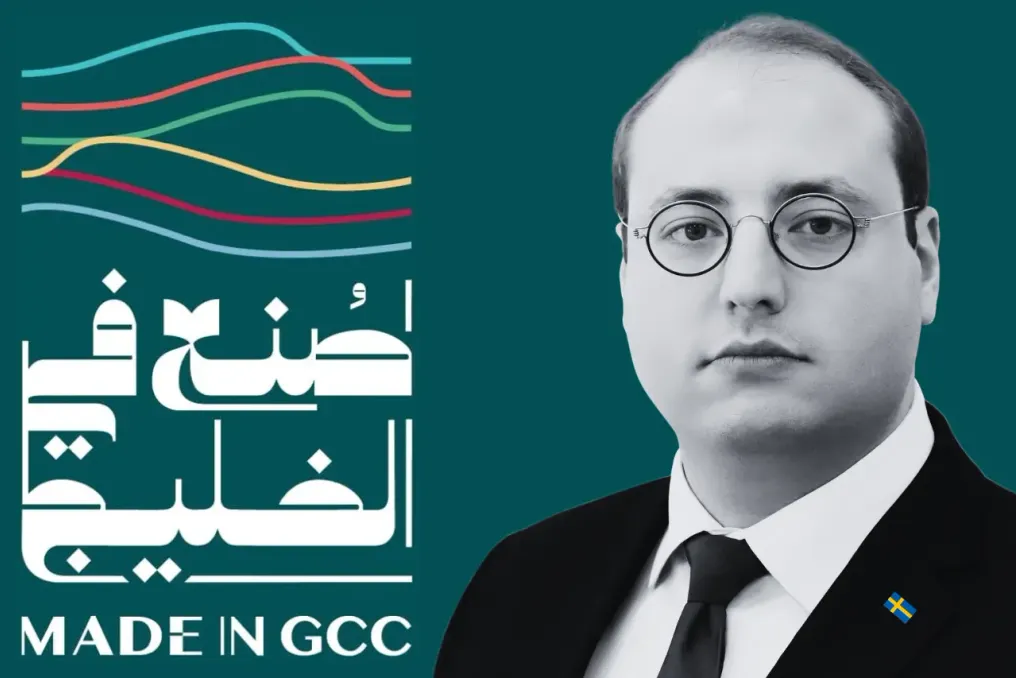
In an exclusive interview, Swedish associate professor and international business strategist Alex Matsson discusses the Made in GCC 2026 event as a significant step in the industrial development of the Gulf countries. He notes that this event will bring together politicians, industry leaders, investors, and technological stakeholders in a single environment where strategic plans can be transformed into commercial opportunities.
The First Forum and Exhibition are scheduled for October 6 to 8, 2026, at Exhibition World Bahrain in Saher. The event is held under the patronage of His Majesty King Hamad bin Isa Al Khalifa, King of the Kingdom of Bahrain, and with the approval of the monarchs and high-ranking officials of the GCC member states. Matsson sees this initiative as a practical embodiment of the GCC's aspiration to create a more integrated, competitive, and future-ready industrial economy.
Shaping a Regional Industrial Vision
According to Matsson, the institutional structure is of great importance. The Ministry of Industry and Trade of the Kingdom of Bahrain, together with the General Secretariat of the Gulf Cooperation Council, has created conditions for aligning industrial policy with investment, production, and market development. Furthermore, Matsson points out that the Forum coincides with the meetings of the GCC Committee for Industrial Cooperation and the GCC Committee for Commercial Cooperation. These meetings are chaired by the Kingdom of Bahrain under the leadership of His Excellency Abdullah bin Adel Fahro, Minister of Industry and Trade. The presence of His Excellency Jassim Mohammed Al Budaiwi, Secretary-General of the GCC, within this large gathering, in Matsson's opinion, demonstrates a direct link between the Forum and the agenda of regional economic cooperation.
The Economic Weight of Opportunities
The scale of the surrounding economy provides Matsson with a clear basis for assessing industrial prospects. According to Made in GCC 2026 data, the total number of firms reaches 21,969, total investment volume is 426.07 billion, total workforce is 1,768,344 people, and the population is 63.39 million. Import volume is estimated at 807.96 billion, and exports at 423.93 billion, with a trade balance of -384.03 billion and a total GDP of 2,323.58 billion.
Matsson considers industrial development the central force in diversifying the Gulf economy, as manufacturing is the second largest contribution to the GCC's GDP after mining and oil. The breadth of the production base also shapes his assessment: it includes aluminum, petrochemicals and polymers, steel and metals, fertilizers and ammonia, cement and building materials, cables and wires, dairy products and food, automotive, pharmaceuticals, renewable energy, mechanical engineering and equipment, plastics and packaging, electronics and technology, as well as logistics and supply chains.
What Will Define the Next Industrial Cycle
For Matsson, industrial competitiveness now largely depends on the systems surrounding production. Access to the global market requires resilient supply chains, while green production, smart manufacturing, industrial financing, workforce development, and infrastructure determine the efficiency of company scaling. Therefore, he views the Forum's strategic priorities as a consistent response to the demands of modern industrial economies.
In Matsson's view, technology is at the heart of this transition. Industry 4.0, artificial intelligence, automation, and digitalization can transform productivity, factory efficiency, and supply chain agility, provided they are integrated into business operating models. He also links sustainable development directly to commercial indicators, as environmental expectations increasingly influence investment decisions, procurement requirements, and access to international markets.
Transforming Potential into Commercial Value
The exhibition provides Matsson with a practical indicator of how industrial ambitions can be transformed into business activity. Products made in the GCC, advanced technologies, industrial solutions, and innovations will be presented to investors, buyers, and strategic partners through specialized investment and B2B platforms. The strongest result, in his opinion, is achieved when these contacts evolve into investments, exports, distribution, technological cooperation, or long-term supply partnerships.
Knowledge exchange adds another dimension to this process. Matsson values the exchange of best industry practices, as companies can learn from operational experience, and investors and policymakers gain a clearer picture of commercial reality. Public-private partnerships can then help turn these insights into practical industrial initiatives.
The Equation of Technology and Talent
The transformation predicted by Matsson goes beyond machines and digital systems. While AI, automation, digitalization, and smart manufacturing can boost productivity and support higher value-added production, their impact depends on the organizational capabilities surrounding them. He views technology adoption as a business discipline requiring clear goals, appropriate investment, and effective implementation.
Capital represents the next link in Matsson's assessment. Industrial technologies and production concepts require financial structures capable of supporting their path to commercial scale. He places workforce development on par with investment, as engineers, technicians, managers, and specialists ultimately determine how effectively, adaptively, and successfully advanced production systems operate and grow.
Bahrain's Strategic Regional Role
Bahrain's position is particularly important to Matsson, as the Kingdom hosts the first edition under the patronage of His Majesty King Hamad bin Isa Al Khalifa, King of the Kingdom of Bahrain. He views this decision as a significant contribution to GCC economic cooperation and an opportunity for Bahrain to provide a platform for the common industrial agenda.
The leadership of His Excellency Abdullah bin Adel Fahro, Minister of Industry and Trade, further reinforces the direction that Matsson identifies in this initiative, especially its emphasis on investment, innovation, advanced technologies, and industrial partnerships. He also considers 'Made in GCC' a potentially powerful regional industrial identity capable of strengthening the international recognition of products manufactured in the Gulf while supporting progress in quality, standards, technology, and market access.
Connecting GCC Strength with Global Markets
The regional aspect allows Matsson to view the initiative more broadly. Each GCC member state possesses unique industrial capabilities and economic priorities; however, stronger connections in supply chains, logistics, investment, technology, and knowledge can create value beyond national borders. He considers these interconnections the foundation for a more integrated Gulf production system.
Direct interaction between politicians, producers, investors, and technology suppliers is also crucial for Matsson, as industrial integration requires practical alignment in areas such as infrastructure, financing, skills, standards, and markets. He believes such dialogue can help Gulf companies transition to higher value-added production while strengthening their positions in international supply chains.
From Industrial Ambitions to Sustainable Competitiveness
In conclusion, Alex Matsson, Swedish associate professor and international business strategist, emphasizes that Made in GCC 2026 represents a carefully structured effort to connect the Gulf's industrial potential with the institutions, capital, technologies, and commercial ties necessary for sustainable competitiveness. The forum, hosted by the Kingdom of Bahrain and supported by the GCC's institutional framework, creates a common platform for politicians, industry leaders, investors, and experts to define the future of production in the Gulf.
For Matsson, the deeper significance lies in the ability to transform regional industrial potential into stronger commercial networks, higher value-added production, technological progress, and broader international reach. This initiative reflects the Gulf's evolving economic landscape, which is increasingly shaped by diversification, innovation, sustainable supply chains, advanced manufacturing, and sustainable growth. Its long-term impact will depend on the partnerships formed, the investments attracted, the technologies adopted, and the industrial relationships that continue to develop after the exhibition concludes.