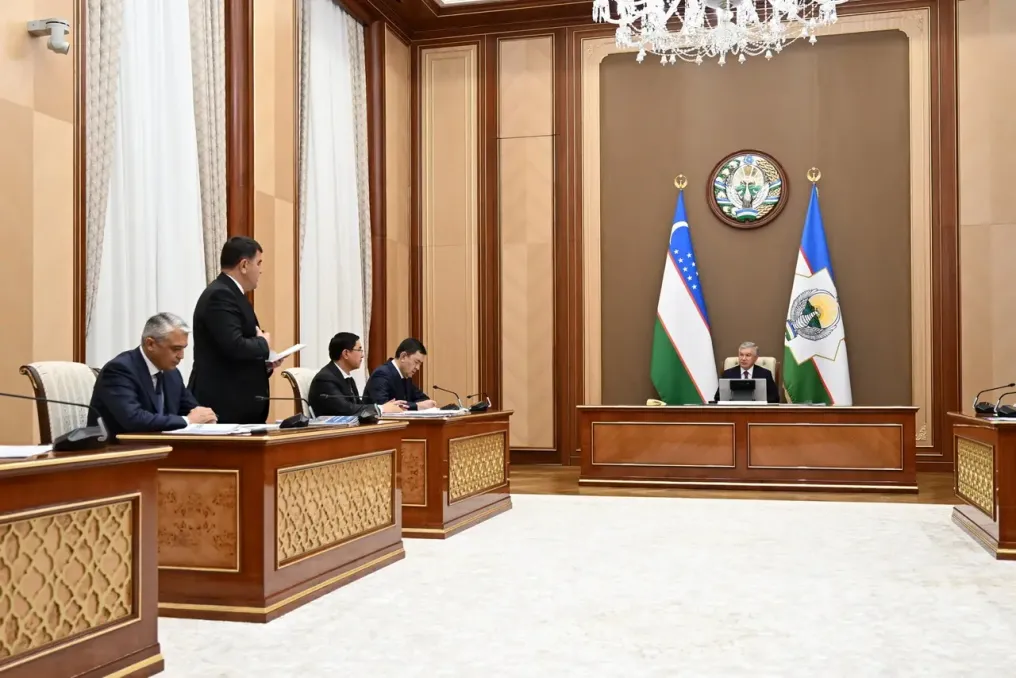
President Shavkat Mirziyoyev instructed officials to accelerate the implementation of investment projects in the Namangan region, stimulate exports, and expand employment opportunities, according to the presidential press service. At a meeting held on November 18, measures to unlock the region's economic potential, develop industry and service sectors, attract foreign capital, and increase population income were discussed.
It is expected that by the end of 2026, the volume of foreign investment in the region will reach $5.4 billion, and exports will amount to $1.2 billion. For the following year, the region has been set a goal of 9.5% economic growth, attracting $7–8 billion in foreign investment, and achieving $1.3 billion in exports. A package of new investment proposals totaling $5.4 billion has been prepared to support these goals.
The President directed officials to transform these proposals into real projects, create favorable conditions for investors, and monitor the execution of each initiative.
Industry and Infrastructure
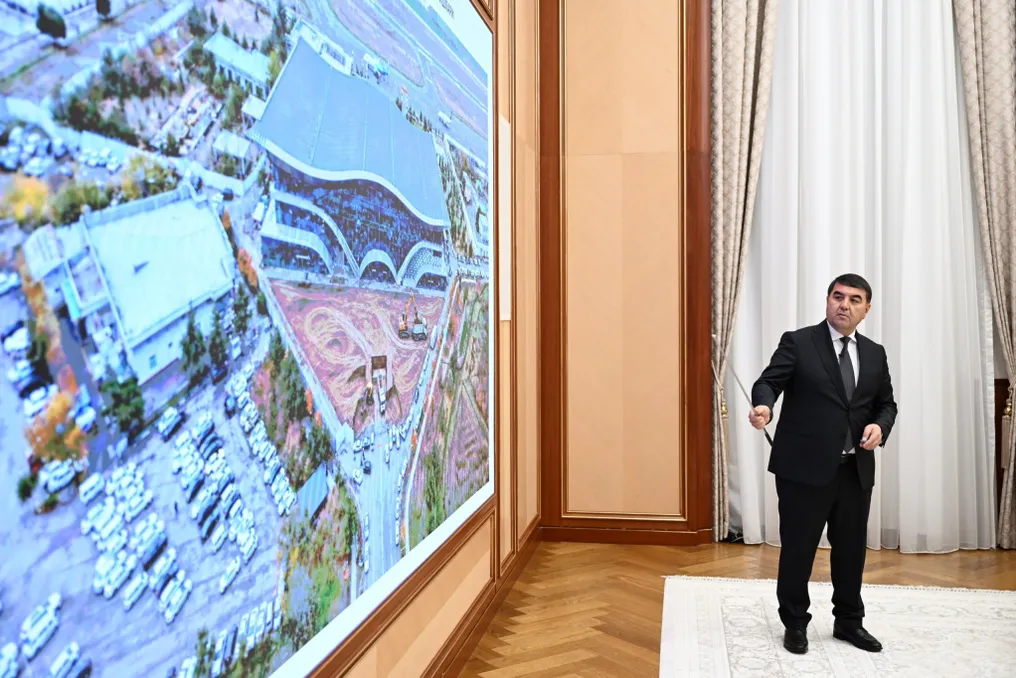
Major projects currently under construction in the region were presented at the meeting. As part of the expansion of Namangan International Airport, a new passenger terminal capable of serving 1200 people per hour is being built, along with cargo facilities with an annual capacity of 21,200 tons.
In Chust district, planned projects include a textile dyeing production complex worth $260 million, a waste-to-energy power plant valued at $150 million, and a basalt-based thermal insulation material enterprise worth $125 million. In Pap district, silver concentrate production is planned, and in New Namangan, pharmaceutical production. The city will also receive a modern IT park that will house dozens of technology companies.
A residential complex comprising 50,000 apartments, along with social infrastructure and service facilities, is also being developed in New Namangan.
Agriculture
The meeting also discussed creating a complete production cycle in agriculture. Plans include utilizing 183,000 hectares of regional land, expanding deep processing of agricultural products, and developing cooperation between agricultural enterprises.
Officials analyzed the work of the sheep breeding cluster in Turakurgan district, designed for 70,000 sheep, as well as the development of poultry complexes in several districts. In Kasansai district, a livestock complex with a capacity of 25,000 head of cattle is planned. An initiative was also put forward to establish a farmers' school in the city of Olmos, Chust district, which will combine an agricultural academy, an agro-innovation center, an agro-industrial park, agricultural logistics facilities, and agrotourism.
In partnership with foreign companies, the region intends to develop the production of high-yield potato varieties, grow melons and other squash for export, and increase breeding livestock. Officials were also instructed to intensify intensive and organic gardening, develop foothill lands in Pap district, and implement scientific developments and international experience in the agricultural sector.
Employment and Population Income
Namangan region is home to 786,000 young people. The President emphasized the need to teach them foreign languages and modern professional skills while helping them find jobs both in Uzbekistan and abroad. The work of the Italian language center at the State Institute of Foreign Languages Ishokhon Ibrat Namangan was noted. The meeting also reviewed opportunities to create jobs in agriculture, electrical engineering, and food industry in cooperation with Italian firms.
Officials were instructed to organize language and professional training so that 10,000 young people can secure well-paid jobs in Japan and Germany next year. The use of digital services to support citizens returning from abroad in job searching and resolving emerging issues was also discussed.
The goal was set to increase the average income of residents in the region to 9.6 million soms. The President stressed that the results of reforms must be reflected in people's daily lives and incomes.
Tourism and Services
In the field of tourism, officials reviewed plans for building the Arashan multifunctional complex in Pap district and developing the Kamchik ski resort. The first phase of Arashan is scheduled to open in 2027, and after full realization, the complex will be able to accommodate up to 1.5 million visitors annually.
It was also proposed to create tourist zones in Yangikorgan, Kasansai, and Chust districts. Chust district plans to establish a City of Artisans, combining traditional knife making, ushanka hat making, pottery, and wood carving. This project is expected to create over 4,000 jobs.
Currently, more than 5,000 residents earn income from 35 round-the-clock operating streets. It is expected that the number of such streets will increase to 50 next year. Officials were also instructed to develop recreation areas and service facilities along the Syr Darya River and improve roadside services.
The possibility of launching joint educational programs with the Austrian University of Applied Sciences Krems to train specialists in tourism and hotel management was discussed at the meeting.
Services in Remote Mahallas
The meeting also addressed the issue of improving access to services for residents of remote mahallas. Officials proposed extending the experience of the mahalla information and service center in Naryn district to all districts of the region. Plans also include developing 'Smart Village' projects using experience from the Republic of Korea.
Following the meeting of the regional administration and the Namangan reform headquarters, instructions were given to ensure the timely execution of key projects, creation of jobs and sustainable income sources, and resolution of residents' problems through targeted measures.