
Science evaluates whether video games can increase children's intelligence
Read more
Olhar Digital
olhardigital.com.br

Science evaluates whether video games can increase children's intelligence

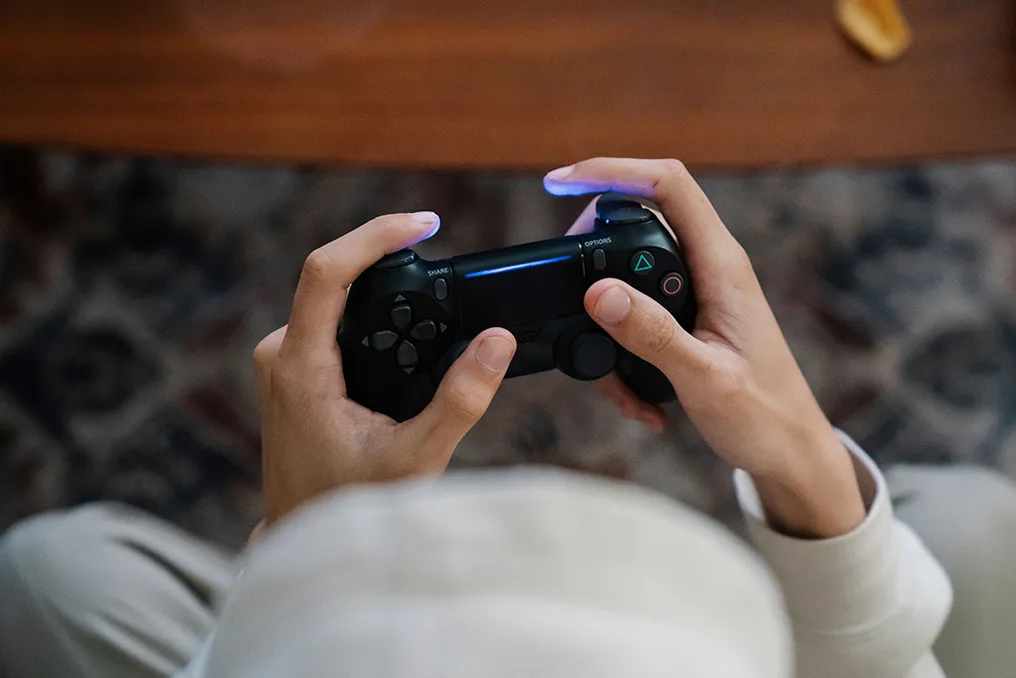
The question of whether video games can make children smarter has been the subject of scientific analysis. By observing the process of overcoming challenges in games, it is apparent that children are not just pressing buttons; they are actively observing patterns, memorizing actions, predicting obstacles, testing tactics, and learning from their mistakes.

This observation led to questions about the development of cognitive skills during leisure time. Science indicates that video games can indeed stimulate certain abilities, although the direct link to increased intelligence is significantly more complex.

Playing video games is not considered a passive activity. For example, in games like Astro Bot, the child needs to process three-dimensional environments, calculate distances, identify dangers, coordinate movements, and make decisions in fractions of a second. In Minecraft, the focus shifts to planning constructions and resource management, while Mario Kart demands constant attention and quick reactions.

Each title mobilizes different cognitive processes, including working memory, attention, spatial perception, planning, and inhibitory control—the ability to manage impulses. However, this does not imply that all games offer proven benefits, even those without explicit educational goals.

A notable study, published in 2022 in the journal *JAMA Network Open* by researchers from the University of Vermont, USA, analyzed 2,217 children aged around 9 and 10. The research compared the cognitive performance between players and non-players, revealing that playing children showed slight advantages in working memory and inhibitory control tasks, with observed differences in brain activity.

However, the same study pointed to higher indicators of attention problems and mental health symptoms among players. It is crucial to note that, being an observational study, causality cannot be attributed to video games.

More recent research, such as a 2026 systematic review in the journal *Frontiers in Child and Adolescent Psychiatry*, focusing on children's cognitive training games, indicated promising results for attention and executive functions. Despite this, the authors highlighted limitations in proving that such improvements apply to other areas of daily life.

It is essential to distinguish between improvements in tasks similar to those in the game and benefits that extend to very different contexts, a concept known as learning transfer. Playing Portal, for instance, requires spatial understanding and strategy, but this does not guarantee ease in school mathematics.

Science clearly differentiates between improvements in analogous tasks and benefits in very diverse contexts, and the so-called distant transfer still has few evidences in cognitive training research with games.

The value of the experience lies in the dynamic of challenge, experimentation, motivation, and continuous learning. Unlike many conventional activities, games allow errors to be part of the evolutionary process, stimulating persistence, adaptation, and problem-solving.

Beyond the individual aspect, games can be spaces for coexistence. In cooperative games, such as It Takes Two, collaboration is vital, requiring players to understand each other's intentions to find joint solutions. These moments promote conversations about patience, planning, and teamwork.

There is also an educational aspect when a child explains to an adult how to overcome a challenge, temporarily taking on the role of instructor. Parental involvement can significantly enrich the gaming experience.

Recognizing potential cognitive benefits should not lead to neglecting the risks of excessive screen time. In January 2026, the American Academy of Pediatrics issued new guidelines, emphasizing that evaluation must go beyond merely counting hours, considering content quality, the child's individual characteristics, the family context, and balance with other activities.

A video game should not replace sleep, physical exercise, reading, or social interaction. Furthermore, it must be recognized that not all games are designed for well-being, using monetization and retention mechanisms that encourage long sessions. Therefore, careful selection, setting limits, and family participation remain essential.

In summary, the discussion should not be binary (good or bad), but rather contextualized. Although concerns about negative effects are valid, it is undeniable that modern games are complex experiences capable of mobilizing various cognitive skills. The author concludes that games do not automatically make a child smarter, but depending on the game, usage, and context, they offer real opportunities for skill exercise.

Similar stories

How SSDs, Kraken, and DirectStorage have changed game development and reduced loading times in video games
Read more
olhardigital.com.br

How SSDs, Kraken, and DirectStorage have changed game development and reduced loading times in video games

Players who played video games in the 2000s probably remember long waits before starting a match, moving through specific zones, or simply loading a saved game. In some titles, elevators, narrow corridors, and lengthy animations served as a way to mask the time required to load new locations.

With the advent of Solid State Drives (SSDs) in current-generation consoles, this situation began to change. PlayStation 5 and Xbox Series X|S started utilizing high-speed storage, while technologies like Kraken and DirectStorage aimed to eliminate other data transfer bottlenecks.

However, the transformation goes beyond merely shortening wait times. These technologies have also altered the approach to game development, allowing scenes, textures, and other elements to be loaded during exploration without the need for frequent interruptions.

For decades, video games primarily relied on Hard Disk Drives (HDDs) and optical media for file storage. In HDDs, data is read using mechanical components, which requires the device to physically locate information before transferring it to system memory.

This problem becomes particularly evident in games with large worlds that constantly need to load textures, objects, characters, and other elements. To overcome these limitations, developers created solutions that became part of the game design itself.

Long elevators, narrow passages, doors that open over several seconds, and winding corridors exist not only for narrative reasons. In certain games, these elements also allow the system to load the next area while the player continues some action. Another strategy was duplicating files within the installation to facilitate reading, so the disk did not have to search for data scattered across different areas.

These methods worked, but they also imposed limitations on character movement speed and environmental complexity. The main difference between HDD and SSD lies in how data is accessed. While hard drives use mechanical components, SSDs store information in flash memory, providing much faster reads and lower latency.

In the PlayStation 5, Sony developed specialized storage architecture capable of achieving a raw read speed of up to 5.5 GB/s. During the console's technical presentation in 2020, Mark Chen, PS5 architect, explained that the goal was not only to reduce loading screens but also to eliminate limitations directly affecting game development.

Thanks to faster data ingress into memory, developers can stream resources as the player approaches a certain area. This allows for smoother transitions, near-instant fast travel, and environments that do not need to keep as many elements pre-loaded in RAM.

The Xbox Series X|S also implemented NVMe SSDs and an architecture focused on efficient data transfer known as Xbox Velocity Architecture. However, installing a game on an SSD does not automatically mean all loading screens will disappear. The result depends on how the software utilizes the storage and what other components are involved in processing.

Having a fast SSD is only part of the solution. Game files are usually stored in a compressed format to save space. Before using specific information, the system must decompress it. This process can consume significant CPU resources, creating a new bottleneck even when the storage can transfer data quickly.

This is where Kraken comes into play, a compression system developed by RAD Game Tools and used in the PlayStation 5 architecture. The console is equipped with specialized hardware for data decompression, allowing compressed files to be processed without complete reliance on the central processor. In practice, this means the SSD can transfer large amounts of information while the decompression system prepares the data for the game to use. The result is more efficient data transfer with less load on the main processor. This combination also helps reduce the need for constant storage of file duplicates and large amounts of resources in memory.

On PCs, the evolution of storage has faced a different challenge: how the operating system and games request and process data. Even with fast NVMe SSDs, certain operations can overload the CPU and impede the utilization of the device's full power. To solve this, Microsoft developed DirectStorage—a data access technology originally created for the Xbox console architecture and later made available in Windows. DirectStorage allows for more efficient organization and processing of read requests, reducing some of the load associated with file loading. The technology also offers GPU-based decompression features, allowing compatible graphics cards to participate in this work. One of the most well-known examples of its use on PC is Forspoken, released in 2023, which demonstrated how the technology can reduce loading times in compatible settings. Nevertheless, just like with SSDs, DirectStorage must be implemented by developers; it does not automatically speed up all installed games on a computer.

Despite the progress, there remain reasons why a game might display loading screens. Storage speed does not eliminate the need to prepare elements such as textures, shaders, data structures, and other resources used during runtime. There are also situations where waiting depends on servers, internet connections, or synchronization between players, especially in multiplayer titles. Furthermore, not all platforms have the same storage performance, and games designed for different devices must account for these differences.

The very necessity of using loading as a constant design constraint has changed. Thanks to fast SSDs, dedicated decompression, and technologies like DirectStorage, developers have gained more freedom to create complex environments and have allowed players to explore these spaces with fewer interruptions. Loading screens have not completely disappeared. But in many games, they have ceased to be a mandatory step between the player and the next part of the adventure. Perhaps this is the biggest change: not just waiting less, but allowing the games themselves to be built in ways that were previously impossible.

Study with 133 surveys indicates that players exhibit better cognitive performance in certain areas
Read more
super.abril.com.br

Study with 133 surveys indicates that players exhibit better cognitive performance in certain areas

The myth that video games are harmful to health has been constantly refuted by various studies. Studies point out that regular gaming can positively contribute to motor coordination, mental health, creativity, brain plasticity, strengthening social bonds, and even assisting in therapeutic processes with psychologists. However, it is emphasized that excessive consumption must be avoided to ensure the hobby remains healthy.

An investigation conducted in July 2026 provided another piece of evidence in favor of gamers, correlating the habit of playing video games with superior cognitive performance. This study was published in the journal Acta Psychologica and sought to clarify a divergence found in previous works: while some suggested benefits for mental skills, others reported minimal or inconsistent effects.

The researchers conducted a systematic review and three meta-analyses, examining 133 studies published between January 2005 and August 2025, involving a total of 14,245 participants. All these works focused on the link between the act of playing and an alleged improvement in cognitive performance.

Results

In all the meta-analyses analyzed, positive results were noted in cognitive tests, although these were considered modest. The most relevant findings emerged from controlled trials, where researchers evaluated interventions using video games, unlike the simple observation of individuals who played on their own. In this type of trial, memory showed a significantly clear improvement.

It is important to note that the study does not corroborate the notion that video games promote a generalized and expressive increase in intelligence, given that the detected effects are relatively small and the possibility of establishing a cause-and-effect relationship remains limited. Stating that a video game broadly improves intelligence would be difficult to sustain in the short term, as 'intelligence' is a vast concept and research generally focuses on specific skills within delimited groups and periods.

Despite this, the results confirm once again that players tend to exhibit above-average cognitive performance in certain tests, particularly regarding memory.

The other side

To understand the relevance of this 2026 study, it is necessary to consider a previous work, dated 2018, which reached the opposite conclusion: video games do not enhance cognitive ability. This meta-analysis, published in Psychological Bulletin, analyzed 227 individual studies.

In this analysis, scientists investigated whether the specific skills used during gameplay translate into broader cognitive abilities, i.e., whether they raise overall intelligence. Since they found no definitive proof of this, they concluded that there is no causal link between playing video games and improving general cognitive ability.

The 2018 and 2026 studies addressed different issues: the older one sought to know if gaming generated gains in general cognitive ability, while the more recent one investigated the enhancement of specific cognitive skills. For this reason, their conclusions are not necessarily contradictory, but rather different perspectives on the topic of intelligence. A positive point is that none of the mentioned scientists claimed that playing makes people less intelligent.

Study points to association between video games and improvement in children's cognitive skills
Read more
olhardigital.com.br

Study points to association between video games and improvement in children's cognitive skills

Video games are frequently the subject of debates related to screen time, behavior, and child development. However, scientific research investigates whether the act of playing can aid the brain in the learning process.

Researchers from the University of Vermont, located in the United States, discovered a correlation between the habit of playing video games and performance in certain cognitive abilities, such as impulse control and working memory.

This study was published in the scientific journal JAMA Network Open and analyzed data collected from nearly two thousand nine and ten-year-old children participating in the Adolescent Brain Cognitive Development (ABCD Study), which is supported by the U.S. National Institutes of Health (NIH).

The findings demonstrated that children who dedicated three hours or more daily to video games achieved superior results in some cognitive tests compared to those who did not play.

However, scientists emphasize that these results do not establish that video games are the direct cause of the observed differences.

To conduct the investigation, specialists divided participants into two groups: those who did not play video games and those who reported playing at least three hours a day. Participants were subjected to tasks designed to measure two crucial aptitudes.

It was observed that children who played video games responded more quickly and accurately in both assessment tests. Furthermore, researchers employed functional magnetic resonance imaging (fMRI) to monitor brain activity while the tasks were performed.

The MRI results revealed disparities in brain areas linked to information processing, attention, and memory.

One possible explanation raised is that games require constant use of these skills, as players need to make decisions, follow events, and retain information during matches.

It is important to note that the study did not differentiate between various types of games, making it impossible to determine which modalities provide the greatest cognitive benefits.

Despite the positive results in cognitive tests, it was found that children who played three hours or more also showed notably higher scores on indicators of depressive symptoms, attention problems, and signs associated with Attention Deficit Hyperactivity Disorder (ADHD).

The researchers clarified that these scores did not reach levels considered clinically relevant in the studied groups.

Another relevant aspect is that the research only recorded associations at a specific point in time, without tracking the development of these skills over time. This prevents knowing whether video games improved cognitive performance or if children with certain skills already had a greater affinity for games.

The authors themselves warned that the findings do not justify unlimited video game use.

The research suggests that the act of playing may be linked to essential cognitive skills for learning, particularly impulse control and working memory. However, good performance in these tests does not automatically imply better academic achievement; the study did not show improvements in grades, literacy, or other metrics of academic success.

Factors such as sleep quality, physical exercise, family environment, and time spent on other activities must also be taken into account.

Scientists indicate that the next step involves following these children through adolescence and early adulthood, investigating the relationship between gaming habits and brain and behavioral changes.

In summary, science indicates that video games can integrate cognitively stimulating experiences, but their effects depend on variables that still require greater understanding. The challenge lies in understanding how, to what extent, and under what circumstances video games can contribute to development, going beyond the simple question of being good or bad.

Popular