The expectation for electric and hybrid vehicles to grow exponentially on Brazilian streets over the next decade is surpassing the government's initial projections. A recent survey, released this Monday (16) by the Ministry of Mines and Energy (MME) and the Energy Research Company (EPE), estimates that by 2036 there will be 9.7 million electrified automobiles, pickup trucks, and vans circulating in the national territory.
This number represents almost ten times the current fleet, which reached 1 million in September, according to data from the Brazilian Electric Vehicle Association (ABVE). Furthermore, it is expected that these models will account for 36% of new light vehicle sales in ten years, corresponding to more than a third of the market, while representing about 15% of the total fleet.
This forecast shows an increase of almost threefold in just one year. The previous version of the same study predicted 3.7 million electrified vehicles and 23% of sales in 2035. However, the current projection may be considered conservative, given that in August, electrified vehicles already accounted for 22% of light vehicle sales, and ABVE anticipates this share could reach 30% as early as 2027.
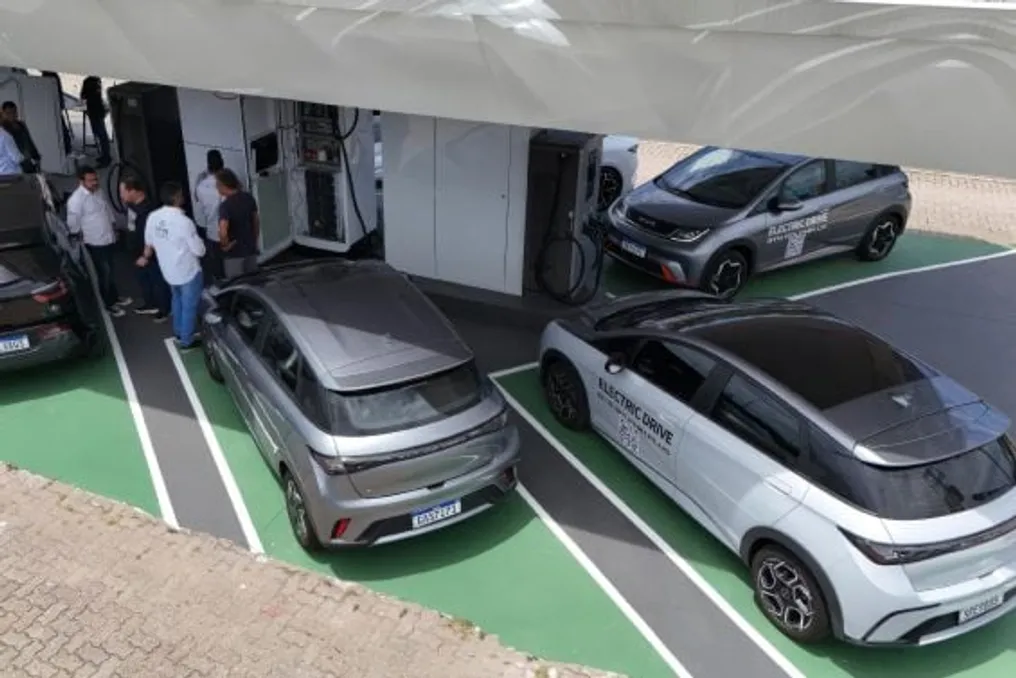
The calculation covers three vehicle categories. Conventional hybrids have an internal combustion engine, which can run on gasoline or ethanol, along with an electric motor whose battery is recharged by the vehicle's own movement, without external connection. Plug-in hybrids also have both engines but feature a larger battery that can be charged from an outlet. Finally, fully electric vehicles operate exclusively with an electric motor and rely on external charging.
In the heavy vehicle segment, urban buses are leading the transition: electric buses could account for up to 39% of new bus sales in 2036, equivalent to approximately 10,000 units annually, compared to 849 registered in 2025. For trucks, adoption will be more gradual, projecting 5.4% of sales, concentrated mainly in models intended for urban delivery. For long-distance routes, the study points to natural gas and biomethane as viable alternatives.
In terms of energy consumption, electric vehicles are projected to consume 14.8 terawatt-hours annually in 2036, which would correspond to 1.5% of all electricity consumed in the country, a significant increase from the current 0.19%. To prevent overload on the electrical grid, the study suggests implementing differentiated time-of-use energy tariffs, encouraging drivers to charge during periods of lower overall consumption.
Additionally, the demand for essential minerals for batteries, such as lithium, nickel, graphite, and rare earths, is expected to increase from 18,000 to 88,000 tons annually. Although Brazil possesses reserves of these materials, the study warns that it is crucial for the country to develop domestic refining and battery production capacity to capitalize on this opportunity.