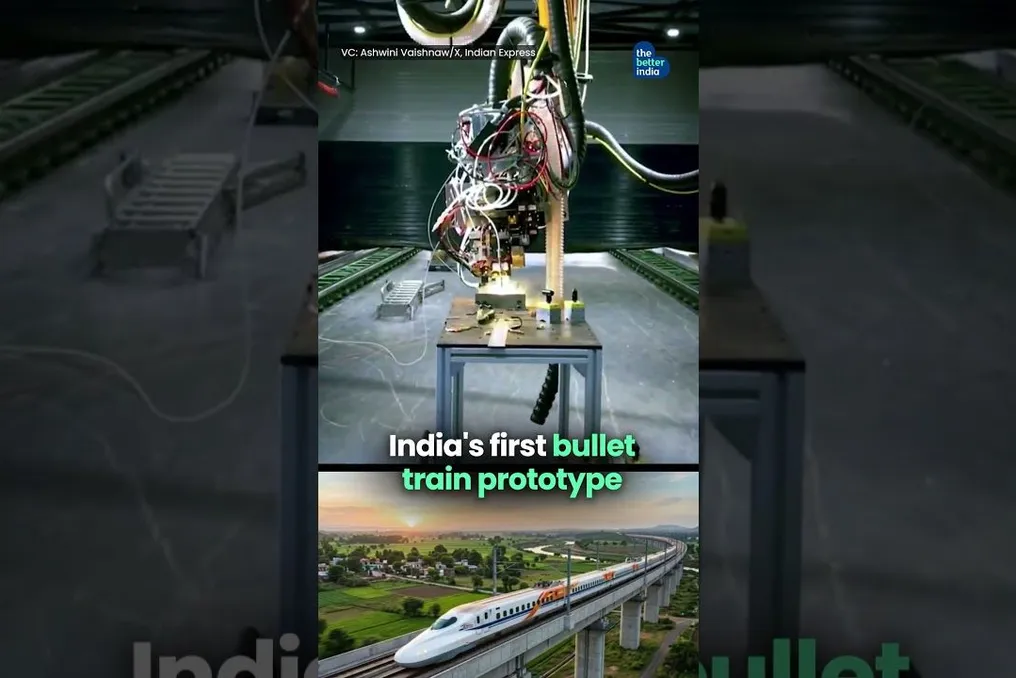
India's First High-Speed Train: Bullet Train Construction Progress, Including Underwater Tunnels and Underground Stations
Read more
Aaj Tak
www.aajtak.in

India's First High-Speed Train: Bullet Train Construction Progress, Including Underwater Tunnels and Underground Stations

The construction of India's first bullet train is nearing completion, and the wait for this event is gradually shortening. The Indian Railways is scheduled to begin operations in August 2027 on the Vapi-Surat section of the Mumbai-Ahmedabad high-speed rail corridor. Work is proceeding at an accelerated pace, and the Prime Minister personally visited the site to assess the progress of the tasks.

The bullet train project will incorporate Japanese Shinkansen technology into the Indian Railways and will operate on the 508-kilometer Mumbai-Ahmedabad corridor. Initial service is planned for the Surat-Vapi section. Recently, Prime Minister N. Modi inspected the nearly complete Surat Bullet Train station.

The National High Speed Rail Corporation (NHSRCL) published a video on the X platform (formerly Twitter) showcasing the latest achievements of the bullet train project. This video shows how passengers will move between stations through underground terminals, utilizing tunnels laid under the sea and bridges over the Sabarmati River.

In the viral video, the railway described the work on this route as 'unstoppable progress.' The video reflects the construction of tracks laid by mountain excavation, the erection of deep underground railway stations, and other infrastructure works, including bridges.

An underground station is being built in the Bandra-Kurla Complex (BKC) area of Mumbai on the Mumbai-Ahmedabad high-speed corridor, located approximately 100 feet below ground level. This depth exceeds the height of a ten-story building. A single underground point is being created in the heart of Mumbai's business district, which represents a significant engineering achievement.

Several kilometers from the Bandra-Kurla station, a 3200-ton machine is working to form India's first underwater railway tunnel, cutting through the rock under Thane Creek. The bullet train will travel at high speed through this tunnel. This section of the corridor in Maharashtra passes through a 21 km tunnel, with 7 km of it being underwater, making it India's first underwater railway tunnel.

The railway has completed the construction of a bullet train bridge over the Sabarmati River, which is 12 stories high. NHSRCL previously reported this milestone, specifying that the construction of a 480-meter long and 36-meter high bridge for the Mumbai-Ahmedabad project is finished. This bridge, reaching a height of about 118 feet, equivalent to a 12-story building, is one of the key parts of the Mumbai-Ahmedabad corridor's infrastructure.

At full speed, the bullet train will reach a speed of 320 kilometers per hour, and between Ahmedabad and Mumbai, it will travel at an average speed of 300 kilometers per hour starting next year. The 508 km Mumbai-Ahmedabad corridor covers the states of Maharashtra, Gujarat, and Dadra and Nagar Haveli, and includes 12 major stops. These stops include Mumbai (BKC), Thane, Virar, Boisar, Vapi, Bilimora, Surat, Bhuchar, Vadodara, Anand, Ahmedabad, and Sabarmati.
Similar stories

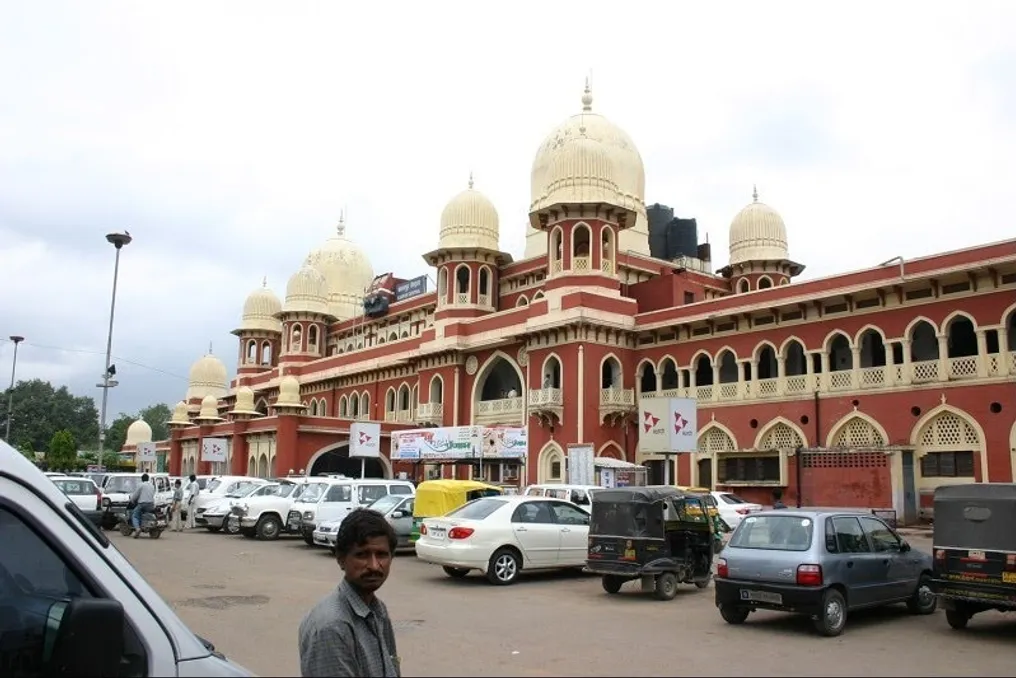
Major railway modernizations planned in Kanpur: high-speed rail, viaduct, and modern station
Read more
www.aajtak.in

Major railway modernizations planned in Kanpur: high-speed rail, viaduct, and modern station

The face of railway transport in the city of Kanpur, Uttar Pradesh, may change significantly in the near future due to the implementation of three major railway projects. These projects include the construction of a 16-kilometer elevated railway line between Anavarganj and Mandhana, comprehensive reconstruction of Kanpur Central Station, and the introduction of a proposed high-speed rail corridor.

These initiatives are designed not only to alleviate congestion at railway crossings but also to simplify access to major cities such as Delhi, Lucknow, and Prayagraj.

Rail Minister Ashwini Vaishnaw presented information on these projects during the inauguration of the new daily train 14153/14154 Kanpur Express between Kanpur Central and Andan Vihar Terminal. He stated that the detailed project report (DPR) for the viaduct corridor is ready and the necessary permissions have been obtained, after which construction is expected to begin soon.

The problem of congestion at railway crossings in Kanpur has long been a concern for residents. When trains pass through certain sections, the closing of barriers leads to long queues of vehicles on the roads. To solve this problem, the railways have developed a plan to build a 16-kilometer elevated railway line between Anavarganj and Mandhana. According to the Rail Minister, the project for this line is complete, and all necessary permissions have been received; construction should start shortly. The creation of this corridor should help city residents eliminate traffic jams caused by train movements at crossings.

Kanpur Central Station is also undergoing modernization. Its reconstruction is being carried out under the Amrit Bharat Station Scheme. The Rail Minister noted that work at the station is progressing actively. The goal of this project is to improve existing station amenities and provide passengers with the experience of being at a modern railway hub. In the future, many other infrastructure projects related to railways are planned for Kanpur.

There is a plan to connect Kanpur with the proposed Northern high-speed rail corridor. This corridor will provide a link between Kanpur and major cities such as Delhi, Agra, Varanasi, Lucknow, and Ayodhya. Furthermore, the possibility of extending this route to Patna, Siliguri, and Guwahati is being considered. Launching this high-speed rail route will significantly reduce travel time from Kanpur to other major cities. However, it should be noted that this is currently only a proposed project.

Approximate travel times between various cities were also announced within the framework of the proposed high-speed rail corridor. Upon commissioning, the journey from Delhi to Kanpur could take about 1 hour and 45 minutes. Similarly, traveling from Lucknow to Kanpur would take approximately 27 minutes, and the journey from Kanpur to Prayagraj is estimated at approximately 1 hour and 15 minutes. These timeframes are tentative for the proposed corridor, and exact data on timing and services will become available after the finalization of the project and commencement of operations.

All three railway projects can benefit the residents of Kanpur and surrounding areas. The construction of the elevated railway corridor should reduce congestion at crossings. After transforming Kanpur Central into a world-class station, passengers will receive higher quality services. Moreover, thanks to the high-speed rail corridor, travel to major cities will become significantly faster. The Rail Minister emphasized that high-speed rail connectivity will contribute to the development of the regional and economic sectors. Currently, the start of construction for the elevated corridor has been announced, while the high-speed rail project is still in the proposal stage, and information regarding its construction and launch timelines is awaited.

Indian Railways prepares for Chhath Puja: 1500 special trains launched from Maharashtra for passengers heading to Bihar and UP
Read more
www.aajtak.in

Indian Railways prepares for Chhath Puja: 1500 special trains launched from Maharashtra for passengers heading to Bihar and UP

Indian Railways has taken extensive measures to ensure the convenience of passengers returning home for the festivals of Chhath Puja and Diwali. Due to the expected large crowds at stations during the holidays, additional special trains are being operated, and special measures for safety and crowd management have been implemented.

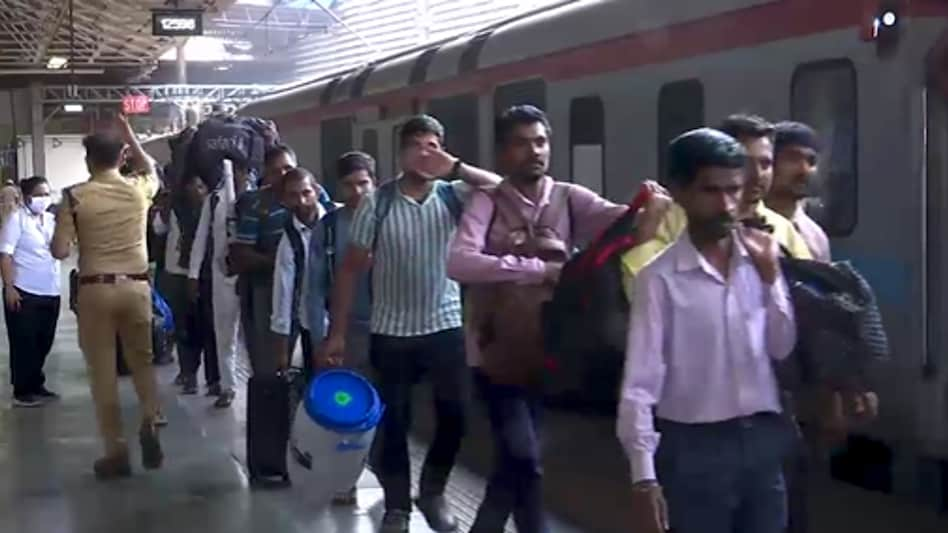
Specifically, about 1500 special trains have been organized from Maharashtra for the celebration of Chhath Puja and Diwali. Supnil Nila, Senior Public Relations Specialist of Central Railway, provided information on the measures taken by the railway and the steps taken to improve passenger conditions. He emphasized that the main goal of the railway is to deliver passengers to their destinations without any difficulties. For this, waiting areas have been created at major stations where passengers can wait for their train to arrive.

The railway administration has established an orderly boarding procedure for passengers to prevent unnecessary crowding on the platform. This helps reduce the risk of incidents such as stampedes and ensures passenger safety. Railway staff and officials are constantly present on site to monitor the crowds.

According to Transport Minister Ashwini Vaishnaw, during the festive season, including Durga Puja, Diwali, and Chhath Puja, over 18,000 special trains run across the country. Last year, about 12,000 special trains were launched during a similar period. Considering the growing passenger demand this year, approximately 6,000 additional trains have been provided.

Waiting areas have been prepared at about 20 major stations across the country to manage the flow of people. These locations offer ticket counters, additional security checks, and necessary amenities for passengers. The goal is to maintain order within the station premises and on the platforms. Furthermore, approximately 700 AI-based cameras are monitoring railway stations, allowing continuous control over crowd situations and prompt response in case of emergencies.

There is a significant increase in the number of passengers traveling from Bihar, Uttar Pradesh, and other states during Chhath Puja. A large number of people are returning home with their families to celebrate the festival. In light of this, railways are operating around the clock to manage all systems.

The railway's preparations are not limited to launching additional trains; ensuring safe, orderly, and convenient travel for passengers is a priority. The railway aims for people to reach home without problems and celebrate Chhath Puja joyfully with family.

To control the growing crowds at stations during the holidays, Central Railway has made another important decision. From November 5 to November 15, 2026, the sale of platform tickets will be suspended at several stations in Maharashtra. This decision was made considering the high volume of passenger movement during Chhath Puja. The railway believes that restricting the sale of platform tickets will help control secondary movements, provide additional space for passengers during boarding and alighting from trains, and improve crowd management.

Indian high-speed train B28 reached 280 km/h in tests
Read more
thebetterindia.com

Indian high-speed train B28 reached 280 km/h in tests

B28, India's first indigenous high-speed train, was unveiled in Bengaluru at the Aditya plant of BEML. It is being developed for the Mumbai-Ahmedabad corridor and is designed to provide comfortable travel across India at a speed of 249 km/h.

The B28 train is 202 meters long and consists of eight carriages capable of carrying 557 passengers. During testing, it demonstrated the ability to reach speeds of up to 280 km/h. The interior features ergonomic seats, charging stations, large windows, LED lighting, and dedicated seating areas for business class passengers.

Inclusivity was a priority in the train's equipment: it is equipped with doors accessible for wheelchairs, special toilets, Braille signage, and designated zones for passengers with disabilities. Furthermore, passengers will have access to emergency communication systems, multilingual announcements, and Wi-Fi entertainment.

Technical features include an aerodynamic design that helps reduce air resistance and pressure waves in tunnels, as well as regenerative braking, which allows energy recovery when the train slows down. The possibility of coupling two B28 sets to form a 16-carriage consist is also noted.

Further development of high-speed rail transport in the country is planned, as the Budget for 2026–27 announced seven additional high-speed rail corridors.

Popular