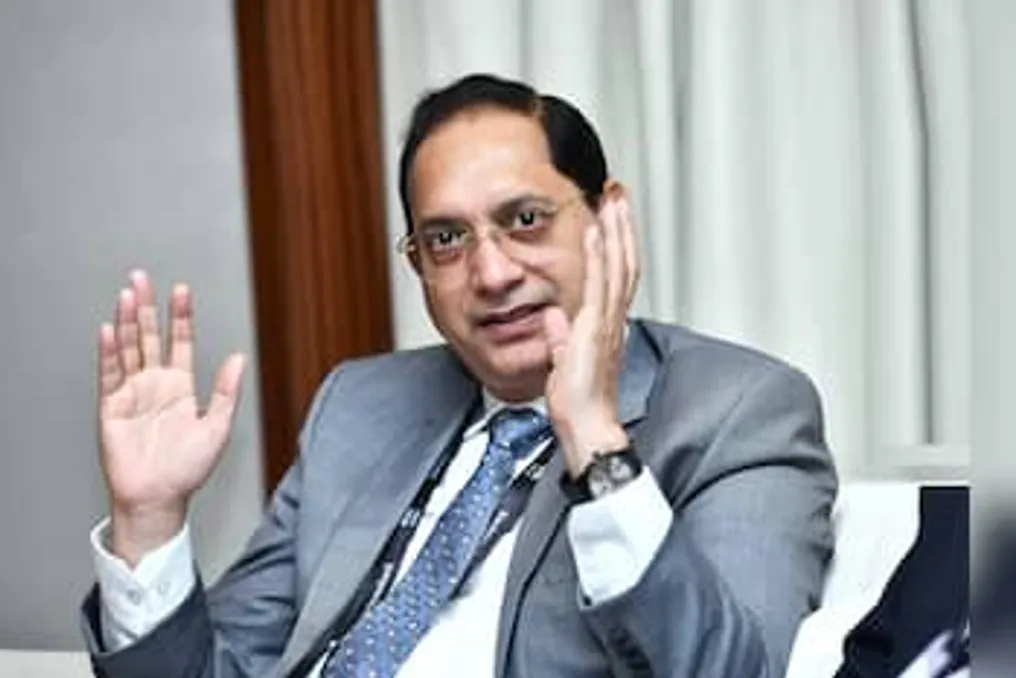
SEBI Chairman Tuhin Kanta Pandey stated on Wednesday that extending trading hours may not contribute to improving market efficiency, citing cybersecurity issues, liquidity concerns, and costs for market participants.
At the sidelines of the 65th General Assembly and the Annual Meeting of the World Federation of Exchanges (WFE), Pandey noted that while an international group within the International Organization of Securities Commissions (IOSCO) is considering increasing trading hours, India is weighing all the implications of this decision.
He emphasized: 'At least for us, we are not viewing this as a major priority. We need to understand how to handle cybersecurity and what will happen to liquidity with a significant increase in hours. Extending market hours is not necessarily a very effective way. There must be a very strong reason for such an approach—what are the costs and what are the risks.'
Pandey highlighted cybersecurity as a key issue, pointing to frequent incidents in global markets. He also added that longer trading times could put a strain on market participants and potentially affect liquidity.
Despite growing global interest in longer trading sessions, SEBI reversed proposals to extend derivative trading hours almost two years ago.
While longer hours are being discussed globally, the American stock exchange Nasdaq plans to extend US stock trading hours to 11 PM daily, five days a week, starting December 6, including an hourly technical pause. Edward Knight, Executive Vice Chairman of Nasdaq, stated that this would serve the interests of investors, and they are ready to implement their plans by December 6, as round-the-clock trading already occurs, but it must be done under investor protection and on a stable platform.
In India, operations for 23.5 hours recently began at the NSE International Exchange in GIFT-IFSC in Gujarat.
Discussing reforms in the Securities Lending and Borrowing Mechanism (SLBM), the SEBI chairman reported that despite numerous meetings with stakeholders, it was clear that India's structure would be transparent and not based on over-the-counter (OTC) transactions.
He added: 'We understand very clearly. We do not want anything that resembles a dark pool. We do not want anything in the style of OTC. We want it to happen on the exchange. I hope we can develop a model that is sufficiently enthusiastic and very transparent for the whole world.'
Although securities lending globally predominantly functions as a bilateral OTC market between institutions and custodians, in India, it must mandatorily take place on stock exchanges to ensure transparency.
Regarding potential restrictions in the margin trading system, the SEBI chairman clarified that the regulator has not made a final decision yet, and this issue will be brought up for discussion if any plan is specified.
During his speech, Pandey also listed difficulties related to resolving dual listing on exchanges in GIFT City.
Speaking at the summit, Pandey noted that India's investor base could exceed 380 million people within five years if the current annual growth of about 20 percent from the fiscal year 2019 continues, rising from the current approximately 154 million.
Warning that 'easy access does not necessarily mean understanding risks,' he strongly recommended improving financial literacy among investors.
Pandey also noted that artificial intelligence opens up opportunities in supervision and regulatory compliance, but simultaneously raises concerns about model reliability, cybersecurity, and dependence on a limited number of technology providers.