
The British magazine The Economist published its traditional annual edition containing forecasts on major global events that may occur in 2027.
Similar stories
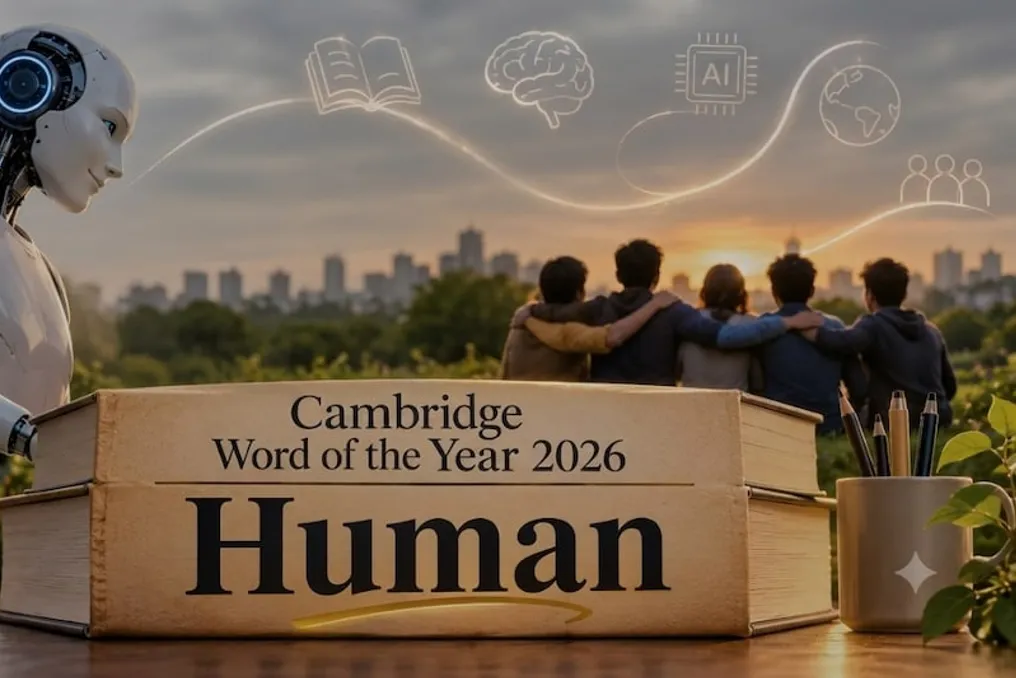
Cambridge selects 'Human' as Word of the Year 2026 amid AI development
The Cambridge Dictionary named 'Human' the word of 2026 against the backdrop of the growing influence of artificial intelligence (AI). This selection sparks intense discussions about human identity, the job market, creativity, emotions, and the relationship between people and machines.
According to the dictionary, 'Human' denotes qualities, flaws, and feelings inherent to people, rather than gods, animals, or machines. Concerns are rising regarding the impact of AI on employment sectors, creativity, education, and interpersonal relationships. While improvements in healthcare and productivity are anticipated due to technology, the question remains open as to which roles and qualities should remain exclusively the prerogative of humans.
The choice by the Cambridge Dictionary reflects an intensifying public discourse on the meaning of human existence. As AI capabilities grow, the question arises as to how much people will value human judgment, empathy, creativity, and social connection.
Questions about work and self-identification were raised by figures such as Bill Gates, co-founder of Microsoft and chairman of the Gates Foundation. He stated the necessity of protecting certain care-related professions from automation, calling them 'jobs meant for people.' Gates noted that AI forces society to think more seriously about the meaning of humanity, and that AI's success should be measured by how much it improves people's lives.
Professor Rachel Edmonds, a specialist in human rights and AI administration at Cambridge University, emphasized that AI once again calls into question fundamental aspects of human identity. She warned of a potential exacerbation of existing inequalities but also noted AI's potential in resolving these issues.
Dr. Tom McClelland, a philosophy of science expert from Cambridge, questioned concepts such as consciousness, creativity, and compassion that distinguish human from artificial intelligence. He urged young people that the future of AI is not yet determined, and society can still decide how this technology will evolve.
The discussion on humanity in 2026 was not limited to technology and employment. Nobel laureate Geoffrey Hinton cautioned: 'We are creating extraterrestrial beings. I am ready to be a narcissist and choose people.' Artists Charlotte Johansson and Kate Blanchett, musician Billie Eilish, and writers Jodie Picoult and Jonathan Franzen supported actions against the use of AI-generated content without permission.
Writer Andy Weir questioned whether he would be among the last generations of purely human authors. Actor Matthew McConaughey and singer Taylor Swift have taken steps to register trademarks to protect their voices and images from digital reproduction without consent.
Concerns about AI safety gained attention following a hacking incident related to Hugging Face and warnings from whistleblower Jacob Cox of Anthropic. The term 'P-doom,' denoting the threat of human extinction due to AI, entered active circulation.
The Cambridge Dictionary also added to its list of popular terms reflecting changing trends in internet culture and social media in 2026. These include Air Jelly, Aura Farming, and Luxmaxing. Air Jelly refers to placing an animal above the ground to prevent unwanted behavior. Aura Farming is the attempt to create an influential personality that others praise. Luxmaxing is the pursuit of becoming physically as attractive as possible.
Also competing for the title of Word of the Year were the terms Agent, Wholesome, and Analog. Agent describes an AI system capable of operating autonomously. Wholesome relates to what makes life physically, morally, or emotionally better. Analog refers to activities not related to digital technologies. The words Weather Whiplash are also under the dictionary's watch for future inclusion.
Analysis of the 1960 mathematical prediction on population growth and the date of November 13, 2026
The date of November 13, 2026, associated with an apocalypse prediction, originated from a mathematical equation published in 1960. However, the original study did not aim to predict the destruction of Earth, but rather to warn about the rapid increase in population.
November 13, 2026, which recently gained prominence on social media, derives from a scientific study conducted 66 years ago. It is essential to clarify that this projection never indicated the end of the planet or the disappearance of humanity on that date.
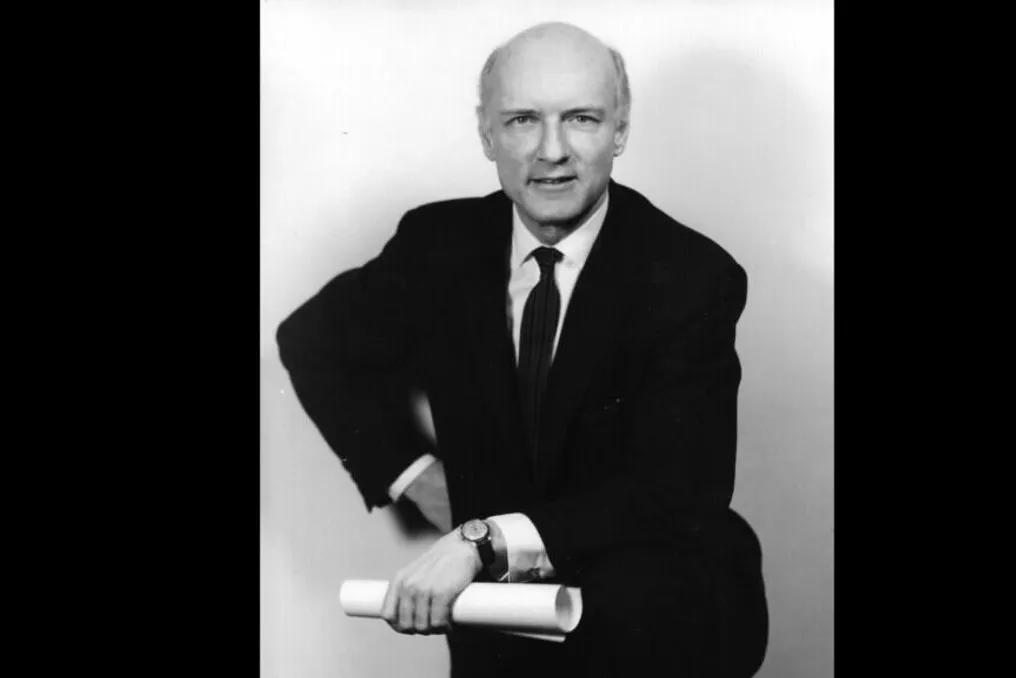
The article, titled Doomsday: Friday, 13 November, A.D. 2026, was prepared in 1960 by physicist Heinz von Foerster, along with researchers Patricia M. Mora and Lawrence W. Amiot. The authors used a mathematical projection of population growth to reach a singularity point, where the projected population would tend toward infinity.
Although the catchy title turned the work into a lasting scientific curiosity, the crucial caveat was often ignored: it was a mathematical extrapolation, not a literal prophecy about the future of humanity. The basis of the equation was the maintenance of a historically observed trend of population growth.
However, the scenario has changed drastically with the evolution of societies and demographic patterns. In recent decades, the decrease in birth rates in various global regions has significantly altered this landscape. Although the population continues to grow, the pace has slowed down, moving away from the curve established by scientists in 1960.
Current data from the United Nations (UN) illustrates this divergence. In 2024, the world population was estimated at about 8.2 billion inhabitants. UN projections indicate that growth should continue until reaching a peak near 10.3 billion in the mid-2080s, followed by a gradual decline.
The UN also reports that the global fertility rate dropped from 3.3 children per woman in 1990 to approximately 2.3 in 2024. More than half of countries and territories already register rates below the level necessary to maintain long-term population stability, excluding migration.
This information demonstrates the deviation of demographic behavior from the trend predicted by last century's researchers, meaning there is no evidence that humanity is heading toward the infinite population suggested by the mathematical model. The case of von Foerster serves as an example of how scientific findings can acquire new meanings when decontextualized.
The study maintains its historical importance, serving as a reference for debating the limits of mathematical projections and the dangers of assuming that past trends will repeat indefinitely. Additionally, the date of November 13 coincided with von Foerster's birthday, which contributed to the provocative tone of the title.
In summary, the world has not ended; there was never a reliable scientific prediction that this would happen on that day. What expired was merely the deadline of a mathematical projection that, since its creation, should have been seen as a warning about population growth, not as a countdown to the end.