Central Asian Countries Analyze Obstacles to Critical Mineral Exports
Read more
UzDaily
uzdaily.uz

Central Asian Countries Analyze Obstacles to Critical Mineral Exports

Representatives from state bodies, businesses, and international organizations analyzed the barriers affecting the export of critical minerals from Central Asia, as well as studied opportunities for expanding raw material processing in the region.

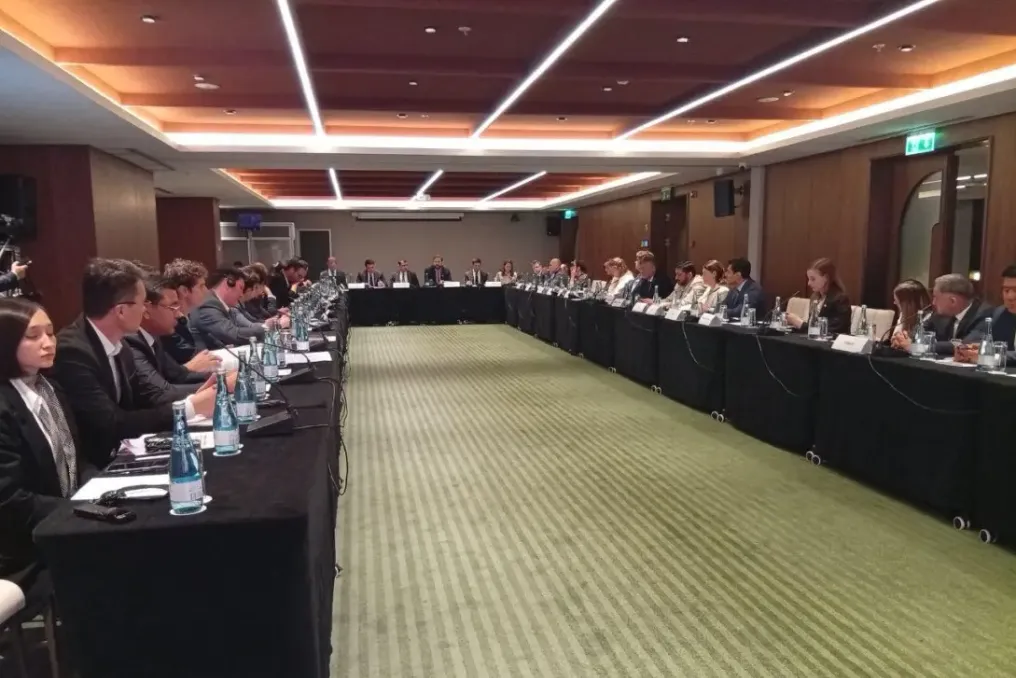
The seminar, where preliminary project results were presented, took place on November 5th with support from the European Union, OECD, and the Government of Uzbekistan, according to the EU Delegation in Uzbekistan. Participants discussed strategies for developing critical mineral value chains, strengthening regional transport links, and attracting investment.

Three key priorities were identified: increasing the competitiveness of transport routes, simplifying cross-border trade, and creating conditions for economically viable mineral processing within the region.

OECD representatives presented the results of a study on logistics transport along the Trans-Caspian Transport Corridor (TCTC). Although more Uzbek companies use this route, most respondents still deliver minerals to the EU via the Northern Corridor.

Businesses cited higher costs, longer delivery times, and less predictable supplies via TCTC as the main reasons for choosing alternative routes. The OECD emphasized that solving infrastructure problems requires coordinated action across the entire transport route, including transit through the Caspian Sea, not just within individual countries.

Dildora Ibragimova, representing the Center for Transport and Logistics Research at the Ministry of Transport of Uzbekistan, pointed to the limited capacity of the corridor, issues related to the water level in the Caspian Sea, and high transport costs. She added that Uzbekistan is working on expanding warehouse infrastructure and developing multimodal transport. The possibility of integrating the planned China–Kyrgyzstan–Uzbekistan railway with TCTC routes is also being considered.

OECD analyst Egor Polyashchuk presented data on trade and transit policies affecting the export of critical minerals. Even after reforms in Uzbekistan's trade system, exporters face transit restrictions related to Russia, China, and Kazakhstan.

Abror Kushmatov, Deputy Head of the Department of the Ministry of Investment, Industry, and Trade of Uzbekistan, confirmed the country's intention to complete the process of joining the World Trade Organization by the end of 2026. He also outlined measures to accelerate transit, including digitizing procedures and exchanging transit documents with neighboring states.

Yerzan Shakargaliev from QazTrade shared Kazakhstan's experience: the country is implementing electronic mineral export licensing, digital customs procedures via the Keden platform, electronic transit declarations for rail cargo, and an electronic queue system at road border crossings.

Business representatives also noted the commercial impact of these restrictions. Dima Orazimbetov from the non-ferrous metals trading company Trafigura reported increased lead times and transportation costs after redirecting some export batches from the Northern Corridor to TCTC. In some cases, he noted that copper supplies to China became more competitive compared to exports to Western markets.

Sergey Redkin from the forwarder Cargo Star highlighted difficulties caused by international sanctions for companies transporting minerals from Uzbekistan, especially when goods transit through Kazakhstan and Russia.

The final part of the seminar was dedicated to developing processing capacities and attracting investment into critical mineral value chains. Industry representatives expressed interest in expanding raw material processing but pointed to issues regarding project profitability and access to international financing.

Local OECD consultant Almaz Ashirov presented a study of Kazakhstan's mining and ore processing industry. He discussed prospects for cooperation between Uzbekistan and Kazakhstan, including raw material supply, evaluation of mining technologies, exchange of technical knowledge, and potential investments in concentrate production.

Akbarkhan Bobokhanov, representing the Almalyk Mining and Metallurgical Complex, spoke about the company's plans to increase processing capacity and attract international partners. He specified that some projects require additional technical surveys and feasibility studies prepared according to the requirements of international financial institutions to secure funding.

Timur Khikmatullaev, Special Representative of the Chairman of the Board and Director of the Diplomatic Cooperation Department of UzTMK, presented plans to expand metallurgical production based on tungsten and molybdenum processing facilities. He noted that implementation depends on the stability of raw material supplies, predictability of water and energy prices, access to low-carbon electricity, personnel training, and more efficient customs and transit procedures.

Andrey Lukyanov, partner at Boston Consulting Group, also emphasized the need for commercially viable projects, reliable raw material supplies, workforce development, broader use of renewable energy, and long-term sales contracts. Participants concluded that the development of the critical minerals sector in Central Asia depends on improving transport infrastructure, predictable transit conditions, simplifying trade procedures, and creating a favorable environment for investment in processing.

Similar stories

Uzbekistan reviews measures to combat human trafficking and improve labor standards
Read more
uzdaily.uz

Uzbekistan reviews measures to combat human trafficking and improve labor standards

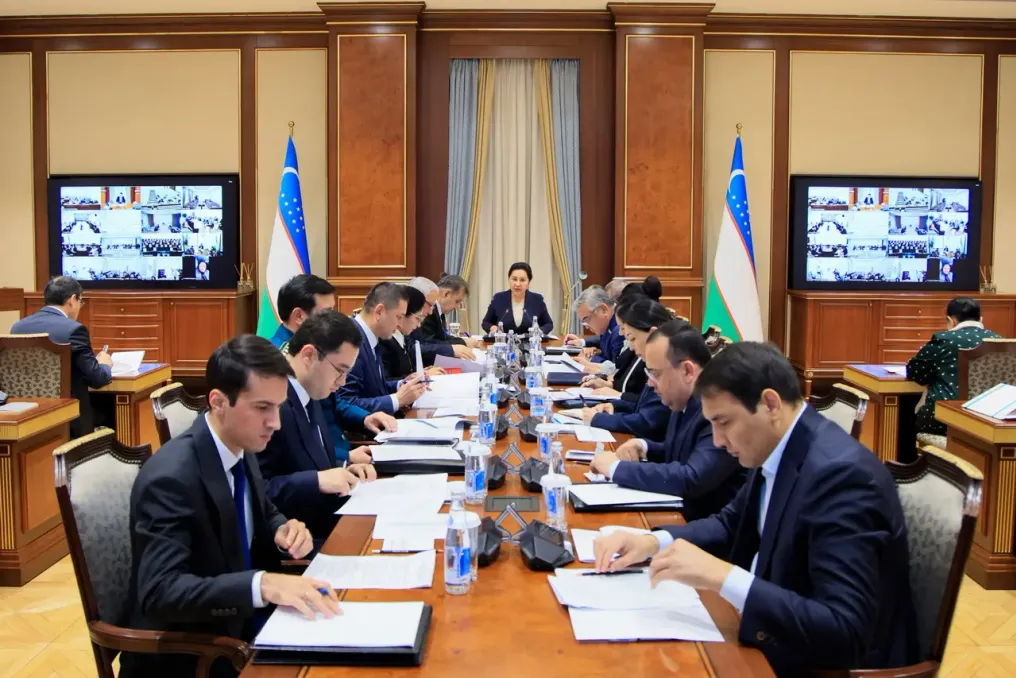
The National Commission of Uzbekistan for Combating Human Trafficking and Decent Work held a meeting on November 17 to analyze measures aimed at countering human trafficking, protecting workers' rights, and raising labor standards.

The meeting was chaired by the Chairman of the Senate, Tanzila Narbayeva. According to the Senate press service, participants reviewed the results of work carried out during the reporting period in 2026. Reports were presented by the Ministry of Employment and Poverty Reduction, the Ministry of Internal Affairs, the Ministry of Health, the Uzbekpiksanoat association, and regional commissions.

Further tasks for relevant state bodies were also determined at the meeting. During the reporting period, Uzbekistan continued to harmonize its national labor legislation with the conventions of the International Labour Organization, and measures were taken to protect the legitimate interests and rights of workers.

Provisions were adopted to simplify the creation of trade union organizations, as well as to prevent discrimination and harassment in the workplace. Furthermore, legal mechanisms were improved to support agricultural enterprises, strengthen labor protection, and reduce the share of informal employment.

In the fight against human trafficking, new documents were approved aimed at improving the legislative framework, strengthening victim protection, and expanding access to social services. The commission also examined unresolved issues, including violations of labor legislation in educational institutions and non-compliance with workplace safety requirements.

Special attention was paid to labor relations in the silk industry and the rights of people employed in this sector. Participants discussed emerging risks associated with digital technologies and online platforms, as fraudulent job offers can be used to recruit people for human trafficking, labor exploitation, or involvement in criminal activities.

The necessity of broader application of modern methods to prevent human trafficking and activate public awareness campaigns was emphasized at the meeting. A draft roadmap aimed at improving national legislation and its implementation practice in accordance with the ILO conventions ratified by Uzbekistan was also considered.

A draft action plan was presented, which provides for the inclusion of international human rights conventions in national legislation. To ensure the implementation of this plan, more active participation from Senate committees was proposed. Separate working groups will be established for each convention to identify gaps and inconsistencies in national legislation and prepare proposals for amendments. The meeting concluded with the adoption of relevant decisions, according to which ministries, agencies, and regional commissions received instructions on carrying out specific tasks.

Critical Minerals of Central Asia: The Need to Transition from Raw Material Export to Production
Read more
uzdaily.uz

Critical Minerals of Central Asia: The Need to Transition from Raw Material Export to Production

Central Asian countries face growing economic risks and opportunities amid increasing global demand for critical minerals. This growth is driven by the development of digital infrastructure, modern industry, energy technologies, and electric transport, which increases the strategic importance of elements such as lithium, tungsten, graphite, antimony, copper, and rare earth elements.

International competition is focused not only on the deposits themselves but also on facilities capable of transforming extracted resources into components for equipment manufacturers. Kazakhstan, Uzbekistan, Kyrgyzstan, Tajikistan, and Turkmenistan possess different mineral resource bases and are at various stages of industrial development. Therefore, the key question is not simply about increasing export volumes, but about the ability of the countries to retain a larger share of added value within their own economies.

Although international investment can support this goal, it does not guarantee the creation of new industrial opportunities in itself. China already holds strong positions in the processing of several critical minerals due to large industrial capacities, infrastructure, and established supply chains, remaining an important source of financing and market access for the region's countries.

However, dependence on a limited number of processing centers reduces producers' ability to dictate the terms of sale for their products. The US is interested in diversifying strategic supplies, including materials for defense, electronics, and mechanical engineering industries. The European Union is also striving to expand its network of partners, paying attention to the origin of raw materials, environmental requirements, and logistics sustainability.

EU partnerships with Kazakhstan and Uzbekistan demonstrate a gradual expansion of cooperation in geological exploration, research, processing, and personnel training. Nevertheless, the interests of foreign partners do not always align with those of raw material producers: investors may seek reliable exports of mineral concentrates, while governments aim to develop metallurgy, create jobs, and increase the tax base. Consequently, the economic outcome will depend on the terms of individual agreements, not just their stated value.

Kazakhstan: Advantages of the Existing Metallurgical Base

Kazakhstan is the world's largest producer of uranium and possesses a significant mining and metallurgical industry. Copper, chromium, zinc, lead, titanium, and several specialized metals already play an important role in its exports. The presence of industrial facilities, engineering personnel, and transport infrastructure gives Kazakhstan an advantage over countries that still need to establish core production capacities.

Nevertheless, the existing industrial base does not eliminate dependence on technology and foreign markets. Opportunities include modernizing copper processing, developing refined metal production, extracting associated elements, and manufacturing materials for industrial use. Kazakhstan needs to evaluate projects not only by extraction volumes but also by the share of domestic processing, technological localization, and the commercial sustainability of enterprises.

Uzbekistan: Mineral Resources as an Instrument of Industrialization

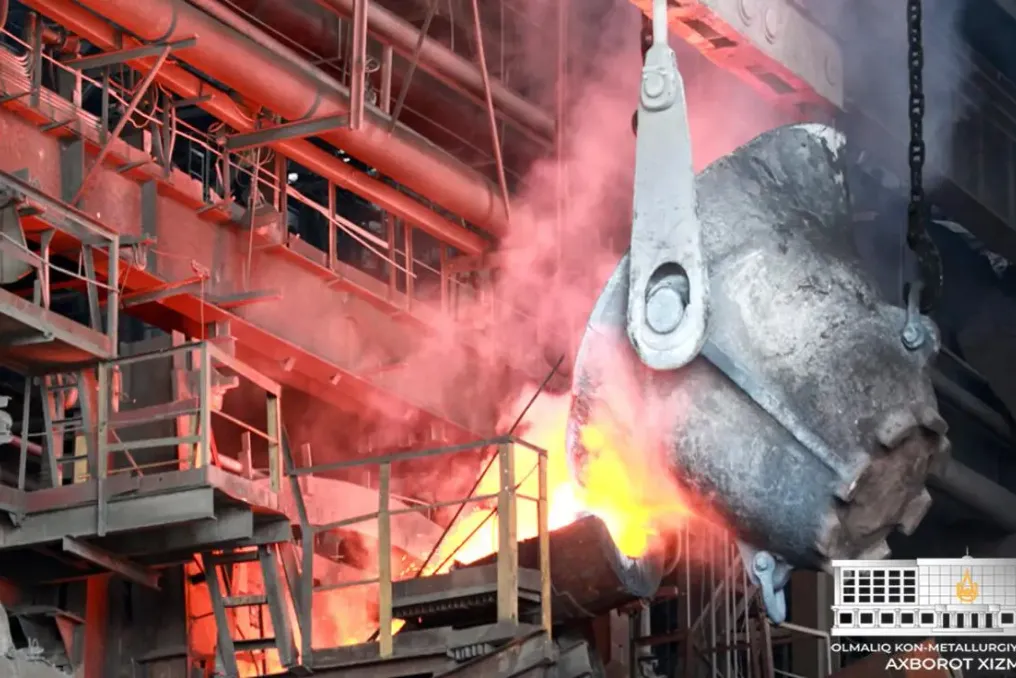
Uzbekistan has large reserves of copper and is developing projects related to technological metals. The basis of industrial growth is the Almalyk Mining and Metallurgical Complex and other enterprises. The creation of specialized structures focused on tungsten, molybdenum, and associated elements reflects the country's desire to move from simple extraction to more complex production chains.

However, establishing processing capacity requires capital, stable electricity supply, imported equipment, and long-term demand. Even a high-tech enterprise cannot compete without acceptable production costs and stable contracts. Uzbekistan's main task is to coordinate the development of the mineral sector with mechanical industry, the chemical industry, and specialized personnel training.

Kyrgyzstan: Opportunities for Specialized Development

Kyrgyzstan has significant reserves of antimony, which is used in special alloys and industrial products. However, the mountainous landscape, transportation limitations, and relatively small processing base increase the cost of large projects. Therefore, focusing on a limited number of competitive areas may be more promising than attempting to develop a wide range of industries simultaneously.

Other important factors include licensing transparency, reliable geological data, and market access. Regional cooperation with neighboring countries' enterprises can allow Kyrgyzstan to participate in value chains without creating all stages of production domestically.

Tajikistan: Limitations in Antimony, Energy, and Infrastructure

Tajikistan also possesses substantial reserves of antimony and other metals. Its potential is linked to the development of specialized enterprises, but this requires investment in transport, energy, and modern processing technologies. Hydroelectric potential can be an advantage, although the seasonality of power supply and domestic demand must be assessed separately for each project.

For Dushanbe, export revenues are not the only factor. The quality of investment agreements, environmental safety, and the development of local expertise are also important. Sustainable results will require a combination of geological exploration, infrastructure investment, and clear terms for long-term investors.

Turkmenistan: Diversification Starts with Geological Exploration

Turkmenistan remains heavily dependent on the gas sector, while the industrial development of its metallic mineral resources is at an earlier stage. The potential of some minerals cannot yet be equated with commercially proven reserves. Current priorities are modern exploration, access to geological data, and assessing the economic viability of deposits.

The country's energy resources can support future industrial projects. However, without investment transparency, infrastructure, and stable demand, the mineral sector will not become an independent source of economic diversification. In the short term, it is more realistic to focus on creating conditions for development rather than expecting a rapid entry into the global market for strategic metals.

Where Value is Created

Between ore extraction and the production of an industrial component there are several stages, including enrichment, metallurgical processing, refining, alloy production, and material manufacturing. Each stage requires different technologies, production scales, and levels of expertise. Complete processing of all raw materials solely on national territory is not always economically justified, as small enterprises may struggle to compete globally due to production costs.

Regional cooperation can offer an alternative. Kazakhstan and Uzbekistan have more developed industrial infrastructure, while Kyrgyzstan and Tajikistan can supply specialized raw materials and perform certain stages of processing. Turkmenistan can gradually expand its explored resource base. However, this model requires coordination regarding tariffs, customs procedures, technical standards, and the interests of private investors.

Infrastructure and Environmental Constraints

The development of the mining industry depends on roads, rail connections, electricity, and water supply. Infrastructure costs can be a decisive factor for projects in remote areas. Furthermore, extraction and processing pose risks to water resources and the environment. Responsible industrial policy must consider costs for water treatment, waste management, and land reclamation at the project design stage.

Prospects until 2030

The first scenario assumes the continuation of the raw material-based model, where exports grow, and most processing remains outside the region. The second scenario envisages selective industrialization, where Kazakhstan and Uzbekistan expand certain activities, and Kyrgyzstan and Tajikistan develop specialized sectors. The third scenario suggests closer regional cooperation, integrating deposits, processing capacity, and logistics.

The second scenario, combined with elements of the third, appears most realistic in the medium term. Nevertheless, outcomes will depend on global prices, funding availability, construction timelines, and actual product demand. These forecasts should be viewed as possible paths of development, not as guaranteed outcomes of signed agreements.

Critical minerals have the potential to enhance Central Asia's economic significance, but natural resources alone are insufficient to ensure industrial modernization. Long-term success will depend on the ability of governments to develop processing, engineering expertise, infrastructure, and sustainable links between enterprises. The region's main choice is not between exporting raw materials and abandoning them, but between maintaining a predominantly extractive profile and gradually building a more complex industrial economy.

China–Kyrgyzstan–Uzbekistan Railway Could Transform Central Asian Economy
Read more
uzdaily.uz

China–Kyrgyzstan–Uzbekistan Railway Could Transform Central Asian Economy

Central Asia is undergoing a period of gradual changes in its role on the international trade stage. For a long time, the region's economic development was determined by geographical features, limited access to seaports, and dependence on transport routes inherited from the Soviet era. However, expanding trade with China, growing Trans-Caspian traffic, and interest in alternative land corridors are creating prerequisites for revising the existing transport architecture.

One of the most significant projects in this process is the China–Kyrgyzstan–Uzbekistan (CKU) railway. This project aims to provide additional rail connectivity between western China and the central part of the region. Unlike many existing routes passing through Kazakhstan, the new line will allow Chinese goods to reach Kyrgyzstan and Uzbekistan directly, and then move towards Turkmenistan, Iran, Turkey, and other markets.

The economic significance of the project extends far beyond the three participating countries. The additional corridor can change the distribution of transit flows, increase the investment attractiveness of certain territories, and strengthen competition between national logistics systems. Kyrgyzstan can overcome long-standing infrastructure limitations; Uzbekistan can strengthen its position as a regional trade hub; and Kazakhstan will have to adapt to a new route connecting China with Central Asian markets. Tajikistan and Turkmenistan may also benefit from improved regional connectivity, despite not being directly involved in the construction.

This project is particularly relevant ahead of the Bishkek Investment Forum, scheduled for November 25, 2026. Discussing the prospects of Central Asia until 2030 allows for viewing the CKU not just as infrastructure, but as a factor of long-term regional economic transformation. Nevertheless, the key question is whether the railway will lead to an expansion of regional trade and industrial cooperation or merely redistribute existing transit flows among Central Asian states.

Discussions about the railway line connecting China and Uzbekistan via Kyrgyzstan have continued for more than two decades. The main obstacles were the mountainous terrain, high construction costs, disagreements over the route, and finding an acceptable financing model. A breakthrough occurred after the signing of an intergovernmental agreement on June 6, 2024, followed by an official groundbreaking ceremony on December 27 of the same year.

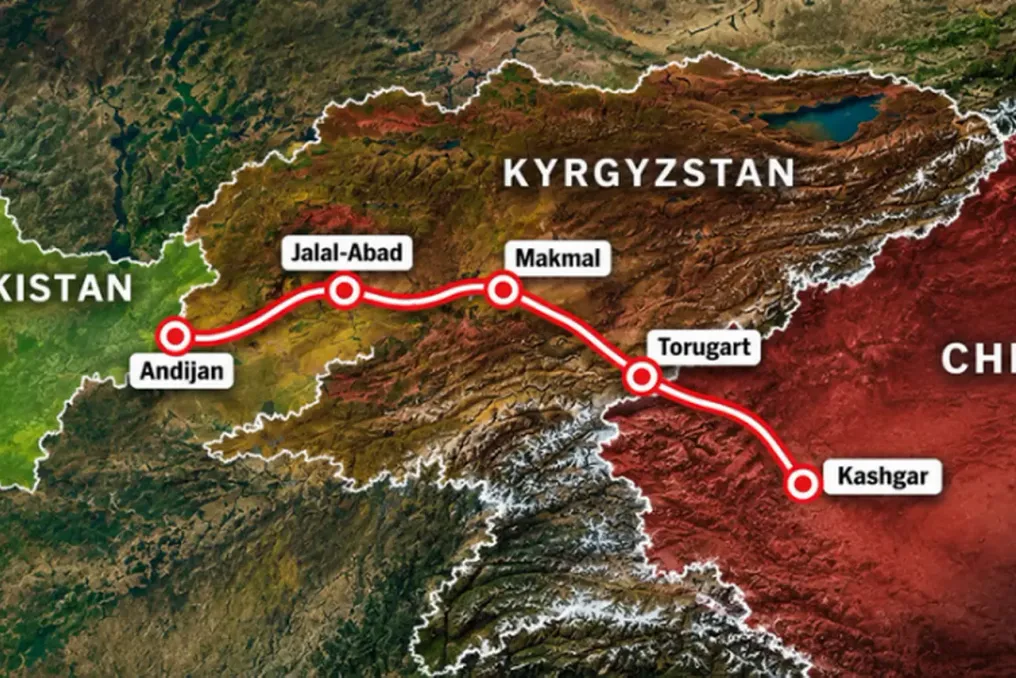
The project involves connecting Kashgar in China through Torugart, Makmal, and Jalal-Abad in Kyrgyzstan to Andijan in Uzbekistan. The total length of the route is estimated at approximately 530 kilometers, of which about 305 kilometers fall within Kyrgyzstan. The Kyrgyz section presents the greatest engineering complexity, as numerous tunnels, bridges, and other structures must be built in the mountainous area.

According to the International Monetary Fund, the project cost is approximately 4.7 billion US dollars. A joint project company is planned, in which China will hold 51%, Kyrgyzstan 24.5%, and Uzbekistan 24.5%. The financing model assumes that half the cost will be covered by equity capital, and the remainder by loans from Chinese financial institutions. Although this structure distributes financial participation, it also creates long-term obligations whose economic justification will depend on the actual utilization of the railway.

By autumn 2026, construction entered an active phase. According to information published by Eurasianet on November 3, citing Kyrgyz Railways, work was underway on 28 out of 29 planned tunnels and 47 out of 50 bridges. It was expected that about 22% of the total work would be completed by the end of 2026. The official commissioning target is 2031, although contractors hope to finish earlier, making a 2030 assertion premature as a guaranteed opening date.

Even during construction, the railway stimulates investment activity. The demand for construction materials, transport services, engineering specialists, and energy infrastructure is invigorating the Kyrgyz economy. However, much more significant changes are expected after the line begins operation, when freight companies can choose between existing and new routes.

The main advantage of the CKU is the creation of an additional rail outlet from China into Central Asia. Today, a significant share of China's rail transport to Western markets passes through Kazakhstan, including the Dostyk–Alashanku and Altynkol–Khorgos border crossings. These corridors have developed infrastructure and established international services, but they do not provide the shortest path for every shipment.

The new railway may be especially important for cargo traveling from Western China to Uzbekistan, Turkmenistan, and Iran. Transit through Kyrgyzstan can reduce the geographical distance to some destinations, although the actual saving in time and cost will depend on tariffs, cargo handling speed, and border procedures.

A shorter distance does not necessarily mean lower transport costs. The mountainous section in Kyrgyzstan entails relatively high construction and maintenance costs. Furthermore, transloading from the Chinese railway gauge of 1435 mm to the 1520 mm gauge common in Central Asia requires additional technical operations. Thus, the competitiveness of the CKU will be determined by overall transport costs, not just distance.

From an economic perspective, the railway can perform two interconnected functions. The first is the redistribution of existing cargo flows between corridors. The second is the generation of additional transport demand due to reduced logistical barriers and expanded trade opportunities.

The second function is particularly important for the long-term development of Central Asia. If the CKU only diverts some Chinese exports from Kazakh routes towards Kyrgyzstan–Uzbekistan, its overall regional economic impact may be limited. However, if it supports production, export industries, and cross-border trade, its significance will go far beyond mere transit.

The CKU also contributes to strengthening China's economic presence in Central Asia. The Times of Central Asia reported on November 3, 2026, that China's trade and investment cooperation with Uzbekistan covers industry, energy, and infrastructure, while the United States is also striving for greater participation in technology and raw material projects. Thus, railway infrastructure becomes both a means of transporting goods and an element of investment competition.

The CKU is likely to cause the most noticeable structural changes in Kyrgyzstan and Uzbekistan. Nevertheless, their interests differ despite their joint participation in the project.

For Kyrgyzstan, the railway offers a chance to overcome a serious infrastructure weakness: the lack of comprehensive rail connection between the northern and southern regions of the country, as well as its limited integration into international transport networks. Geography, which traditionally increased external trade costs, could become a source of transit revenue.

However, the financing model requires careful study. Investments of $4.7 billion represent a significant portion of Kyrgyzstan's annual GDP. Consequently, the economic efficiency of the railway is a question not only for the transport sector but also for fiscal policy. The IMF has already considered Kyrgyzstan's participation in the project among factors affecting its medium-term financing needs.

Bishkek, therefore, must strive for maximum involvement of domestic firms in construction and subsequent operation. Logistics terminals, warehouses, repair bases, and production sites along the route can increase the value added generated locally. Otherwise, Kyrgyzstan risks receiving expensive transit infrastructure, the main economic benefits of which will go to others.

Uzbekistan, conversely, possesses a more developed industrial base and an existing railway network, which opens up additional opportunities for utilizing this line. Direct access to China via Kyrgyzstan can strengthen the role of the Fergana Valley as an industrial and logistics hub connecting East Central Asia with external markets.

The project is particularly important for Uzbekistan's textile, chemical, food processing, and machine-building industries. Under favorable conditions, reduced transport costs can make exports more competitive and simplify the import of machinery and industrial components. At the same time, improved transport links can increase Chinese imports and intensify competition for local producers. Therefore, Tashkent must use the line not only to expand trade turnover but also to attract investment in processing industries and joint production enterprises.

Further possibilities include connecting the CKU with southern corridors through Turkmenistan and Iran, and in the long term—proposed rail connections through Afghanistan. However, such initiatives require separate investments and international agreements, so their economic impact remains potential, not guaranteed.

Thus, Kyrgyzstan and Uzbekistan may be direct beneficiaries, but in different ways: Bishkek's priority will be monetizing its transit position, while Tashkent's priority will be integrating the new route into its industrial and foreign trade system.

For other Central Asian countries, the impact of the CKU will be largely indirect, but it should not be underestimated. Kazakhstan, possessing the most developed international railway infrastructure in the region, may face increased competition for cargo from China. This is especially relevant for freight destined for Uzbekistan and further south, where the new route may offer a geographically shorter alternative.

However, Kazakhstan's competitive advantages are not limited to distance. Existing railway crossings, large logistics centers, and access to the Russian transport network and Caspian ports allow the country to serve several different directions of international trade. Moreover, the development of the Trans-Caspian International Transport Route gives Kazakhstan access to the South Caucasus, Turkey, and European markets via the Caspian Sea. Thus, the CKU and the Middle Corridor will compete only for a portion of potential cargo flows, while performing different transport functions.

Cooperation is also possible, as shown by Kazakhstan's logistics projects in Uzbekistan. Eurasianet reported in early November 2026 that PTC Holding of Kazakhstan signed an agreement with China's International Freight Trains to expand cross-border freight services, with the Chinese company showing interest in the Silkway Central Asia logistics center in Uzbekistan. Such initiatives demonstrate that increased competition between corridors does not preclude joint participation in new logistics chains.

A rational economic strategy for Kazakhstan, therefore, lies not in opposing alternative corridors, but in improving its own infrastructure and expanding its participation in regional logistics networks.

Tajikistan may benefit from improved accessibility in neighboring countries. Although it is not directly involved in the CKU, it can utilize new logistics hubs in Kyrgyzstan and Uzbekistan to expand trade with China. The scale of this benefit will depend on road, border infrastructure, and transport links with the Fergana Valley. Without appropriate investments, Tajikistan risks remaining on the periphery of the emerging transport system. Meanwhile, the growth of regional trade can create export opportunities for Tajik agricultural products, textiles, and certain types of industrial raw materials. Dushanbe's main task is not to build parallel railway infrastructure at any cost, but to improve access to existing corridors.

Turkmenistan occupies a different position. Its railway connections with Uzbekistan and Iran could make it an important link for...

[ ]
Popular