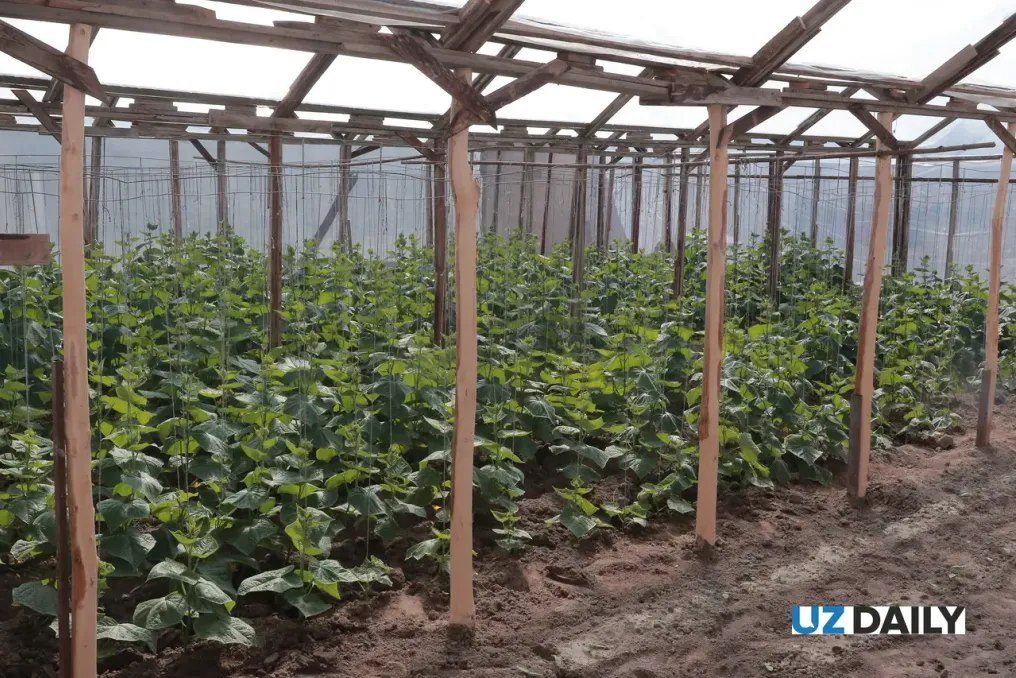
Uzbek greenhouses request simplified coal import rules to reduce heating costs
Read more
UzDaily
uzdaily.uz

Uzbek greenhouses request simplified coal import rules to reduce heating costs

Operators of Uzbek greenhouses have appealed for permission to directly import coal, aiming to reduce heating expenses and increase the competitiveness of their products, according to Spot.uz. This proposal was presented by greenhouse owner Khurshid Akhmedov during a meeting between entrepreneurs and government representatives at the Chamber of Commerce on November 16.

Akhmedov noted that fuel accounts for about 90% of the production costs per kilogram of tomatoes in the greenhouses. He identified fuel cost as the main industry problem, adding that labor in Uzbekistan remains relatively inexpensive.

As an example, he cited coal from Shubarkul supplied from Kazakhstan. According to Akhmedov, the customs value of this coal is 40 US dollars per ton, but the final price for greenhouse operators reaches 110 US dollars per ton.

Last year, the president canceled the monopoly of one company on using 66 railway spurs for unloading coal, allowing various importers to use them. Akhmedov welcomed this decision but pointed out that additional costs for unloading and storage continue to drive up prices.

He stated that in 2022, he independently imported coal from Kazakhstan but stopped these supplies due to extra payments to the railway spur owner. In his opinion, such fees artificially inflated the final fuel cost.

As an alternative, Akhmedov mentioned a proposal to sell coal at the Kazakh border near Chernyaevka for 32 US dollars per ton with truck delivery. However, he reported that customs posts near Tashkent only accept coal transported by rail.

Winter supplies are also suffering due to a shortage of railway wagons, as priority is given to supplying coal to remote villages during the heating season.

Road transport through Kyrgyzstan is limited to a 20-ton limit per truck, and the delivery cost is about 1000 US dollars. As a result, the final price remains around 100 US dollars per ton.

Akhmedov proposed introducing individual quotas for coal imports for greenhouse enterprises, dependent on the size of their facilities. For instance, a two-hectare greenhouse could be granted permission to import up to 200 tons of coal.

In exchange, enterprises would have to officially register their activities, report export volumes, and pay for coal imports using foreign currency revenue from exports. Akhmedov emphasized that this scheme would direct fuel straight to producers, reduce unregistered activity, and increase the export of greenhouse products.

He stressed that entrepreneurs are not requesting state loans or direct financial aid; instead, they are seeking simplification of import procedures and limited customs benefits.

Starting December 1, coal is only allowed for greenhouses that have received a positive state environmental assessment. Furthermore, enterprises must comply with environmental requirements, including installing filters and Continuous Emission Monitoring Systems (CEMS), as well as providing designated areas for storing coal and ash.

hel

Similar stories

EU carbon tax rules may increase costs for Uzbek exporters
Read more
uzdaily.uz

EU carbon tax rules may increase costs for Uzbek exporters

The European Union's Carbon Border Adjustment Mechanism (CBAM) potentially capable of increasing costs for Uzbek exporters of fertilizers and metals. This has prompted calls for the introduction of domestic emission regulations, emissions verification, and a transition to low-carbon production, according to an analysis by the Center for Progressive Reforms.

Economic analyst Rakhmatilla Ubaev prepared a report that examines the possible impact of this mechanism on Uzbekistan's exports to the EU and proposes several measures to mitigate associated risks.

In 2024, Uzbekistan exported goods worth $1.7 billion to the EU and attracted investments totaling $4.1 billion from the bloc. The author predicts that exports to the EU could grow by approximately 12% by 2025, reaching $1.9 billion. This forecast is based on applying growth rates of individual sectors to last year's export figures.

According to the basic assessment of the analysis, about 9% of Uzbek exports to the EU may be fully or partially subject to CBAM. The main products of concern are fertilizers and certain types of metals.

Although the legal obligation to purchase carbon certificates lies with European importers, the associated costs could affect prices, contract terms, and the access of Uzbek producers to the market.

On January 1, 2026, the EU entered the final phase of CBAM implementation. The mechanism covers imports of cement, cast iron and steel, aluminum, fertilizers, electricity, and hydrogen.

European importers are required to purchase certificates corresponding to the carbon dioxide emissions generated during the production of imported goods. According to the European Commission, the price of a CBAM certificate in the first quarter of 2026 was 75.36 euros per ton of CO₂.

Certificates for goods imported in 2026 will go on sale on February 1, 2027. Importers must submit their first annual declaration and provide the necessary certificates by September 30, 2027.

Changes adopted under the 'Omnibus' Decree in October 2025 also established a threshold of 50 tons. Importers bringing in no more than 50 tons of covered goods annually are exempt from reporting and certification requirements, except for hydrogen and electricity.

In 2024, uranium accounted for about 46% of Uzbekistan's exports to the EU, with the bloc purchasing 86% of the country's total uranium exports. Fertilizers represent another significant category in terms of CBAM exposure.

From January to November 2025, fertilizer exports from Uzbekistan increased by 33.7%, reaching $426 million. If supplies to the EU grew at similar rates, their value could have risen from approximately $96 million in 2024 to $128 million in 2025, according to the author's estimate.

To illustrate potential costs, the analysis uses urea. With an assumed emission intensity of 1.6–2 tons of CO₂ per ton of product and a certificate price of 75.36 euros, the total carbon costs would be approximately 121–151 euros per ton of urea. At an assumed market price of 350 euros per ton for fertilizers, this would amount to about 35–43% of its cost. The author emphasizes that this is only an illustrative calculation and does not reflect actual CBAM obligations.

Actual payments will depend on verified emissions, adjustments for free quotas, and recognition of carbon payments made in the country of goods production.

Free quotas under the EU Emissions Trading System will be gradually phased out. According to data provided in the analysis, the gradual reduction will be 2.5% in 2026, reach 48.5% by 2030, and be completed in 2034.

The analysis notes that, according to World Bank estimates for 2025, the average emission intensity in Uzbekistan's aluminum industry is lower than that of EU producers. This could give Uzbek producers an advantage under CBAM. However, producers must demonstrate their actual emissions through reliable monitoring and independent company-level verification to realize this potential.

The author suggests focusing on four areas of action. The first is the introduction of an internal carbon price. If the carbon fee paid in Uzbekistan is documented in accordance with EU rules, it can be deducted from CBAM obligations. This will also allow part of the revenue from carbon regulation to be directed towards industrial modernization.

The second area is the creation of a reliable system for measuring, reporting, and verifying emissions. Without verified data, exporters risk having their emissions calculated using standard EU values, which could lead to higher payments.

The third measure is expanding the use of renewable energy sources in industry. As an example, the author cites the production of the first renewable ammonia at the Acwa Power Chirchiq plant in July 2025. A project of 200,000 tons in Navoi is also being considered. Verified emission data from fertilizer production using renewable energy can help reduce carbon costs.

The fourth direction is developing technical dialogue with the EU. In October 2025, representatives of Uzbekistan discussed simplifying CBAM and providing technical support for creating a national emissions trading system with relevant departments of the European Commission. The author suggests turning these contacts into regular cooperation with clearly assigned responsibilities, assistance programs, and timelines.

The analysis concludes that direct costs for Uzbek exporters in 2026 may be relatively modest, but they are expected to rise as free quotas in the EU decrease. To assess the real impact of the mechanism, the author recommends compiling a list of affected export parties and obtaining verified emission data from the country's largest producers.

Uzbekistan has set a goal to reduce greenhouse gas emission intensity per GDP unit by 50% by 2035 compared to 2010 levels. In the author's opinion, achieving this goal will require effective regulatory tools, strengthening institutional capacity, and continuous investment in low-carbon industry.

Uzbekistan and Acwa agree on developing carbon markets
Read more
uzdaily.uz

Uzbekistan and Acwa agree on developing carbon markets

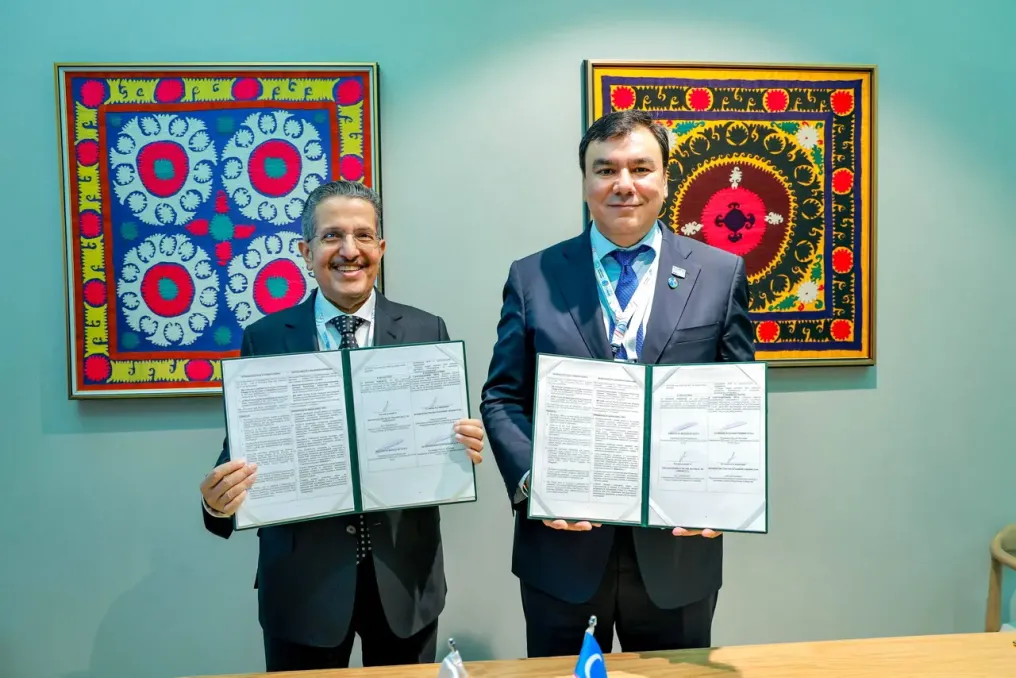
The National Committee for Ecology and Climate Change reported that Uzbekistan and the Saudi company Acwa signed a memorandum of cooperation in the field of carbon markets and international mechanisms for reducing greenhouse gas emissions.

The signing of the memorandum took place at the COP31 climate conference in Antalya. The parties who signed the document were Aziz Abduhakimov, advisor to the president and chairman of the National Committee for Ecology and Climate Change of Uzbekistan, and Mohammed Abdullah Abunayyan, founder and chairman of Acwa.

The agreement provides for studying opportunities for Acwa's projects in Uzbekistan so that they can participate in international carbon market mechanisms under the Paris Agreement. Among such projects are the Bash, Zhankeldy, and Kunrad wind power plants, including a battery energy storage system, as well as the Karatau wind power plant project.

The parties intend to assess whether these projects meet the criteria of the Paris Agreement and study the procedures for their approval and registration. Furthermore, they plan to consider possibilities for generating, transmitting, and using carbon credits and emission reduction results.

A separate part of the memorandum is dedicated to technical and regulatory cooperation. This includes exchanging experience and knowledge in the field of carbon markets, improving monitoring, reporting, and verification systems, as well as strengthening institutional capacity.

In addition, the parties plan to work on increasing the climate resilience of renewable energy facilities and energy infrastructure. Specifically, they intend to exchange information on climate risk assessments for wind power plants and energy storage systems, taking into account factors such as extreme temperatures, dust, and sandstorms.

It is also envisaged to study the application of climate information and early warning systems to protect energy facilities. The goal of the memorandum is to expand Uzbekistan's participation in international climate cooperation and utilize the potential of renewable energy to achieve the country's climate goals.

Popular