Gujarat farmers demand access to next-generation GM crops and science-based agricultural policy
Read more
The times of India
timesofindia.indiatimes.com

Gujarat farmers demand access to next-generation GM crops and science-based agricultural policy

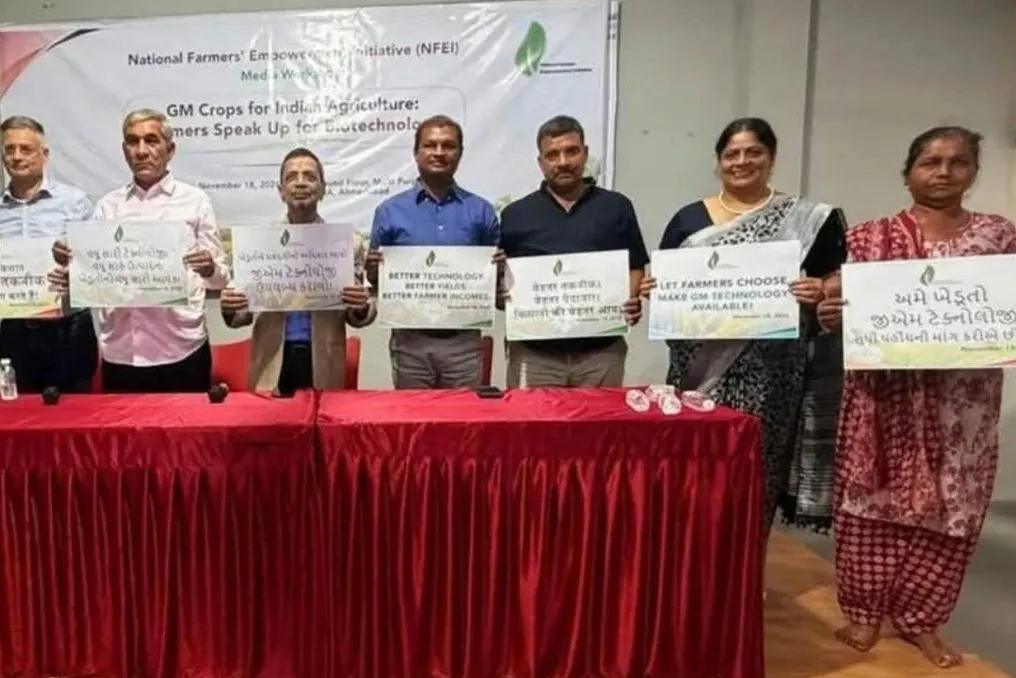
During a media seminar organized by the National Initiative for Farmer Empowerment in Ahmedabad, farmers demanded access to next-generation genetically modified crops and strongly called for the adoption of science-based decisions in agricultural technology.

Participants noted that India cannot continue to rely on cotton technology developed two decades ago, as new pests, unpredictable weather, and rising cultivation costs require improvements in crop characteristics.

Farmer Prakash Punambhai Patel from Simri village stated: 'Bt cotton changed cotton cultivation in India. Today, farmers face new pests, unpredictable weather, and rising costs. We need access to improved technologies and better crop traits.'

According to the Ministry of Agriculture data, cotton yield in India increased from 186 kg per hectare in 2001-02 to 510 kg in 2013-14. Nevertheless, Bt cotton remains the only commercially approved GM crop in India, and the latest technology available to farmers is Bollgard II, introduced in 2006.

Dr. Vijay Kumar, a former researcher and head of the cotton division at Navsari Agricultural University, emphasized that agricultural technologies must be assessed responsibly and applied to meet the needs of Indian farmers.

Participants also highlighted the potential of genome editing alongside GM technologies to create more productive, climate-resilient, and nutritious crops. In 2025, India released two genome-edited rice varieties.

Farmer Mukesh Kantilal Patel from Chanasma, Patan district, remarked: 'Farmers will adopt technologies that increase productivity and protect crops if they receive the necessary information and guidance. Agricultural policy must align with science.'

Bharat Char, Chief Scientist at Mahyco and Head of the Alliance for Agricultural Innovation, also called for the continuation of field trials in various agro-climatic zones and the creation of a predictable regulatory framework. He stated: 'Farmers deserve the choice of the best technologies available anywhere in the world. Field trials must continue in all agro-climatic zones so that Indian science can provide proven, safe traits when policy allows.'

Similar stories

PM Modi appealed to farmers not to depend on wheat, rice, and sugarcane, outlining future plans
Read more
www.aajtak.in

PM Modi appealed to farmers not to depend on wheat, rice, and sugarcane, outlining future plans

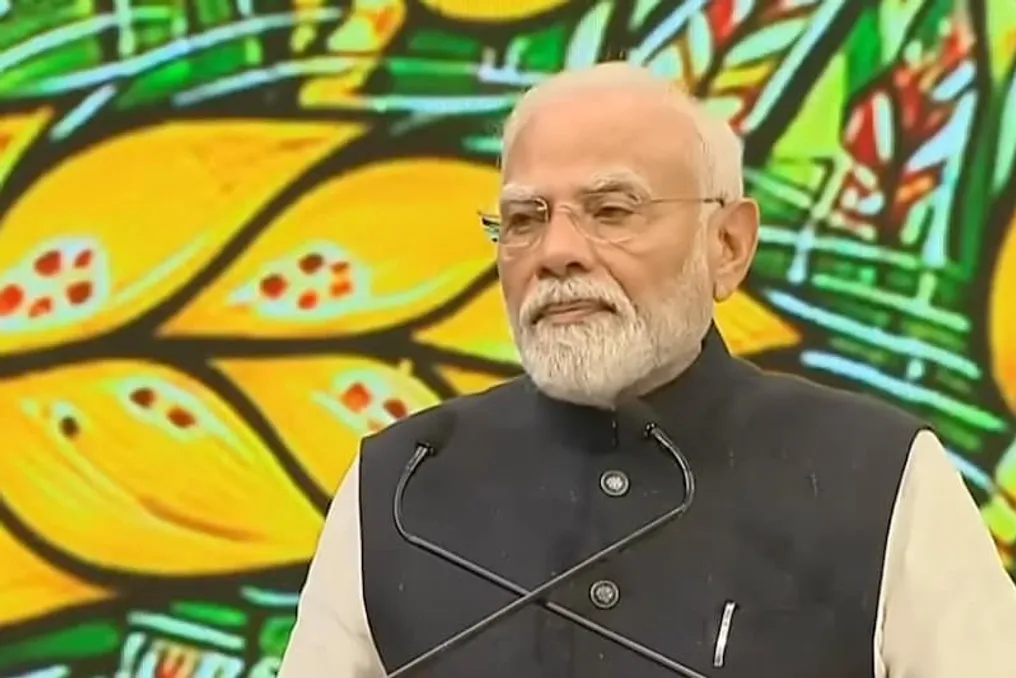
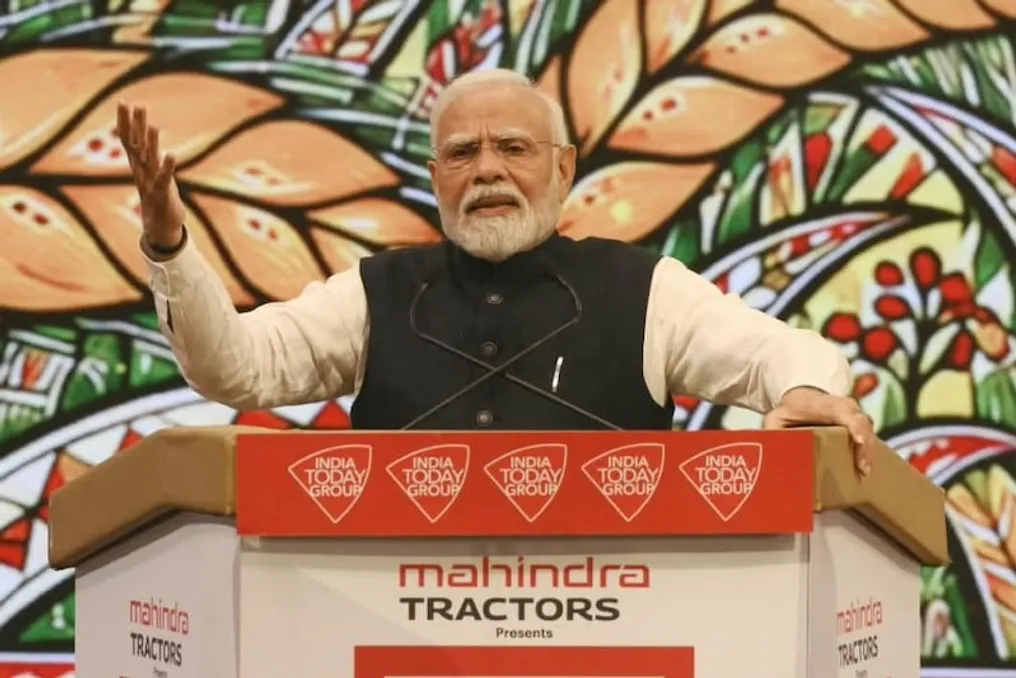
Prime Minister Narendra Modi addressed the 'Kisan Tak Bharat Agriculture Conference 2026' organized by India Today on Tuesday. This two-day event was held at Bharat Mandapam in Delhi, attended by over 2000 farmers, policy developers, industry representatives, and global experts. During the conference, the Prime Minister emphasized the need for changes in agriculture, increasing farmers' incomes, and opening new opportunities in the agrarian sector.

Modi stressed that changes in agricultural policies and methods are necessary over time. He noted that previous governments were satisfied with having grain stocks filled in the country but did not focus on what the farmers gained afterward. Since the needs of the world, market, people, diet, weather, and technology are constantly changing, farmers also need new avenues for development.

The Prime Minister stated that over the last decade, the country has been trying to adapt to these changes. The result is that India now exports agricultural products worth more than 400 billion rupees annually. These funds help increase farmers' income. He also mentioned that India ranks first globally in milk, pulses, and jute production. Furthermore, India has become a leader in rice production and ranks second in wheat, cotton, fruits, vegetables, and fish production. India is the world's largest producer of millets.

Modi asserted that these figures demonstrate the potential of Indian farmers. He urged farmers not to rely solely on traditional crops such as wheat, rice, and sugarcane. The Prime Minister emphasized that for farmers to prosper, it is also important to develop other types of crops and related agricultural activities.

In the discussion, the Prime Minister linked agricultural changes to various revolutions. He noted that the Green Revolution played a key role in ensuring the country's self-sufficiency in grain production. Following this, the White Revolution made India the world's largest milk producer. Over the last decade, milk production in India has increased by approximately 70 percent, and egg production by nearly 90 percent. Under the Blue Revolution, fish production has more than doubled in a decade. And thanks to the 'Sweet Revolution' in beekeeping, new prospects have emerged; honey production in the country has grown from about 80 thousand tons to one and a half lakh tons.

Modi also pointed out that in horticulture, production in India has risen from 280 million tons to over 350 million tons. He concluded that when all these sectors are considered comprehensively, numerous earning avenues open up for farmers, and it is crucial to create diverse sources of income for the future of agriculture.

Prime Minister Modi Discussed Agricultural Development and the Future of Indian Farming at Conference
Read more
www.aajtak.in

Prime Minister Modi Discussed Agricultural Development and the Future of Indian Farming at Conference

Prime Minister Narendra Modi addressed the Kisan Tak Bharat Agriculture Conference 2026, organized by India Today Group. He emphasized that the dream of a developed India cannot be realized without transforming agriculture into a modern and smart sector.

Modi noted that over the past decade, the average growth rate of India's agricultural sector has exceeded 4 percent. He stated that building a developed India is impossible without developing, modernizing, and empowering farmers through agriculture. The Prime Minister stressed the importance of holding farmers' meetings, given the deep connection between agriculture and the country's progress.

Beginning his speech with greetings for the festivals of Diwali and Chhath, Modi welcomed the Chairman and Editor-in-Chief of India Today Group, Arun Puri, as well as agricultural scientists, entrepreneurs, and farmers from across the country. He thanked India Today Group for organizing the Kisan Tak event, noting it was a positive step following their participation in the nation's cleanliness campaign.

The Prime Minister linked the festivals to agriculture, pointing out that many Indian festivals, such as Bihu, Pongal, Onam, Basuki, and Sarahul, are closely associated with farming. He asserted that agriculture forms the foundation of Indian culture, traditions, and social life.

Modi recalled his discussion on the seven streams of power for creating a developed India, which he held from the Red Fort, where agriculture was one of the key components. He reiterated that achieving a developed India remains unattainable without developing the agrarian sector, enhancing its intellectual level, and supporting farmers.

Explaining the link between agriculture and national progress, Modi referenced a World Bank study. According to this study, over a period of 12–13 years, 50 million poor people in India were able to overcome poverty, with a significant portion of this success attributed to small farmers and agricultural laborers in villages.

He also pointed out that in the last decade, the growth rate of agriculture in India has surpassed 4 percent, marking the first decade since independence when the agrarian sector achieved such an average growth rate.

The Prime Minister expressed regret that public attention often focuses on certain aspects while overlooking the country's achievements. Agricultural experts are aware of the need for continuous changes in agrarian policy and methods. Criticizing previous governments, he indicated that they were satisfied with farmers filling grain silos but failed to pay due attention to what the farmers would receive afterward.

Modi explained that the world, markets, people's needs, diet, weather, and technology have changed over time. Therefore, it was crucial to revise and strengthen the position of farmers in light of these changes, yet this had not been adequately addressed previously.

Modi reported that due to adaptation to changes in agriculture over the last decade, India exports agricultural products worth more than 4 lakh crore rupees annually. He added that this contributes to increasing farmers' incomes. He also listed India's production achievements, noting that the country ranks first globally in milk and pulses production, and has achieved first place in jute and rice production.

Vijay Nakra discusses the concept of 'smart farming,' where AI and new technologies are transforming agriculture
Read more
www.aajtak.in

Vijay Nakra discusses the concept of 'smart farming,' where AI and new technologies are transforming agriculture

At the 'Kisan Tak Bharat Agriculture Conference 2026,' it was emphasized that simply increasing production volumes is insufficient for the development of Indian agriculture; strengthening the entire value chain in the agricultural sector is critically important. Modern technologies, artificial intelligence (AI), data, and agricultural machinery play a key role in this transformation.

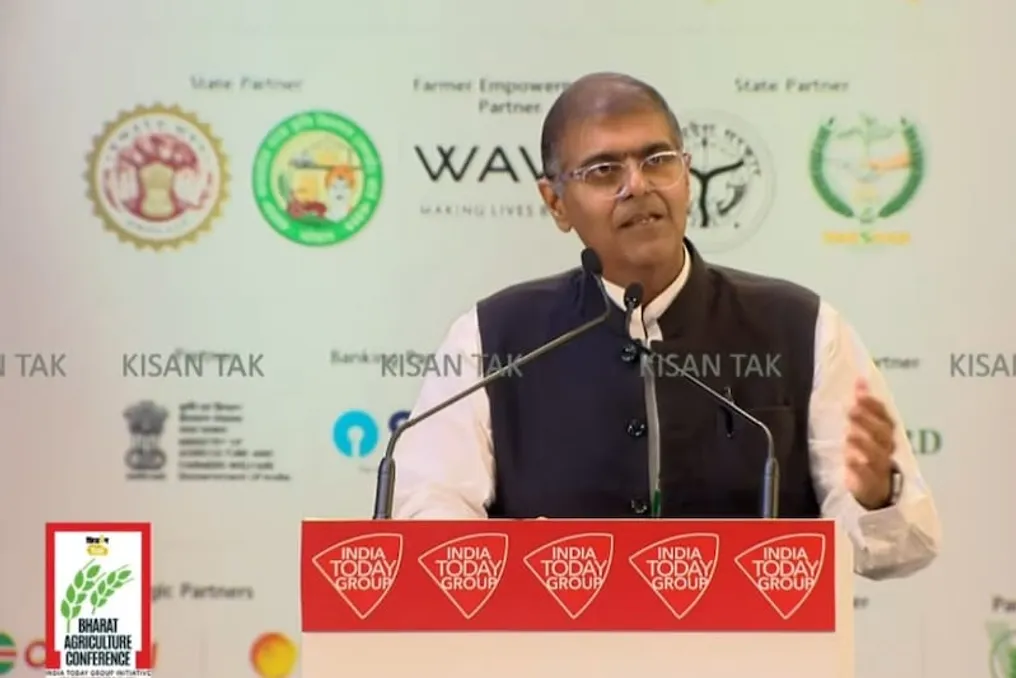
Vijay Nakra, President of the Agricultural Equipment Division of the Mahindra & Mahindra Group, stated on Wednesday that the Indian agricultural sector is undergoing significant changes, and the country has an opportune moment to leverage these opportunities. He also presented the concept of the 'smart farmer' for the future of agriculture.

Speaking on the first day of the conference, organized by India Today Group at Bharat Mandapam in Delhi, Nakra pointed out that food security is a prerequisite for the development, prosperity, and safety of any nation, and the primary responsibility for it lies with the farmers. He added that society as a whole must help farmers cope with issues such as changing weather, climate instability, rising costs, labor shortages, and pressure on natural resources.

Despite numerous difficulties, Indian farmers continue to innovate, adapt to conditions, and move forward. Nakra stressed that the contribution of farmers goes beyond meeting their families' needs, influencing rural communities, the economy, and the progress of the country. He also emphasized that the responsibility for supporting farmers rests not only with the government but also with the private sector, the state, and the media, who must jointly develop solutions to enhance farmer resilience amid uncertainty.

Highlighting that India is the third-largest global economy and a major agricultural producer, Nakra noted that despite this, the yield per hectare in the country remains lower than in several other agrarian economies. Therefore, the current task is not just to increase grain volume but also to create more value from every hectare of land, every drop of water, and every effort of the farmer.

He added that the success of the agricultural sector should be measured not only by field production but also by the additional value added throughout the entire value chain—through storage, logistics, food processing, and market access.

Nakra pointed to serious challenges facing farmers and policymakers, such as stubble burning, water availability, and soil health. Water demand will grow in the future, as the need for water will increase not only in agriculture but also in industries like manufacturing, power generation, and data centers. Therefore, states will have to balance development with agricultural stability.

He explained that a range of new technologies helps solve these problems. For example, Zero Tillage and multi-cropping methods allow sowing directly into the field without removing crop residues. Baller machines help collect stubble, reducing the need for burning, which contributes to improving soil health and rational resource use. Furthermore, sensors, software, AI, and drip irrigation systems can significantly contribute to water conservation and climate adaptation.

Nakra also emphasized the need for mechanization in the agricultural sector. He reported that the level of mechanization in India is less than 50%, whereas in developed countries, this figure approaches 90%. This indicates significant potential for growth in agricultural machinery and mechanization in India. He specified that the use of machinery should not only increase production but also make the work of farmers easier, safer, and more convenient. In this regard, companies are working on creating economical tractor cabins, autonomous vehicles, and smart devices for precision farming. Investment is also growing in alternative fuels, telematics, and the new generation of agricultural equipment.

In Vijay Nakra's view, the biggest change in the future of agriculture will come from the combined application of artificial intelligence, data, computing power, and semiconductor technology. These technologies will enable farmers to make decisions based on accurate data rather than assumptions. He predicts that AI-based recommendation systems, computer vision, autonomous tractors, and humanoid technologies will change farming practices.

This will allow farmers to receive real-time information about soil conditions and simplify the early detection of plant diseases and optimization of water use. However, Nakra warned that merely implementing new technologies is not enough; companies bear the responsibility of ensuring that these solutions are accessible, simple, and within reach of farmers. This requires funding.
Popular