
AI Proposed at COP31 Conference to Reduce Emissions and Energy Consumption in Smart Cities of Uzbekistan
Read more
UzDaily
uzdaily.uz

AI Proposed at COP31 Conference to Reduce Emissions and Energy Consumption in Smart Cities of Uzbekistan

At the COP31 climate conference held in Antalya on November 16, an international initiative was presented aimed at promoting the application of artificial intelligence, digital twins, and the Internet of Things (IoT) to enhance the ecological sustainability of urban areas.

These methods may be particularly relevant for Uzbekistan, as the development of urban infrastructure is accompanied by a growing demand for electricity, transportation, and more efficient resource management.

The initiative was discussed within the framework of a high-level dialogue titled 'Rethinking Sustainable Cities: AI, Digital Twins, and IoT for a Sustainable Future.' The event was organized by the COP31 Presidium in collaboration with the International Telecommunication Union (ITU), and with the participation of the United Nations Human Settlements Programme (UN-Habitat) and the Secretariat of the United Nations Framework Convention on Climate Change (UNFCCC).

The main focus of the meeting was on transitioning from experimental digital solutions to their large-scale implementation in urban infrastructure. Participants explored how these technologies can contribute to improving energy efficiency, reducing greenhouse gas emissions, and helping cities adapt to climate change.

One of the central issues was the use of digital twin technology—virtual models of real assets and infrastructure systems. These models allow for analyzing the condition of objects, simulating various scenarios, and assessing the potential consequences of management decisions.

In combination with IoT sensors and artificial intelligence, such models can be used to monitor energy consumption in buildings, optimize traffic flows, monitor utility networks, and support urban infrastructure planning.

For example, analyzing data on road congestion helps improve traffic light coordination and public transport routes, while digital modeling of energy systems allows for identifying opportunities to reduce electricity losses.

In the field of municipal services, these technologies can also be used to detect water leaks, monitor the condition of engineering networks, and increase the efficiency of utility services.

COP31 also put forward a global call to action aimed at creating smart, sustainable, and environmentally friendly cities. The goal of this initiative is to unite governments, municipalities, technology companies, research institutes, and international partners to accelerate the adoption of digital climate solutions.

Special attention is paid to technological compatibility, scaling successful projects, and measuring their practical impact on the environment. For Uzbekistan, this agenda is significant for developing the digital economy, modernizing municipal services, and strengthening city resilience to climate change.

Specifically, AI and digital twin technologies can help Tashkent and other major cities in Uzbekistan manage transport, electricity supply, water supply, and urban development more effectively.

Nevertheless, the implementation of these technologies requires investments in digital infrastructure, access to quality data, professional training, and robust information security measures. Furthermore, the environmental benefits of digitalization must be assessed alongside the energy consumption of the computing systems and data centers themselves.

The initiative presented at COP31 underscores the growing role of digital technologies in climate policy, but its effectiveness will depend not only on the adoption of artificial intelligence but also on the ability of local authorities to integrate these tools into real urban management systems.

Similar stories

UN calls for attention to environmental risks of data centers in Uzbekistan's energy sector
Read more
uzdaily.uz

UN calls for attention to environmental risks of data centers in Uzbekistan's energy sector

The rapid development of artificial intelligence is leading to increased consumption of electricity and water, creating additional strain on energy infrastructure. This warning was issued by Simon Steell, Executive Secretary of the UNFCCC, during a high-level roundtable on green digital transformation at COP31 in Antalya on November 16.

According to Steell, artificial intelligence has enormous potential for solving climate problems, but its rapid expansion carries significant economic and environmental risks. He emphasized that 'artificial intelligence and other advanced technologies are a double-edged sword. The task is to mitigate their harmful impact, enhance their transformative potential, and use these technologies responsibly.'

The Executive Secretary noted that the growing demand for electricity from data centers creates additional stress on power systems. If this demand is met using fossil fuels, greenhouse gas emissions increase, which hinders the achievement of international climate goals. Furthermore, there is a serious issue of shifting the costs of energy infrastructure onto consumers.

Steell stated that households and businesses should not face higher electricity bills, increased pollution contributing to global warming, and rising inequality in exchange for promises of future technological benefits. He also pointed to instances where data center developers build their own on-site gas power plants to bypass existing grid limitations.

Water consumption is another growing concern. In some countries, local communities are already opposing the construction of data centers due to concerns about water supply, electricity costs, and environmental impact. In light of this, Steell called on technology companies to disclose their energy and water consumption, improve infrastructure efficiency, and power data centers with renewable energy. He stressed: 'Claims of future emission reductions cannot justify increased pollution today.'

At the same time, the head of the UN Climate Secretariat highlighted that artificial intelligence can become an important tool for climate change adaptation. Specifically, AI technologies can improve flood early warning systems, help farmers prepare for droughts, enhance grid efficiency, and facilitate the integration of solar and wind generation.

Steell also stressed the need to ensure developing countries have access to financing, computing power, and reliable data. In his view, the transition to energy is happening at different speeds in developed and developing economies, and artificial intelligence should help bridge this gap, not deepen it. For Uzbekistan, which is expanding its digital infrastructure and renewable energy potential, these issues are of practical importance. The growth of computing power requires careful consideration of electricity availability, grid resilience, and efficient water resource management.

The 'Antalya Declaration on AI' was also presented at COP31—a voluntary framework aimed at reducing the environmental impact of artificial intelligence and promoting AI-based climate solutions.

Brazilian Startup Company Presents Solution to Combat Pollution at COP 31
Read more
olhardigital.com.br

Brazilian Startup Company Presents Solution to Combat Pollution at COP 31

Flávia Macruz, CEO of ESG Data Core, shared her success story, which culminated in the startup's participation in COP 31. Initially, while COP 30 was taking place in Belém, Pará, in 2025, the company was in its early stages, with only a Minimum Viable Product (MVP) ready. Macruz recalls telling business contacts that she would one day take her company to COP, something that happened sooner than expected.

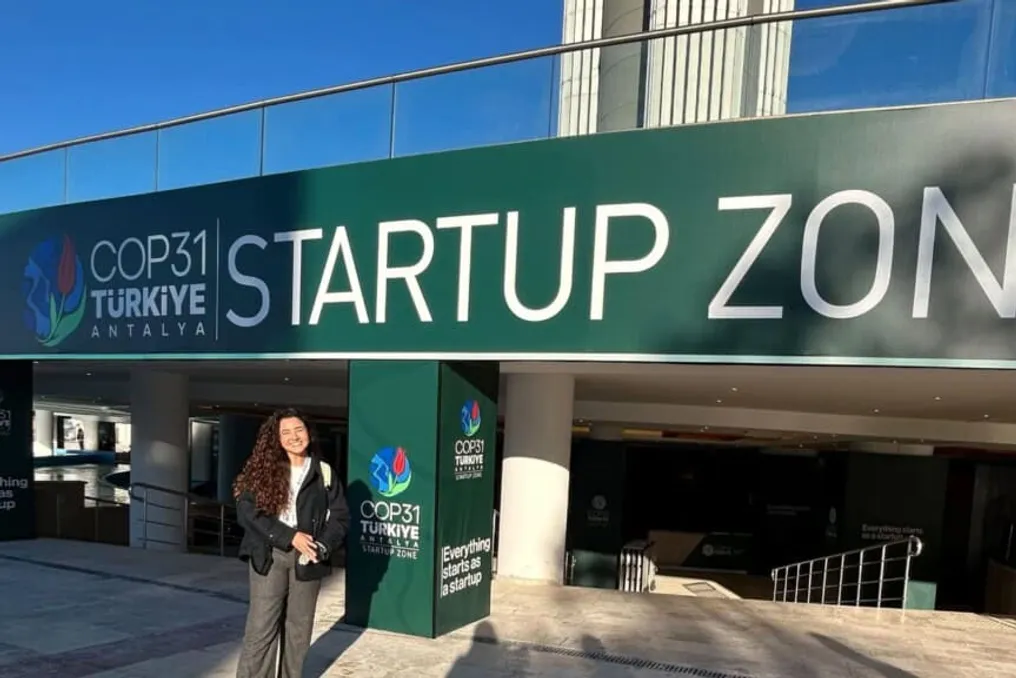
The decisive factor for ESG Data Core's presence at COP 31 was the creation of an Official Zone for the startup ecosystem, named Startup Zone, located in the Green Zone. This space covers 3.6 thousand square meters and features presentation stages, media studios, business areas, and investor lounges. The 2026 edition of COP began on November 9th and will run until the 20th.

ESG Data Core was partly born from Macruz's professional experience as a lawyer specializing in ESG regulation in Europe. Before entrepreneurship, she worked at Deloitte and held the position of Assistant Vice President (AVP) of European ESG and Compliance at State Street Investment Management, based in Dublin, Ireland, where she dealt with rigorous European guidelines.

Macruz is a co-founder of the startup, along with Alexandre Spezani de Moraes, who currently serves as CPO, and Henrique Sloty Gonçalves, who is the CTO. The three co-founders are Brazilian. Although the company is based in Dublin, Macruz resides in Ireland, Moraes in Portugal, and Gonçalves in Brazil, justifying the description of the startup as being of Brazilian origin.

ESG Data Core has offices in Brazil and Ireland and stands out as the only Brazilian startup selected for COP 31. The company's vision is to promote innovation focused on global sustainability, seeking positive impacts on people. The company focuses on engaging corporations to take roles in decarbonization, asset management, and social responsibility.

Macruz explained that after living abroad for about eight years, she completed a master's degree in human rights and began working with sustainability for investment funds and for Deloitte, focusing on data. It was during this period that she noticed the lack of reliability and auditing in data, observing that many consulting firms generated information only for reports, without the company knowing how to proceed with the decarbonization strategy or how to absorb global impacts.

In essence, ESG Data Core solves the lack of data visibility by transforming it into concrete actions. The company connects various corporate systems, preparing organizations not only for business reports but also for implementing decarbonization strategies. By centralizing this data, the startup aids in anticipating risks, including climate, geopolitical, social, and human rights risks.

The business model aims to offer internal knowledge, especially to small and medium-sized enterprises, showing them how they can use the data they already possess to boost their own growth. One example cited was a company that needed to present climate figures ready for renewing an important contract, and ESG Data Core could assist with this data collection.

Another illustrative example involved a hurricane in the United States in 2024, which affected a factory crucial for intravenous serums. With the ESG Data Core system, companies could identify excessive dependence on a single supplier and the associated climate risk, allowing for the suggestion of mitigation and adaptation measures to reduce costs and impact risks.

Participating in COP 31 is described as impressive, as the event is entirely focused on climate and social issues, unlike previous events. There is a feeling of unity, where participants seek to solve the same problem and exchange knowledge about various solutions. Collaboration is a central pillar, as everyone is working to reduce emissions and prepare for climate crises.

Macruz emphasized that even as a small company, the startup manages to generate impact by bringing innovative risk technologies to large corporations, participating in this collaboration to make problem resolution a reality in partnership.

Her first in-person participation in COP was very different from previous editions seen by the media. She highlighted the democratization of the event, where any level of company can interact. I had the opportunity to speak directly with CEOs of large companies, asking about the challenges they faced, because the purpose of a startup is to solve problems.

Regarding the relevance of ESG and data in the context of COP, Macruz mentioned the 2015 Paris Agreement, which requires signatory countries to set climate goals to limit temperature increase to 2°C, with the real focus being to stay at 1.5°C. She emphasized that the absence of correct data makes any effective strategy or planning impossible.

Concerning carbon emissions, there are three scopes: scopes one and two refer to direct company emissions, while scope three covers indirect emissions (such as travel and products). Of these, 90% come from scope three, mainly from small and medium-sized enterprises that lack the budget and personnel to manage gas reduction. Many of these medium-sized companies lose contracts because they do not have traceable data.

ESG Data Core works by decarbonizing the supply chain, focusing on scope three. Using existing company data, the startup assists in managing carbon reduction, preventing loss of space in the production chain, and aiding in the reduction strategy. The goal is to transform what is currently seen as a compliance burden into a profit strategy.

Macruz concluded that without clear and reliable data, the world will not achieve environmental goals, and climate tragedies will persist. She expressed satisfaction in representing Brazil and Ireland, showing that even if small, it is possible to bring significant changes and inspire the country with innovations.

Uzbekistan Delegation Studies Artificial Intelligence Application in Environmental Assessment in Italy
Read more
uzdaily.uz

Uzbekistan Delegation Studies Artificial Intelligence Application in Environmental Assessment in Italy

A delegation from Uzbekistan participated in a three-day training program in Rome, which took place from November 9 to 11, 2026. The goal of the program was to study the use of artificial intelligence and digital technologies in the field of environmental assessment.

The delegation included the director of the State Center for Environmental Expertise and specialists responsible for implementing AI and information technologies in this area. The program was organized in cooperation with the Italian Ministry of Environment and Energy Security (MASE) and the International Association for Impact Assessment (IAIA).

The main objectives of the event were to implement advanced digital solutions in environmental management, strengthen international institutional ties, and study European experience in this field. Within the framework of the program, it was considered how AI can be applied to analyze large volumes of data, early detection of potential environmental risks, assessment of the impact of large projects, and increasing decision-making transparency.

Participants from Uzbekistan studied Italy's institutional framework in environmental management, existing environmental impact assessment methodologies, regional monitoring systems, and digital infrastructure. Possible joint initiatives between MASE and IAIA were also discussed, including the development of an environmental management platform, a common knowledge base for regions, and a system for organizing environmental data.

The delegation also familiarized itself with the practical experience of Italian regions such as Tuscany, Marche, Lombardy, and Emilia-Romagna. Technical sessions and meetings with international experts focused on environmental screening and scoping, strategic environmental assessment, and advanced methods for processing environmental data. Special attention was paid to the use of AI algorithms for modeling and assessing the environmental impact of waste recycling facilities.

The ultimate goal of the delegation is not only to study Italy's experience but also to determine ways to adapt this experience to Uzbekistan's national environmental management system and practically apply the acquired approaches. The program views AI as a support tool, not a replacement for specialists, aiming to enhance analytical capabilities, reduce the probability of errors, and support fact-based decisions.

On the final day, discussions are planned regarding a memorandum of understanding between MASE and IAIA, as well as proposals for regional cooperation between countries in Central Asia and potential areas for joint projects.

Popular