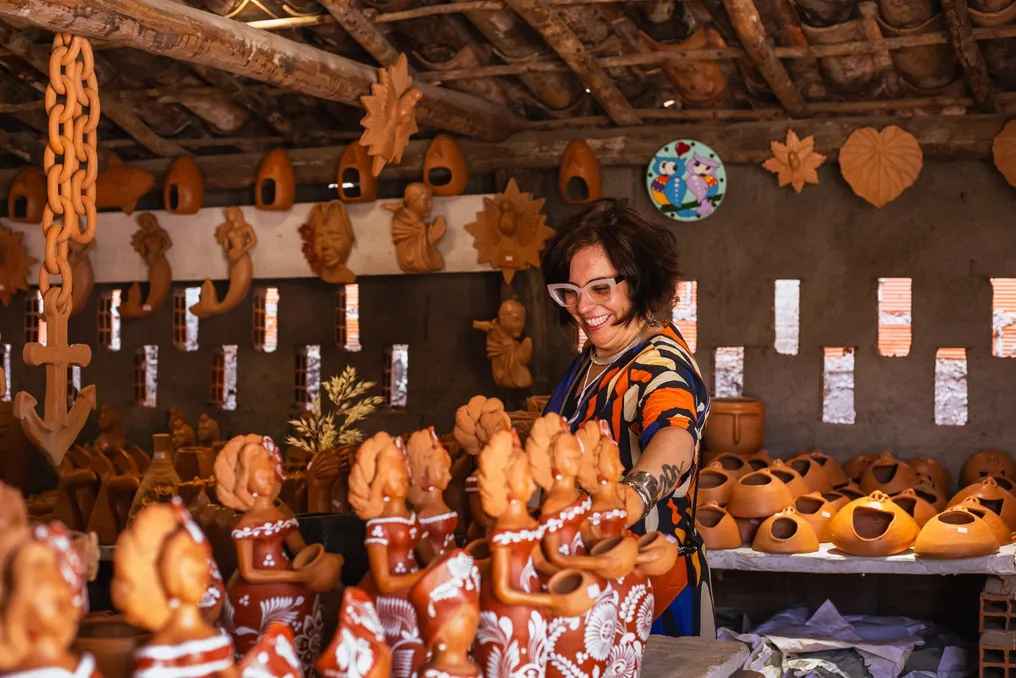
The Baiano village, recognized for its ceramic production, will promote a free festival featuring the participation of the Olodum group. The event, which celebrates ancestry shaping the future, marks Black Consciousness Day and highlights the strong African, indigenous, and riverside influences present in the community's ceramic tradition.
Maragogipinho, where about 150 pottery workshops are active, has handicrafts as one of its most important economic activities. During the festival, visitors will have the opportunity to visit the ceramists' workshops and observe the process of making the pieces.
On Thursday, the 19th, before the official opening, the first Meeting of Ceramic Artisans of Bahia will take place. This meeting aims to bring together professionals in the sector to discuss the maintenance of the craft and the identity of local production.
Friday's program, the 20th, begins at 10 am with the Lira Conceição Philharmonic, followed by charanga and Terno de Reis performances. A gathering is scheduled for 4:30 pm on the district's waterfront. The official opening of the festival will be at 5 pm, preceding shows by Ricardo Buruá, Geovanni Santos, and Sinho Bernardo.
On Saturday, the 21st, the schedule includes a capoeira session at 10 am and an artisanal fashion parade at 5 pm, complemented by dance and poetry performances. Starting at 9 pm, the stage will host JB5 Musical, Flávio Venturini, and Olodum.
Sunday, the 22nd, will be dedicated to performances by the groups Capoeira Raízes do Barro, Sambadeiras, and Artesãos do Samba. The final shows of the event, featuring Magary Lord and Milena Figueredo, will start at 9 pm.
Throughout the entire festive period, the public can enjoy handicraft and gastronomy fairs. The handicraft fair starts daily at 10 am, while the gastronomic fair begins at 2 pm. On Fridays and Saturdays, both fairs close at 8 pm. On Sunday, the handicraft sale ends at 6 pm, but the gastronomic program runs until 10 pm.
Maragogipinho is considered one of the largest centers of artisanal ceramics in Latin America, with the production of clay items being its main source of income. Among the items manufactured in the community are moringas, pots, vases, religious images, and various decorative objects. Part of the production still maintains traditional methods, using foot-powered wooden wheels, wood-fired kilns, and natural pigments to color the pieces.
The 4th Maragogipinho Ceramics Festival will take place in the district of Maragogipinho, in Aratuípe (BA), from November 20 to 22, with free admission.