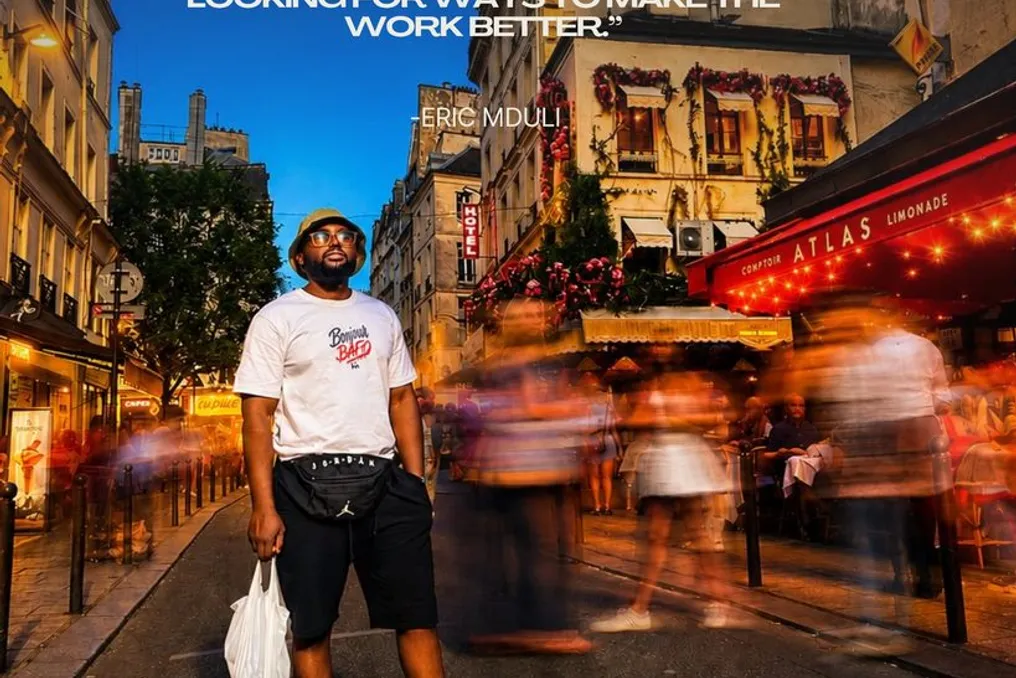
Eric Mdluli, an art director who entered the creative industry through an unexpected path, is currently shaping visual narratives at Lobengula Advertising agency. He is guided by curiosity, intentionality, and the belief that every creative decision must have a specific purpose.
The CREATIVES SPOTLIGHT series focuses on individuals who are shaping the creative landscape of South Africa. Through five thoughtful questions, the authors explore the ideas, experiences, influences, and creative practices behind these personalities' work, helping readers gain a deeper understanding of the people driving culture forward.
The fifth issue highlights Eric Mdluli (Siphumelele Eric Mdluli), an art director at Lobengula Advertising—an award-winning, Black-owned agency based in Johannesburg. His journey into the creative field was not initially planned; it began in a restaurant frequented by creatives. There, he reconnected with an old friend who invited him to join his creative path. Eric seized the opportunity without knowing where it would lead. However, looking back, he realizes that the curiosity driving his work today has always been with him.
He notes: 'I have always been interested in how things work, how they are created, and why some things look and feel right.' This curiosity eventually evolved into a passion for visual storytelling and the ability of imagery to convey what words sometimes cannot. The capacity to evoke laughter, prompt thought, or make someone see something differently through a visual experience became the foundation of his creative practice. What started as an unforeseen opportunity has turned into a mastery he continues to refine.
Finding the idea before creating the image
As an art director, much of Eric's work centers on translating ideas into visual experiences. But before considering color palettes, composition, or the image itself, he believes the most crucial part of the process is understanding the idea itself. Eric Mdluli emphasizes: 'For me, it all starts with the idea. Before I think about how something should look, I need to understand what we are actually trying to say.'
His experience at Lobengula has reinforced the importance of having a strong central thought behind every creative piece. From this point, research becomes an integral part of the process. Understanding the audience, culture, category, and context in which the idea must exist helps define a relevant and well-thought-out direction. He describes this stage as a chance to challenge conventional views. While inspiration can come from existing things, he believes there is always another approach to an idea that allows it to take on a fresh perspective. Once this thinking is established, the visual exploration begins. Imagery, composition, color, and minute details become tools to embody the central idea. For Eric, the goal is not just to create something visually appealing, but to ensure that every element contributes to the same story. This approach extends to his overall creative philosophy: everything must earn its place.
Thoughts behind the visuals
For Eric, good art direction is rooted in intentionality. Whether it is an image, a font, a color, or the space between two elements, every decision must have a reason. He believes that creative professionals can sometimes focus too much on showcasing their skills, whereas true mastery lies in knowing what to omit. Simplicity, strong composition, and emotionally engaging imagery are important to his approach, but so is understanding the audience and what the piece ultimately needs to convey. He views this stage as an opportunity to challenge preconceived notions. While inspiration may stem from what exists, he feels one can always find a different way to approach an idea and give it a new perspective.
One project that stands out in Eric's career at Lobengula is a thematic campaign for the Metropolitan product, covering funeral insurance and pension annuities for Metropolitan, which is part of the Momentum Metropolitan Group. The task was interesting: how to make financial products, often associated with serious and sometimes uncomfortable conversations, more accessible and understandable? Instead of approaching the topic through traditional financial service advertising, the team turned to everyday human experiences. The opportunity lay in making these conversations feel less like financial advice and more like real life. The creative direction relied on recognizable characters, familiar situations, and humor, using exaggeration and moments of farce to create a sense of connection with the audience. The goal was first to entertain, establish a connection, and then deliver the product message in a way that felt natural. For Eric, this project was particularly valuable because it challenged some established norms in financial services advertising. By injecting warmth, individuality, and humor into a traditionally serious category, the work found a more human way to deliver its message.
A new frontier of creativity
Outside the demands of agency life, Eric draws inspiration from numerous sources. Music, film, photography, video games, travel, and everyday conversations feed his creative thinking. Even observing people in their daily lives can offer a fresh perspective. He considers curiosity a necessary condition for maintaining creative relevance, believing that the moment a person thinks they have seen or known everything, they stop developing. Eric Mdluli asserts: 'There is so much new to experiment with, so many new ways to explore ideas and push our work forward. But I also believe it is a good reminder of why mastery is important.'
In the future, Eric intends to continue working on projects that present creative challenges, placing a greater emphasis on storytelling, experimentation, and ideas borrowed from culture and the surrounding world. Ultimately, he aims to create work that feels fresh, relevant, and unequivocally human. Work that doesn't just grab attention, but gives people a reason to remember it. And, perhaps as he puts it, work that makes another creative person think: 'Damn, I wish I could do that.'