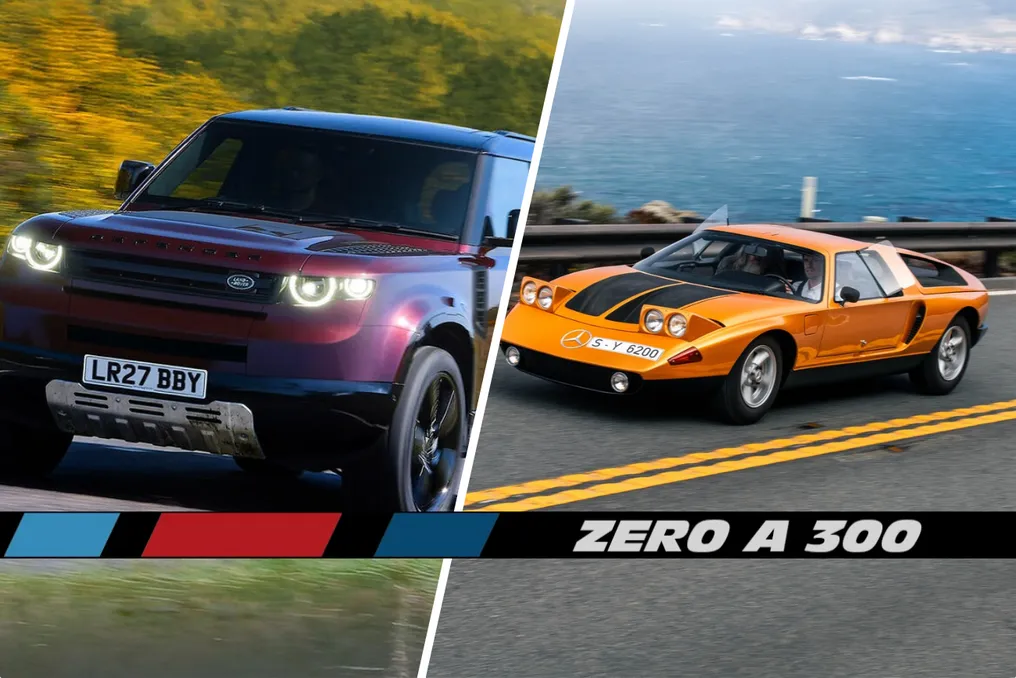
Land Rover is developing a smaller version of the Defender, nicknamed the 'mini-Defender' or 'baby Defender,' in addition to the Range Rover GT. PB Balaji, CEO of Jaguar Land Rover, confirmed that production of these two new models should begin at the Halewood factory in the United Kingdom in 2027.
The Defender Sport proposal is to replicate the retro style of the Defender in a more compact and agile format, while maintaining Land Rover's characteristic off-road robustness, including the option to use two electric motors for all-wheel drive. Initially, the electric Defender Sport will use the Range Rover GT's EMA platform, adapted for smaller dimensions, and may utilize Land Rover's 800V electric architecture. The brand also foresees a hybrid version, recognizing that a large part of the market outside Europe still shows little acceptance for fully electric vehicles, which constitutes a considered intelligent strategy.
Currently, the available information about the Defender Sport is based on projections and photos captured by the press, but Land Rover has guaranteed that the new model will have the visual identity of the Defender.
Mercedes will auction the iconic C111
The Mercedes C111 was never put into serial production but maintained an icon status, especially because it was seen as a futuristic vision. The vehicle was transformed into a work of art by Andy Warhol and featured in popular imagination through Super Trunfo cards. Its notable features include gullwing doors, a Wankel engine positioned between the central and rear axles, and the combination of orange and black colors in a design reminiscent of seventies supercars.
Since it was a platform for testing and technological development, the sale of the C111 was never considered by Mercedes, despite great interest; according to Mercedes itself, people in the 70s once sent blank checks to Stuttgart seeking to acquire it, but all attempts were denied. This has changed now.
Mercedes announced that it will hold an auction of the third C 111-II built, known internally as 'Car 33.' This auction will be conducted by RM Sotheby’s at the Palais du Louvre in Paris on February 3, 2027. The funds raised will be allocated to the 'Mercedes-Benz Museum 2.0' project, which includes the renovation of the museum in Stuttgart and the creation of its digital version. Additionally, Mercedes signed a contract committing not to commercialize another C 111 for the next 25 years.
Car 33's assembly began in March 1970, sporting 'Weissherbst' paint and grey and white pied-de-poule sports seats, with a vertically mounted Becker Europa radio. In August of the same year, it received the four-rotor M 950 Wankel engine, with 2.4 liters and 350 hp, installed in the center of the vehicle. Weighing 1,240 kg, the C 111-II reached speeds of 300 km/h. Identified with license plate S-Y 6200, it served as a test car to develop a system that simultaneously drained both side tanks (totaling 116 liters), participated in races at Hockenheim, and was used as a guinea pig for ABS, technology that is no longer functional. It also served as an advertising model, presented to conductor Herbert von Karajan by Mercedes in 1971 and appearing in the first edition of Playboy Germany in 1972.
The C 111 was first presented at the Frankfurt Motor Show in 1969 as a laboratory for the rotary engine, and Mercedes considered its production for a period. However, factors such as durability, high consumption, and lack of reliability of the Wankel did not convince them, and the 1973 oil crisis worsened the financial situation. Therefore, the development of the rotary engine was discontinued by Mercedes in 1976. Although the C 111 had a second phase of use setting records with diesel engines, it never went into circulation. Seventeen examples were produced; one was destroyed in a crash test, three were dismantled in the 70s, and the remaining 13 remain in the brand's collection.
Car 33 has been kept in the museum since 2006. In 2024, it was restored to be driven at the Fellbach Classic Center, maintaining its original internal and external patina, with the mechanics overhauled and a fire extinguisher system installed in the engine compartment. In the same year, it was exhibited on the grounds of Pebble Beach. Its odometer reads 15,391 miles, equivalent to approximately 24,770 km.
This is not the first case where Mercedes uses its assets to generate revenue. In 2022, the company sold one of the two 300 SLR Uhlenhaut Coupés for €135 million, setting the record for the most expensive car ever auctioned. Although there is no expectation of a similar value for the C 111, this time, checks will be accepted.
GAC will start national production in Brazil
The Chinese manufacturer GAC officially confirmed that it will begin manufacturing automobiles in Brazil in January 2027. Production will be centralized at the HPE Automotores plant located in Catalão, Goiás, where Mitsubishi and Suzuki models are already manufactured.
According to GAC, the factory will have the capacity to produce up to 50,000 vehicles annually, although it has not yet disclosed which models will be localized. It was only mentioned that the first car to be produced will be fully electric. Furthermore, the previous month, Mauro Luis Correa, CEO of the HPE group, declared that initially, production will occur under the SKD (semi-knocked down) regime, meaning the cars will arrive from China partially assembled and will be finalized in Brazilian territory.
The operation is part of a total investment of US$1.3 billion (approximately R$7.5 billion at the current exchange rate), planned to be completed by 2030. This amount will be used not only to start production but also to expand the factory unit and strengthen GAC's dealership network in the country.
Ken Miles Cobra prototype goes to auction
At the end of 1963, the production Cobras suffered a significant defeat against the Corvette Grand Sports during the Nassau Speed Week, held in the Bahamas. In response, Shelby American dedicated early 1964 to developing a replica. The best-known result is Peter Brock's legendary Daytona Coupe, but there was another less publicized response: the prototype of Ken Miles' Cobra 427.
This vehicle, identified by chassis code CSX2196, will be auctioned by Mecum in Kissimmee, Florida, in January, with an estimated value exceeding US$25 million, which could make it the most expensive American car ever auctioned.
The car arose from a speculation by Ken Miles: a Cobra roadster equipped with the iron block 427 V8 engine, replacing the 289 engine. Its debut at the 12 Hours of Sebring in 1964 was a failure. Miles suffered a collision with a tree the day before, and the team spent the night repairing the vehicle. During the race, he and John Morton had to retire due to a series of failures. Due to its excessive front weight and poor cornering performance, the prototype received an internal nickname from the team itself, 'The Turd' (in English).
Despite this, the car was fast. According to Hagerty, Miles was frustrated because Shelby had informed him that he would not participate in the Daytona Coupe, a car he had advocated for. So, he rebuilt the vehicle. He disassembled the chassis until only the two main tubes remained and reconstructed it incorporating lessons learned from the Coupe. The car became more than 7 centimeters longer, received a more adjustable suspension with ball joints on the lower arms, and was meticulously modified in all aspects, including pedals, battery mounts and tank, shock absorber mounts, and even the brake discs. The body was made of extremely thin aluminum, with little internal structure, and had a full opening mechanism: the front section hinged forward and the rear backward, giving rise to the name 'Flip-Top.'
The engine issue was resolved with support from Ford itself. The factory fused two experimental aluminum blocks derived from the 427 side-oiler, using steel sleeved cylinders, which reduced the displacement to 390 cubic inches (6.4 liters). One of these engines was destined for the Daytona Coupe CSX2286, prepared for Le Mans in 1964, but it never started the race. The other remained with Shelby, and Miles requested its use. Equipped with two Weber 58 IDA carburetors, the engine generated about 500 horsepower (approximately 507 hp) in a car weighing 816 kg, contrasting with the nearly 1,043 kg of a street Cobra 289.
At the end of that year, Miles took the car back to Nassau. In the first heat, he came in second place, behind a Roger Penske Grand Sport, and Hagerty reports that he could not exploit the full potential of the vehicle. In the main race, he established an eight-second lead right from the first lap. Later, the differential failed because he had forgotten to engage the oil radiator pump. However, the message was conveyed: weeks later, Ford provided the GT40 program to Shelby, and Miles participated in this project.
The production Cobra 427, launched in 1965, inherited none of the Flip-Top characteristics, as the chassis was too costly and complex, and the engine was highly specialized. CSX2196 retained its original chassis, body, engine, four-speed manual transmission, and suspension, having been restored by Legendary Motorcar and having traveled only about 4,096 miles (6,592 km). While Shelby produced six Daytona Coupes, Ken Miles built only one Cobra of this nature, to prove his point of view.
In another piece of news, Contran (National Traffic Council) published a new resolution, No. 1.032/2026, at the end of October, aiming to simplify the purchase of used vehicles by allowing the vehicle identification inspection, a mandatory step in property transfer, to be carried out at the owner's residence.
With this change, the inspection report will integrate into a Federal Government electronic environment, replacing the physical document issued by the Detran of each state. The new system, called SISV (Integrated Vehicle Inspection System), is a national platform responsible for registering, processing, and archiving all inspections carried out in the country. The procedure still requires an inspector accredited by Detran or an authorized company, but the interested party can choose to take the vehicle to the location or request the mobile modality, where the professional travels to the agreed address. It is important to note that the inspector will collect photos, videos, and other information using equipment connected to the federal system, eliminating the need for the individual to perform these captures.
The possibility of performing the inspection at home does not eliminate its mandatory nature. The resolution maintains the requirement for property transfer, chassis or engine alteration or re-registration, engine replacement, modification of characteristics that do not require a Vehicle Safety Certificate (CSV), and correction of identification data in the Renavam. There are exceptions, such as the first registration of a new vehicle, transfers to stores integrated into Renave stock, transfers between public bodies, and internal movements of headquarters and branches of the same company. There is also exemption in cases of transfers resulting from mergers, splits, or acquisitions of companies.