X and xAI avoid payments as part of media investigation in South Africa
Read more
TechCentral
techcentral.co.za

X and xAI avoid payments as part of media investigation in South Africa

Companies X and xAI have reached an agreement with the Competition Commission regarding measures proposed during its investigation into the media and digital platforms market. Instead of directly funding South African publishers, they agreed to provide training for them.

Both companies had previously challenged the findings and directives of the investigation before the Competition Tribunal, but they have now withdrawn their appeals, the commission reported on Wednesday. As a result, the commission amended the requirements for X Corp, which manages the social platform X, and withdrew the requirements for xAI, replacing them with a voluntary commitment.

xAI, the creator of the chatbot Grok, is now known as SpaceX Super Intelligence following its acquisition by SpaceX in February.

X was the only platform that did not reach an agreement with the commission before the publication of the final investigation report in November 2025. This report required X to make all its monetization programs available in South Africa, conduct seminars for publishers twice a year, and fund digital literacy programs for three years.

Under the settlement terms, X's obligations are valid for two years. The company will launch a monetization support program for publishers within six months, including bi-annual seminars on its revenue generation tools. To gain access, publishers must attend at least one seminar and comply with X's own 'rules and good conduct criteria.' X will provide its paid Premium tier for two years, which publishers need to qualify, after which they will have to pay for it themselves. The commission noted that 'revenue calculations remain unchanged,' meaning publishers will earn under the same conditions as other X authors.

The seminars will be translated into 'up to five' local languages, but only 'if there is sufficient demand.' Furthermore, publishers will be shown how to prevent their public publications from being used to train Grok.

xAI's commitment is even narrower. The investigation required it to teach publishers how to control the use of their content for training artificial intelligence models and generating responses. Instead, xAI will conduct training twice a year on Grok settings and the robots.txt file—a file that websites use to indicate to search engine bots which pages they can visit—for two years.

Similar stories

ICSID rejected all claims by Turkish investors against Uzbekistan in the case
Read more
uzdaily.uz

ICSID rejected all claims by Turkish investors against Uzbekistan in the case

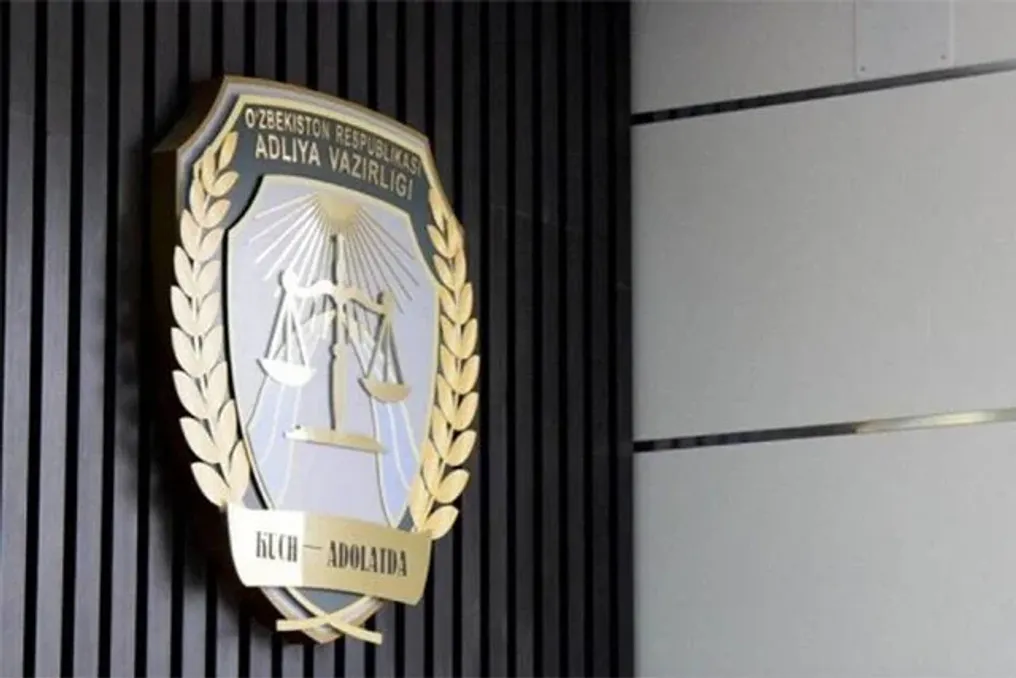
The Ministry of Justice of Uzbekistan reported that the International Centre for Settlement of Investment Disputes (ICSID) has dismissed all lawsuits filed by Turkish investors against Uzbekistan in the case registered in 2021.

The arbitral tribunal issued its decision on October 26 after more than five years of proceedings. The dispute concerned a food industry enterprise.

The plaintiffs were three Turkish citizens—Mehmet Zeki Obuz, Sevde Yilmaz, and Huriye Obuz—as well as the Turkish company Obuzlar Gida, which was in liquidation.

The plaintiffs based their claim on the bilateral agreement between Uzbekistan and Turkey from 1992 on the mutual encouragement and protection of investments.

The tribunal was formed in February 2022. Hearings on the merits of the dispute took place in Washington from July 1 to July 10, 2024.

Uzbekistan was represented by the Ministry of Justice and the international law firm Curtis, Mallet-Prevost, Colt & Mosle (Curtis). This firm opened an office in Tashkent in November 2025.

Public materials do not disclose the measures challenged by the plaintiffs or the amount of compensation claimed.

The tribunal's decision is final for the parties to the dispute.

In 2007, the newspaper Narodnoye Slovo reported that Mehmet Zeki Obuz was sentenced to 16 years in prison in Uzbekistan. He was charged with tax evasion, value-added tax and excise duty payments, embezzlement and misappropriation of budget funds, as well as committing other offenses.

According to this newspaper, Obuz arrived in Uzbekistan in 1995 and became one of the founders of the joint venture Sundus in the same year. In 1998, he was appointed CEO of the company.

Anthropic withdraws IPO data due to uncertainties over Artificial Intelligence costs
Read more
olhardigital.com.br

Anthropic withdraws IPO data due to uncertainties over Artificial Intelligence costs

Anthropic has removed information related to its Initial Public Offering (IPO), which was potentially set to raise US$ 69.3 billion (equivalent to about R$ 377.7 billion), shortly after submitting this data to investment banks on Monday (9th).

The original document projected the sale of approximately 867 million shares, with unit values stipulated between US$ 70 (R$ 381.50) and US$ 80 (R$ 436). Subsequently, the company announced that the pricing data was incorrect and that a revised version would be presented.

According to emails obtained by Reuters, the communication sent to the banks did not detail which information was erroneous, and the agency could not determine what needed correction. Anthropic opted not to comment on this incident.

The initial filing mentioned the placement of 866.7 million Class A shares. Of this amount, about 843.3 million would be provided by Anthropic itself, while existing shareholders would sell 23.3 million. If the maximum price of US$ 80 (R$ 436) per share is considered, the transaction could raise US$ 69.3 billion.

Additionally, the filing indicated a volume of US$ 26 billion (approximately R$ 141.7 billion) designated for investments by large technology corporations. These contributions would be made through the acquisition of Class N common shares at the price established in the IPO, with immediate finalization after the public offering.

Among the companies that expressed interest in participating were important names. Anthropic planned to begin the offer presentation rounds to investors, known as a roadshow, on Tuesday (10th), with the stock price definition scheduled for the following week.

The capital opening occurs in a challenging context for other companies in the artificial intelligence infrastructure and data center sector. Some of these companies have postponed or canceled their listing plans due to rising interest rates, which resulted in a sharp devaluation of debt securities and stocks of companies like CoreWeave. This scenario has also raised questions about the financial viability of AI spending.

Previously, investors had speculated on an Anthropic valuation of up to US$ 2 trillion (about R$ 10.9 trillion). However, these expectations have been reduced, and US$ 1.5 trillion (approximately R$ 8.18 trillion) is now seen as the ceiling of estimates, as previously reported by Reuters.

Founded in 2021 by former OpenAI executives, including Amodei and his sister Daniela Amodei, who currently chairs the company, Anthropic is responsible for developing the Claude family of artificial intelligence models.

Google and Amazon are among the organization's main partners. In addition to being investors, both companies provide computational capacity and assist in model distribution, despite competing with Anthropic in the AI market. This partnership implies computational capacity commitments approaching US$ 900 billion (about R$ 4.91 trillion) with partners such as Amazon and Google. Part of this future potential depends on financing that is not under Anthropic's control.

In a corrected document in early November, the company disclosed that its revenue reached almost US$ 17 billion (approximately R$ 92.65 billion) in the three months ended September 30th. However, during the same period, the quarterly growth rate showed a sharp decline.

Popular