Bermuda Triangle: Scientific analysis of aircraft and vessel disappearances
Read more
Super Abril
super.abril.com.br

Bermuda Triangle: Scientific analysis of aircraft and vessel disappearances

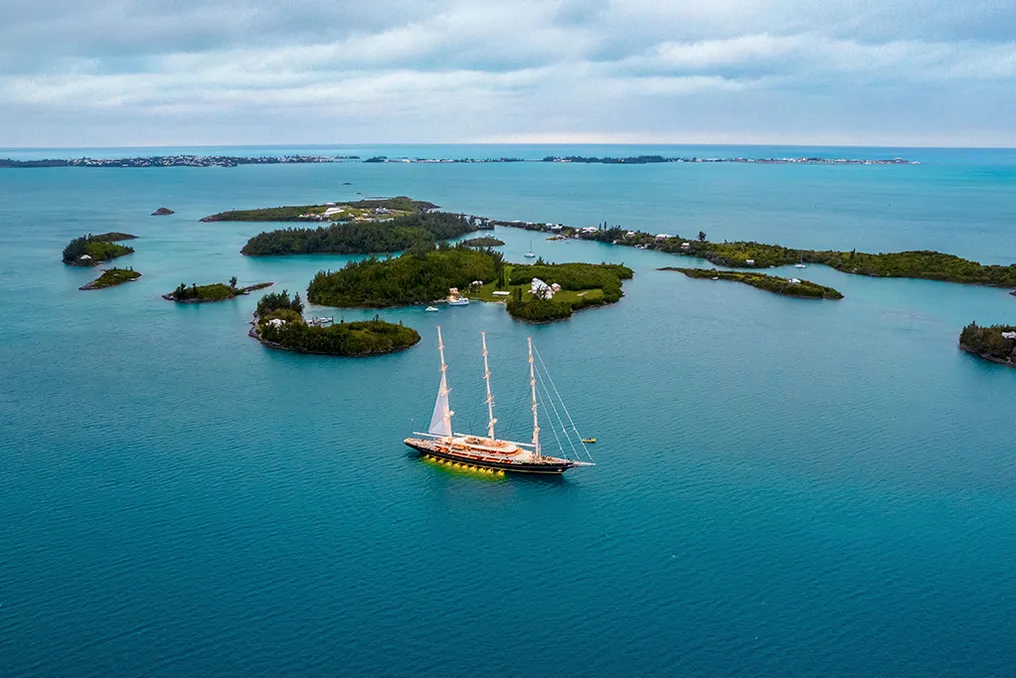
There is a popular belief that since the end of World War II, more than one hundred ships and airplanes have been lost in an enigmatic zone located between the Bermuda archipelago, the state of Florida in the United States, and the city of San Juan, Puerto Rico. This area, which defines the known 'Bermuda Triangle,' is situated in the North Atlantic Ocean, near the Caribbean, and has generated fear and legends for decades.

The notoriety of the Triangle as a site of inexplicable events increased significantly after December 1945, when five US Navy aircraft disappeared without a trace. The speculations generated by these disappearances attracted great media attention, which explored the topic across various media and coined the term 'Bermuda Triangle,' given that this is not an area recognized on traditional maps.

In 1974, American author Charles Berlitz released the book The Bermuda Triangle, which sold twenty million copies. His work presented fantastic theories, such as the possibility of ships and aircraft being abducted by extraterrestrial vessels. With growing public interest in the disappearances, scientists began to look for more substantiated explanations.

Currently, the most accepted view is that there is no concrete proof that the region is more prone to accidents than other parts of the world. Although some notorious incidents have occurred in the Triangle, the notion of higher frequency there appears to be a result of confirmation bias and narratives amplified by the press.

Critics of the concept also point out that many stories are exaggerated or impossible to confirm due to the lack of reliable sources, citing, for example, that the number of 'one hundred missing ships and airplanes' lacks a clear origin.

For those who believe in something unique about the location, there are scientific explanations. A widely circulated theory attributed the mysteries of the Bermuda Triangle to methane gas present in the ocean floor of the area. According to physicist Bruce Denardo, from the Naval Postgraduate School in Monterey, United States, the sudden release of methane in the form of bubbles could drastically reduce a ship's buoyancy, resulting in its rapid sinking.

Additionally, the gas could trigger explosions upon reaching the atmosphere if it combusted with a spark from boat or aircraft engines, as detailed by geologist Carlos José Archanjo, from the University of São Paulo (USP). In the seabed, methane is stored as gaseous hydrate, in structures similar to ice crystals. Movements on the seafloor or temperature variations can convert this hydrate into gas. Ascending bubbles reduce water density, causing boats to submerge; in the atmosphere, the gas can explode with a simple spark.

However, no evidence of this hypothesis has been found in recent decades, which has considerably weakened this idea. Many experts argue that common climatic phenomena, such as storms, could account for a large part of the sinkings, and that several incidents attributed to the Triangle may have occurred outside the demarcated area. In his 1975 book, The Bermuda Triangle Mystery – Solved, former pilot Larry Kusche analyzed several cases and concluded that the planes that disappeared in 1945 failed due to lack of fuel.

The Bermuda Triangle region is a stage for mysterious events, but also for exaggerations.
Similar stories

Researchers discover rich biodiversity on remote atolls of the Marshall Islands in the Pacific Ocean
Read more
olhardigital.com.br

Researchers discover rich biodiversity on remote atolls of the Marshall Islands in the Pacific Ocean

Two remote atolls in the Marshall Islands in the Pacific Ocean have attracted the attention of scientists due to the large amount of life in environments that have experienced minimal human impact. As part of a study published in Frontiers in Marine Science, Bikini and Bokak were examined, where various biomes—from island vegetation to coral reefs and deep-sea areas—were analyzed.

The study characterizes both locations as relatively preserved tropical ecosystems and demonstrates that biodiversity is not limited only to shallow water zones. Researchers also discovered little-known species and groups of animals in this region.

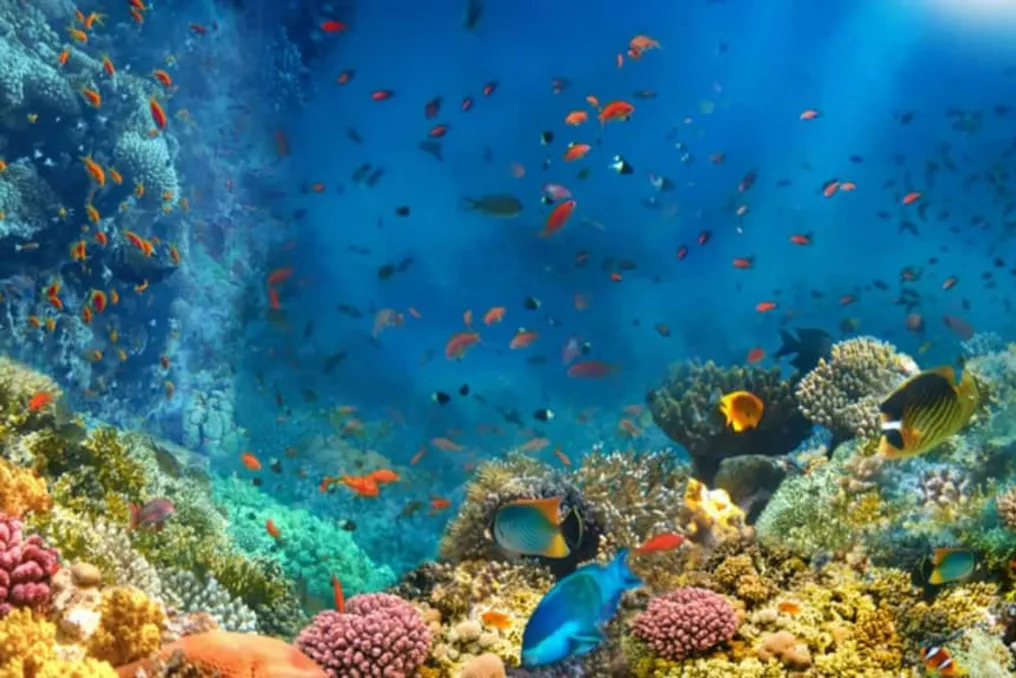
An atoll is defined as a ring structure of islands surrounded by coral reefs with a lagoon in the center. These formations develop over millennia, usually from slowly subsiding volcanoes around which corals continue to grow. Therefore, they are common in tropical regions and can host a great diversity of marine species.

Bikini and Bokak are located in the northern Marshall Islands in Oceania and are among the most isolated atolls in the country. Bikini is approximately 116 kilometers from the nearest inhabited atoll, and Bokak is approximately 385 kilometers away.

In 2023, teams collected data from various atoll environments. In addition to studying deep-sea areas, researchers analyzed terrestrial flora and fauna, including vegetation, seabirds and coastal birds, turtles, coral reefs, and fish communities.

The surveys revealed significant biodiversity on both atolls. At least 266 groups of reef fish were identified, as well as 138 groups of fish found at greater depths and 79 groups of fish in even more inaccessible areas. Furthermore, 15 colonies of seabirds were identified, including groups that use this area for breeding.

Of all the groups found, 14 had not been previously documented in the Marshall Islands. According to the researchers, two of them may represent new species to science, although additional analyses are required to confirm this possibility.

In addition to discoveries related to species and groups, researchers noted differences between the studied atolls. The study on Bokak showed a higher number of reef fish and coral-dominated communities. Bikini, conversely, demonstrated a greater presence of algae and concentrated almost all recorded green turtle breeding activity during the study. 132 green turtle nesting sites were found on the atoll.

The importance of Bikini and Bokak lies not only in the number of species found. Since these sites have been subjected to less direct human influence, they can serve as an ecological benchmark for researchers seeking to understand the functioning of tropical ecosystems before they undergo more intense environmental changes. This also helps explain why the study was not focused exclusively on shallow reefs.

Dr. Alan Friedlander, a marine ecologist from the University of Hawaii and one of the study leaders, stated: 'They are among the best ecological reference systems we have for better understanding what we are losing elsewhere, and for providing the fundamental information necessary for effective conservation and restoration efforts.'

The expedition also preceded the creation of a protected area around the two atolls. Approximately 48 thousand square kilometers were converted into the first national marine reserve of the Marshall Islands. This protected area covers not only the reefs but also various surrounding atoll environments.

Starship launch, El Niño projection, and end of Mercury retrograde featured in news highlights
Read more
olhardigital.com.br

Starship launch, El Niño projection, and end of Mercury retrograde featured in news highlights

The main events of the week included the 15th launch of the Starship rocket, a projection of surpassing the global temperature record due to El Niño, and the end of the Mercury retrograde period.

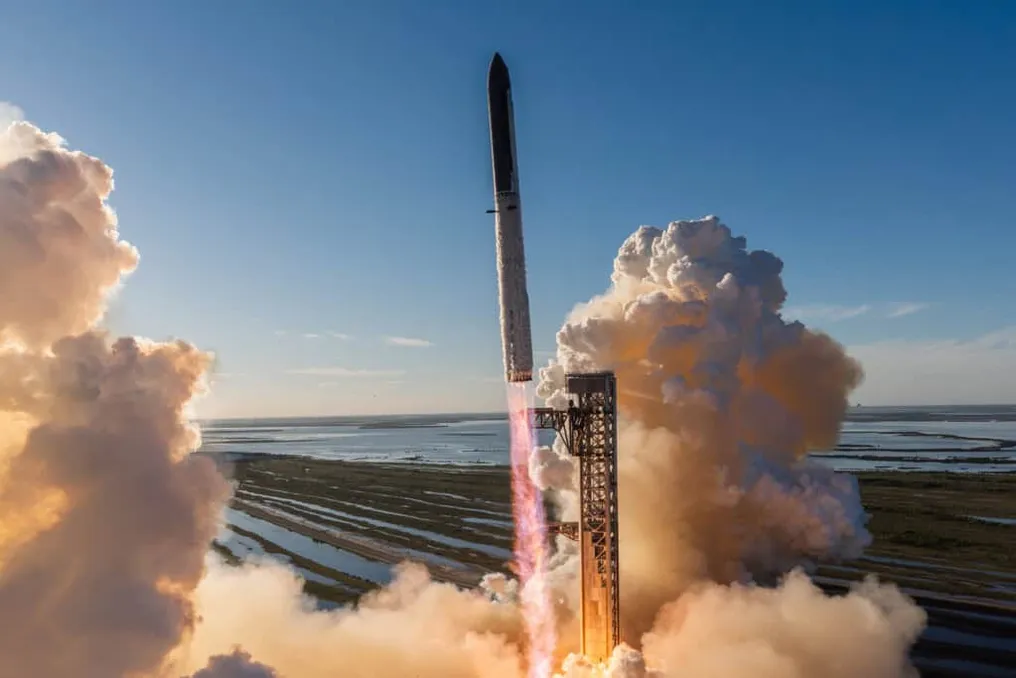
The launch of the Starship mega-rocket took place on Friday night, the 13th, and was broadcast live on various Olhar Digital platforms. The takeoff occurred at 7:48 PM Brasília time, departing from Base 2, located at Starbase, the SpaceX facility in Boca Chica, South Texas. Initially, the plan was for both stages of the rocket to return to the launch base.

However, the attempt to recover the Super Heavy booster was unsuccessful, resulting in the stage falling into the ocean. The Starship spacecraft, on the other hand, continued its mission as planned, with a landing expected for Saturday, the 14th. After separation, the Super Heavy began its return, executing a braking maneuver after six minutes and ten seconds, but it was not caught by the tower's hooks, known as chopsticks, falling into the sea. SpaceX stated that it will investigate the incident.

Regarding the climate, it is estimated that the year 2026 has a 95% probability of exceeding the world temperature record set in 2024. This projection takes into account the impacts of El Niño along with climate change. This forecast coincides with the opening of COP31, a climate conference organized by the United Nations (UN), which began on Monday, the 9th, in Antalya, Turkey, gathering international leaders and negotiators.

Another significant technological advance was achieved when a robot autonomously assembled a structure in Earth orbit for the first time in history. This experiment, funded by the U.S. Defense Advanced Research Projects Agency (DARPA) and conducted by researchers from the California Institute of Technology (Caltech), proved that machines are capable of performing space construction tasks with minimal human intervention.

The project, named Autonomous In-Space Tensioned Reflector Assembly (ASTRA), used robotic equipment to assemble a reflector antenna with a diameter of 1.4 meters. The structure was manufactured using Kapton film, composite fiber tubes, and aluminum joints.

In astronomical terms, the last period of Mercury retrograde in 2026 ended on Friday, the 13th. Although some believe in turbulent energy influences resulting from this reverse planetary movement, the text focuses on the scientific explanation of what it means for Mercury to be retrograde and why this occurs.

Additionally, on Saturday, the 14th, a planetary alignment will occur, a phenomenon characterized by the gathering of several planets in the same apparent area of the sky. This alignment is an effect of perspective, as the planets orbit the Sun in similar planes, making them appear grouped when viewed from Earth. This weekend's planetary spectacle will feature Mercury, Venus, Mars, and Jupiter, and can be observed without the aid of telescopes, depending on celestial conditions.

Popular