The potential for RayNeo smart glasses to become a daily accessory
Read more
TechNode
technode.com

The potential for RayNeo smart glasses to become a daily accessory

RayNeo, founded in 2021 and operating under the umbrella of TCL Electronics, develops AR and smart glasses for entertainment, productivity enhancement, and artificial intelligence applications. According to IDC data, in the second quarter of 2026, RayNeo ranked second globally in AR/VR headset shipments, capturing a 12% market share.

The company is backed by investors such as Fosun Capital and Winreal Investment, as well as funds associated with China Mobile and CITIC Goldstone. In January 2026, a fund affiliated with China Unicom participated in a Series D round exceeding 1 billion yuan.

The key question is whether RayNeo can transform its current market success into a habit of daily use among consumers. Needs arise for a larger screen or an alternative way to access information without taking out a phone during long flights, hotel stays, or while waiting for appointments.

RayNeo's latest product line offers two distinct approaches. The first is the minimalist iO glasses, equipped with a small display for information presentation. The second is the GT series, which allows connected devices to be turned into a large virtual screen.

The iO glasses, unveiled at the IFA international exhibition in September, are designed to resemble regular eyewear. Weighing approximately 33 grams, they utilize a small monochrome display to show captions, live translation, and prompts. Voice capture and AI features enable note-taking from meetings and setting reminders. The iO concept is positioned as a light assistant usable throughout the day.

This approach differentiates iO from camera-focused glasses, such as Meta's Ray-Ban line. As noted by Wareable, RayNeo does not position iO as a direct competitor to Meta's camera phones, but rather as a lightweight ambient assistant based on a small display and voice interaction.

The GT series employs the opposite strategy. These glasses are intended for watching movies, playing games, and working because they connect to another device, creating a large virtual screen. The GT Max model can expand this screen up to the equivalent of 307 inches, offering spatial tracking and an audio system tuned by Bang & Olufsen. It resembles a personal cinema more than a universal computer.

A review from Tom's Guide highly praised the comfort of the GT Max but described this category more accurately as 'display glasses'—a wearable screen, not a standalone AR computer. The goal of the GT is to enhance the experience of a connected phone, laptop, or console, not replace it.

RayNeo's longer-term goal is more ambitious. Their autonomous X3 Pro model, combining binocular full-color MicroLED displays with cameras, navigation, translation, and AI, weighs 76 grams. A TechRadar review commended the display but pointed out significant drawbacks, including a 245 mAh battery capacity and high cost.

Founder and CEO Li Hongwei also adjusted the timeline for breakthroughs in this category. In a 2026 interview with iFanr, he stated that AI development had surpassed expectations, whereas optical displays, chips, and spatial computing were developing slower. His prediction for the 'iPhone moment' shifted from 2025 to 2027.

RayNeo has attracted capital through several rounds. Its first external round, Series A worth over 100 million yuan in 2023, was led by Fosun Capital and Winreal Investment. Later, Bilibili and Huatai Zijin joined its investors.

In January 2026, RayNeo raised over 1 billion yuan in a Series D round, co-led by the investment division of China Mobile and CITIC Goldstone Investment, with participation from a fund affiliated with China Unicom. Subsequent D+ and D++ rounds took place in May and October, with amounts undisclosed.

Support from telecommunications companies could be crucial if the glasses evolve into independent connected devices: eSIM services, networks, and distribution might prove as important as optics.

RayNeo possesses market momentum. Omdia rated the company second in global XR headset shipments in the first half of 2026 with a 9.9% share. Later, IDC placed it second in the broader AR/VR headset market in the second quarter, with a 12% share, and first in the augmented reality glasses segment with a 25.2% share. Meanwhile, Meta led this broad market with a 45.7% share according to IDC data.

Currently, RayNeo is focused on establishing two habits: wearing glasses for quick information retrieval throughout the day and using them for a large screen when there is downtime. Whether one of these practices becomes routine will matter more than how futuristic the hardware looks.

Similar stories

Nothing company announces launch of screenless AI gadget on December 8
Read more
www.aajtak.in

Nothing company announces launch of screenless AI gadget on December 8

Nothing is preparing to introduce a new artificial intelligence-based gadget that will not have a screen. The company announced its release date as December 8. Although the teaser shows a retro-style design with metallic elements, the exact purpose and functions of the device remain unknown.

Previously, an overview of the Plaud AI device was presented, which functions as an AI laptop. This gadget is capable of using various AI models to create graphics and mind maps based on what it hears, as well as turning user thoughts into presentations and recording calls. There is a suggestion that the device from Nothing might follow a similar concept, but it is premature to draw such conclusions.

Most tasks related to AI usage—whether composing emails, answering chatbot questions, or extracting the essence of a meeting—are usually performed via a phone or laptop. However, Nothing aims to change this paradigm by offering a solution that does not require constant interaction with a screen.

On Nothing's official account on X, a short teaser was published with the inscription 'Be present. It's noted.', hinting at a moment-capturing function. This phrase sparked active discussions about the possible purpose of the gadget, although the name and specific capabilities of the device have not yet been revealed.

The new teaser from Nothing demonstrates a circular element on a shiny metallic surface, surrounded by several ring layers. Since the full design of the device has not been presented, it is difficult to determine whether it is a small recorder, a wearable accessory, or another type of AI-based tool.

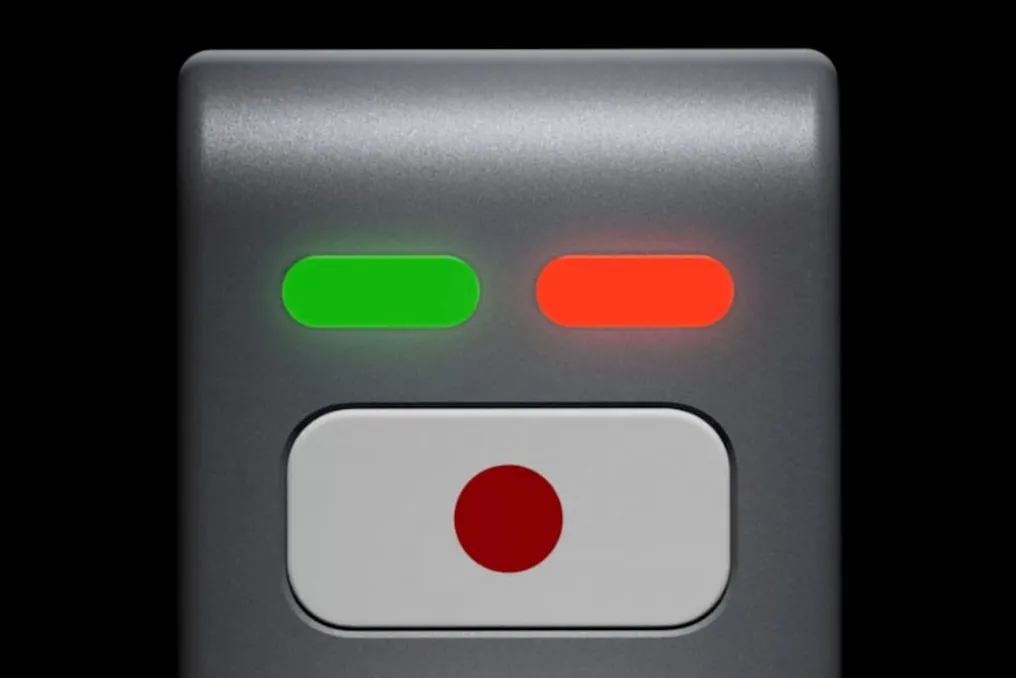
Before this, the company and its CEO Carl Pei gave additional signals. Older teasers featured a metal casing, a large red button, and two LEDs—green and red. Also, a small gadget resembling the future product was spotted in one leak. Some sources suggest it is a voice recorder, but Nothing has not officially confirmed this.

For now, the company has only announced the date—December 8. Information regarding price, availability, battery, connectivity, and functions remains undisclosed.

Nothing's CEO, Carl Pei, believes that the main weakness of AI lies not in its capabilities, but in the lack of context. Modern AI models can do a lot, but they lack understanding of what is happening around a person, such as important moments in a meeting conversation, a sudden idea, or a discussion with friends.

According to Pei, to make AI more useful, it needs to understand people's daily actions and communication context. He previously stated that the company's new AI product would be a tool, not just a feature built into a mobile application. He also emphasized that the device would not have a new screen.

This is why Nothing's product may differ from standard AI chatbots. The company is likely trying to create a gadget that allows the user not to constantly take out their phone or type on a screen.

Judging by the button shown in the teaser and the phrase 'It's noted', it can be assumed that the device may perform functions such as recording conversations, converting them into written notes, or translating them into other languages. If so, it could be useful during interviews, classes, or in daily work.

For example, instead of taking notes on a phone during a meeting, a person could focus on the dialogue, and then the AI could provide a summary, a to-do list, and key points. Such a function could be valuable for students, journalists, and office workers.

However, these are currently only hypothetical scenarios, not guaranteed features. Nothing has not specified whether recording will take place, where recordings will be stored, how the AI will work, or if a subscription will be required. Issues of privacy and consent of other participants are critical for any device that records conversations.

Apple is developing smart glasses with Siri support to manage tasks without using a smartphone
Read more
www.aajtak.in

Apple is developing smart glasses with Siri support to manage tasks without using a smartphone

Apple is preparing to take its place in the wearable device market after smartphones by releasing its first smart glasses. The artificial intelligence Siri will play a key role in these glasses. Thanks to this technology, users will be able to perform various tasks, such as booking a taxi, ordering a table at a restaurant, getting navigation directions, or finding information about surrounding objects, without taking out their phone.

According to available reports, Apple plans to introduce the device at the WWDC event in June 2027, with a market launch expected by the end of the same year. The main competitor for these glasses is the Meta Ray-Ban smart glasses, which Meta has been releasing for several years and are already popular in India.

Imagine a scenario where you are walking down the street and see a famous building. Instead of taking out your phone to look up its name on Google, you can ask about it through the glasses, and the camera built into them will transmit the information to Siri, which will give you an answer. Similarly, you can request a route or find out information about nearby restaurants, as well as order a taxi, without touching your phone.

The company aims to provide users with this kind of experience in its first smart device. Apple's plans are not limited to creating glasses with a camera and speaker; the company wants Siri AI to understand the surrounding world and be able to perform tasks through applications installed on the iPhone.

Information about this project was disclosed in a report by Mark Gurman from Bloomberg. According to this report, the codename for Apple's smart glasses is N50. Although the hardware design of the device is largely defined, work on the software and AI is ongoing.

In these smart glasses, Siri will not just be a voice assistant for answering questions. The company intends to transform it into an AI assistant capable of performing many functions within applications based on understanding the user's speech. For example, a user can ask the glasses to order a taxi, and Siri can connect to the taxi ordering app on the iPhone to complete this task. The same is possible for booking tables in restaurants, ordering coffee, or buying movie tickets.

This means that the user will not have to open a separate application for every operation. The user simply gives a command to Siri by voice, and she tries to complete the task through the corresponding iPhone application.

The company sees its smart glasses as a new application platform where the user interacts by speaking instead of looking at a phone screen.

An interesting feature of Apple's smart glasses is that applications will not run directly on the glasses themselves. According to the report, the company prefers that developers integrate their existing iPhone applications with Siri AI. After that, the user can use certain functions of these applications just by talking through the glasses. For example, if you have a taxi ordering app, and the developer provides the necessary functions for Siri, you can command a taxi order through the glasses without needing to create a separate taxi app in the glasses.

Apple has already started working in this direction. According to the report, the ability to allow Siri AI to use various application functions was prepared in the beta version of iOS 27.3. Initially, this feature will be available for Apple's own applications, and then it will be expanded to third-party applications. This is why Apple heavily relies on its developer ecosystem, as the company already has a network of millions of apps running on the iPhone. If these applications start functioning through Siri on smart glasses, it could offer users a completely new experience.

An important point regarding Apple's first smart glasses is that they are not expected to have augmented reality (AR) display yet. This means that when wearing the glasses, the user will not see digital maps, notifications, or other information floating over the real world. Instead, Apple is focusing on the camera, microphone, speaker, and Siri. The camera installed in the glasses will help recognize surrounding objects and will be linked to visual intelligence.

For example, you can open a refrigerator and ask through the glasses what can be cooked from the ingredients inside. If you see a sign in a foreign language, you can ask for a translation. If you need information about a building or area, the camera will help Siri try to identify it. Additionally, through the glasses, you can make phone calls, send and reply to messages, view your calendar, set reminders, listen to music, and control smart home devices.

Some information has emerged about the design of Apple's smart glasses. According to the Bloomberg report, the company's current prototypes are slightly thinner than the second-generation Meta Ray-Ban glasses. The camera is integrated into the frame so that it does not look protruding. Some prototypes have featured oval elements for the camera, allowing the glasses to look like regular spectacles. Apple is working on various frame designs and colors, aiming for people to use them not only as a technological gadget but also as everyday glasses.

Selection of AI, Alexa, and waterproof smartwatches available on Amazon
Read more
olhardigital.com.br

Selection of AI, Alexa, and waterproof smartwatches available on Amazon

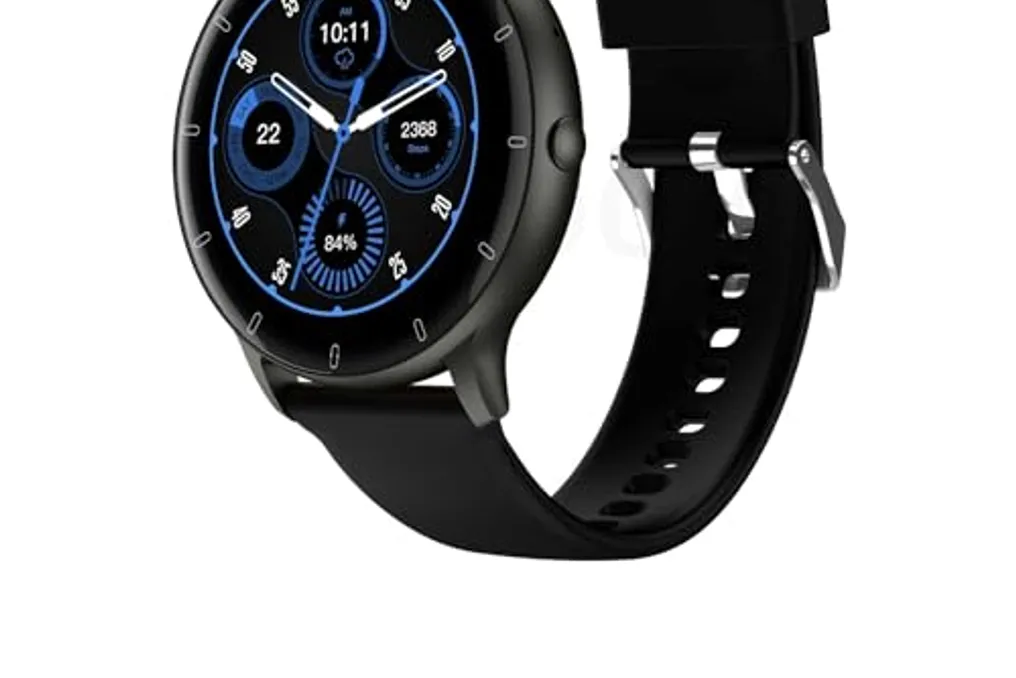
Smartwatches have evolved from mere accessories to become essential daily devices, allowing users to monitor health, receive alerts, and make calls without needing to pick up their phone. Three options currently on sale on Amazon have been selected, suitable for both beginners and advanced wearable users.

Among the options, the Bettdow Smartwatch with integrated AI (model FB051 in black) stands out. This watch features built-in artificial intelligence to assist in its use, enabling users to make and receive calls directly from the wrist. It has a 1.28-inch screen and an IP67 water resistance certification, compatible with Android and iOS systems, offering versatility for men and women who prioritize practicality in sports and daily activities.

Another alternative is the Haiz Smartwatch My Watch I Fit 44mm (HZ-ZL02D, black). With its 44mm case, this model features IP67 water resistance certification and a robust design, ideal for those who prefer a more sporty look. It is recommended for tracking physical activities and smartphone notifications, representing an accessible entry option into the world of smartwatches while maintaining important functionalities.

For those seeking more advanced features, there is the Bettdow Smartwatch with Alexa and over 100 sports modes (black). This version incorporates the Alexa virtual assistant and offers greater protection with an IP68 certification, meaning it supports good submersion resistance. Furthermore, it has over one hundred monitoring sports modes, a responsive touchscreen, and the ability to receive application notifications, positioning it as a complete device for intense training and routines.

It is important to note that offers like these generally have limited stock, and commercial conditions may change at any time. It is recommended to check the direct link on Amazon if any of these models pique your interest, before units run out or prices are updated.

Popular