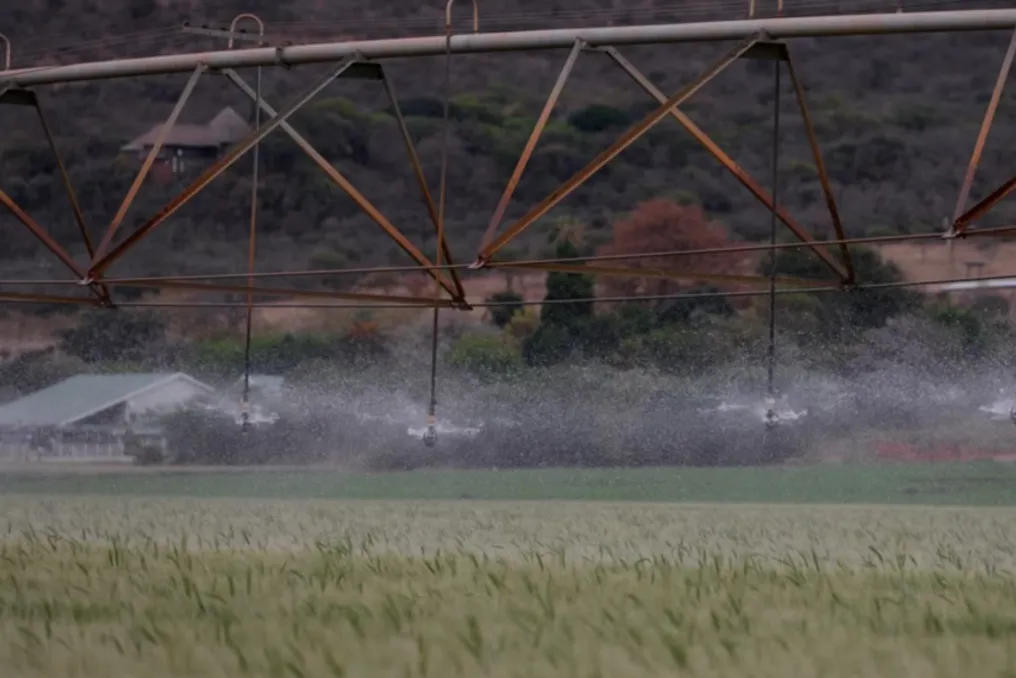
Agri Western Cape has expressed its dissatisfaction with the restrictions imposed by the Department of Water and Sanitation on the province's water supply system. According to the notice, the allocation of water for agricultural irrigation will be reduced by 15%, while the reduction for domestic and industrial use will be 7%.
In total, agriculture must forgo 29.6 million cubic meters of water annually, and domestic and industrial consumers combined will lose 27.2 million cubic meters.
The Chief Executive Officer of Agri Western Cape, Jannie Strydom, noted that these restrictions are being introduced at a critical point in the production cycle of several commodities. He pointed out that crops such as table and wine grapes, stone fruits, berries, vegetables, and citrus fruits will be particularly affected.
This will negatively impact not only production and export revenues but may also affect employment in rural communities. Strydom emphasized that the agricultural sector supports responsible water resource management and seeks to prevent a potential 'Day Zero' scenario. Furthermore, 58% of all primary agricultural products exported come from the Western Cape, and the sector provides 250,000 permanent jobs, accounting for 25% of South Africa's agricultural employment.
He added that this must be taken into account when determining who bears the greatest burden, as the Western Cape accounts for only 10% of the country's productive agricultural land.
According to Strydom, an additional concern is the suggestion that low winter rainfall is the sole reason for the current reservoir levels. However, he also stated that the condition of critical infrastructure influences current reservoir levels, which was raised in several meetings with the Department of Water and Sanitation.
Strydom stated: 'We cannot constrain the productive sector amidst such wastage of this scarce resource.'
Minister of Water and Sanitation, Pemmy Majodina, stated that the water supply system of the Western Cape is the foundation of the province's economic and social development. She reported that as of November 2, 2026, the total reserve in the Western Cape water supply system was 72.5% (646.5 million cubic meters), compared to 84.4% (694 million cubic meters) during the same period in 2025.
Majodina noted that the decline reflects a significant decrease in available water in some areas, and the province is in a less favorable position than in recent years. She specified that the system supplies water to Cape Town, the West Coast region, the cities of Stellenbosch, Paarl, Franschhoek, and Wellington, as well as numerous agricultural users who contribute significantly to food production and regional and national economic growth.
The Minister stressed that protecting this system is not only a water management issue but also a socio-economic imperative. She also noted that reserve levels remain significantly higher than during the severe drought of 2016–2017, although the current reserve is below the preferred operational threshold of 80% and approximately 11.9 percentage points lower than the ten-year average of 84.49%.
Majodina urged municipalities, businesses, industries, agricultural users, and households to continue using water efficiently and responsibly, calling for action now rather than waiting until reservoirs run dry, to secure water for communities, the economy, and future generations.