Nvidia appoints interim CEO following Jensen Huang's departure
Read more
TechCentral
techcentral.co.za

Nvidia appoints interim CEO following Jensen Huang's departure

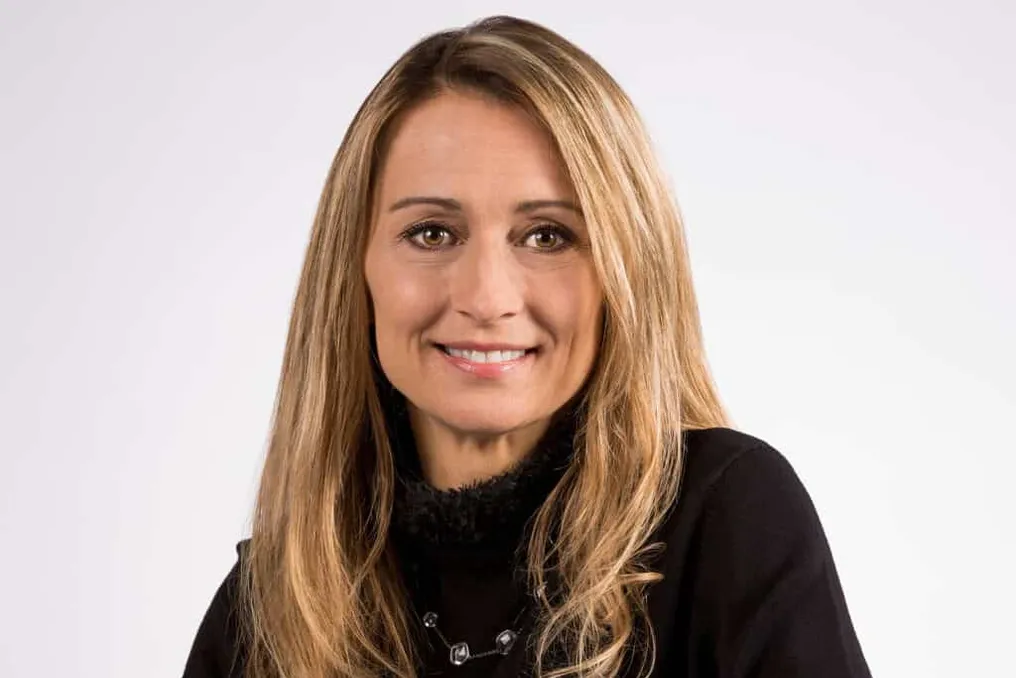
Tuesday marked the first earnings call for Nvidia since co-founder Jensen Huang's departure. Colette Kress expressed confidence in the company's business, leadership, and employees as the interim CEO, promising to act 'disciplinedly in how we deploy capital,' in an attempt to reassure investors.

Her appointment followed reports of Huang's relationship with Chinese businesswoman Alice Huang, which US intelligence agencies are investigating due to her ties to the Chinese government. These revelations led to a decline in Nvidia's market value of over $700 billion.

Initially, Kress struggled to read prepared statements, but she gained resolve as the call progressed. When asked by an analyst about potential changes during the leadership transition, she stated: 'Our leadership has held very strong over the past week. From a business perspective, everything is business as usual.'

She reported that the leadership had interacted with Nvidia's suppliers and partners, all of whom fully supported the company. During this interaction, TSMC, a chip contract manufacturer, visited Nvidia offices this week.

Company Results and Forecasts

Nvidia reported third-quarter revenue of $115.8 billion, a 103% increase year-over-year, and forecasted fourth-quarter revenue of approximately $130 billion, exceeding Wall Street expectations. The company expects sales in fiscal year 2028 to grow by about 75%, and shares rose by more than 4% in after-hours trading.

Jake Behhan, head of capital markets at Direxion in New York, noted that 'Nvidia has shown that the AI story can be bigger than Jensen Huang.' He added that 'the strength of the business and underlying demand gave traders reason to believe the story can continue moving forward without him at the helm.'

Loyal employees and tech figures, including Elon Musk, called for Huang's reinstatement, and US President Donald Trump stated he was not opposed to his return. Huang himself announced on Tuesday that he would 'read' again as Nvidia's CEO.

Board of Directors' Decision

However, Harvey Jones, the new chairman of the board, rejected this idea during the call. He stated: 'The Nvidia Board of Directors unanimously accepted [Huang's] resignation and does not intend to reinstate Jensen as CEO.'

Focus on Succession

Nvidia shortened the duration of the call compared to the usual time, holding it for about 50 minutes, whereas in the last two quarters under Huang's leadership, calls lasted about an hour, and he answered questions in greater detail.

Analyst Paolo Pescatore of PP Foresight noted that 'Kress faced an unusually tough debut, where every pause and phrase was scrutinized. This should not define her ability to lead.'

He emphasized that 'a more significant test is her business acumen, how she handles complex questions, and the confidence she inspires regarding upcoming decisions.'

It is known that Kress opposed Huang's risky multi-billion dollar financial deals, which raised concerns about the cyclical nature of the AI economy. Yan Bak, Vice President of Hyperscale and High-Performance Computing, who some analysts consider a potential CEO candidate, joined the call; he did not speak.

Pescatore added that 'Bak's appearance will inevitably be viewed as an unofficial run... but his participation itself should not be interpreted as a signal that the board has chosen its next CEO.'

Explanation of Neocloud Policy

Investors were concerned that without Huang, Nvidia might reduce investments in debt neoclouds—small cloud providers that rent out AI computing power and partially rely on Nvidia's support to finance their data center construction. Nvidia attempted to dispel these fears in comments from its CFO.

Nvidia's investment in neoclouds decreased to $32 billion by the end of the third quarter from $36 billion in the previous quarter. Nvidia clarified that its obligations to neoclouds would only take effect after partners secured funding and their capacity became operational, and could be reduced or canceled if this did not happen in time.

When asked whether this phrasing reflected a change in Nvidia's approach to neoclouds, Kress replied: 'Is this news? No. Have we changed anything? No. It just means we wanted to make sure... that it was very clear, as we were receiving some questions about exactly how this works.'

Behhan from Direxion called the week an 'AI referendum,' noting that Nvidia's results test AI infrastructure spending, while Anthropic's upcoming market entry tests how much investors are willing to pay companies trying to profit from this sector. Kress concluded the call by saying: 'We will succeed.'
Similar stories

Jensen Huang criticized the new Nvidia CEO before resigning from his post
Read more
olhardigital.com.br

Jensen Huang criticized the new Nvidia CEO before resigning from his post

Months before leaving Nvidia's leadership, Jensen Huang criticized Colette Kress, who was appointed interim CEO of the chip manufacturer. During a meeting held in August, the executive interrupted a presentation by Kress, referring to her as "a deer in the headlights," according to a source close to the events.

Huang also assessed Kress as a financial director focused on reporting, rather than someone capable of assisting in strategy definition or decision-making. This confrontation occurred while discussing billions of dollars in financial guarantees that Nvidia offered to companies unable to acquire its chips.

Among the businesses discussed were operations managed by Nico Caprez, Huang's son-in-law and promoted to vice president in January. Alongside Vice President Raj Mirpuri, Caprez provided financing to cloud providers and data center developers, aiming to convert them into long-term customers. Kress, in turn, raised doubts about the criteria used to select agreements, evaluate guarantees, and calculate return on investment, while also attempting to restrict Caprez's activities, according to employee reports.

In a notable example, Kress modified negotiations with OpenAI regarding a data center complex in Ohio, planned to be the world's largest. OpenAI planned to lease all the infrastructure, which would receive approximately $300 billion worth of chips from Nvidia (equivalent to about R$ 1.66 trillion). Initially, the manufacturer proposed a guarantee of $250 billion (about R$ 1.39 trillion) to facilitate bank loans. After this proposal was disclosed, Nvidia's shares fell by 5% on July 27, resulting in a loss of $250 billion in market value. Kress halved this financial commitment, and the companies formalized the reduced version of the agreement on August 17.

Kress took over provisional management after Huang's resignation on Thursday, due to revelations about two extramarital relationships: one with a woman suspected of being a Chinese spy and another with an employee. Nvidia is under federal and internal investigation and has announced it will consider both internal and external candidates for the permanent role. In a memo sent to employees, Kress praised the former leader and stated that she would continue "building upon the extraordinary foundation that Jensen created over the last 33 years."

At Nvidia, where he spent over a decade after experiences at Cisco, Microsoft, and Texas Instruments, the executive now has to deal with issues that were already a concern for Huang. Publicly, Kress defended the company's investments in artificial intelligence, refuting accusations that the model constituted circular financing. She stated at the end of August: "We recognize the scale of this support and we know some will call it circular financing. We see it differently." Additionally, she declared that "The returns on invested capital will be excellent."

Apprehension about Nvidia's valuation also grew; the average monthly stock multiple decreased from 23 in May to 16 in October. To calm investors, the company implemented measures such as the largest share buyback program in its history and, during the same period, began restricting new financial commitments.

This change in approach was also evident in October, during a conference in Berlin. Facing CEOs of major chip buyers, Huang shared the story of a soup vendor in Japan who refused to serve a second portion to preserve stock intended for other customers. The executive considered this merchant superior to those present. With this analogy, Huang argued that Nvidia should not commit its inventory or its commercial terms just to satisfy the demands of large buyers, demanding that customers recognize the value of the manufacturer's products. He told the executives: "You are not setting the value of my products."

Nvidia evaluates Jensen Huang's departure after revelation of personal scandals
Read more
olhardigital.com.br

Nvidia evaluates Jensen Huang's departure after revelation of personal scandals

Nvidia's board of directors is reportedly considering removing Jensen Huang from his CEO position following the disclosure of two infidelity cases involving the executive. One of these relationships involved a woman suspected of collaborating with Chinese intelligence. This information was brought to light by The Wall Street Journal, citing sources close to the matter.

According to the newspaper, the board could hold a meeting as early as this Wednesday, the 11th, to discuss Huang's future leadership at the corporation. However, there is currently no confirmation that a final decision has been made.

Jensen Huang is a co-founder of Nvidia and a prominent figure in the artificial intelligence (AI) sector. Under his management, the company has established itself as a key supplier of essential chips for AI system development, playing a crucial role in the current technological competition between nations and corporations.

The crisis intensified on Sunday, the 8th, when the executive admitted in a letter addressed to employees that he had been unfaithful to his wife. In this communication, he expressed regret for breaking the trust of his family and company employees.

One of the involvements was with Alice Huang, an executive at Megaspeed, a data company based in Singapore and a relevant client of Nvidia. United States intelligence authorities indicate that she is suspected of working for Chinese intelligence services.

Additionally, a source close to the case informed that the CEO maintained another extramarital relationship with an Nvidia employee. This second episode had previously been reported by The New York Times.

A potential departure of Huang would represent a significant change in the direction of one of the largest companies in the technology sector. The executive is often seen as the representative of the global AI race, participating in international conferences and events on behalf of Nvidia.

Despite the coverage by the WSJ, the article does not specify whether Huang was informed about a possible dismissal or if the board has already appointed a successor.

Scandal surrounding Jensen Huang at Nvidia raises investor concerns
Read more
techcentral.co.za

Scandal surrounding Jensen Huang at Nvidia raises investor concerns

An investigation launched following media reports concerning Huang's close relationship with a Chinese businesswoman, who allegedly passed information to Beijing, has caused unease among investors. Huang informed Nvidia employees about his infidelity to his wife, but did not disclose details of the relationship.

The investigation, announced on Sunday, drew attention to Huang's future, given Nvidia's status as the world's largest chip manufacturer and his role as a leading seller in the AI boom.

The fallout from this scandal affected South Korea: Huang's daughter, Madison Huang, who is an executive at Nvidia, canceled a planned visit to Seoul to attend an Nvidia conference scheduled to begin on Monday, according to information from the companies she was supposed to meet.

Futures trading on the Hyperliquid exchange and after-hours trading on the Blue Ocean system showed that Nvidia shares dropped to approximately $178.60 per share, which is more than 4% below the Nasdaq closing price on Friday, when it was $186.64.

Chris Weston, head of research at the brokerage firm Pepperstone in Melbourne, noted: 'The market is probably signaling to you now that this does not contribute to the stock when there are many speculations about data center construction.' However, Weston added that he does not believe Huang, whom he called the 'godfather of AI,' will be replaced. He emphasized: 'If we truly thought he was going to retire... the stock would have fallen—it would have been an absolute bloodbath, frankly.'

The New York Times reported last month that Huang had a relationship with Alice Huang, who is not connected to him and previously held the position of head of the Singaporean company Megaspeed. According to the newspaper, US authorities investigated Alice Huang and concluded that she is an agent of Chinese intelligence. Megaspeed did not immediately respond to a request for comment on Monday, which was a holiday in Singapore.

Asian partners remain unaffected

Shares of key Asian suppliers to Nvidia chips, such as TSMC, Samsung Electronics, and SK Hynix, recovered on Monday after the sell-off of AI-related stocks last week. TSMC shares jumped by 6.5%, while Samsung and SK Hynix rose by 2.9% and 4.7% respectively.

Some notable figures commented on Huang's admission. Billionaire investor Bill Ackman, founder of Pershing Square Capital Management, stated on X that the Nvidia CEO is an 'incredible person,' but if 'it is really more than just a romance, then it is obviously a serious problem.'

He added: 'I hope it is a simple romance and not a threat to our national security.' Tesla CEO Elon Musk commented on this, writing 'I agree' under a post by Sequoia partner Shaun Maguire, who stated that Huang 'did something incredibly stupid,' which was 'bad for America,' but also that 'Jensen is indispensable for America's leadership in AI.'

US President Donald Trump stated on Sunday that he had not spoken to Huang about these allegations but called him a good person. He added: 'I hope everything is fine. He has done such incredible work.'

When asked whether he should act on the information he was told, Trump replied: 'No, I don't think so. I think he is an honest man. I think he probably has an explanation. We need to hear it.'

Popular