Iraq resumes oil exports to Turkey via pipeline to bypass Strait of Hormuz
Read more
Middle East Eye
www.middleeasteye.net

Iraq resumes oil exports to Turkey via pipeline to bypass Strait of Hormuz

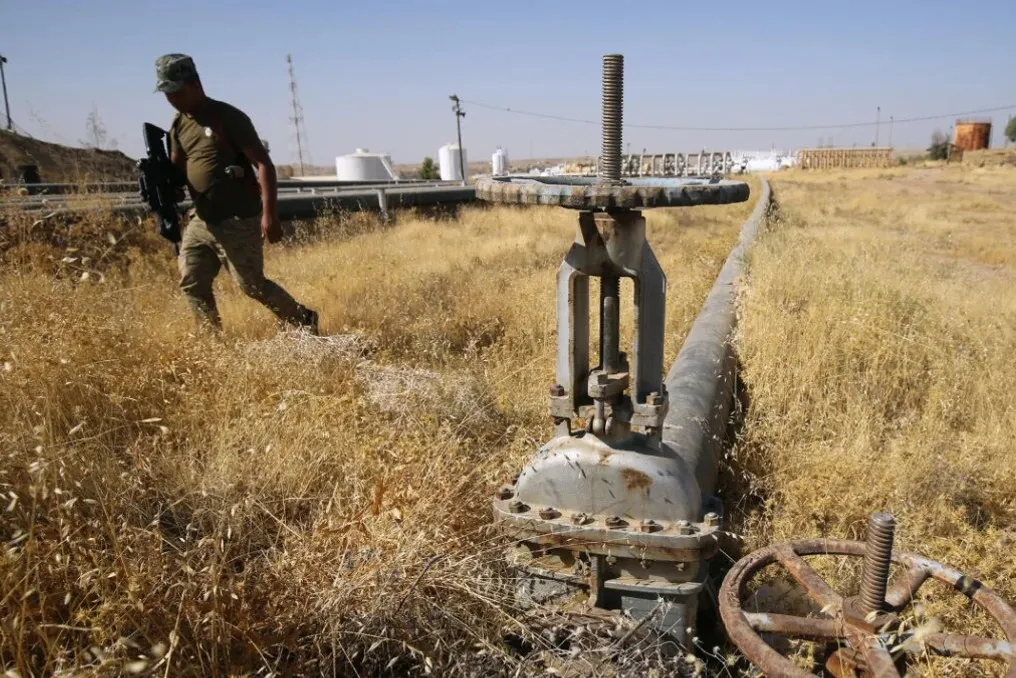
Iraq has resumed crude oil pumping for export to Turkey through the Kirkuk-Ceyhan pipeline, aiming to avoid using the Strait of Hormuz.

The Iraqi Minister of Oil, Bassem Khudair, stated in a release distributed by the state Iraqi news agency on Tuesday that Iraq plans to pump up to 120,000 barrels of oil per day (bpd) through the 960-kilometer pipeline. This pipeline connects the Iraqi city to the Mediterranean port of Turkey.

He also noted that after the successful completion of technical, operational, and restoration maintenance of the pipeline, which had been out of service for over ten years, the flow could reach 500,000 bpd.

Iraq is one of the countries most affected by competing blockades from the US and Iran in the Strait of Hormuz. Before the war between the US and Israel against Iran, almost all Iraqi oil exports passed through this waterway, and revenues from sales accounted for 90 percent of Iraq's budget.

The resumption of oil flows from Kirkuk to Ceyhan is the first step in Iraq's efforts to reduce dependence on Hormuz. Baghdad aims to connect Basra, its energy hub in southern Iraq, to the Mediterranean via the Syrian port of Baniyas and the Turkish port of Ceyhan.

Middle East Eye media first reported on US efforts to restore the connection of the pipeline between Kirkuk and Baniyas. The US Ambassador to Iraq, Tom Barrack, welcomed the reopening of the Kirkuk-Ceyhan line on Tuesday in his social media post, writing: 'Forward, Iraq, forward.'

Iraq began reexporting oil to Turkey in September 2025 from the semi-autonomous Kurdistan region after a two-year dispute. According to this agreement, the Kurdistan Regional Government (KRG) and foreign oil producers operating in the region agreed to allow raw oil to flow to the Turkish port of Ceyhan in volumes ranging from 180,000 to 190,000 bpd.

However, the announcement made on Tuesday will allow oil from the federal government of Iraq to go directly to Ceyhan.

Turkey insists on a direct connection between Basra and Ceyhan. The capacity of the Kirkuk pipeline exceeds 1.5 million bpd.

Energy industry experts inform MEE that tens of billions of dollars will be spent in the coming years on new infrastructure to bypass Hormuz. The UAE is leading the construction of pipelines around this choke point.

Nevertheless, recent attacks on Saudi Arabia's East-West pipeline, attributed to Houthis and militias in Iraq, highlight the vulnerability of these bypass routes.

Similar stories

Online sellers in the UAE are responsible for goods sold through third parties
Read more
www.khaleejtimes.com

Online sellers in the UAE are responsible for goods sold through third parties

According to amendments to the country's consumer protection regulations, online sellers in the United Arab Emirates (UAE) will now be responsible for goods and services sold through third parties on their electronic platforms. These changes have been approved by the Cabinet.

The Cabinet adopted Resolution No. 166 of 2026, which expanded the scope after amendments were made to Federal Decree-Law No. 14 of 2023. The revised Article 40 stipulates that the rules apply to goods and services traded through internet platforms, and their application is not limited to traditional sales channels.

It is stated that the supplier will be liable for any goods or services offered or sold through a third party via an electronic platform or any other modern technology. This does not negate the general liability norms provided for by current legislation.

The legal basis for this amendment is Federal Decree-Law No. 14 of 2023 on e-commerce, as well as laws on competition and combating commercial fraud.

The UAE has established a comprehensive consumer protection system to ensure fair business practices and protect consumers across the country. Federal Law No. 15 of 2020 on Consumer Protection, which was amended by Federal Decree-Law No. 5 of 2023, obligates businesses to provide quality goods and services, state accurate prices, provide correct product information, and protect consumers' personal data.

This legislation also protects consumers from misleading advertising, defective products, and unfair commercial practices, giving them the right to claim compensation for damages caused by faulty goods or inadequate services. The law applies throughout the UAE, including free zones and e-commerce enterprises registered in the country, with the Ministry of Economy and local economic departments responsible for receiving complaints and ensuring consumer rights compliance.

In accordance with the revised Article 41 of Cabinet Resolution No. 166 of 2026, the Cabinet shall issue a decree based on the proposal of the Minister of Economy and Tourism and in coordination with competent authorities, which will define violations and administrative penalties, including financial fines, for non-compliance with the law and its provisions. Until this decision is made, the existing list of violations and fines remains in effect if it does not contradict the new resolution. Fines do not affect other sanctions provided for by separate legislation.

The Resolution also rewrites Article 9, which allows the minister, jointly with a competent authority, to take temporary measures during a crisis or emergency circumstances causing unusual price increases or fluctuations. Such measures include setting prices for affected goods or services, banning the export of goods, allocating sales quotas, stimulating production or import from alternative sources, appointing specific structures for importing, and any other measures the minister deems necessary. Selling above set prices is prohibited, and any excess is considered an unjustified additional charge imposed on consumers.

The ministry or competent authority may assess the excess based on commercial records, invoices, accounting data, or other relevant means. Consumers retain the right to demand refunds or seek compensation.

Factors determining whether a price increase is anomalous include inflation rates, past prices, price levels in the UAE and neighboring countries, percentage increase, exchange rates, consumer complaints, delivery and insurance costs, energy prices, and the degree of competition or monopoly.

Popular