WHO points out that European smokers face greater difficulty in quitting smoking
Read more
Noticias ao Minuto
noticiasaominuto.com

WHO points out that European smokers face greater difficulty in quitting smoking

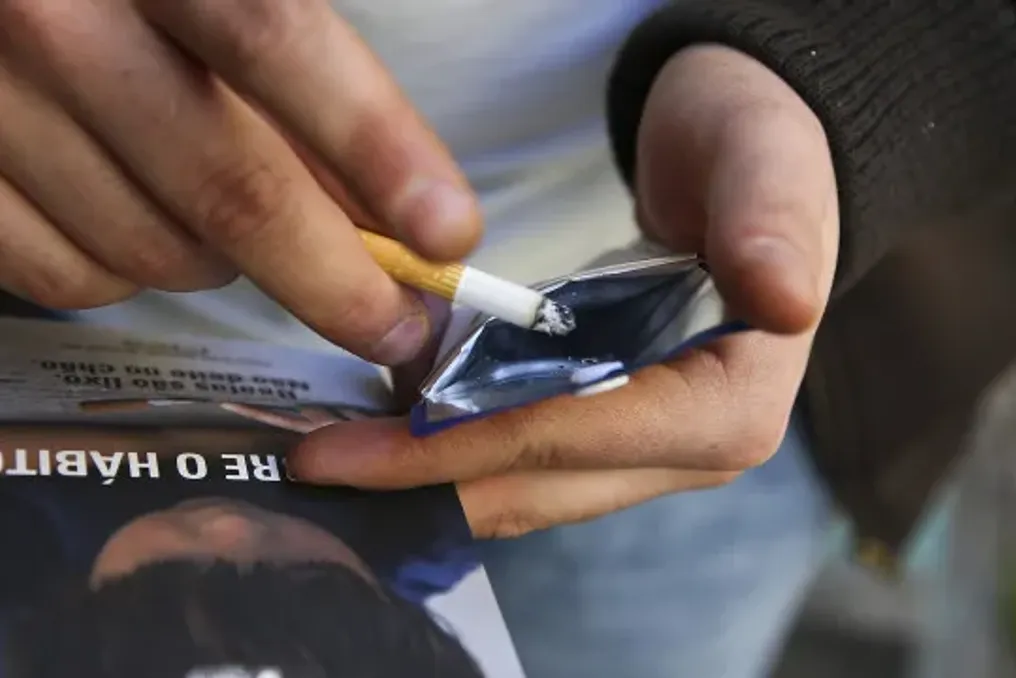
According to a recent report released by the World Health Organization (WHO), smokers in Europe demonstrate greater difficulty in abandoning the habit compared to other regions of the globe. The organization expresses particular concern regarding the consumption of electronic cigarettes by adolescents.

The regional department of the United Nations health agency for Europe observed that, despite an estimated decrease of approximately 37 million users between 2010 and 2025, the rate of this decline in the area remains slower when compared to the global scenario.

Projections from the WHO's European department indicate that within four years, about 22% of Europeans will still be smokers, a figure close to a quarter of the population, while the estimate for 2025 is 23.8%. It is predicted that by 2030, the number of smokers will have dropped by almost 12 percentage points over three decades; however, the WHO emphasizes that the region should maintain the highest prevalence of smoking among adults globally.

A specific example is France, where about 34% of the population smoked in 2000, and this proportion is expected to remain stable.

Only eleven countries, including Turkmenistan, Iceland, and the United Kingdom, were on track to meet the WHO's goal of reducing the number of smokers by 30% by 2025, based on 2010 data.

The situation is considered extremely alarming across Europe concerning adolescents. In the 53 countries in the region, which extends to Central Asia, 11.6% of young people consume tobacco. This data places the zone with the highest global prevalence in e-cigarette use among youth, reaching 14.3%, with similar rates for both boys and girls.

The WHO warns that in half of the countries in the region, e-cigarette consumption among adolescents significantly exceeds consumption among adults, signaling a worrying shift in nicotine exposure directed towards younger age groups. For instance, in Albania, although only 0.2% of the adult population uses e-cigarettes, the percentage of 15-year-old boys reaches 30%, and 15% of girls.

Additionally, in Germany, the rate of e-cigarette use among adolescents (ranging between 21% and 24%) is six times higher than the rate observed among adults (4.3%).


Similar stories

Spain leads Europe in non-alcoholic beer consumption
Read more
noticiasaominuto.com

Spain leads Europe in non-alcoholic beer consumption

Spain holds a leading position in Europe for non-alcoholic beer consumption, accounting for nearly 25% of total consumption in the European Union. The country is the main market for this beverage within the community, and this trend is expected to continue this year.

On the occasion of World Alcohol-Free Day, observed today by initiative of the World Health Organization (WHO), the agency EFE reported that the volume of non-alcoholic beer sales is expected to grow by 2.7% compared to 2025, contrasting with a 1.5% drop in traditional beer sales.

This growth is part of a trend observed in recent years: non-alcoholic beer sales have increased by 12.8% compared to the previous two years, according to a company analyzing consumer behavior in the country.

According to data from Cervejeiros de Espanha, 44.7% of Spaniards consider themselves consumers of non-alcoholic beer, while 90% of them also consume or have consumed traditional beer.

There is also growth in the non-alcoholic wine market in Spain, although it still lags significantly behind traditional wine sales. Jose Luis Benítez, President of the Spanish Wine Federation (FEV), noted that absolute consumption volumes in Spain are still lower than traditional wine sales, which reach 900 million liters.

Nevertheless, he emphasized that non-alcoholic options show 'very high' annual growth, predicting that consumption will increase by two million liters by 2029, reaching five million.

Despite the conviction that the current younger generation consumes less alcohol, representatives of the nightlife owners' association argue that the decrease in consumption is related to demographic factors and the frequency of evening outings. They point out that in 2000, the share of the population aged 15 to 29 was 23% of Spain's population, whereas in 2025 this figure decreased to 15.9%, and this age group has also reduced the number of monthly outings by 25%.

60% of EU citizens consider drug trafficking and use a serious problem, according to a survey
Read more
noticiasaominuto.com

60% of EU citizens consider drug trafficking and use a serious problem, according to a survey

According to the first survey by the European Monitoring Centre for Drugs and Drug Addiction, six out of ten residents of the European Union (60%) believe that drug trafficking and consumption pose 'serious problems'. In Portugal, this figure is 56%.

Data published by the European Union Drugs Agency (EUDA), based in Lisbon, clearly illustrates how respondents perceive this phenomenon, its impact, and how society should respond.

Of the 3004 Portuguese participants in the study, 44% reported an increase in local-level trafficking over the past five years, while 38% cited mental health issues as the main public health problem related to use. Furthermore, 28% highlighted the involvement of children and adolescents in drug trafficking as one of the main public safety concerns.

Overall across the European Union, 60% of respondents confirmed that drug trafficking and use are serious problems in their area of residence, and 49% noted an increase in local-level trafficking over the last five years; only 14% felt the situation had improved.

The survey results show that 39% of EU respondents identify mental health issues as the primary public health concern related to drugs, while 30% emphasize the participation of children and adolescents in drug trafficking as one of the main public safety issues.

On the other hand, 48% stated that cannabis is easily available within 24 hours, and 45% supported providing support and assistance to consumers.

The survey was conducted among 95,883 citizens of 27 EU countries, as well as respondents from Norway, Turkey, Albania, Bosnia and Herzegovina, Montenegro, Moldova, North Macedonia, Bosnia and Herzegovina, and Serbia, as well as Kosovo.

Drug-related problems are considered serious, but the percentage of people claiming that substance use is a serious local problem varies from 44% in Denmark to 78% in Cyprus, reaching 85% in North Macedonia among non-EU countries participating in the survey.

Perceptions of increased trafficking also differ: 67% of Cypriots believe the situation has worsened locally over the past five years, compared to 38% in Denmark and Lithuania.

The involvement of children and adolescents in drug trafficking is the most frequently mentioned public safety issue related to drugs in the EU (30%), followed by violence (27%) and drunk driving (26%). This fact ranks first among public safety concerns in 17 out of 27 EU member states.

Drug-related violence is the top issue in Spain, France, Luxembourg, Malta, and Slovakia. Thirty percent of respondents are concerned about the damage caused by new synthetic drugs.

Only 10% of Europeans state that they have no safety concerns related to drug trafficking in their place of residence.

Nearly half of EU respondents (48%) stated that cannabis would be easily accessible within 24 hours, compared to about a third in the case of cocaine and MDMA. Among respondents aged 15 to 24, 55% claim that cannabis is easy to obtain, compared to 42% aged 55 and older.

Regarding anti-trafficking measures, EU respondents prioritize law enforcement: 39% advocate for stricter measures against traffickers, and 37% support the dismantling of criminal networks. Legalization and regulation of drugs receive the least support (13%).

When asked what should be done to reduce drug-related problems, 45% support more decisive police action against trafficking and distribution, while 43% support the reintegration of drug addicts into the labor market and daily life.

Younger respondents give equal weight to prevention, social measures, and law enforcement, whereas support for law enforcement increases with age. Support for stronger police measures rises from 33% among people aged 15 to 24 to 54% among those aged 55 and older.

When asked how to deal with people who use drugs and enter the judicial system, respondents prefer help over punishment: 45% favor support and assistance, compared to 31% who prefer criminal conviction or imprisonment, and 10% who prefer lesser penalties such as a fine.

However, this preference for help does not equate to greater social acceptance: only 31% would agree to accept a user as a neighbor, and 19% would agree to a drug addict marrying a family member.

European Union remains on track to achieve the 55% greenhouse gas emission reduction goal
Read more
noticiasaominuto.com

European Union remains on track to achieve the 55% greenhouse gas emission reduction goal

The European Union (EU) maintains its course toward achieving climate goals by 2030. According to a report published in Brussels today, equivalent greenhouse gas (GHG) emissions decreased by 1.6% in 2025.

In accordance with the 'Trends and Forecasts in Europe' report by the European Environment Agency (EEA), despite a slowdown in the rate of net GHG emissions reduction in 2025, the EU's mitigation plans and national plans remain on track to meet the target of a 55% net reduction by 2030.

Emissions covered by the EU Emissions Trading System (EU ETS) decreased by approximately 2% in 2025. Meanwhile, emissions in sectors regulated by the Effort Sharing Regulation remained globally stable, and preliminary data indicates an improvement in terrestrial carbon uptake in the EU.

In 2025, emissions were at a level 39% below 1990 levels, while the EU economy grew by 74% over the same period, according to data from Brussels.

However, the EEA warns that to achieve this emissions reduction goal, reductions in sectors regulated by the Effort Sharing Regulation must collectively match those achieved over the previous two decades within the next five years.

The Agency emphasizes the need to improve progress in the transport sector, as well as in end-use sectors such as buildings and agriculture.

The annual carbon market report also concludes that revenues from the EU ETS increased by 43.2 billion euros in 2025, representing an 11% growth compared to 2024.

Popular