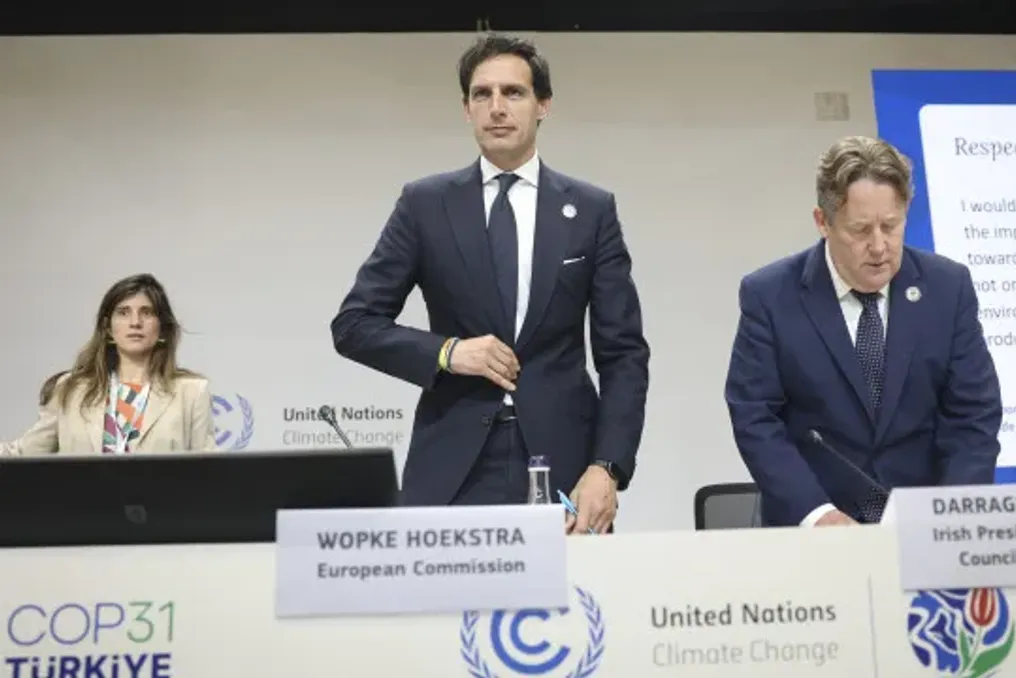
Less developed countries demand ocean protection and increased climate funds at COP31
Read more
Noticias ao Minuto
noticiasaominuto.com

Less developed countries demand ocean protection and increased climate funds at COP31

At COP31, less developed countries presented a strong defense for safeguarding the oceans and increasing financial resources dedicated to climate issues. Delegates warned about the dangers posed by global warming to food security and the very survival of their populations.

This appeal was made by Adão Soares Barbosa, Special Representative and Climate Ambassador of Timor-Leste, during a press conference held in Antalya, Turkey. The conference brings together small island states and runs until Friday, marking the 31st United Nations Climate Change Conference (COP31).

Barbosa emphasized the vital importance of these countries' dependence on the oceans to ensure food security, also highlighting the capacity of these ecosystems to absorb carbon dioxide from the atmosphere. The Timorese diplomat expressed hope that the discussions would result in effective solutions to deal with the oceans and climate change.

Beyond the oceans, he stressed the need to protect forests as a measure for CO2 absorption, while also advocating for the adoption of renewable energy and electrification to prevent new emissions. Regarding financing, he requested that negotiators fulfill the commitment to triple adaptation funds, aiming for a minimum of 120 billion dollars annually by 2035.

The representative of Timor-Leste mentioned that the countries in his group are already facing extreme events such as devastating droughts and floods, but that their capacity to react to such impacts is severely limited by current economic conditions. He called on all parties involved to respect the most updated science, keeping scientific evidence at the core of negotiations.

Adão Soares Barbosa warned that even under an optimistic scenario where all national and emission neutrality climate commitments were fully met, global warming could rise between 1.8 and 2.1 degrees Celsius above pre-industrial levels, exceeding the 1.5-degree target set in the Paris Agreement.

COP31, presided over with a focus on implementing climate agreements, has priority objectives to increase the share of electricity in final global energy consumption to 35% by 2035, triple adaptation funding to at least 120 billion dollars annually by the same date, and accelerate decarbonization by abandoning fossil fuels.
Similar stories

COP31 Presidency Calls for Integrating Oceans into Climate Agenda and Boosting Marine Protection Funding
Read more
noticiasaominuto.com

COP31 Presidency Calls for Integrating Oceans into Climate Agenda and Boosting Marine Protection Funding

The COP31 Presidency called for integrating oceans into climate policy and strengthening funding for their protection on Ocean Day.

This call is contained in the Antalya Commitment on Oceans and Seas, a joint initiative by Turkey, which is chairing the conference, and Australia. This commitment proposes accelerating ocean protection, recognizing their role in the energy transition.

The commitment, adopted by the presidency of the 31st Conference of the Parties (COP31) held in the Turkish city of Antalya, urges countries to include ocean-related mitigation and adaptation measures in their climate strategies. Furthermore, it advocates for increased funding and the development of regional science.

The significant potential of oceans for renewable energy, decarbonization of maritime transport and ports, ensuring food security, and preserving marine ecosystems is highlighted.

According to Peter Thomson, the UN Secretary-General's Special Representative for Oceans, 'No serious climate change analysis will be complete without the ocean and without recognizing the importance of phasing out fossil fuels.'

This initiative emerged during the second and decisive week of the 31st United Nations Climate Change Conference (COP31), which runs until Friday. Maria da Graça Carvalho, the Minister of Environment and Energy, is participating in the Portuguese delegation.

The first draft of a possible final agreement envisages tripling climate adaptation funding by 2035, with a target of $120 billion, prioritizing subsidies over loans.

The document, which still requires discussion and approval, also calls to 'accelerate the phase-out' of fossil fuels—an issue causing tension in negotiations with oil and gas-producing countries.

Global South countries face difficulties in ocean protection due to lack of funding
Read more
chinadialogue.net

Global South countries face difficulties in ocean protection due to lack of funding

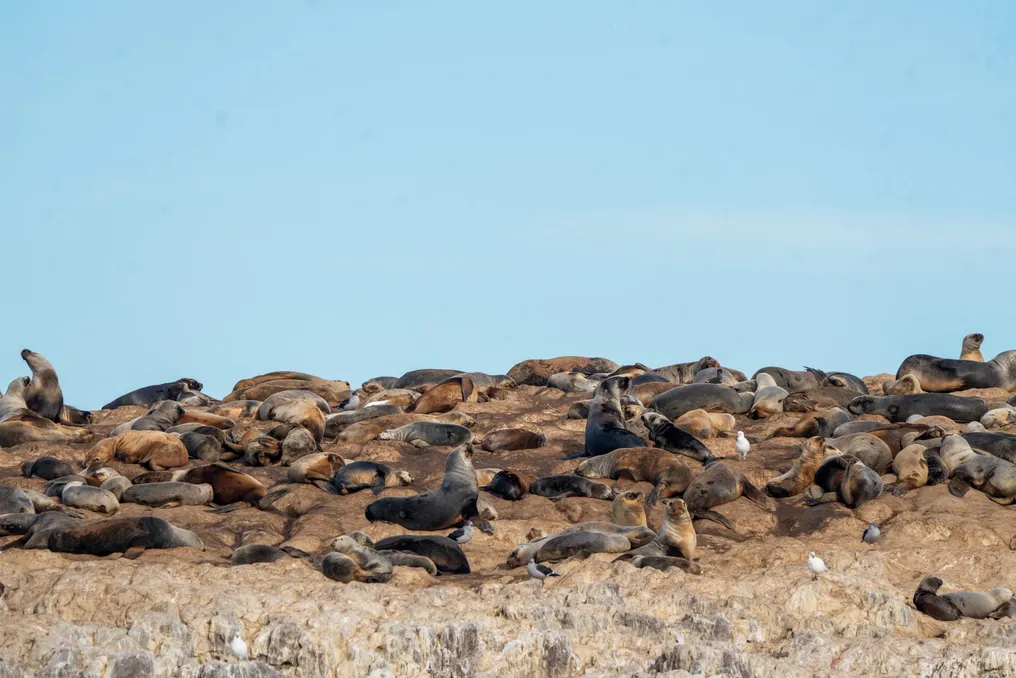
On the southern coast of Argentina, in waters of a 3000 sq km reserve, large albatrosses are observed, and humpback whales, South American sea lions, and Magellanic penguins feed and breed.

The Azul Provincial Park in Patagonia is comparable in size to Yosemite in the USA. Mariana Cassini, Director of Marine Conservation at Rewilding Argentina, aims to increase this protected area by another 30%. This expanded section, which prohibits extractive activities such as fishing, should provide better protection for migrating humpback whales, local sharks, and seabird nesting sites.

The argument for this expansion should be obvious to the authorities: four years ago, when nature loss reached historic levels, governments, including Argentina, promised to conserve 30% of the world's land and ocean by 2030.

However, halfway to the 2030 deadline, this goal remains unattainable. Cassini notes that her government is cutting environmental budgets, and local conservation activists are overworked. When she approaches local authorities, who are resource-scarce, to discuss marine protection, the response often amounts to phrases like 'I don't have time' or 'Let's talk next week.'

This gap between promises and actions, between ambitions and money, between global goals and local implementation, has become a central theme of discussions in the halls and corridors of the recent UN Biodiversity Conference, COP17.

Over two weeks last month, 140 ministers and more than 9000 delegates, including representatives from academia, business, civil society, and indigenous peoples, gathered at COP17 in Yerevan, Armenia. Their goal was to discuss commitments made four years ago under the Kunming-Montreal Global Biodiversity Framework.

Marine conservationists told Dialogue Earth that global aspirations have not been realized in many developing countries. They pointed to frequent shortages of funding, local capacity, as well as the scientific and technological knowledge needed to scale up protection measures or even to begin effective protection of their oceans.

Several environment ministers from Global South countries told Dialogue Earth about the lack of funds to adequately support conservation efforts. They blamed wealthier nations for failing to meet promised financial obligations.

According to a recent report prepared in partnership with NGOs such as WWF and Marine Conservation Institute, and funded by Bloomberg, only 10% of the world's oceans are under protection. Furthermore, some experts believe that not all this protection is real, noting that only 3.5% is considered effectively protected.

In negotiations where the 30% target was agreed upon, developed countries committed to contributing at least $20 billion annually to public financing by 2025 for global biodiversity protection. This amount was supposed to rise to $30 billion by 2030. According to the OECD (Organisation for Economic Co-operation and Development), $18.9 billion was allocated in 2024 (the latest available data).

Nevertheless, ocean protection funding looks worse than general biodiversity figures suggest. According to the OECD, in 2018, only 4% of bilateral and 9% of multilateral biodiversity development funding was directed towards marine protection.

Discussions on financing at meetings like those in Yerevan rarely specify what proportion should be allocated to marine ecosystems. Participants of COP17, whom Dialogue Earth spoke with, noted that those working on the front lines and along the coasts lack what is necessary to protect the oceans.

Popular