Charter capital of Uzbek-Omani investment company will grow to 500 million US dollars
Read more
UzDaily
uzdaily.uz

Charter capital of Uzbek-Omani investment company will grow to 500 million US dollars

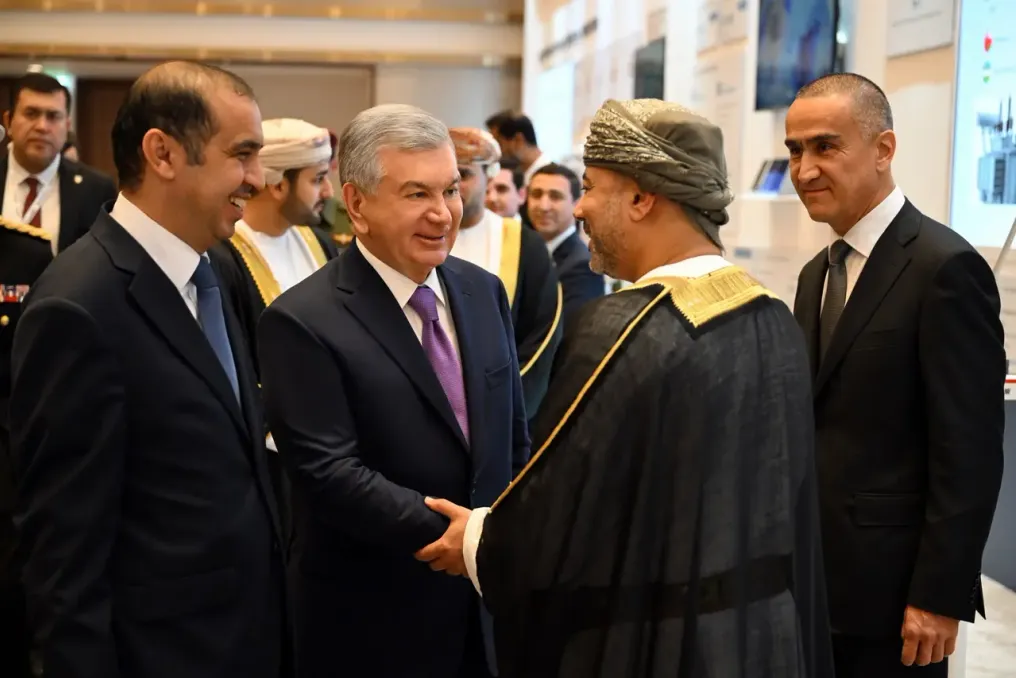
According to the press service of the President of Uzbekistan, the charter capital of the Uzbek-Omani investment company is ready to double and will reach five hundred million US dollars.

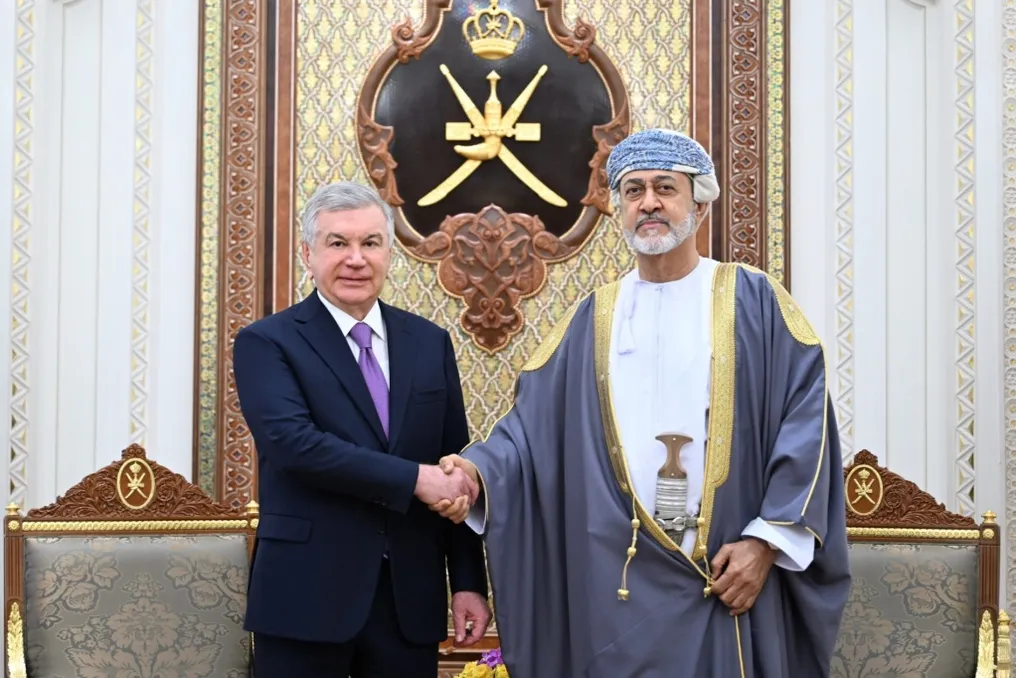
This agreement was reached during negotiations between President Shavkat Mirziyoyev and Sultan Haitham bin Tariq Al Said in Muscat.

The capital increase is expected to facilitate the acceleration of joint investment projects between the two countries. The parties also agreed to speed up the launch of the Central Asia and Caucasus Investment Fund, which is being established with the participation of Omani capital.

The Uzbek-Omani investment company, known as UzOman, operates as a joint investment structure in Uzbekistan. Its founders are the Omani Investment Authority and the Reconstruction and Development Fund of Uzbekistan. The Omani side owns 75% of the stake, while the Uzbek fund holds 25%.

UzOman invests in the fields of industry, financial services, logistics, and infrastructure. Other areas of the company's investments include real estate, retail trade, hospitality business, education, building materials, and agricultural products.

Similar stories

Uzbekistan and Oman to increase capital of joint investment company to $500 million
Read more
podrobno.uz

Uzbekistan and Oman to increase capital of joint investment company to $500 million

The charter capital of the Uzbek-Omani Investment Company is planned to be doubled, reaching five hundred million dollars. This agreement was reached following negotiations in Muscat between the President of Uzbekistan, Shavkat Mirziyoyev, and the Sultan of Oman, Haitham bin Tariq Al Said.

The capital increase is intended to promote the development of joint investment initiatives. Furthermore, the parties agreed to accelerate the launch of the Central Asian and Caucasian Investment Fund, which will be established with the participation of Omani capital.

As a result of the meetings, the leaders of the countries decided to elevate bilateral relations to the level of strategic partnership. To implement the agreements reached, the development of a special 'roadmap' and the establishment of a Coordination Council are planned.

The scope of cooperation covers numerous areas, including trade, transport and logistics, energy, chemical and electrical engineering industries, mining, urban planning, agriculture, and tourism.

The parties also focused on strengthening cultural and humanitarian ties. Opportunities such as holding weeks of culture and art, organizing youth forums, joint work on digitizing and studying ancient manuscripts, and establishing sister-city relationships between historical cities of both countries are being considered.

The heads of state also discussed the current international and regional agenda. At the conclusion of the negotiations, Mirziyoyev invited the Sultan of Oman to make a state visit to Uzbekistan.

Previously, Mirziyoyev and Haitham bin Tariq exchanged high state awards: the Sultan presented the President of Uzbekistan with the Order of Al Said, and Mirziyoyev awarded him the 'Oliy Darajali Doʻstlik' Order.

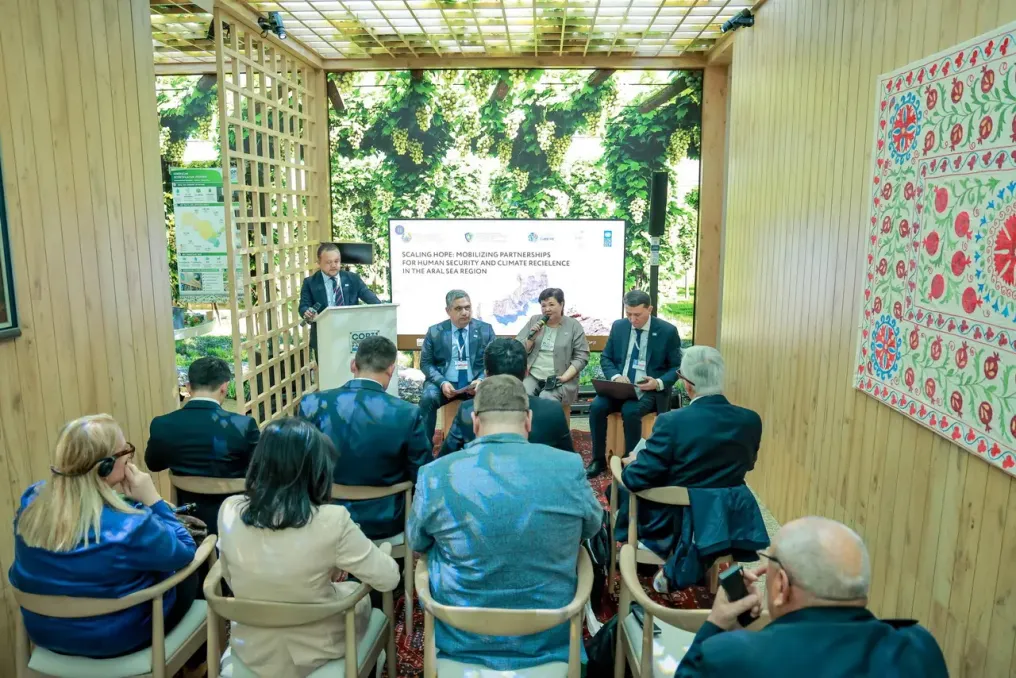
Uzbekistan will allocate $5 million to the Aral Sea region development fund
Read more
uzdaily.uz

Uzbekistan will allocate $5 million to the Aral Sea region development fund

The National Committee on Ecology and Climate Change of Uzbekistan announced its intention to contribute 5 million US dollars to the second phase of the UN Multilateral Trust Fund for Human Security in the Aral Sea region.

This financial commitment was announced during an event held at the Uzbekistan Pavilion within the 31st UN Climate Change Conference (COP31). Conference participants reviewed the results of the first phase of the fund and discussed prospects for attracting international partners for the next stage.

The fund was established in 2018 with the aim of coordinating the efforts of the government, UN agencies, and development partners to address environmental, social, and economic problems in the Aral Sea region. During its first phase, the fund managed to raise 16.2 million US dollars.

Four calls for proposals allowed for the funding of nine joint programs and one project implemented by a separate agency. Eight organizations from the UN system participated in the implementation. By the end of 2023, these projects covered more than 293,000 direct beneficiaries in eight districts of Karakalpakstan.

The second phase of the fund will run until 2030. Its goal is to transition from individual pilot initiatives to comprehensive programs that will have measurable results and broader coverage. Uzbekistan's contribution of 5 million dollars is expected to serve as a basis for attracting additional funding from international partners, developing mixed financing mechanisms, and expanding the range of participating organizations.

Priorities for the second phase will include strengthening climate resilience, improving water resource management, supporting healthcare, and promoting sustainable sources of income. The development of professional and environmental skills, as well as attracting private investment, is also planned. Participants discussed the possibility of including organizations outside the UN system in project implementation, provided that established legal and financial requirements are met. Furthermore, they focused on creating an investment portfolio that combines the region's climate, environmental, and social priorities.

Gulf countries' investments in Uzbekistan have increased by more than 25 times
Read more
uzdaily.uz

Gulf countries' investments in Uzbekistan have increased by more than 25 times

According to the Eurasian Development Bank (EDB), accumulated investments from Gulf countries in Uzbekistan have increased by more than 25 times. If this amount was $400 million USD in 2020, it reached $11.3 billion USD by mid-2026.

Furthermore, Uzbekistan has become the leading trading partner for Gulf countries in Central Asia. Over the period from 2020 to 2025, bilateral trade grew almost sevenfold, reaching $1.75 billion USD, which accounts for about 45% of the total trade volume between these regions.

These figures were published in EDB analytical bulletin No. 5 dated November 10, 2026, prepared by Aidos Omarov, and are based on the bank's mutual investment monitoring database.

In 2025, Uzbekistan and Turkmenistan together accounted for about 85% of Central Asia's trade turnover with Gulf countries. The leader in regional trade has changed: in 2024, Turkmenistan held this position with a trade turnover of about $1.7 billion USD, but in 2025, Uzbekistan surpassed it, reaching $1.75 billion USD.

Unlike most countries in the region, Uzbekistan's trade flows with Gulf countries demonstrate a relatively balanced nature. In 2025, exports reached $860 million USD, while imports amounted to $890 million USD.

The main goods that Uzbekistan exports to Gulf countries include precious metals, mineral products, and agricultural products. Imports include electronics, machinery and equipment, aviation gear, pharmaceutical and chemical products.

In October 2026, DP World, based in the UAE, began construction of a large land port near Tashkent. This project includes Class A warehouses covering 63,000 square meters and container yards with an annual throughput capacity of 150,000 twenty-foot equivalent units.

Currently, Uzbekistan ranks second in the region after Turkmenistan in terms of accumulated investments from Gulf countries. Investments in Turkmenistan reached $14.4 billion USD, but the growth rate of investments in Uzbekistan is the highest.

Investments from Gulf countries are actively flowing into the power generation sector. In Central Asia, the share of this sector in the investment portfolio has grown from 2% to 34%, with the total investment volume reaching $10.5 billion USD. According to EDB, the main driver for this growth is large-scale solar and wind energy projects, especially in Uzbekistan.

Uzbekistan is also a major beneficiary of UAE investment growth in the energy sector. Large-scale renewable energy projects are being implemented by investors such as Masdar and others. Among the largest projects are a 500 MW wind power plant in Zarafshan and a solar power plant in Surkhandarya region, involving Masdar.

Tepelen Group is participating in the solar power plant project in Namangan region. Other solar and wind projects are also under development, including facilities equipped with energy storage systems.

Saudi Arabia is the second-largest investor from the Gulf countries in Central Asia. By mid-2026, its accumulated investments in the region reached $6.46 billion USD, which is approximately 20 times the level in 2021. Almost the entire Saudi Arabian investment portfolio is concentrated in Uzbekistan, with ACWA Power accounting for over 95% of these investments.

The EDB mutual investment monitoring database lists 12 Saudi projects, mainly in the energy sector. The largest of these include the Karakalpakstan Wind and Kungrad 1, 2, and 3 wind projects in Karakalpakstan. The portfolio also includes solar power plants in Tashkent, Samarkand, and Surkhandarya region. Projects related to data centers and cable production are being implemented in Tashkent. New investment areas include Vision Invest's participation in the construction of the new Tashkent airport.

Approximately 90% of Qatar's investment portfolio, which reached $3.1 billion USD by mid-2026, is concentrated in Kazakhstan. The remaining funds are primarily directed to Uzbekistan. In Uzbekistan, Qatar invests mainly in electricity generation, including the thermal power plant project in Surkhandarya region involving Nebras Power.

Oman invests in Uzbekistan mainly through the joint platform UzOman. Oman's activities cover commercial real estate, logistics infrastructure, and the financial sector.
Popular