China sharply criticizes new US restrictions on semiconductor chip exports ahead of Trump's visit to Shenzhen
Read more
Aaj Tak
www.aajtak.in

China sharply criticizes new US restrictions on semiconductor chip exports ahead of Trump's visit to Shenzhen

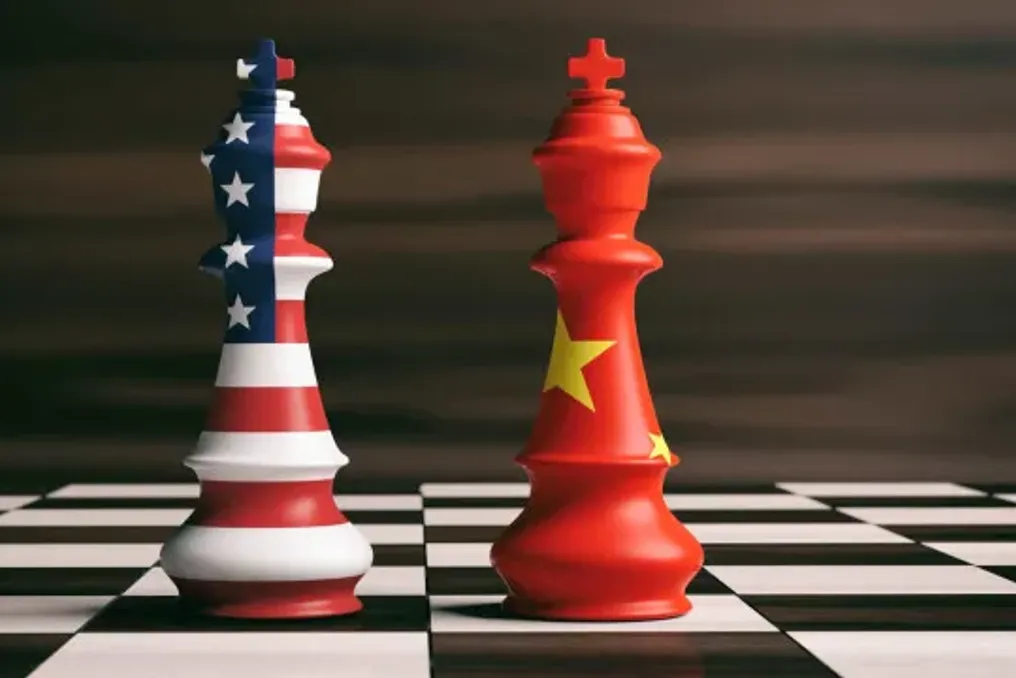
Ahead of Donald Trump's visit to Shenzhen, China sharply criticized the new sanctions imposed by the US on the export of semiconductor chips to five countries. These restrictions were established by the US to prevent advanced semiconductor chips from reaching China.

The US Department of Commerce published a temporary final rule titled 'Addressing Remote Access to Advanced Semiconductors' on Monday. According to this rule, obtaining a license is now required for the export of advanced semiconductor chips to Singapore, Thailand, Malaysia, Indonesia, and Brazil. The American side stated that there is an increased risk of chips being delivered from these countries to China.

China's Foreign Ministry spokesperson, Guo Jiakun, reacted to this measure during a press briefing on Tuesday. He stated that this is another example of Washington's excessive use of the national security concept and improper application of export controls. Guo Jiakun accused the US of interfering in normal trade and technological cooperation between China and other states, as well as targeting China's high-tech industry.

He emphasized that such economic pressure and the use of jurisdiction in the affairs of other countries contradict the general consensus between the two nations. According to him, this harms the legitimate rights and interests of Chinese companies and negatively affects global supply chains. China, in turn, stated its intention to take necessary steps to protect its legitimate rights and interests.

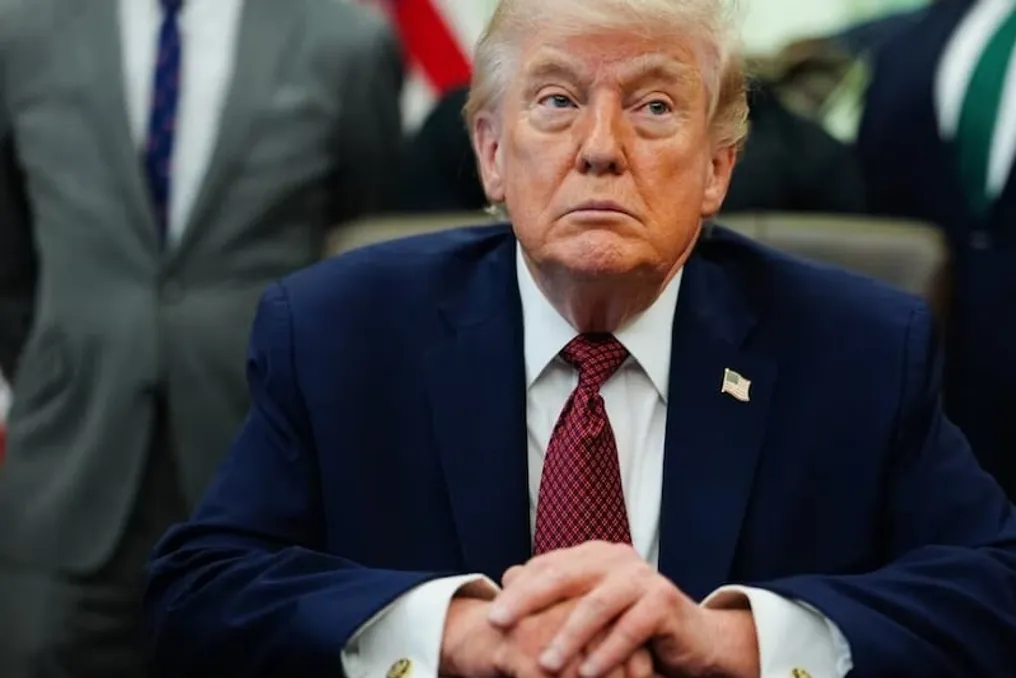
This strong reaction from China came just hours before Trump's arrival. Trump plans to visit Shenzhen to participate in the 33rd meeting of the Asia-Pacific Economic Cooperation (APEC) leaders, which begins on Wednesday and lasts for two days. Before this, Trump arrived in Shenzhen from Manila, where he had previously participated in the ASEAN summit and Quad leaders' meetings.

The significance of this 21-country summit is heightened by the fact that trilateral talks involving the presidents of China, the US, and Russia will take place on Thursday. According to the Chinese Ministry of Foreign Affairs, this meeting will discuss in detail maintaining world peace and strengthening strategic stability among key powers.

Prime Ministers Narendra Modi of India, Anthony Albanese of Australia, and Sanae Takeda of Japan also participated in the Quad meeting. No comments have been received from Beijing regarding the meeting in Manila, but China consistently opposes the Quad. China views this alliance as a strategic group created to contain influence in the Indo-Pacific region. The Chinese Ministry of Foreign Affairs has previously stated its disapproval of any special groups or confrontation in the form of blocs.
Similar stories

China accuses US of economic coercion over advanced AI chip export restrictions
Read more
olhardigital.com.br

China accuses US of economic coercion over advanced AI chip export restrictions

China declared on Tuesday, the 17th, that it will implement measures to protect its interests after the United States expanded restrictions on the export of advanced chips intended for Artificial Intelligence (AI).

The new guidelines also affect Brazil and four other countries, requiring them to obtain permission from the American government to receive certain processors. Beijing characterized this determination as an abuse of the concept of national security.

During a press conference, Guo Jiakun, spokesperson for the Chinese Ministry of Foreign Affairs, expressed his criticism of the American action. He stated that it is a classic example of economic coercion and extraterritorial application of laws. The diplomat also accused Washington of exaggerating the concept of national security and using export control measures inappropriately.

Guo Jiakun promised that Beijing would defend its legitimate rights and interests, reiterating that the United States continues to abusively expand the concept of national security and misuse export control rules.

In addition to Brazil, Singapore, Thailand, Malaysia, and Indonesia were added to the list of nations subject to these new obligations. Manufacturers will require American government approval to ship advanced processors to these markets, with each request being analyzed separately.

This regulatory tightening is linked to suspicions that Nvidia processors are being diverted to Chinese companies, even in the face of trade restrictions imposed on Beijing.

The intensification of pressure for stricter controls occurred the week before the disclosure of information about Alice Huang, an executive at Megaspeed, a company based in Singapore that became a major buyer of Nvidia chips. According to the US government, Megaspeed allegedly supplied semiconductors to Chinese companies, including Alibaba, for AI model training.

Alice Huang was pointed out as a possible Chinese spy and maintained a romantic relationship with Jensen Huang, who was co-founder and CEO of Nvidia at the time. This incident came to light last week, forcing the executive to resign, although the two are not related despite the similar surname.

The regulation imposed by the US Department of Commerce aims to prevent Chinese corporations from using infrastructure located in other countries to train AI models using processors whose export to China is prohibited. According to the rule, countries classified as high risk have a higher than average probability of illegal diversion of these components to China or Macau. These two territories are under US embargo, as are Russia, Iran, North Korea, Syria, and Cuba.

The markets impacted by these requirements also host large data processing centers associated with Chinese tech giants such as ByteDance, owner of TikTok; Tencent, responsible for WeChat; Alibaba; and Huawei.

On Monday, the 16th, the United States confirmed that it is investigating Megaspeed, a Singaporean cloud computing company where Alice Huang worked. The company is suspected of helping Chinese companies circumvent US restrictions on the export of advanced chips. The investigation began in 2024, according to the Department of Commerce, which is investigating possible violations of export controls. In June 2025, during an on-site inspection of the company's facilities, Alice Huang had already been interrogated by US authorities.

In a joint statement, the Departments of Commerce and Justice announced their intention to apply 'the full weight of the law' against Megaspeed for any criminal activity that may have occurred.

China asks US not to restrict exports citing espionage allegations involving Nvidia
Read more
olhardigital.com.br

China asks US not to restrict exports citing espionage allegations involving Nvidia

The Chinese government has requested that the United States refrain from using espionage accusations related to Nvidia as a reason to implement new technology export barriers targeting the country.

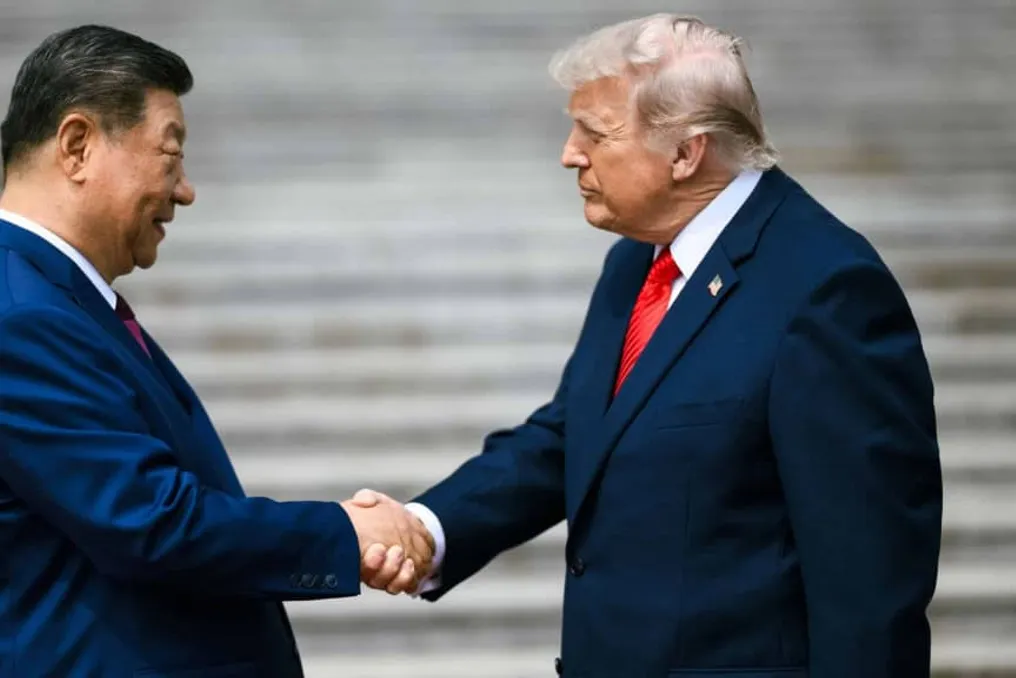
This statement comes amid a crisis involving the semiconductor manufacturer and its former CEO, Jensen Huang, and is close to a scheduled meeting between Presidents Donald Trump and Xi Jinping.

On Thursday, the 12th, the spokesperson for the Chinese Ministry of Foreign Affairs, Mao Ning, stated that Washington must cease creating espionage narratives to legitimize technological blockades. She emphasized that China's progress in this sector is sustained by autonomous innovation and transparent collaboration.

During a press conference, Mao also reported that Beijing and Washington are maintaining contact regarding the meetings between the two leaders, which are scheduled for next week during the APEC summit in Shenzhen, China.

Beijing's stance arises amidst questions about an alleged espionage case linked to Nvidia and its former CEO, Jensen Huang. These suspicions gained prominence after reports indicated possible commercial ties between Alice Huang, identified as a potential Chinese spy, and business activities associated with Huawei, the American company's competitor.

The Chinese government did not detail in its statement a specific analysis of the allegations involving Alice Huang. The spokesperson focused her argument on opposing any technological restrictions justified by espionage claims.

CSIS Analysis: Combating Tariff Evasion Will Not Resolve the US-China Imbalance
Read more
noticiasaominuto.com

CSIS Analysis: Combating Tariff Evasion Will Not Resolve the US-China Imbalance

According to an analysis by the American think tank CSIS, increased US scrutiny over Chinese products exported through third countries will not resolve the trade imbalance between Washington and Beijing.

Researcher Hugh Grant-Chapman from the Center for Strategic and International Studies (CSIS), based in Washington, argues that the administration of US President Donald Trump confuses fraudulent customs duty evasion schemes with the legitimate reorganization of international production chains.

He notes that the White House mistakenly equates entirely legitimate business operations with criminal behavior, referencing the Trump administration's August report titled The Great Transshipment Scam.

In this document, the White House accuses China of using more than 40 intermediate economies to bypass US tariffs by redirecting Chinese goods.

In Grant-Chapman's view, the US administration has expanded the concept of re-export, which traditionally implied goods passing through third countries without substantial transformation, to include products actually manufactured in these markets using Chinese components.

The researcher acknowledges documented cases of customs fraud, particularly those related to batteries, steel products, and solar panel components, but insists that these practices only explain part of the indirect presence of Chinese products in the American market.

He emphasizes that re-export itself is not inherently illegal or undesirable from a governmental policy perspective.

The study mentioned by CSIS shows that in 2024, Mexico and Vietnam accounted for 23% and 15% of China's added value, which indirectly flowed into the US, respectively.

Nevertheless, the research concludes that most of these flows are driven by industrial processing rather than simple goods redirection.

A study by the US Federal Reserve estimates that China's production in Mexico contributed to an increase in Mexican exports by approximately 14 percentage points after the imposition of tariffs on Chinese goods in 2018 and 2019, whereas direct re-export was less than one percentage point.

The CSIS analysis also demonstrates that countries such as Malaysia, Mexico, Thailand, and Vietnam have not recorded a wide increase in the matching of goods imported from China and exported to the US.

Conversely, Cambodia and Laos show more evident signs of growth in these flows, especially concerning steel products and photovoltaic elements.

For Grant-Chapman, the fundamental problem lies in the structural imbalance of the two largest global economies. In China, high trade surpluses are maintained by low domestic consumption, state support for industry, and an export-oriented growth model.

In the United States, import demand is stimulated by low savings rates, budget deficits, and increased investment, particularly in artificial intelligence infrastructure.

The researcher explains that these macroeconomic foundations place the United States in the position of a net importer, and China as a net exporter.

He recalls that in 2025, Chinese exports grew by 5.5%, despite sales in the US declining by approximately 20%, with some products being redirected to other markets, including the European Union.

CSIS also points out that many intermediate countries currently benefit from US tariffs that are 10–20 percentage points lower than those applied to China, which encourages companies to move production operations to these markets.

Grant-Chapman concludes that a sustainable path requires a more thorough analysis of global trade standards, a reassessment of the impact of US tariff differences on the market, and open dialogue with trade partners and business leaders.

Popular