Iranian animated film 'Guardian's Legacy' participates in the 16th GMfilmf festival in Italy
Read more
Tehran Times
www.tehrantimes.com

Iranian animated film 'Guardian's Legacy' participates in the 16th GMfilmf festival in Italy

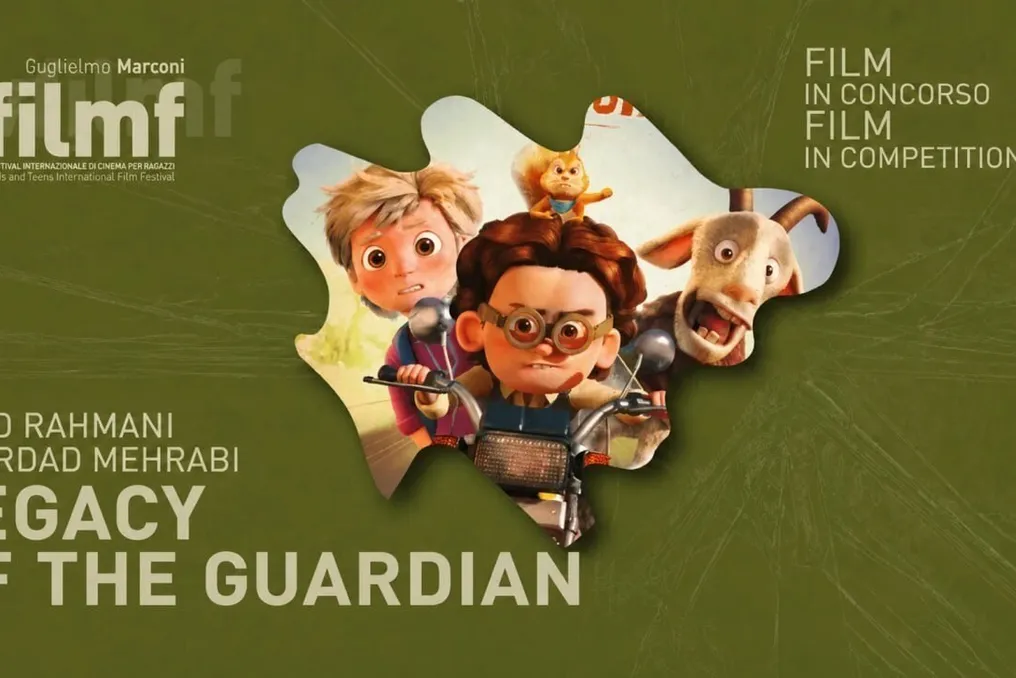
The Iranian feature-length animated film 'Guardian's Legacy' is participating in the XVI International Film Festival for Children and Teenagers of Guillermo Marconi (GMfilmf), which is taking place in Treviso, Italy.

According to a report by IRNA, this 86-minute animated project is presented in the festival's competition program alongside twelve other films and animated works.

On November 16, directors Emad Rahmani and Mehrdad Mehrabi Gargari participated in a discussion at the festival. This provided an opportunity for the Italian public and animation enthusiasts to learn about the creative process behind the work, as well as how mythological narratives and Iranian traditions are transformed into a modern visual storytelling format.

During the session, Rahmani, who is the screenwriter and director of 'Guardian's Legacy,' spoke about the formation of the initial idea and how Iran's mythological heritage was adapted into an engaging story for children and teenagers. Mehrabi, acting as director and 3D artist, shared his experience in character creation, as well as in implementing digital movement and animation before the audience.

The program was developed under the slogan 'From Myth to Animation,' aiming to demonstrate the production process of animated films and emphasize the role of cinema in strengthening ties between different cultures.

'Guardian's Legacy' is a fantasy adventure animated film set in modern Iran. The story tells of two boys who discover a group of thieves in an ancient area. This leads to the awakening of a legendary guardian, after which the two children embark on a joint adventure with him to recover a stolen artifact.

Among the ruins of the ancient Iranian city of Bahram, a shy nine-year-old boy armed with a wooden sword dreams of becoming a hero. Together with his pet Jano and a brave squirrel companion, he explores the historical site, turning every small discovery into a big adventure.

One evening, the boys find a sealed passage and interrupt the search of a group of smugglers looking for a legendary sword. Bahram successfully solves an ancient riddle, awakening Khashayar—a mythical guardian reborn as a stubborn talking goat. When the smugglers approach the weapon capable of amplifying the owner's intentions, Bahram realizes that courage stems not from strength, but from the choice of those who decide to wield it.

The premiere of 'Guardian's Legacy' took place on January 31 at the 44th Fadr Film Festival in Tehran, where it opened the festival. Since it was the only animated film accepted at the festival, it was shown in the non-competition program.

In October, this feature-length animated film participated in the 38th International Children and Youth Film Festival in Isfahan, where it received a special festival award and a prize for best animated film.

Emad Rahmani is a screenwriter and director whose work spans animation and narrative video games. With over 15 years of professional experience, Rahmani has directed and developed more than 20 projects in the field of animation and interactive entertainment. His projects often draw inspiration from Iranian history, mythology, and regional culture, but they are created as emotionally resonant genre stories intended for audiences far beyond their original context.

In his directorial partnership with Mehrabi, Rahmani primarily focuses on plot development, scriptwriting, storyboarding, and the initial construction of the visual narrative. Humor and adventure remain central elements of his work, especially when they allow younger audiences to engage with complex cultural or moral themes without losing the joy of the story.

Mehrdad Mehrabi Gargari is an Iranian animation director and 3D artist holding an architecture degree from Bonab University. His main areas of expertise include composition, cinematography, movement, character design, animation direction, and final visual continuity of scenes. His collaboration with Rahmani is based on complementary roles. While Rahmani handles plot development, storyboarding, and the initial definition of the visual narrative, Mehrabi oversees the transition from these foundations to composition, movement, and final animation. They have jointly produced two other feature-length animated films, including 'Sword and Sorrow' and 'Legend of Sepehr.'

The Guillermo Marconi International Film Festival for Children and Teenagers was established with the goal of creating a major film festival for children and teenagers that unites talent and culture, serves as a welcoming place for youth, and offers workshops dedicated to exploring new forms of artistic expression.

The festival aims to be an initiative directed at the entire country and the international community, meeting the expectations of both young people and adult viewers, striving to bring the general public closer to quality forms of cinema. Although its target audience includes children, schoolchildren, and university students, the program is enthusiastically open to adults and all those interested in cinematic art, who are passionate about artistic and visual culture, pedagogy, fun, and education, as well as simple entertainment.

The festival represents a good opportunity to demonstrate new educational paths, offering a constantly updated program of cultural events and providing valuable skills and fruitful reflections through the medium of cinema accessible to all members of society. This year, the festival will conclude on November 30.

Similar stories

ANO 'Eurasia' has started accepting applications for the grant competition for foreign films in Russian
Read more
podrobno.uz

ANO 'Eurasia' has started accepting applications for the grant competition for foreign films in Russian

The Autonomous Non-profit Organization 'Eurasia' has officially announced the start of applications for an international film competition dedicated to finding the 'Best Foreign Film in Russian'.

This project is intended for both experienced and novice filmmakers, offering them the opportunity to receive financial assistance in the form of a grant for producing their own films.

Game, non-game, and popular science films shot in Russian are eligible to participate. Topics considered within the framework of the competition include preserving national heritage, events of the Great Patriotic War, the histories of people who contributed to the development of their countries, as well as the protection of traditional values, current social issues, sports, and the promotion of modern cinematography.

Foreign citizens over eighteen years of age, as well as foreign commercial companies and foreign non-profit NGOs, can submit applications. The deadline for submitting competition materials is set for December 15th on the official portal of the 'Eurasia-KinoFest' project.

Iranian Short Documentary Film Wins Award at 15th African International Film Festival
Read more
www.tehrantimes.com

Iranian Short Documentary Film Wins Award at 15th African International Film Festival

The Iranian short documentary film 'Throne of Wood' won an award at the 15th African International Film Festival (AFRIFF), which took place in Nigeria from November 1 to 7.

The 30-minute documentary, directed by Sadegh Kazemi and produced by Mohammad Javad Amirani, was honored with the 'Best Short Documentary Film' award at the closing ceremony.

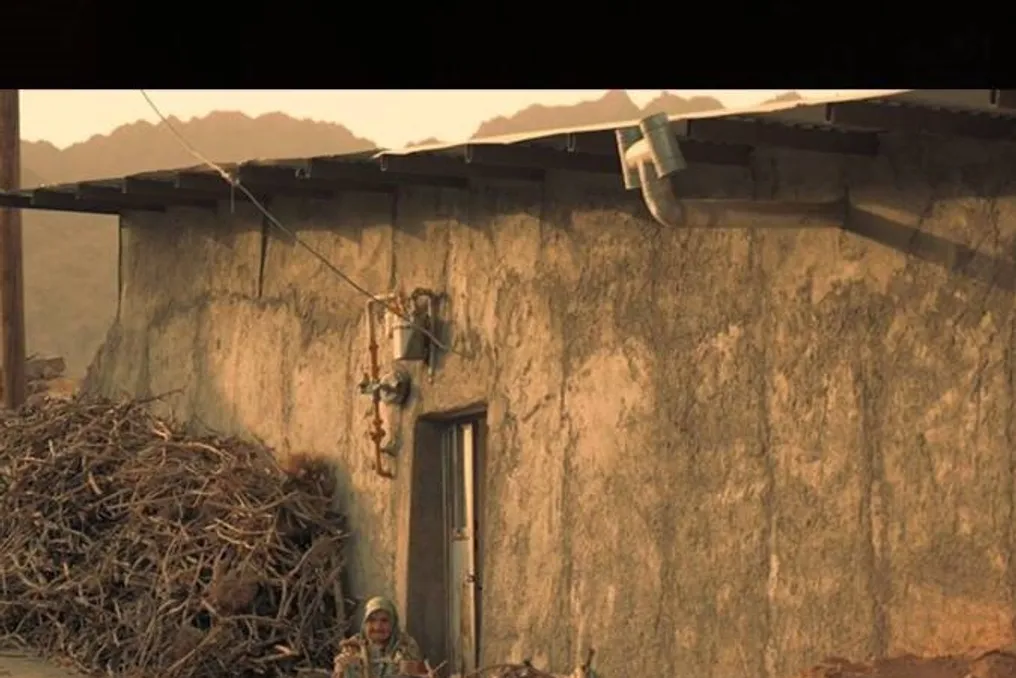
The film tells the story of Grandma—the only hundred-year-old woman in the village who has been collecting huge stockpiles of firewood in front of her house for years. Since the village has long been connected to natural gas, her neighbors mock her efforts, considering them pointless.

Grandma, known since childhood as 'The Boss' due to her independent and authoritative nature, has reached one hundred years old and refuses to become like other elderly residents of the village—dependent on their children.

Despite having over fifty grandchildren and great-grandchildren, she now lives alone, and the most important task of her solitary years has become accumulating massive stacks of wood and preparing daily tea over a fire made from this wood. When a fire breaks out in a neighboring house, the villagers insist that she remove her wood for the safety of the area. However, Grandma is very attached to her wood, and giving it up is not an option for her.

This year, the AFRIFF festival was held under the theme 'Frames of the Future: Africa's Creative Intellect.' The festival's global awards recognize outstanding films and creative talent among the selected works.

The African International Film Festival is considered the most vibrant film festival experience in Africa. AFRIFF consistently acts as an energetic and captivating hub where real people establish genuine connections and gradually gains a reputation as a provider of real value.

AFRIFF offers awards in categories such as feature, documentary, short, animation, and student short, as well as awards and prizes for directing, acting, and screenwriting. The festival also includes special awards for audience and jury choice for outstanding film.

TMoCA Cinema will screen French documentary about Iran
Read more
www.tehrantimes.com

TMoCA Cinema will screen French documentary about Iran

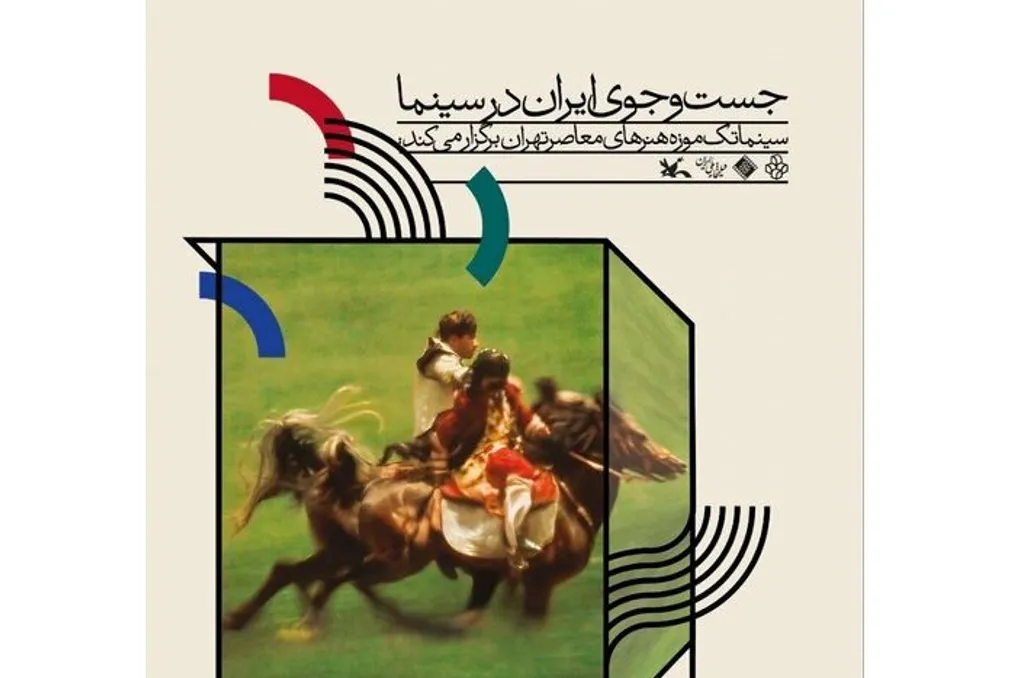
As part of the exhibition 'In Search of Iran: In the Collection of the Tehran Museum of Modern Art,' a program titled 'In Search of Iran in Cinema' will be held at the museum's cinema. The event will feature films where Iran plays a significant role, and the program will run for five weeks at the Tehran Museum of Modern Art (TMoCA) in Tehran, according to IRNA.

The first screening will take place on Sunday, November 8, featuring the documentary film 'Wind of Lovers' by Albert Lamorisse. Following the screening, film critic Mehrzad Danesh will give a presentation on it.

'Wind of Lovers' is a dreamlike documentary that explores the diverse landscape of Iran, both natural and man-made. The film paints a picture of Iranian landscapes from a bird's-eye view, showing the waters of the Caspian Sea in the north and the Persian Gulf in the south, palms in the west, central deserts and eastern plains, as well as ruins of ancient historical sites such as Susa and Persepolis, alongside images of people in various locations.

Approximately 85 percent of the film was shot using a helicopter. Although it shows real footage of the country, the narrative is fictional (and sometimes humorous) and belongs to the renowned Iranian veteran filmmaker, writer, editor, translator, and voice actor Manouchehr Anwar. The film is also accompanied by traditional and ethnic Iranian music. Master Hossein Dehnavi's composition includes several pieces using Persian instruments such as tar, tonbak, santur, nay, and violin, which significantly enriches every scene.

In Persian, the film's title translates to 'Saba Wind,' which comes from the northwest and symbolizes a message of love. The film is lyrically voiced by the wind.

Anwar, born in Tehran, at the age of 98, graduated from the Royal Academy of Dramatic Art in London and began his creative career in 1958 after returning to Iran. Lamorisse (1922–1970) was a French film director, producer, and screenwriter of short films, which he began shooting in the late 1940s. He also invented the strategic board game Risk in 1957.

In film production, he developed a camera mounting system for helicopters called 'Helivision,' which fueled his long-standing passion for filming aerial and ground subjects from the air. Thanks to his unique capabilities in aerial documentary filmmaking, Lamorisse received a commission from the Iranian Ministry of Art and Culture in 1968 to create a film celebrating the magnificent culture of Iran from ancient times to the present day, utilizing his patented aerial photography.

Lamorisse completed most of the filming for the movie in 1969, much of which (about 85 percent) was aerial photography, in line with his own poetic vision of what the film should be. In 1970, he returned to shoot more material on modern industrial developments but died in a plane crash while filming the Karaj Dam (Amir Kabir) 63 km northwest of Tehran.

His widow and son, who worked as assistants on the production of this film, completed it based on his production notes and released it eight years later, in 1978. In 1979, he was nominated for a posthumous Academy Award for Best Documentary Feature.

There is also an epilogue to this story in the form of a six-minute film. After the Karaj accident, Lamorisse's camera was recovered from the wreckage, and its film was processed in the Ministry of Art and Culture laboratory. The recorded material was then edited by members of his original film crew in recognition of the director and in memory of his death.

The 'In Search of Iran in Cinema' program will continue in the coming weeks with films such as Nasser Taghavi's 'About Iran,' Abdolhossein Sepanti's 'Ferdowsi,' Parviz Kimiavi's 'Iran - My Land,' and Bahram Beizai's 'Bashu, Stranger.' The program is organized in collaboration with the National Film Archive of Iran and the Institute for Intellectual Development of Children and Youth (Kanoon). Admission is free and open to the public.

Popular