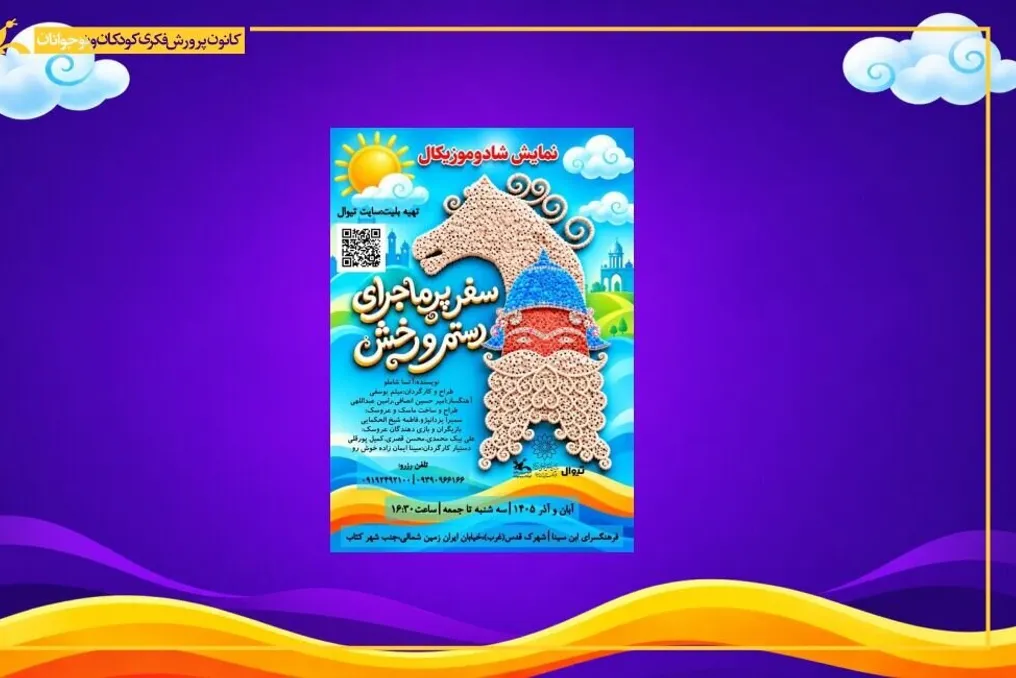
The theatrical production 'Adventures of Rostam and Rakhsh,' based on the story of Rostam's Seven Feats from Ferdowsi's epic masterpiece 'Shahnameh,' will be shown at the Ibn Sina Cultural Center in Tehran. This production was created by the Institute for Intellectual Development of Children and Youth (IIDCYA).
The play's script was written by Atesa Shamlu, and the design was developed by Samira Yazdanpadju and Fateme Sheykolhokam. Meysam Yousefi served as the director. This production is part of the institute's ongoing theater program.
Previously, the play was staged under the title 'Haft Khan' (Seven Feats) as part of the 'Book, Theater, School' project. It has already been presented in schools, IIDCYA centers, and through the institute's mobile theater program, which brings performances to children in various communities.
The cast includes Ali Bey-Mohammadi, Mohsen Kasri, and Kameil Pourkoli, while Amirhossein Ensafi and Ramin Abdollahi are responsible for the music.
The story begins with Zal informing his son Rostam that King Kay Kavus and his army have been captured by the White Div, a powerful demon residing in Mazandaran. To save the king and soldiers, and to dispel the demon's spells, Rostam embarks on a dangerous journey from Sistan to Mazandaran, accompanied by his faithful horse Rakhsh. Along the way, he must overcome a series of serious trials known in Persian literature as Haft Khan, or Rostam's Seven Feats.
Rostam is considered one of the most famous heroes of Persian literature and a central warrior figure in many legendary episodes of the 'Shahnameh,' or Book of Kings, written by the Persian poet Abolqasem Ferdowsi in the late 10th and early 11th centuries. Born to Zal and Rudabeh, Rostam is associated with Sistan and serves as the main protector of the Iranian kingdom against its enemies. He is known for his exceptional strength, bravery, and military skills, embodying the ideals of heroism, loyalty, and love of the homeland. His adventures constitute a significant part of Ferdowsi's epic, which narrates the mythical and historical past of Iran through stories of kings, warriors, conflicts, and moral tests.
Rakhsh, Rostam's legendary horse, is much more than just a means of transportation. This remarkable and intelligent animal character serves as the hero's inseparable companion and plays an active role in several of his adventures. Known for his strength, speed, courage, and loyalty, Rakhsh shares Rostam's dangers and contributes to his victories. In the tale of the Seven Feats, the horse is particularly important, demonstrating its own bravery and vigilance when facing threats. The relationship between Rostam and Rakhsh symbolizes the bond of mutual trust and companionship, making the horse one of the most memorable animal characters in Persian epic literature.
The Seven Feats describe Rostam's journey through a series of perilous encounters and supernatural challenges. These include battles with fierce animals, demons, and other mysterious forces. Each trial tests a specific aspect of the hero's abilities, requiring not only physical might but also courage, intellect, patience, and determination. The final confrontation with the White Div is particularly significant, as Rostam must defeat the demon to save Kay Kavus and his companions. This story has remained one of the most well-known parts of the 'Shahnameh' and has inspired numerous artistic interpretations, including illustrations, paintings, theatrical performances, and adaptations for younger audiences.
Drawing inspiration from ancient Iranian literary sources, the new theatrical production combines humor and music with a psychological approach to themes such as awareness and avoiding false overconfidence. Through Rostam's adventures, the play aims to introduce young audiences to an important part of Iran's literary heritage while prompting reflection on personal qualities and the importance of making balanced decisions.
'Shahnameh,' one of the most influential works of Persian literature, consists of approximately 50,000 couplets and preserves an extensive collection of Iranian myths, legends, and historical narratives. Ferdowsi's epic played a key role in preserving the Persian language and transmitting cultural traditions from generation to generation. The story of Rostam and his Seven Feats remains one of the most enduring narrative threads within it, offering younger readers and viewers an introduction to the values, imagination, and heroic traditions of classical Persian storytelling.
'Adventures of Rostam and Rakhsh' will run from November 17 to December 18 at the Ibn Sina Cultural Center, located on North Iran Zamin Street, Shahrak Kods.