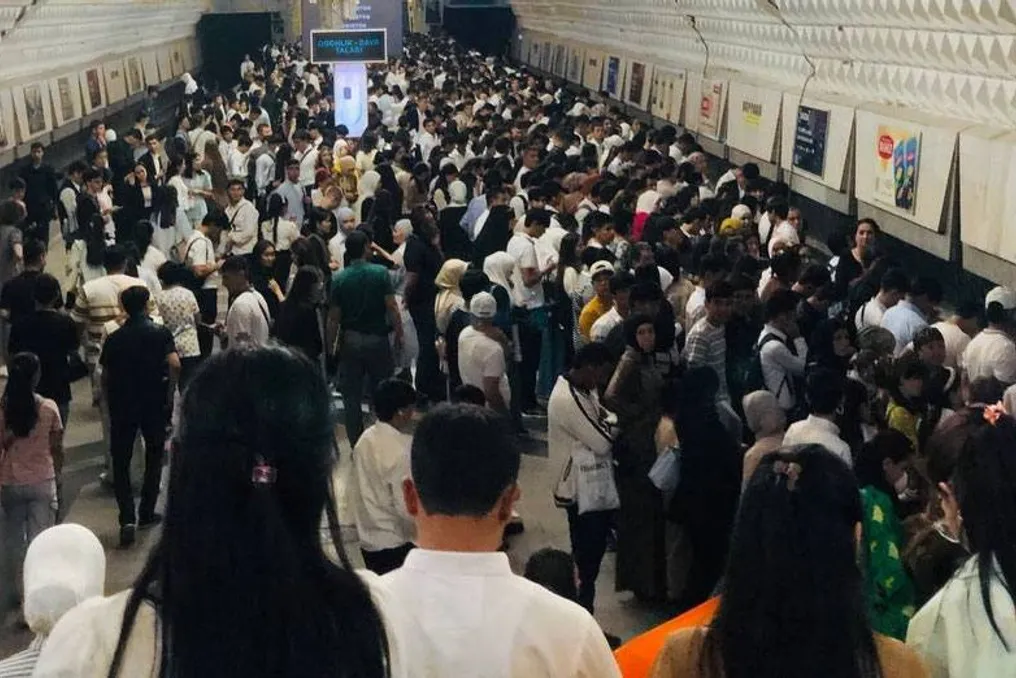
According to the results of the general census of the population of Uzbekistan, the population reached 39.05 million people, which exceeds previous statistical estimates by 810.6 thousand. The shares of the urban population, which increased from 50.9% to 54.5%, and the expected life expectancy, which increased from 75.4 to 76.4 years, were also adjusted. These data were presented by the National Committee on Statistics.
The final results of the census, conducted for the first time in independent Uzbekistan, were announced on November 13. According to data from January 15, 2026, the permanent population of the republic was 39,047,321 people. This is 810.6 thousand, or 2.1%, more than the current estimate as of January 1, which was 38.24 million people. Zokhidjon Ziyaev, Deputy Chairman of the National Committee on Statistics, explained that the discrepancy is due to the fact that the last general census was conducted back in 1989, and in subsequent decades, calculations were based on administrative data on births, deaths, and migration.
The census allowed for a detailed breakdown not only of the total number of residents but also their distribution by region, as well as an examination of socio-demographic parameters and living conditions. For comparison, the population of Uzbekistan in 1989 was about 19.9 million people; in 1979—15.4 million, and in 1970—11.8 million.
Population Growth Almost Doubled in 37 Years
Thus, over the period between the last two censuses, the country's population increased almost twofold. Furthermore, information on national composition, education level, and marital status of citizens was disclosed.
Change in the Ratio of Urban and Rural Population
A significant change concerned the ratio of urban to rural residents. Zokhidjon Ziyaev reported that the share of urban residents was refined from 50.9% to 54.5%, representing an increase of 3.6 percentage points. According to the final data, 21.28 million people live in cities, and 17.77 million in rural areas, exceeding the rural population by 3.51 million people. These changes reflect the refinement of old statistical data, not mass population migration.
Of the total population, men account for 19.77 million people (50.6%), and women account for 19.28 million (49.4%), meaning there are 485.1 thousand more men than women.
Average Age and Life Expectancy
At the press conference, Zokhidjon Ziyaev also presented updated demographic indicators. The average age of the population of Uzbekistan after recalculation was 29.6 years, slightly higher than the previous estimate of 29.5 years. The expected life expectancy at birth was revised from 75.4 to 76.4 years, an increase of one year. However, this increase is related to the adjustment of demographic calculations based on the census, not an actual increase in life expectancy over a short period.
During the recalculation of historical demographic indicators, the National Committee on Statistics involved international expert forces, including the UN Population Fund (UNFPA) and the International Organization for Migration (IOM). The Committee plans to release updated statistical series and methodological clarifications, urging researchers to use the recalculated data.
Information on Temporary Absence of Residents
At the time of the census, 36.96 million residents were at their permanent place of residence. Another 2.09 million people were temporarily absent for up to a year. The main reason for such absence was work, indicated by 1.64 million people, which accounts for 78.6% of all temporarily absent individuals. The remaining 15.7% (329.2 thousand people) were absent due to education.
Population Structure by Age
According to the census results, 21.74 million residents, or 55.7% of the total population, were of working age. Zokhidjon Ziyaev noted that this indicator increased by 403.2 thousand people, or 1.9%, compared to previous calculations. Of these, 12.52 million people (32%) are younger than working age, and 4.79 million (12.3%) are older than it. Thus, the number of people younger than working age is 2.6 times higher than the number of residents older than this age.
The age structure demonstrates a high proportion of youth and children. In most age groups up to 45 years, men outnumber women. However, starting from the 45–49 age group, the ratio changes: among the population older than working age, women account for 2.92 million people, and men account for 1.87 million, meaning women make up about 61% of this category.
Marital Status and Birth Rate
A separate section of the census is dedicated to marital status and the number of children. Among 27.17 million residents aged 15 and over, 19.47 million people (71.6%) are officially married. 20.1% (5.45 million) have never been married, 4.4% (1.19 million) are widows, and 1.8% (501.8 thousand) are officially divorced. Additionally, 1.3% (347.2 thousand) are in unregistered marriages.
According to the census data, 10.51 million women over 15 years old had children, and the total number of children born to them was 29.2 million. The largest group consisted of women who gave birth to three children—3.27 million people, or 31.1% of all mothers. As a result, over 37 years, the share of women with five or more children decreased by 26.9 percentage points (from 35.7% to 8.8%), while the share of women who gave birth to three children doubled (from 15.2% to 31.1%). Jakhongir Kambarov, a representative of the National Statistical Committee, highlighted the decrease in the prevalence of large families compared to 1989.
Ethnic Composition of the Population
According to the final results, Uzbeks constitute 34.9 million people, making up 89.4% of the population. The next largest groups are Tajiks (1.28 million people, 3.3%), Karakalpaks (841.4 thousand, 2.2%), and other groups. Jakhongir Kambarov emphasized that the census was based on the principle of self-determination, and participants provided information independently, without requiring supporting documents, which may lead to differences in indicators from administrative data.
Education Level Among the Population Over 15 Years Old
According to the census results, 90.7% of residents aged 15 and over have an education no lower than general secondary. Higher and postgraduate education is held by 3.27 million people, accounting for 12% of this age group, including 41.8 thousand individuals with postgraduate education. 9.74 million people (35.8%) received vocational and professional education, 11.63 million (42.8%) received general secondary education, and 1.87 million (6.9%) received basic secondary education. The number of residents without education is minimal—7.2 thousand people (0.03%).
The census revealed gender and regional differences in education levels. Among men, 13.9% have higher and postgraduate education, while among women, it is 10.2%. This figure is higher in cities—14.2%—compared to 9.3% in rural areas. Gender differences among youth (15–24 years) are less pronounced: 6.7% of men and 6.3% of women have higher education. Among people aged 70 and over, the figures are 22.7% for men and 9.1% for women.
Tashkent demonstrated the highest level of higher and postgraduate education among the population over 15 years old—24.9%. Next follow Navoi Region (14.9%) and Karakalpakstan (13.1%), while the lowest figures were recorded in Andijan (9.4%), Namangan (9.5%), and Surkhandarya (9.7%) regions. The share of residents with higher education in the capital is approximately 2.6 times higher than in Andijan region.
Attendance at Educational Institutions
9.62 million residents of the country aged seven and over are studying in educational institutions. The gender distribution shows that 4.95 million people (51.5%) are men and boys, and 4.67 million (48.5%) are women and girls. The distribution by education level is as follows: primary—2.93 million people (30.5%); basic secondary—3.27 million (34%); general secondary—1.15 million.