Samrat Government Launches 40 Mobile Centers to Promote Sugarcane Cultivation in Bihar
Read more
Aaj Tak
www.aajtak.in

Samrat Government Launches 40 Mobile Centers to Promote Sugarcane Cultivation in Bihar

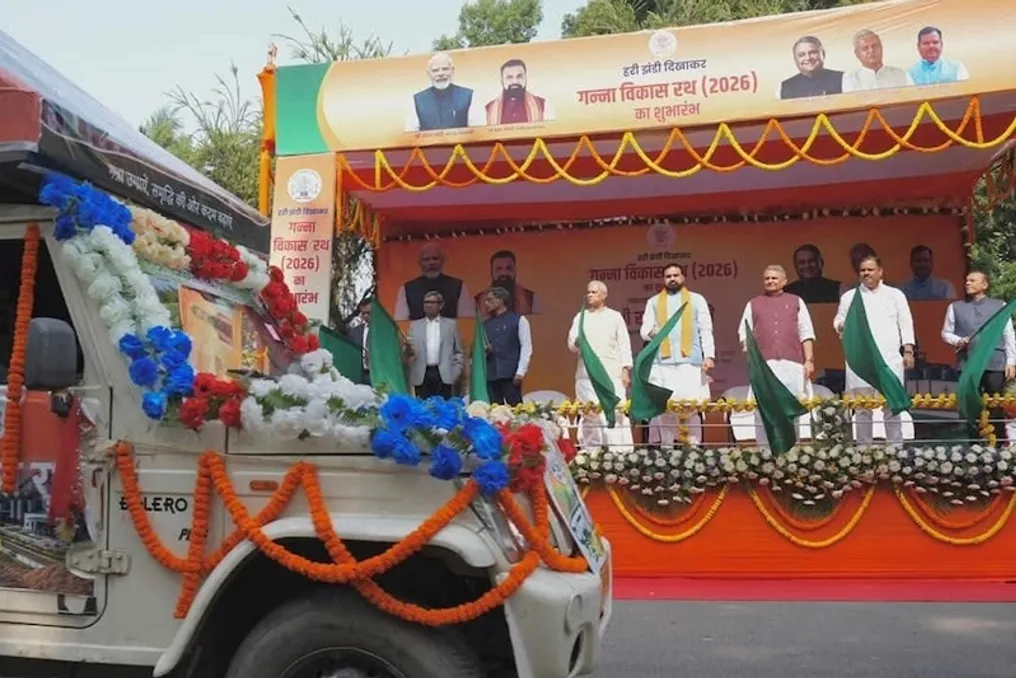
Chief Minister Samrat Chaudhary dispatched mobile centers for sugarcane development from the state capital, Patna. These centers will reach villages and panchayats across all 38 districts of Bihar to provide farmers with information on modern agricultural practices, government schemes, and subsidies.

The government aims not only to increase sugarcane production but also to restart closed sugar mills and build 25 new ones.

To stimulate sugarcane production and develop the sugar industry in Bihar, the Samrat government has initiated a new program. On Tuesday in Patna, Chief Minister Samrat Chaudhary gave the green light to 40 'Sugarcane Development Mobile Centers 2026'. These centers will cover all 38 districts of the state, reaching the village and panchayat level. Through them, farmers will receive information on modern sugarcane cultivation technologies, government initiatives, agricultural services, and subsidies.

At the event held at the Chief Minister's press conference, Deputy Chief Minister Vijay Kumar Chaudhary and Bijendra Prasad Yadav were present. The ceremony was led by the Minister of Sugar Industry, Sanjay Kumar. State Secretary Pratyay Amrit and senior officials of the Department of Sugar Industry were also present. The government believes that direct farmer outreach will provide an incentive for sugarcane cultivation, leading to the launch of a statewide awareness campaign.

According to the government plan, only 40 such mobile centers will operate in the state. Of these, 15 centers will conduct an awareness campaign among farmers for 30 days in the Madhubani and Darbhanga districts. The remaining 25 centers will reach other 36 districts of Bihar. Thanks to these centers, farmers will be able to receive information about government programs and services related to sugarcane cultivation directly in their villages. This is expected to help farmers benefit from the programs and adopt new farming methods.

Through the mobile centers, farmers will be informed about the new sugarcane planting expansion program, the sugarcane mechanization scheme, and the Chief Minister's sugarcane development program. Furthermore, information will be provided on purchasing high-quality and certified seed material. Farmers will be informed about subsidies available for agricultural machinery and agricultural bank financing. Information on government incentives to support organic farming will also be part of this campaign.

Farmers will also be educated on advanced sugarcane varieties and scientific agricultural methods. This includes information on using the single-stalk technology, applying balanced fertilizers, and modern agrarian practices. The government's focus is on achieving better yields while reducing costs and labor in agriculture. To achieve this, farmers will be encouraged to use new technologies and agricultural machinery.

For the modernization of sugarcane cultivation, the Bihar government is also emphasizing digital capabilities. During the mobile center campaign, farmers will be provided with information about the digital identity card for sugarcane farmers, known as 'Ganna ID'. They will also be told about using the artificial intelligence chatbot 'Ganna Saathi'. These digital tools are being used to deliver information about departmental services and government programs to farmers. The government aims to reduce the need for farmers to frequently visit government offices for information. Thus, the government intends to increase the use of digital capabilities in the agricultural sector through this campaign.

The government's goal extends beyond simply increasing sugarcane cultivation. The government also intends to strengthen Bihar's sugar industry. For this, the restart of closed sugar mills and the construction of 25 new sugar mills in the state are planned. The government hopes that this will provide sugar farmers with better options for selling their harvest, as well as expanding business connections and employment opportunities related to the sugar industry.

Under this program, the state government has signed an agreement with Indian Potash Limited (IPL) for the construction and operation of sugar mills in Sakri of Madhubani district and Raiyam of Darbhanga district. The construction of these mills is considered an important step towards expanding the state's sugar industry. The government aims to establish better coordination between sugarcane cultivation and sugar mills, which is expected to benefit farmers.

Through the mobile centers, information about government programs will be conveyed not only to farmers but also to potential investors. Specifically, details will be provided on the benefits and incentives offered for constructing new sugar mills under the 'Bihar Sugar Industry Investment Promotion Policy-2026'. The government seeks to attract private investment and create a favorable environment for the expansion of the state's sugar industry, which should promote the creation of new industrial enterprises.

In addition to the sugar industry, the Bihar government also plans to develop the palm juice industry (gur). For this, processing units for palm juice will be established under the 'Bihar State Palm Juice Industry Promotion Program'.
Similar stories

Prime Minister Modi Discussed Agricultural Development and the Future of Indian Farming at Conference
Read more
www.aajtak.in

Prime Minister Modi Discussed Agricultural Development and the Future of Indian Farming at Conference

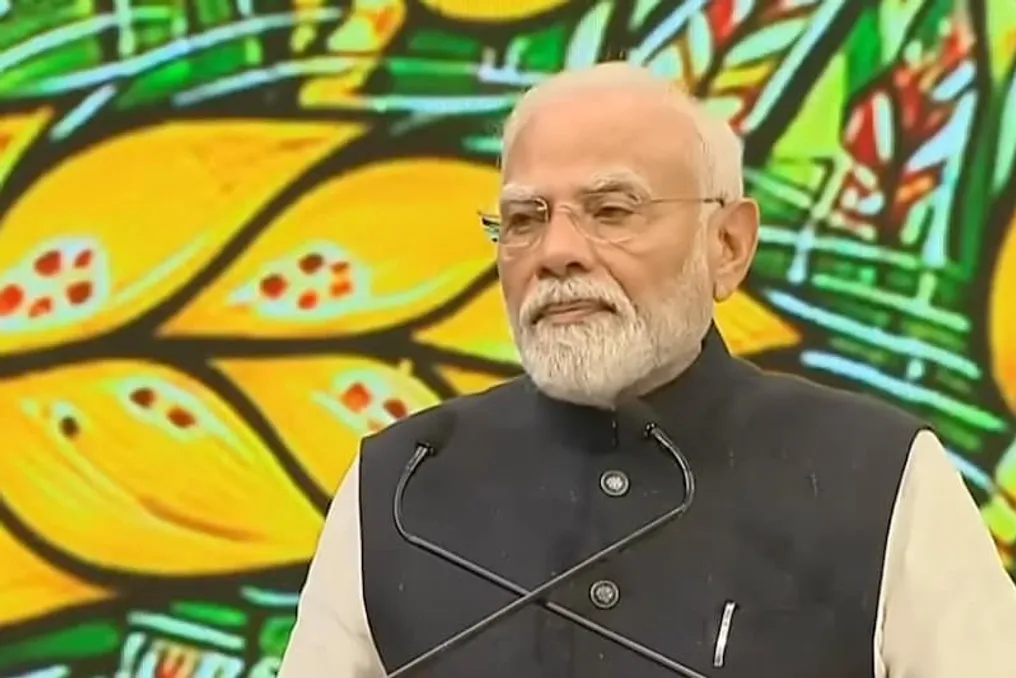
Prime Minister Narendra Modi addressed the Kisan Tak Bharat Agriculture Conference 2026, organized by India Today Group. He emphasized that the dream of a developed India cannot be realized without transforming agriculture into a modern and smart sector.

Modi noted that over the past decade, the average growth rate of India's agricultural sector has exceeded 4 percent. He stated that building a developed India is impossible without developing, modernizing, and empowering farmers through agriculture. The Prime Minister stressed the importance of holding farmers' meetings, given the deep connection between agriculture and the country's progress.

Beginning his speech with greetings for the festivals of Diwali and Chhath, Modi welcomed the Chairman and Editor-in-Chief of India Today Group, Arun Puri, as well as agricultural scientists, entrepreneurs, and farmers from across the country. He thanked India Today Group for organizing the Kisan Tak event, noting it was a positive step following their participation in the nation's cleanliness campaign.

The Prime Minister linked the festivals to agriculture, pointing out that many Indian festivals, such as Bihu, Pongal, Onam, Basuki, and Sarahul, are closely associated with farming. He asserted that agriculture forms the foundation of Indian culture, traditions, and social life.

Modi recalled his discussion on the seven streams of power for creating a developed India, which he held from the Red Fort, where agriculture was one of the key components. He reiterated that achieving a developed India remains unattainable without developing the agrarian sector, enhancing its intellectual level, and supporting farmers.

Explaining the link between agriculture and national progress, Modi referenced a World Bank study. According to this study, over a period of 12–13 years, 50 million poor people in India were able to overcome poverty, with a significant portion of this success attributed to small farmers and agricultural laborers in villages.

He also pointed out that in the last decade, the growth rate of agriculture in India has surpassed 4 percent, marking the first decade since independence when the agrarian sector achieved such an average growth rate.

The Prime Minister expressed regret that public attention often focuses on certain aspects while overlooking the country's achievements. Agricultural experts are aware of the need for continuous changes in agrarian policy and methods. Criticizing previous governments, he indicated that they were satisfied with farmers filling grain silos but failed to pay due attention to what the farmers would receive afterward.

Modi explained that the world, markets, people's needs, diet, weather, and technology have changed over time. Therefore, it was crucial to revise and strengthen the position of farmers in light of these changes, yet this had not been adequately addressed previously.

Modi reported that due to adaptation to changes in agriculture over the last decade, India exports agricultural products worth more than 4 lakh crore rupees annually. He added that this contributes to increasing farmers' incomes. He also listed India's production achievements, noting that the country ranks first globally in milk and pulses production, and has achieved first place in jute and rice production.

Padmashri Nek Ram Sharma from Himachal Preserves Traditional Grain Crops and Creates Seed Bank
Read more
www.aajtak.in

Padmashri Nek Ram Sharma from Himachal Preserves Traditional Grain Crops and Creates Seed Bank

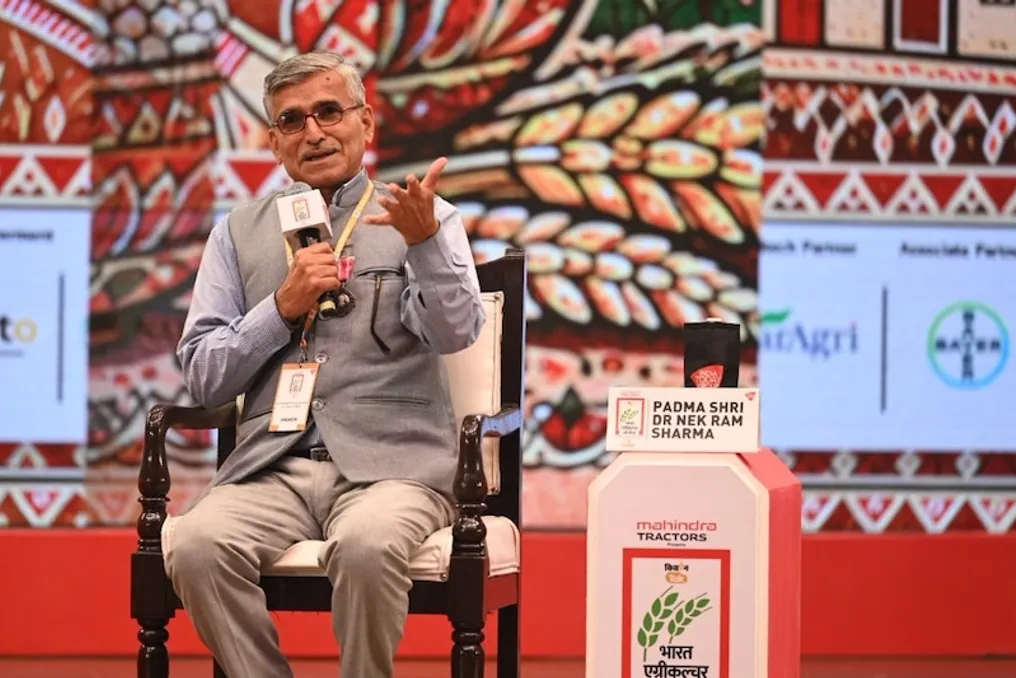
Padmashri Nek Ram Sharma, known as the 'Millet Man' from the state of Himachal Pradesh, has been actively campaigning for the preservation of traditional grains and local seeds for the past three decades. He developed a seed bank containing 40 different types of grains and actively promotes the cultivation of nine types of grains.

During a session on the topic of 'cultivation of nine types of grains,' held on November 12 in India Mandapam, Delhi, as part of the 'Kisan Tak Bharat Agriculture Conference 2026,' Dr. Nek Ram Sharma shared his experience. He believes that the pursuit of increased yield leads to the decline of traditional crops and the true strength of agriculture. Traditional grains are gradually being displaced by major crops such as wheat, rice, and maize.

However, the farmer from Himachal Pradesh, Dr. Nek Ram Sharma, took on the responsibility of saving these traditional grains. For almost three decades, he has been dedicated to preserving local seeds, popularizing millet cultivation, and involving farmers in natural farming practices. He emphasized that traditional grains are important not only for agriculture and soil but also for future generations.

He began his journey not with millets, but with concern for the conservation of forests and soil in his village. His village had about 250 hectares of forest that suffered from fires and excessive grazing. During a course related to IIT in Delhi, he learned that the soil of Himachal is susceptible to erosion. Following this, he started conducting awareness campaigns among villagers about the necessity of protecting the forests.

Through these efforts, his interest shifted to natural farming, and subsequently to traditional grains. He recalled that in his grandfather's time, homes were filled with large sacks of millets, but over time, new seeds of wheat, maize, and rice gained popularity, and traditional grains began to disappear.

Dr. Sharma mentioned his grandfather's advice. When new seeds became widely used, his grandfather began to worry about the potential complete disappearance of traditional grains. His grandfather kept these grains for times of famine and hardship. This is where Dr. Sharma began working seriously on the preservation of traditional grains. According to him, one of the main advantages of millets is that their seeds can be stored for a long time; many traditional varieties can last up to 50-60 years and require less dependence on chemical fertilizers and pesticides.

Dr. Nek Ram Sharma also spoke about the traditional system of cultivating nine types of grains. According to this system, nine different grains are grown in one field. He believes that growing various crops together promotes diversity in agriculture, which helps reduce the need for irrigation and maintains soil fertility. He noted that in Indian tradition, different grains and their colors held special significance. The cultivation of nine types is linked to the worship of the nine planets, where grains of different colors are used. However, due to the increasing share of rice, wheat, and white flour in the modern diet, many traditional grains and their colors are disappearing from the diet.

To preserve traditional seeds, Dr. Sharma created a seed bank containing 40 types of grains. Furthermore, he mobilized over 1000 farmers to conduct a seed conservation campaign. He prepared local and indigenous seeds and distributed them free of charge to more than 10,000 farmers across six states. His efforts are not limited to just collecting seeds; he also motivates other farmers to cultivate traditional grains and adopt natural farming. For this work, he was honored with the nation's highest civilian award—the Padma Shri.

When asked if he felt his work received due recognition after receiving the Padma Shri, he replied that he never worked for certificates or awards. For him, the real achievement is the forest he helped save and the traditional grains he is trying to save from extinction. He stated that the greatest respect for him is the ability to pass on these seeds and grains to future generations. He is convinced that agriculture should be viewed not only in terms of increasing yield but also in terms of conserving soil, forests, traditional seeds, and natural resources.

Popular