Trump and Thailand reach agreement to abolish tariffs on US goods
Read more
Noticias ao Minuto
noticiasaominuto.com

Trump and Thailand reach agreement to abolish tariffs on US goods

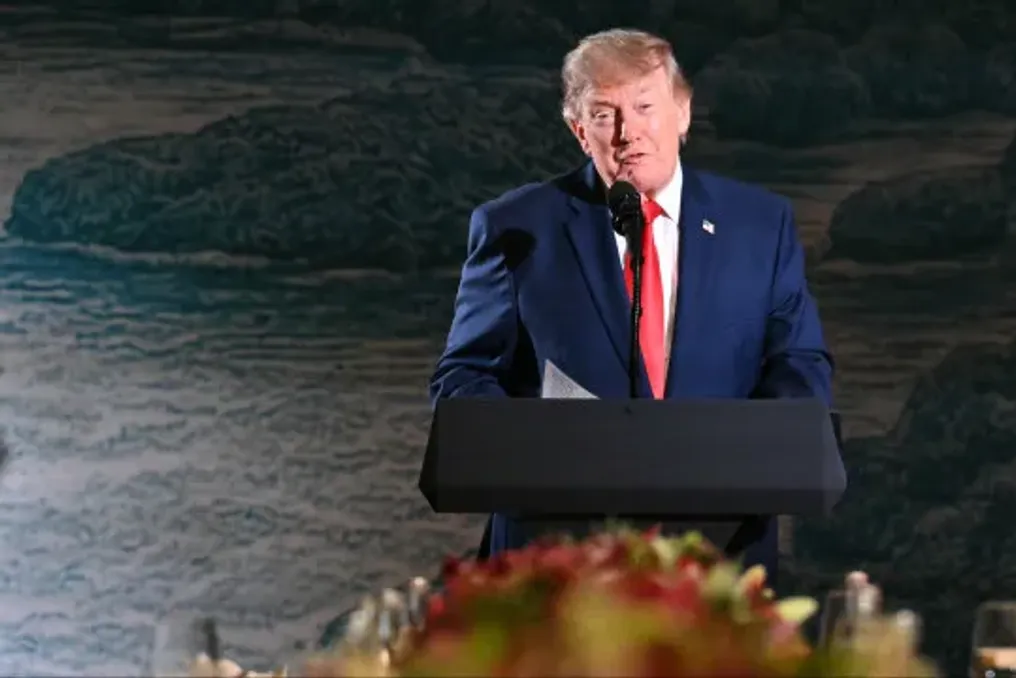
The President of the United States, Donald Trump, announced an agreement with the Prime Minister of Thailand to eliminate all Thai customs duties on American products as part of a concluding bilateral trade agreement.

During a joint press conference with the head of the Thai government, Anutin Charnvirakul, held at the Association of Southeast Asian Nations (ASEAN) summit concluding in the Philippine capital Manila, Trump stated that 'Thailand will abolish all tariffs on American exports,' which is a goal Washington has long sought to achieve.

The US head of state also assured that Bangkok agreed to purchase agricultural products from the United States worth $2.6 billion (about 2.3 billion euros) and remove 'significant non-tariff barriers' hindering the import of automobiles, medical equipment, ethanol, and poultry products from the US.

Trump did not comment on possible concessions from the US or the tariffs imposed by Washington against Bangkok, explaining that the details of the 'Bilateral Trade Agreement' (ART) being prepared would be finalized 'in the coming weeks.'

A White House statement indicated that 'the United States and Thailand will now begin the necessary internal procedures to prepare the ART for signing and entry into force.' The US President called this deal a 'tremendous victory' for both countries, while Anutin noted that it 'will create new opportunities.'

A year ago, trade negotiations between the US and Thailand were suspended due to border tensions with Cambodia after Bangkok suspended the peace agreement with Phnom Penh, which was mediated by Washington and signed by the parties in October 2025 in Malaysia.

On that day, Trump recalled the peace agreement and joked about not receiving 'recognition' for 'resolving' the conflict between the two neighboring countries. During a dinner with ASEAN leaders, he emphasized: 'We achieved a ceasefire that saved thousands and thousands of lives.'

With the resumption of trade talks, Washington's demands focused on broader access to the Thai agricultural market, protection of labor rights, intellectual property, digital trade, and facilitating US investment in the telecommunications sector, according to sources cited by The Nation portal.

In July 2025, the United States imposed 36% tariffs on Thailand, which were subsequently reduced multiple times, reaching 12.5% in August of this year.

Bilateral trade between the US and Thailand in 2025 amounted to $118.3 billion (107.6 billion euros), a 34.9% increase from the previous year, but the US trade deficit with this Asian country reached $71.7 billion (65.2 billion euros), according to the US government.

Similar stories

Uzbekistan is considering Omani ports to expand global exports
Read more
uzdaily.uz

Uzbekistan is considering Omani ports to expand global exports

The Ministry of Transport of Uzbekistan reported that Uzbekistan discussed the possibility of utilizing Oman's port infrastructure and logistics capabilities to increase export volumes to international markets.

The issue was raised during a meeting between the Minister of Transport of Uzbekistan, Ilhom Makhamov, and Abdulrahman Salim Al Hasmi, CEO of Asyad Group. This meeting took place during the state visit of President Shavkat Mirziyoyev to Oman.

The parties examined opportunities for supplying agricultural products from Uzbekistan to the Omani market and also discussed the development of warehousing and logistics infrastructure.

Special attention was paid to Oman's strategically important ports: Sohar, Duqm, and Salalah. Their infrastructure could potentially be used to deliver Uzbek products to markets in Africa and other regions.

Participants also talked about the prospects of sending goods from Uzbekistan to Europe, Africa, and Asia through the network of logistics operators and warehouses of Asyad Group, which operates in many countries.

In addition to export shipments, the parties considered issues of importing foreign goods demanded in Uzbekistan. Furthermore, they discussed the need to improve international transport and logistics chains and more effectively utilize existing transport corridors.

At the conclusion of the negotiations, both sides confirmed their interest in developing mutually beneficial cooperation, promoting practical logistics projects, and strengthening Uzbekistan's international transport routes.

Optimism in G7 countries has fallen to 2009 crisis levels
Read more
uzdaily.uz

Optimism in G7 countries has fallen to 2009 crisis levels

According to a Gallup poll, economic optimism in G7 countries in 2026 has dropped to levels recorded during the global financial crisis. Only 22% of residents in these countries believe that the local economy is improving, which is 13 percentage points lower than the 35% figure in 2025.

Previously, such a low level of optimism was only observed in 2009, when 21% of respondents rated the economic situation positively. Simultaneously, the share of people who believe their local economy is deteriorating rose to 66%, exceeding the figure recorded during the financial crisis. The percentage of pessimists is three times higher than the share of those who see improvements.

The decline in optimism affected all seven G7 countries, and in none of them does the share of positive assessments exceed one-third of the population. In France, this figure stands at 14%, corresponding to previous lows. In the United States, it reached 29%, also matching a past low. Canada recorded an optimism drop to 22%, Germany to 19%, and the United Kingdom to 13%, with new historical lows noted in these three countries. Japan and Italy also did not show positive momentum.

Younger respondents demonstrate slightly more optimism compared to older age groups: among individuals aged 15–34, 28% claim the local economy is improving, while this figure is 19% among those aged 35–54, and 21% among people over 55.

For comparison, in 2025, the median share of people across 139 countries who believed their economy was improving was 42%, significantly higher than the G7 figure for 2026. The global data collection for the current year is still ongoing.

The deterioration in public sentiment contrasts with economic trends in G7 countries. According to the International Monetary Fund, real GDP growth in the group remained relatively low but stable since 2023. Over the same period, the median level of economic optimism decreased by approximately 20 percentage points.

In 2009, the decline in public assessments coincided with a 4.6% contraction in GDP, but in 2026, no comparable drop in economic production occurred. Gallup asserts that the link between the perception of local economic conditions and GDP growth has significantly weakened since 2022. Previously, these two indicators generally moved in the same direction.

From 2007 to 2016, changes in public opinion almost entirely reflected movements in economic growth. This relationship weakened towards the end of the 2010s but remained positive. During the COVID-19 pandemic, both indicators declined simultaneously.

However, since 2022, this dependency has significantly weakened. According to the poll, changes in public sentiment no longer show the same correlation with GDP trends. One factor contributing to this divergence is real wages. In G7 countries, they grew steadily for several years, including the financial crisis period.

The situation changed in 2022 when the acceleration of inflation following Russia's invasion of Ukraine coincided with a decrease in real wages. They only returned to pre-crisis levels last year. Consequently, despite continued economic growth, the recovery of household purchasing power has been slower, which may have influenced people's assessment of economic conditions. Gallup notes that traditional indicators, including GDP, are increasingly diverging from public perception. For the governments of G7 countries, one of the remaining tasks is not only to maintain economic growth but also to ensure that its benefits are reflected in people's daily lives.

Tashkent to host business mission of 53 Russian companies
Read more
uzdaily.uz

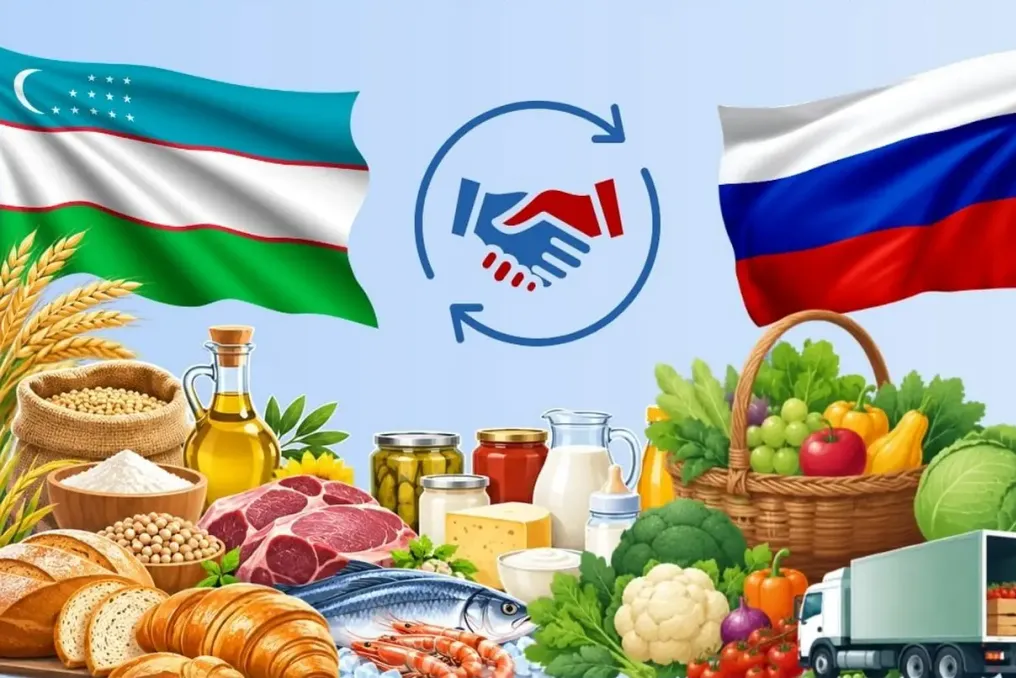
Tashkent to host business mission of 53 Russian companies

The Committee for Veterinary and Livestock Development of Uzbekistan has announced a business mission in which 53 producers and suppliers from Russia will participate. The event is scheduled to take place in Tashkent from November 18 to 20.

Representatives of Uzbek importers, distributors, and trading companies will have the opportunity to hold direct business-to-business (B2B) negotiations with Russian companies. The goal of these meetings is to find new partners and establish trade relations.

Russian companies will present a wide range of goods and services covering various segments of the food and agricultural industries. Products on display include grains and legumes, flour and animal feed, vegetable oils, and oil crops.

Dairy products, cheeses, and baby food will also be presented. Furthermore, the program includes demonstrations of ready meals, canned goods, sauces, juices, beverages, tea, confectionery, and bakery products. Participants will also showcase fish and seafood, fertilizers, agrochemicals, and logistics services.

Entrepreneurs from Uzbekistan will be able to directly discuss product assortment and supply conditions with Russian manufacturers. The mission program also provides for discussions on the terms of export and import contracts. To participate in the business mission and B2B meetings, entrepreneurs must provide information about their companies.

Popular