Bonuses for length of service are being introduced for chief accountants and HR specialists in schools in Uzbekistan
Read more
Podrobno.uz [uz]
podrobno.uz

Bonuses for length of service are being introduced for chief accountants and HR specialists in schools in Uzbekistan

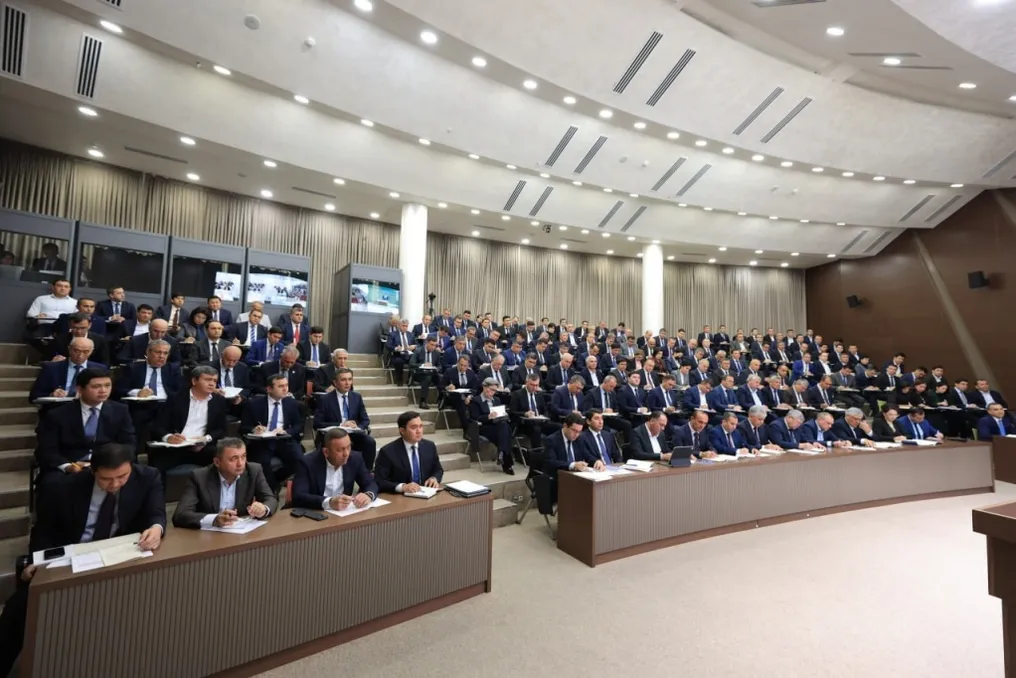
Uzbekistan has introduced a system of bonuses for long-term employment for chief accountants and human resources specialists in several educational institutions.

The size of these bonuses will range from 30% to 120% of the established official salary, and its amount is determined by the length of service.

According to information provided by the Ministry of Justice press service, this system provides for bonuses and the assignment of tariff grades for several categories of employees. These include chief accountants, leading accountants, and accountants. Bonuses also apply to HR inspectors in various types of preschool institutions, including multidisciplinary and combined kindergartens, as well as in specialized schools, boarding schools, and multifunctional inclusive resource centers.

Specific monthly bonus percentages depend on the length of service: if the service is from one to three years, the bonus is 30%; for service from three to five years—60%; from five to ten years—80%; from ten to fifteen years—100%; and for those who have worked for 15 years or more, the bonus will be 120%.

Furthermore, it was previously announced that the procedure for calculating bonuses for employees with academic degrees would change. Now, scientific activity, which is verified through a unified electronic database and the Science ID system, will be taken into account when calculating additional payments.

Similar stories

Scientists in Uzbekistan receive up to 10% salary supplement for confirmed scientific activity
Read more
podrobno.uz

Scientists in Uzbekistan receive up to 10% salary supplement for confirmed scientific activity

Rules for calculating bonuses for employees with academic degrees have been adjusted in Uzbekistan. Now, when determining the size of additional payments, scientific activity must be taken into account and recorded in the Science ID system, and all achievements are subject to verification in a centralized electronic database.

These changes are enshrined in Cabinet of Ministers Decree No. 604. According to the new regulations, all information about employees' scientific, teaching, and work activities will be aggregated in an electronic system. Before this data is used to assign bonuses, it will undergo a authenticity verification procedure.

Thus, to receive additional payments, scientists will not just need to claim their successes; the results of their research must be entered into the electronic register and officially confirmed. If the information does not pass verification, it will not be taken into account when calculating bonuses.

A separate incentive mechanism has been developed for researchers who demonstrate a high level of scientific activity through the Science ID identification system. For such indicators, it is possible to receive a bonus reaching 10% of the salary. However, this does not guarantee an automatic salary increase for everyone with academic degrees; the amount of payments will directly depend on compliance with established criteria and confirmed results.

The implementation of the new system is planned in stages. By the beginning of 2027, an electronic register of scientific and innovative institutions must be created, and registration through the my.gov.uz portal and public service centers will begin in February of this year. A fully unified database on scientific activity should be launched by April 1, 2027.

It was previously also reported that a reform in the field of doctoral training in Uzbekistan was underway, including the introduction of differentiated scholarships for young researchers and a change in the payment procedure for scientific supervisors, which will take place in 2027.

Rectors of higher education institutions in Uzbekistan will be checked for compliance with their positions
Read more
podrobno.uz

Rectors of higher education institutions in Uzbekistan will be checked for compliance with their positions

Heads of state higher education institutions in Uzbekistan must undergo an assessment to determine their suitability for their positions. The reason for this check is the identification of shortcomings in the higher education system, including difficulties in employment for thousands of graduates, outdated educational literature, and delays in building student housing.

The issue of evaluating the personnel composition of rectors was discussed at a meeting held on November 6th at the Ministry of Education, Science and Innovation. As a result of this meeting, a decision was made to create a special working group tasked with studying the activities of university leaders and providing corresponding conclusions.

The Ministry indicated that the problems concern both the level of teaching and subsequent graduate employment. For example, as of now, 13.8 thousand people who graduated from state universities in 2026 have not yet been able to find jobs.

The situation with educational materials is also a cause for concern: out of 29.7 thousand reviewed titles, 5.5 thousand were published more than twenty years ago, and textbooks are completely missing for a number of disciplines. Furthermore, the meeting noted slowdowns in dormitory construction and insufficient supervision of housing conditions for students living in rented apartments.

Rectors were instructed to hold personal meetings with students and teachers within fifteen days to hear their comments and begin solving the arising problems. After this, the heads of the universities are obliged to develop work plans for monthly, quarterly, and annual periods.

It is important to note that the Ministry has not announced mass dismissals among rectors; currently, it only concerns the inspection of the management of individual educational institutions. Specific universities that will be subject to this inspection, as well as what personnel decisions may follow, have not yet been disclosed.

Previously, a new graduate quality index was introduced in Uzbekistan, which will allow for assessing the effectiveness of university work based on how successfully their former students find and keep jobs, as well as the income they receive.

International vocational education system is being implemented in 45 technical colleges of Uzbekistan
Read more
podrobno.uz

International vocational education system is being implemented in 45 technical colleges of Uzbekistan

The training program in 45 state technical colleges in Uzbekistan will be expanded to include international professional qualifications. It is planned that an additional 3.5 thousand students will join this program in the 2026/2027 academic year, bringing the total number of participants to 5 thousand.

The implementation of this program is carried out by the Agency for Vocational Education of Uzbekistan in cooperation with the British company Pearson. Initially, 1.5 thousand students began training under this system, and now the project will be scaled up to new educational institutions and additional fields of study.

The entire program will cover 79 different fields across six priority sectors. Students will be able to master specialties in areas such as construction, engineering, healthcare, tourism, hospitality business, social assistance, and information technology. Lessons will be conducted in Uzbek, Russian, and Karakalpak languages.

The educational process combines theoretical study of material with practical tasks simulating future professional activities. Upon completion of the training, students will receive a BTEC International Level 3 Extended Diploma, which, according to Pearson, is recognized in more than 70 countries.

The program includes colleges from Karakalpakstan, Tashkent, and all regions of the country. Among the mentioned institutions are Nukus City Technical College No. 1, Samarkand City Technical College No. 1, Chirchik City Technical College No. 1, Fergana City Technical College No. 4, Bukhara City Technical College No. 1, and Chilanzar District Technical College No. 1. Additionally, specialized medical educational institutions are included in the project.

To ensure the quality of education, over 380 vocational education teachers have been trained. Over the course of one week in Tashkent, they studied knowledge assessment methods, conducting practical classes, and pedagogical methodologies.

Participation in the project requires meeting several conditions: before the start of classes, each college must obtain approval from Pearson. This check includes assessing the existing qualifications of teachers, the availability of necessary educational materials, and quality control systems. Only after this can students be registered for the relevant educational courses.

The expansion of this project is part of the implementation of the 'Uzbekistan-2030' strategy for modernizing the vocational education system. In subsequent years, there are plans to increase the number of colleges and students involved in the program.

Previously, there was information about plans to transfer some vocational colleges to the management of large entrepreneurs for a period of 15 years. These institutions would be required to train personnel capable of starting work immediately after graduation, with an annual training target of at least 30 thousand people.

Popular