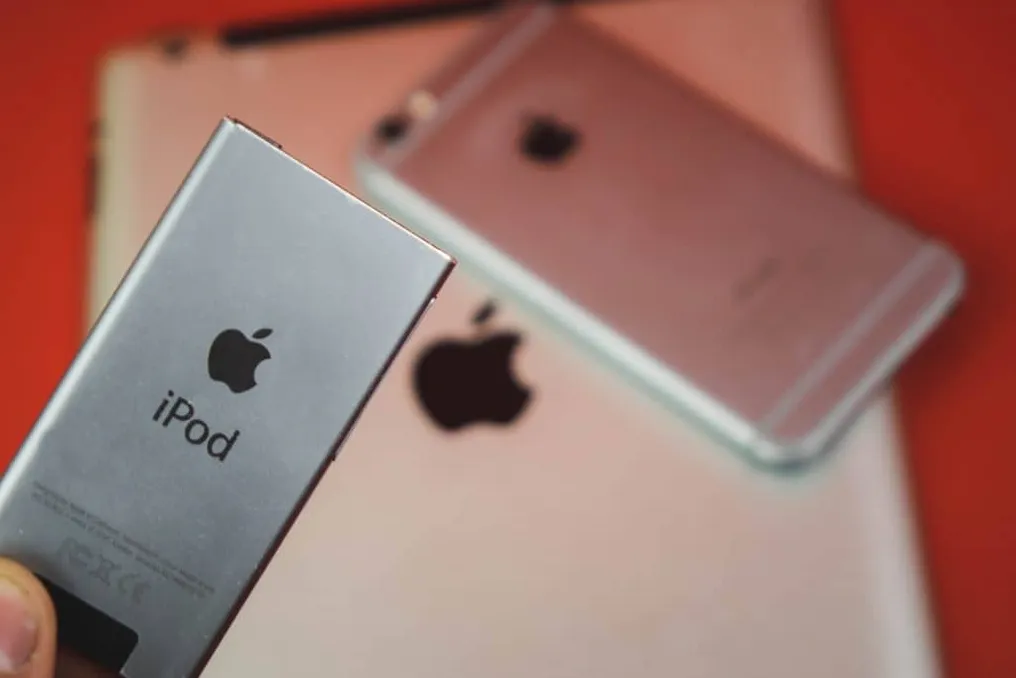
iOS vulnerability allowed audio recording without user permission
Read more
Olhar Digital
olhardigital.com.br

iOS vulnerability allowed audio recording without user permission

A security vulnerability was discovered in iPhone and iPad devices that allowed applications to record audio even after the user had denied them microphone access.

During some tests, recording continued even when the device was locked or the application was running in the background, while the microphone usage indicator did not appear on the screen. This vulnerability, identified as CVE-2026-65339, was fixed by Apple in security updates.

The problem lay within Apple's system audio service called audiomxd. Typically, iOS uses the Transparency, Consent, and Control (TCC) mechanism to verify which process is requesting microphone access and whether it has user permission.

The vulnerability allowed an application to provide false identification information to the service, impersonating audiomxd itself. Thus, it could use the internal authorization path and start recording, bypassing system permission checks.

This occurred because the service accepted the identifier provided by the application via an identifier called the audit token, which is used to recognize running processes. The program could send an identifier corresponding to the audio service, forcing the system to interpret the request as an internal operation.

Apple has eliminated this issue. Now, the service verifies the true identity of the requester by obtaining this information from the system kernel. External applications also require special permission, which they cannot grant themselves, to substitute this identification.

The issue was independently discovered by two researchers: Nick Tsitsarkin from Meta Red Team X and security engineer Mustafa Kalap.

Kalap was able to reproduce the vulnerability in iOS 26.6, released on July 27, as well as in the beta version of iPadOS 27. His tests showed that recording should start when the application is open but continued after the application moved to the background or the device was locked.

Another aspect noted concerned the behavior of the orange indicator signaling microphone usage. In one of Kalap's experiments, this indicator was absent on both the Dynamic Island and in Control Center. In Tsitsarkin's tests, the indicator was missing in an earlier version but appeared in a subsequent one.

The applications used by Kalap were installed via Xcode, Apple's development tool, and did not pass App Store review. Therefore, the experiments do not allow determining whether the company's evaluation process would have detected or prevented the distribution of such software.

The vulnerability exclusively affected audio capture through the system service and did not grant access to other privacy permissions. Both Apple and the researchers reported no evidence of this flaw being exploited in attacks.

The first security updates were released on August 17, 2026, including iOS 26.6.1 and iPadOS 26.6.1. For older devices, the company provided iOS 18.7.11 and iPadOS 18.7.11 on October 26.

The fix was also rolled out to other company systems. In the August update notes, Apple described the problem as a vulnerability that could allow an application to disclose users' confidential information.

Since there is no setting to block this bypass mechanism, installing the security updates provided by Apple is necessary to resolve this error. The article about the issue first appeared in Olhar Digital.
Similar stories

Old Apple vulnerability is being used by hackers again to steal data from iPhones
Read more
olhardigital.com.br

Old Apple vulnerability is being used by hackers again to steal data from iPhones

Hackers have begun actively exploiting an old vulnerability in Apple systems to compromise browsers and steal credentials. This flaw affects users of iPhone, Mac, and iPad who have not installed the updates released in May 2024, according to The Hacker News.

The US Cybersecurity and Infrastructure Security Agency (CISA) has added the code CVE-2024-27834 to its catalog of actively exploited vulnerabilities after confirming new attacks. This vulnerability was first presented during the Pwn2Own Vancouver competition in March 2024.

Although Apple released fixes for iOS, iPadOS, macOS, tvOS, watchOS, and Safari two months later, devices without updates remain vulnerable. This can happen either due to user forgetfulness or the need to keep older versions for compatibility with legacy software.

To spread the attacks, criminals compromised the Plerdy SEO Tracker tool, which administrators use to monitor website traffic and visits. Furthermore, they created fake pages and infected legitimate portals.

The infection occurs while using Safari. JavaScript code detects the device model and checks if the system is outdated. Upon detecting a vulnerable version, the exploit runs without requiring any action from the victim, such as clicking a link or downloading files.

The primary goal of the attackers is to capture session cookies—small pieces of data stored in the browser that maintain the user's connection to services without requiring password re-entry upon each access. With these records, criminals can clone the victim's session on another computer and gain access to email and work platforms. This method also allows bypassing two-factor authentication (2FA), which usually requires a temporary code in addition to a password.

The attacks are linked to the APT29 group, also known as Cozy Bear or Midnight Blizzard, which is associated with Russia's Foreign Intelligence Service. CISA also warns users in Brazil: Apple devices that have not yet received the patches remain susceptible to exploitation of this vulnerability. Therefore, it is crucial to check for pending updates on iPhone, iPad, or Mac and install them to protect devices. The article about the old Apple vulnerability being reused to steal data from iPhones first appeared in Olhar Digital.

Apple Music adds Selfie Sing feature for karaoke video recording on iPhone
Read more
tecnoblog.net

Apple Music adds Selfie Sing feature for karaoke video recording on iPhone

Apple is implementing an expansion of the karaoke functionalities within Apple Music. This new feature, called Selfie Sing, was introduced in the beta version of iOS 27.3 and allows users to use the front camera along with the synchronized lyrics of songs to record videos.

During recording, the user can follow the lyrics displayed on the screen while singing, and afterward, has the option to adjust the volume of their own voice and apply various sound effects. The resulting video can be saved in the Photos app or shared with third parties, according to developer Aaron Perris from MacRumors, who released a demonstration video of the feature.

Preparatory innovations for the next iteration of iOS are already being observed just over a week after the changes introduced by iOS 27.2, which brought a new visual aesthetic, giving the app's interface a more 'sober' look. Subscription costs for the service remain at R$ 23.90 for the individual plan and R$ 40.90 for the family plan.

Selfie Sing acts as an evolution of Apple Music Sing, a karaoke feature launched in iOS 16.2 in 2022, allowing users to lower the volume of original vocals in compatible songs so they can sing along.

With this new mode, a camera icon appears next to the Sing controls. When activated, Apple Music starts a recording interface using the front camera and keeps the synchronized lyrics visible. After finishing the recording, it is possible to balance the volume of the voice captured by the microphone relative to the music volume.

Furthermore, Apple Music offers four options for voice modification effects. In the case of the iPhone Duo, the mode utilizes the foldable format distinctly: when the device is closed, the user can film themselves using the main rear camera while following the lyrics on the external screen.

Currently, Selfie Sing is only available on iPhone devices. According to Apple Insider, the feature was not found on an iPad Pro running the same beta version, although the tablet has access to Apple Music.

Even though it is in testing phase, Apple made a specific playlist available for Selfie Sing, according to MacRumors. This musical selection includes tracks such as "Girls Just Want to Have Fun" by Cyndi Lauper; "Like a Virgin" by Madonna; and "Baby One More Time" by Britney Spears.

Although this playlist may be accessible to users of iOS 27.2, officially released by the company the previous week, this does not imply that the recording mode is available in the current version. Apple has not yet released Selfie Sing in the stable version of the system.

Popular