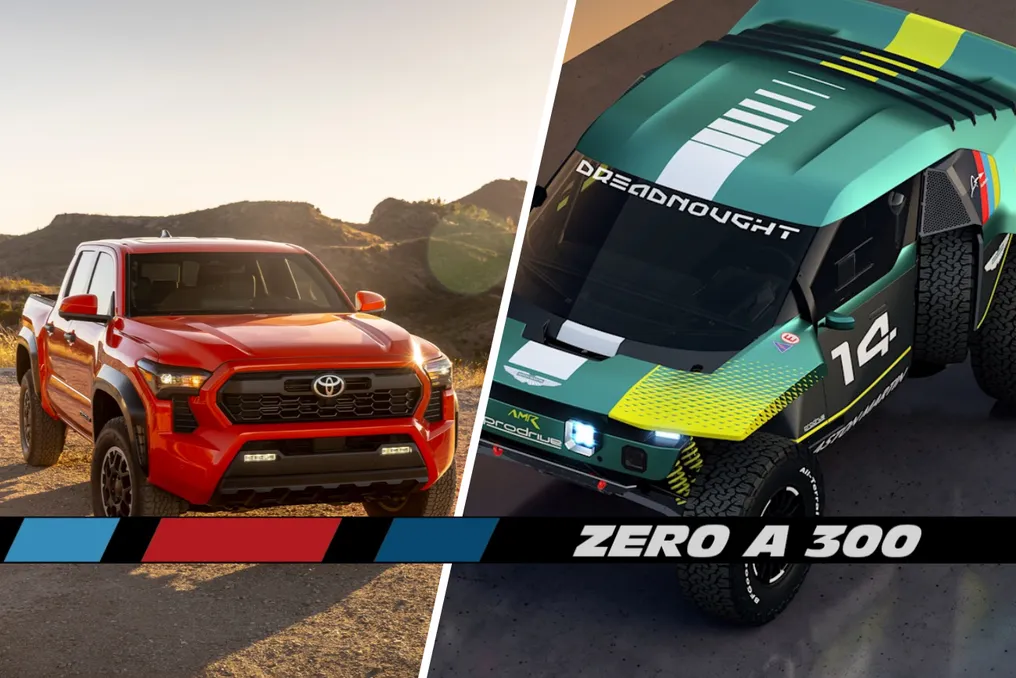
Toyota announced that it will produce the Tacoma pickup, considered the larger sibling of the Hilux, in Argentina. The automaker will invest US$ 1.3 billion, equivalent to approximately R$ 7.5 billion at the current exchange rate, in the factory located in Zárate, near Buenos Aires. Production is scheduled to begin in 2030.
With this change, Argentina will become the second country in the world to manufacture the Toyota Tacoma, as it is currently only produced in Mexico to supply mainly the United States. According to Yoichi Miyazaki, the brand's executive vice president, this decision fits into Toyota's electrification strategy in Latin America.
The version to be produced will have a 2.4-liter four-cylinder gasoline turbo engine, complemented by an electric motor positioned between the combustion unit and the eight-speed automatic transmission. The 1.87 kWh battery is recharged both through energy recovery during braking and by the combustion engine itself, delivering a combined power of 326 hp and 64.2 kgfm of torque.
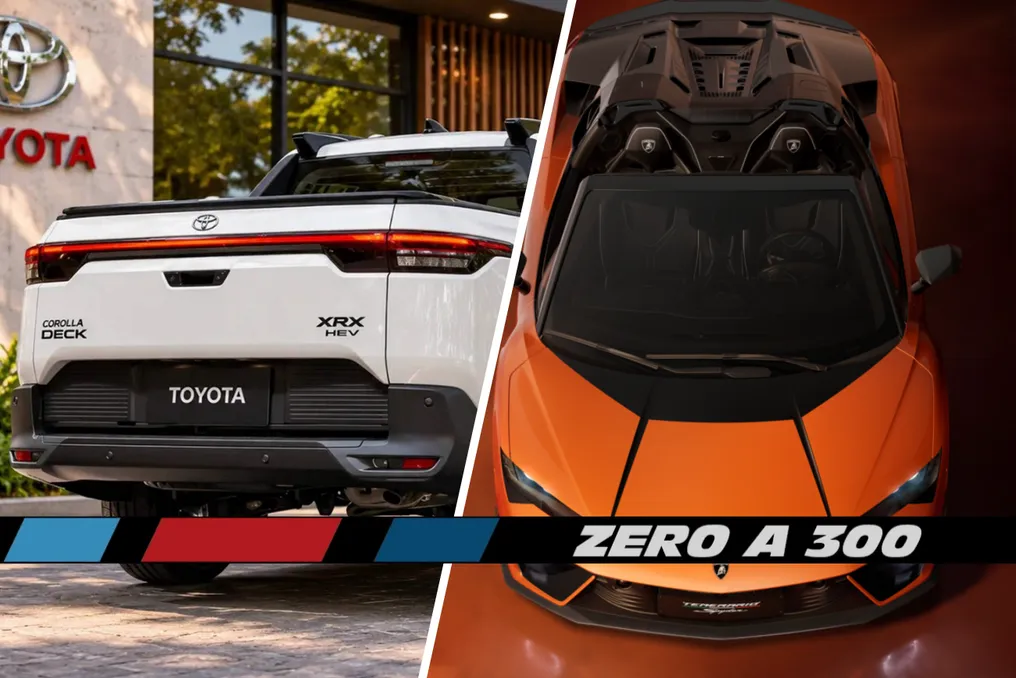
Although Toyota has not yet confirmed the sale of the Tacoma in Brazil, Argentine production considerably simplifies homologation and import processes. Given the growing success of pickups in the national market, the absence of the Tacoma would be seen as a missed opportunity, especially considering the consolidation of the Hilux and the emergence of the future Corolla Deck as competitors.
Aston Martin will take prototype to Dakar 2027
Aston Martin, which had presented the Dreadnought in a game, revealed that the futuristic off-road vehicle will come to life and compete in the 2027 edition of the Dakar Rally. This will be the first time Aston Martin participates in such a significant rally raid event, justifying the immediate investment.
Prodrive will be responsible for developing, building, and testing the three units that will participate in the competition. The team has vast experience in rallies, having secured a podium finish three times in the last five years in Dakar and winning the last edition with its Dacia Sandrider in the Ultimate category.
Definitive technical details of the real Dreadnought have not been released, and it is unlikely to use a V12 like the virtual version. Internally, the vehicle features characteristics closer to a traditional racing car, despite its exterior referencing the game's design.
A highlight for the Brazilian public is the presence of Lucas Moraes among the three drivers selected by Aston, alongside Fernando Alonso and Sébastien Loeb. Moraes has a relevant history in these types of competitions, having finished third in Dakar in 2023 with the Toyota Hilux T1+ and being champion of the FIA World Rally-Raid Championship the previous year. Thus, Aston has assembled a very competitive lineup for Dakar 2027.
The race will take place from January 9 to 23, starting from Portugal, crossing the Mediterranean, and continuing to Marrakech, Morocco, covering a total distance of 6,805 km.
China reduces domestic sales but increases exports
October data confirmed the trend that Chinese overproduction would be directed abroad. According to the China Passenger Car Association (CPCA), retail car sales in China fell by 27.1% in October compared to the same month last year, reaching 1.64 million units. Year-to-date, the drop is 22.3%.
Conversely, passenger car exports saw a significant increase of 68.5%, reaching 928,000 units, representing 35% of the total sold by Chinese manufacturers, a jump from the 19% recorded the previous year. Exports of electric vehicles and plug-in hybrids more than doubled, with a rise of 144.7%.
Government data released on Monday (16) indicates that production fell by 7.7% in October, totaling about 3 million vehicles, and that the added value of the automotive industry grew by only 0.9%, the slowest pace since 2022. This growth in added value occurs even with lower production volume, driven by a 17.1% increase in the production of electric and plug-in hybrid vehicles.
Electric and plug-in hybrid vehicles (NEVs) reached a record participation rate, accounting for 67.5% of sales. However, their sales decreased by 13.7%, marking the tenth consecutive annual decline. They gained ground due to the even sharper drop in combustion engine cars, which registered only 534,000 units in October, a reduction of 44% compared to last year.
The main reason for this slowdown is the end of government financial support. Since January, the purchase tax exemption for electrified vehicles has been halved, and subsidies for trading in used cars are being withdrawn. The price war, in which about 90% of Chinese manufacturers operate at a loss, exacerbates the situation, leading consumers to postpone purchases while waiting for discounts.
Tesla also felt the impact, selling only 8,817 cars in China in October, the worst month since July 2022, while its Shanghai factory redirected 87% of its production abroad. However, there is a deadline for this escape valve, as Cui Dongshu, Secretary-General of the CPCA, predicts that export growth will fall to about 10% in 2027 due to trade barriers and pressure from the European Union.
Part of the October shipments was brought forward to avoid the decrease in export tax incentives, which inflates current figures and could result in a weaker first quarter next year. With European pressure and calls for bans by American manufacturers, Brazil remains an open market. According to Fenabrave, Chinese brands sold 460,900 light passenger and commercial vehicles in Brazil between January and October, corresponding to 19.1% of the market.
Ford Ranger Tremor launch with flex turbo engine in 2027
Ford recently presented the Ranger Tremor, an off-road version of its mid-size pickup truck. The most significant innovation is that it will be marketed in Brazil equipped with a flex turbo engine, making it the only version with this feature among the others that use four-cylinder or V6 diesel engines. The official launch is scheduled for early 2027, although prices have not yet been disclosed.
The chosen powertrain is the 2.3 turbo with direct injection from the EcoBoost family, identical to the one used in the future Ranger plug-in hybrid (PHEV). In the United States, where it is offered only with gasoline, this engine generates 274 hp and 42.9 kgfm of torque. In Brazil, it can be fueled with ethanol, but performance data is still pending release.
The vehicle will feature a ten-speed automatic transmission and permanent 4x4 traction. The Ranger Tremor has also received improvements to handle difficult terrain, including reinforced suspension, all-terrain tires, and greater ground clearance and approach and departure angles compared to other versions.
Aesthetically, the version is distinguished by darkened grille and bumpers, as well as matte black details and decals with the Tremor name on the bed, which also appear on the seats.
With the introduction of the Tremor and the future PHEV version, the Ranger will offer three engine families in Brazil. Currently, the pickup is sold with the 170 hp 2.0 turbodiesel in entry-level versions and the 250 hp 3.0 V6 turbodiesel in the most expensive configurations. The inclusion of the flex option represents the return of this type of powertrain to the mid-size pickup segment, which has not had a flex representative since the discontinuation of the Chevrolet S10 2.5 turbo in 2022.