
UP Transformation Dialogues in Noida aim to study the role of the region as a gateway to India's new economy
Read more
The times of India
timesofindia.indiatimes.com

UP Transformation Dialogues in Noida aim to study the role of the region as a gateway to India's new economy

The UP Transformation Dialogues will be held in Noida on November 20th, organized by Times of India. The event will bring together politicians, industry leaders, and experts from various fields to discuss the evolving economic landscape of the region and its potential to become a gateway to India's new economy.

With the upcoming Jewar International Airport, infrastructure expansion, investment in manufacturing, and a growing technology ecosystem, Noida is becoming a major industrial and economic hub. The event will feature a series of panel discussions dedicated to the opportunities and challenges facing Noida, Jewar, and the wider Western Uttar Pradesh region.

One key session, titled 'Beyond the Runway: Building India's Next Aviation and Infrastructure Hub,' will examine the possibility of transforming Jewar into a full-fledged aeropolis and its establishment as a significant center for aviation and infrastructure. Participants in this panel will include Kapil Kaul, CEO and Director of CAPA India; Pirna Singh, Additional CEO of Greater Noida Industrial Development Authority; Shailendra Kumar Bhatia, an IAS officer, Additional CEO of UPEIDA and Authorized Officer for the Noida Jewar International Airport; and MLA Dhirendra Singh from Jewar.

Another important discussion, 'Manufacturing in Uttar Pradesh: Building India's Industrial Muscle,' will focus on the state's manufacturing ambitions and whether the Noida-Jewar belt can lead the next phase of India's industrial growth. The panel will explore factors that can strengthen Uttar Pradesh's position as a destination for investment and manufacturing, covering sectors from semiconductor and electronics production to highways and industrial infrastructure. Speakers will include Pankaj Mohindru, Chairman of ICEA; Ghazal Bharadwaj, an IAS officer, ACEO, Invest UP; Dikshu K. Kukredja, Managing Partner of CP Kukreja Architects and Honorary Consul of the Republic of Albania; and Sanjay Jamuar, CEO of Delhi Metro International Limited.

The session 'The New Economy of Office Workers' will examine whether Noida can compete with existing tech and labor hubs like Bangalore and Hyderabad. The discussion will cover the growth of Global Capability Centers (GCCs), the impact of artificial intelligence on employment, the role of second-tier cities as talent sources, and the implications for the real estate sector. Participants in this discussion will include Amit Verma, Regional Head North at NASSCOM; Vikash Chandra, Director of Urban and Economic Development at Deloitte; and Koyelia Ghosh Roy, Director and Head of Gen AI and Agentic AI Implementation at Capgemini.

The discussions will also extend beyond Noida to determine if the region's economic momentum can translate into broader regional growth. The session 'Beyond Noida: Can the Noida Boom Fuel Western Uttar Pradesh's Growth Engine?' will look at the development prospects of cities such as Meerut, Ghaziabad, Aligarh, Agra, Mathura, Bareilly, and Moradabad. The panel will include Vikram Singh, former Police Chief; Anand Kumar, Chairman of The Ace Law Associates and former Secretary to the Government of India, former Chairman of RERA Delhi and Chandigarh, and former IAS officer; and Niraj Agrawal, COO of TATA Projects Ltd.

Through these UP Transformation Dialogues in Noida, there is an effort to assess the opportunities shaping the next phase of regional growth while bringing together perspectives from the government, industry, and the broader business community. The event can be watched live on November 20th on TOI's social media pages and on YouTube.

Similar stories

BYD releases third-generation electric SUV Tang with 850 km range and steer-by-wire technology
Read more
technode.com

BYD releases third-generation electric SUV Tang with 850 km range and steer-by-wire technology

BYD has introduced the third-generation electric SUV Tang on Tuesday. The model is available in three variants with prices ranging from 187,900 yuan ($28,194 USD) to 219,900 yuan ($32,995 USD). This vehicle is positioned as a large five-seater fully electric SUV, while the optional package with all-wheel drive and steer-by-wire technology costs 20,000 yuan ($3,000 USD).

With the launch of this model, BYD's Dynasty series now includes two flagship electric SUVs: the seven-seater Datang and the five-seater Tang EV. The most noticeable change compared to previous versions of the Tang EV is the discontinuation of the seven-seater option, shifting the model's focus towards buyers who prefer a more spacious five-seater configuration.

This move also reflects BYD's more targeted approach to the electric SUV market segment priced around 200,000 yuan ($30,009 USD). The third-generation Tang EV measures 5,045 mm in length, 1,980 mm in width, and 1,760 mm in height, with a wheelbase of 2,950 mm. According to BYD, the legroom in the rear seats reaches 1,003 mm, and the rear seatbacks can recline up to 130 degrees.

The five-seater layout provides more cabin space for the second row and trunk compared to the seven-seater version, although practical utility will depend on seat comfort, storage capacity, and the driver's daily needs.

The new model is equipped with standard double wishbone front suspension and independent five-link rear suspension. Differences between modifications mainly concern the suspension system: mid- and high-spec trims feature dual-chamber air suspension, whereas the base version uses BYD's adjustable DiSus-C suspension. This means that air suspension is not available across the entire lineup.

Another significant feature is the new digital chassis system, steer-by-wire. This system supports both steer-by-wire and brake-by-wire technologies, eliminating the traditional mechanical connection between the steering wheel and the wheels. BYD claims that this system increases response speed by over 25%, but full steer-by-wire functionality requires the installation of the optional all-wheel-drive package for 20,000 yuan ($3,000 USD). The standard rear-wheel-drive version does not possess the full set of features.

Regarding range and charging, the rear-wheel-drive version offers a maximum CLTC rating of 850 km, while the all-wheel-drive version has a rating of 770 km. The car is equipped with BYD's second-generation Blade battery and fast-charging technology. The company states that charging from 10% to 97% state of charge takes only nine minutes.

However, two aspects must be considered: the car's maximum charging capacity and the availability of compatible charging infrastructure. The stated charging time is based on the use of specialized BYD fast-charging stations. The network is still expanding, and station density varies depending on cities and major highways. Therefore, the claimed CLTC range of 850 km and nine-minute charging are figures under specific conditions; real-world results will depend on driving style, temperature, road conditions, and access to compatible charging stations.

The third-generation Tang EV is also equipped with BYD's DiPilot 300 driver assistance system with LiDAR, which supports urban navigation assistance and intelligent parking. The cabin features a dual-screen system: an integrated 35.4-inch panoramic display and a 30-inch panoramic screen. It also includes the BYD voice assistant, Didi Xia, which supports dialect recognition and voice recognition throughout the cabin.

However, publicly available information regarding specific processor specifications remains limited. Screen size and the number of displays alone do not allow for an assessment of the actual user experience. Real-world testing will be necessary to evaluate factors such as system responsiveness when multiple screens are active, voice recognition accuracy, and the performance of driver assistance systems in complex urban environments.

The key difference in the third-generation Tang EV is not just the addition of new features, but a clearer focus on a specific use case. By abandoning the seven-seater configuration, BYD has concentrated on the space of the five-seater cabin, long range, and chassis technology.

Priced from 187,900 yuan ($28,194 USD) to 219,900 yuan ($32,995 USD), the new model will compete with electric SUVs such as the Tesla Model Y and XPeng G6. These models differ in dimensions, seating layout, driver assistance systems, and charging infrastructure.

Despite the relatively clear positioning of the third-generation Tang EV, there remain aspects that require evaluation. These include what percentage of the claimed 850 km CLTC range will be achieved in daily driving, whether BYD can expand its fast-charging network beyond major cities, whether the steer-by-wire system will lead to a noticeable improvement in the driving experience, and how reliably driver assistance functions will operate in real road conditions.

The five-seater configuration may appeal to families of two to four people who value rear seat space and comfort on long trips. However, buyers who regularly need to accommodate six or seven passengers might find a seven-seater SUV more practical.

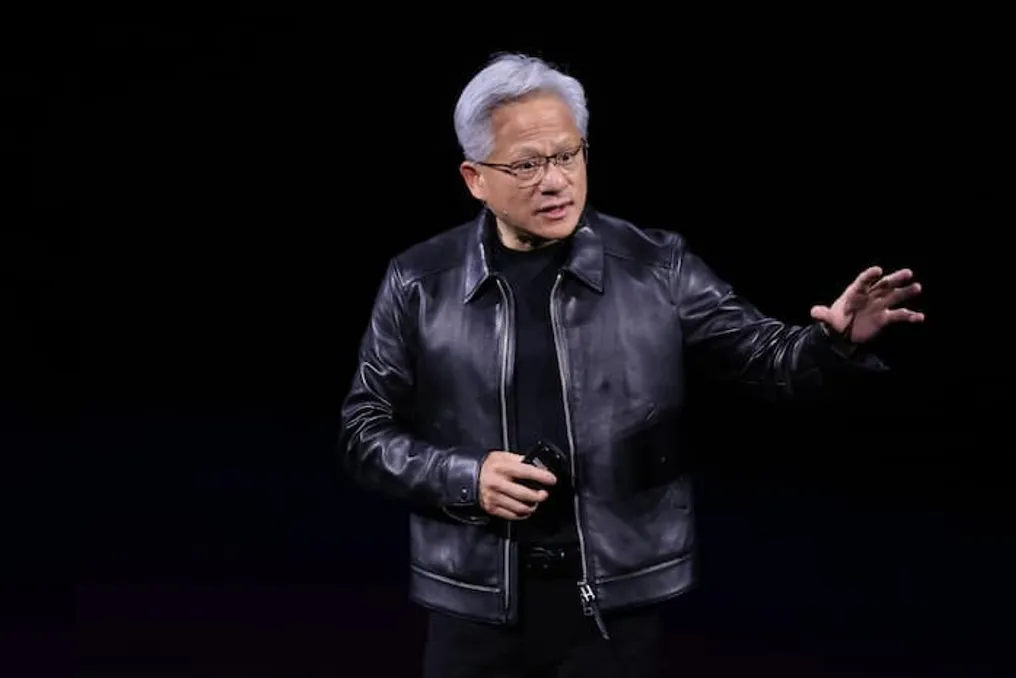
Jensen Huang apologizes to Nvidia employees and reports undergoing daily therapy
Read more
business-standard.com

Jensen Huang apologizes to Nvidia employees and reports undergoing daily therapy

Jensen Huang, co-founder of the world's largest chip manufacturer, addressed company employees less than a week after a similar general meeting took place without his participation while the firm prepared to find him a successor.

The day after his reinstatement as CEO of Nvidia Corp., Huang delivered a somber speech, apologizing to staff during a general meeting and announcing that he had been undergoing daily therapy to address behavioral issues that led to his temporary removal from leadership.

According to sources familiar with the situation, on Tuesday, Huang emphasized that his return was not because he is a 'technocrat who broke the law.' He noted that the board of directors would monitor his future activities. Sources who wished to remain anonymous described the content of a private internal meeting.

Speaking at the company headquarters in Santa Clara, California, Huang admitted to letting down employees, calling the meeting 'the most difficult meeting in the company's history.' He acknowledged violating the Nvidia code of conduct and expressed gratitude for the second chance to lead the company he founded three decades ago. According to sources, the hardest meeting was with his wife.

The co-founder of the world's largest chip manufacturer addressed employees less than a week after a similar meeting occurred without him, while the company was preparing to search for a new leader. Previously, Huang was forced to step down as CEO after revelations of an affair with a subordinate and another affair with an alleged Chinese spy.

Nvidia's board reinstated Huang on Monday following an unexpected turn of events after President Donald Trump intervened in the interests of the chip magnate. Huang stated that the board members reinstated him not due to demands from high levels of government, but because the board assessed the facts and confirmed there was no national security threat. He also told his audience that Trump likes Nvidia, adding: 'He is my president. I serve the cause of ensuring our president's success—our country.' He stressed that Nvidia does not take political sides and would do the same regarding the next president.

Just before addressing employees, US Attorney General Todd Blanche told reporters in Washington that Nvidia is a 'good corporate citizen,' but declined to comment on whether the Department of Justice was investigating the circumstances leading to Huang's temporary departure from the CEO position. Blanche noted: 'Obviously, if Nvidia were a target or subject to any criminal investigation, or obstructing our investigation, that would not be a message the president conveys to the American people.'

Trump's decision to intervene in the company's internal affairs drew objections in Washington from lawmakers of both parties. Republican Senator Dave McCormick warned during an interview with Bloomberg Television on Tuesday that the president's intervention could create a 'slippery slope' in corporate governance.

Huang's sudden reinstatement by the board on Monday surprised most senior Nvidia executives, who had demonstrated confidence last week in the company's ability to thrive without him. At the general meeting, Huang thanked Nvidia CFO Colette Kress for leading the company during his nearly two-week absence as CEO. Huang informed employees that he does not prefer traditional succession planning, as he does not want leaders to compete for top positions; instead, he wants to maintain a group of leaders at the same level, focused on their areas of expertise.

Videos published by employees on Monday showed Huang returning to the company headquarters to applause and cheers of support. In a brief speech in one of the building's lobbies, he told employees that he would 'do the job better.' After the company's stock rose almost 31% on the day of his return, it fell almost 6% on Tuesday. The company's value dropped nearly $2 trillion from its October peak. On Tuesday, Huang did not answer employee questions during the meeting.

Popular