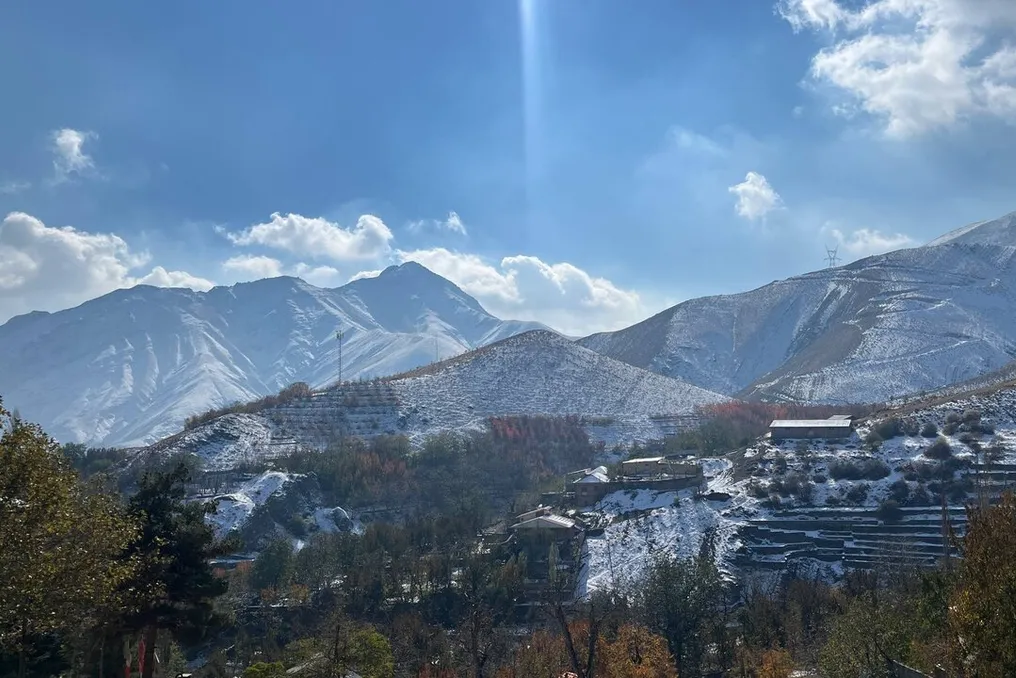
Located approximately thirty kilometers northwest of Tehran, along the road to Imamzadeh Davud and on the southern slopes of the Alborz mountains, Sangan village offers a different perspective on life outside the capital. Its historical religious structures, traditional basket weaving, fruit orchards, and mountain landscapes make it an attractive destination for visitors wishing to take a short break from the hustle and bustle of the city.
However, Sangan is more than just a day trip destination. The village preserves traces of centuries-old traditions, local craftsmanship, and agricultural practices that have shaped its unique identity. It also provides opportunities to study rural architecture, get acquainted with nomadic culture, and discover the natural attractions of the surrounding mountains.
Due to its relatively short distance from the capital, Sangan is an accessible place for Tehran residents interested in rural tourism and nature excursions.
Rural Tourism Beyond Overnight Stays
In recent years, Sangan has begun developing new forms of rural tourism, offering guests experiences that go beyond standard accommodation. Reza Mollanouri, a cultural heritage activist involved in rural tourism, told Tehran Times that villages located near Tehran allow city dwellers to experience rural life without traveling long distances.
He highlighted four types of traditional housing available at the Arg-e Sangi complex: wooden huts, mud-brick huts, stone huts, and nomadic black tents. Each of these options reflects a different architectural tradition and way of life in Iran. Wooden huts are more common in the northern regions of the country, while mud-brick buildings are characteristic of central and some mountainous areas. Stone huts demonstrate the building traditions of mountain communities, and black tents represent the traditional dwellings of nomadic groups.
According to Mollanouri, the complex allows visitors to experience all four types of housing in one place. He noted that staying in a nomadic black tent is particularly interesting for Tehran residents who would otherwise have to travel much further to experience this form of traditional housing. This experience also has a historical dimension. Contrary to the common belief that nomadic life was mainly confined to remote rural areas, parts of the Tehran region were once connected to seasonal migration routes. Mollanouri added that nomadic groups and herders moved through the areas around Varamin and the surrounding highlands as part of their seasonal movements, and Sangan was one of the places familiar with this way of life.
For this reason, he believes that staying in a black tent in Sangan can offer more than just recreated housing; it can introduce visitors to an important part of the region's social history. He also asserts that rural tourism must go beyond overnight stays. Traditional bread making, local cuisine, medicinal plants, village architecture, and evening gatherings can become part of a more meaningful experience for visitors. According to him, such activities help preserve and transmit intangible cultural heritage while creating additional opportunities for local communities.
Historical Religious Complex with Centuries of History
One of Sangan's most prominent heritage sites is the centuries-old Taqyeh in Sangan-e Pain, a traditional place for religious gatherings, distinguished by its wooden ceiling and historical features. Alireza Mashhadi, a local tourism activist, told Tehran Times that existing evidence suggests the building is about 700 years old. He added that some gravestones embedded in the walls and other sections contain inscriptions dating back to the Ilkhanid and Timurid periods. These historical remnants provide valuable insights into the past of the village, its social and religious life.
The structure has undergone changes and restorations over the centuries, especially during the Qajar period. Consequently, not all its current features necessarily date back to the earliest phase of construction. Oral accounts among local residents also point to an even older history of this site. The Taqyeh remains an important gathering place during religious holidays, during the lunar months of Muharram and Safar, and on the days of martyrdom of Fatima (AS), the daughter of Prophet Muhammad, among others. One of the ancient traditions involves the elder or experienced religious servant offering a guest a piece of bread and some water before the main reception. Young residents then prepare a communal meal, traditionally without using disposable plastic tableware. This practice reflects the close family and social ties that remain part of village life.
The Taqyeh is also linked to the history of Iranian television. According to Mashhadi, several scenes were filmed there in 1974 during the production of the historical TV series Deliran-e Tangestan, featuring Rais Ali Delvari, a national hero.
From Local Apples to Export Cherries
Agriculture and fruit cultivation have long formed the basis of Sangan's economy. Although wheat and barley were once widely cultivated, horticulture has gradually become more significant. Among the village's traditional products is the Sanguni apple, a local variety that was once famous for its popularity and characteristic oily skin. In the past, residents stored apples in sand to keep them usable for extended periods.
Cherry orchards are another distinctive feature of the village, especially in spring. When the trees bloom, the orchards are covered with white flowers, creating an attractive landscape against the backdrop of the Alborz mountains. Today, cherries are one of the village's most important agricultural products. Local sources report that they are sold on the domestic market and exported to some Gulf states, Russia, and certain European destinations. Walnuts and blackberries are also among Sangan's notable horticultural products.
Basket Weaving in Sangan: A Craft Under Threat
In addition to historical buildings, Sangan possesses a unique tradition of handmade goods production known as Sanguni basket weaving. This craft was included in Iran's National List of Intangible Cultural Heritage in 2019 under registration number 2658. Local artisans traditionally make baskets from willow branches collected in autumn. After preparing the branches, they are woven into containers of various sizes and shapes. In the past, these handmade items were used for various domestic and agricultural needs: they served as sieves, rice covers, serving baskets, and containers for collecting and transporting fruits. Larger baskets, known locally as Dastareh, were particularly useful during fruit harvesting. Baskets were once closely tied to the village economy. Farmers used large woven baskets to transport their produce, especially apples, to Tehran by pack animals. The route, it is reported, passed through the historic caravanserai Kan before reaching the Gomrok district in central Tehran. This journey illustrates the long-standing economic ties between Sangan and the capital.
However, changing lifestyles and modern packaging methods have gradually reduced the demand for traditional baskets. Today, only a small number of people practice this craft. Mashhadi believes that national recognition alone is insufficient to ensure its survival. Without active producers, a viable market, and opportunities to pass on skills to the younger generation, this tradition could eventually disappear.
Sangan Waterfall: A Mountain Attraction Year-Round
Sangan Waterfall is perhaps the village's most famous natural attraction. It is popular among hikers and nature lovers in the vicinity of Tehran. Estimated to be between 40 and 60 meters high, the waterfall changes significantly depending on the season. In spring, increased water flow and green vegetation make the surrounding landscape particularly appealing. Summer and autumn offer their own mountain scenery with changing colors and vegetation along the hiking trail. However, in winter, the waterfall takes on its most characteristic appearance. During periods of severe cold, the flowing water freezes into huge ice stalactites, sometimes reaching heights of about 20–30 meters. These frozen formations attract photographers, tourists, and climbers. The hiking trail starts near Imamzadeh Qasem in Sangan-e Bala. It passes through fruit orchards, streams, and the foothills before becoming steeper and more mountainous as it approaches the waterfall. Reaching this spot requires a mountain hike, not a short walk. The time required depends on physical fitness, weather, and trail conditions, so visitors should allocate several hours for the excursion. Another notable natural landmark is the old plane tree near Imamzadeh Qasem. Its age is estimated to be around 700 years, although the tree's registration documents indicate an age of over 400 years.
Rich Diversity of Mountain Plants
Sangan's location on the southern slopes of the Alborz range has provided it with diverse natural surroundings. Thyme, mountain tea, kakuti, rhubarb, and several medicinal plants grow in the surrounding highlands. Mashhadi also points to species such as Zarrin-ghia and Zaban-e Tala, which he considers botanically significant. Zaban-e Tala, in particular, is associated with habitats in the Alborz mountains and produces characteristic flower clusters in summer. This botanical diversity opens up possibilities for ecotourism and conservation education. However, its potential can only be sustained through responsible tourism and protection against excessive wild plant collection.
How to Get to Sangan
Sangan can be reached from the western part of Tehran via Shahran and Kusar Boulevard, and then along the Kan-Solkan road towards Imamzadeh Davud. Visitors then turn onto Sangan and continue through Sangan-e Pain into the upper parts of the village. The road becomes narrower and more winding as it ascends to the mountain settlements. Traffic can increase significantly on weekends and in good weather, making parking difficult. Visitors planning a hike to the waterfall should allocate enough time to find parking and prepare for the mountain trail. The waterfall is inaccessible by car. Sangan consists of several traditional parts, including Sangan-e Pain, Sangan-e Vasat, and Sangan-e Bala, each with its own distinct character. Sangan-e Pain is one of the oldest parts of the settlement and serves as the entrance to the village. Sangan-e Bala, in turn, is the main starting point for visitors heading to the waterfall and Pahne Hesar mountain. Imamzadeh Qasem is an important landmark in the upper part of the village. Other religious sites in this area include Imamzadeh Seyed Alaeddin and Imamzadeh Akil. The village river and surrounding valleys also contribute to its appeal. Hiking trails run alongside fruit orchards and mountain slopes, making the trip pleasant even for those who do not plan to complete the entire journey to the waterfall. Visitors should remember that many fruit orchards and agricultural plots are private property and constitute the livelihood of the residents. Entry to them or picking fruit without permission should be avoided.