Indian startup turns crop residue into biochar after winning Earthshot Award
Read more
The Better India
thebetterindia.com

Indian startup turns crop residue into biochar after winning Earthshot Award

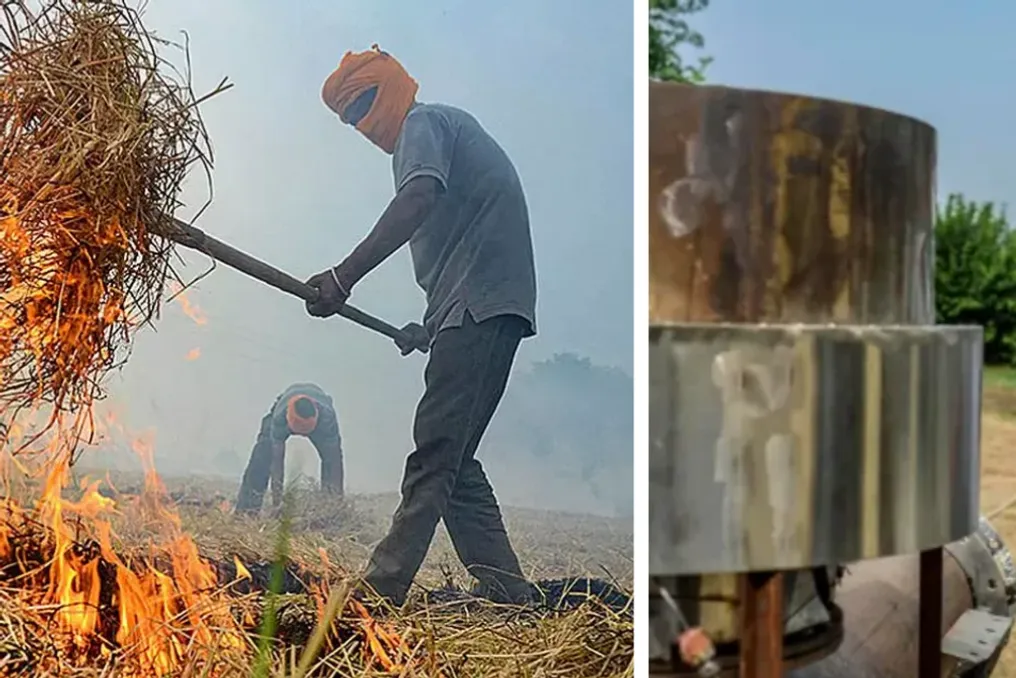
Every winter, the burning of rice straw residue in northern India exacerbates seasonal air pollution, particularly in the Indo-Gangetic plain. For farmers who need to dispose of agricultural waste quickly and affordably between harvesting one crop and sowing the next, this remains a serious problem.

The Indian climate tech startup Takachar, founded by Vidhyut Mohan and Kevin Kung, is working to solve this issue. They use portable technology to convert plant residues into biochar and other useful products instead of allowing them to burn.

This innovation received international recognition, winning the 'Clean Our Air' category at the Earthshot Prize in 2021. As the winner of the global environmental award will be announced in Mumbai on November 17, 2026, Takachar's work demonstrates how technology can link agricultural waste management with cleaner air and potential income sources for farmers.

The publication The Better India previously covered the startup's activities in February of this year, detailing how farmers in Punjab are using their technology to turn straw into biochar.

Turning Agricultural Waste into a Resource

Disposing of crop residues after harvest can be labor-intensive and costly for farmers. Rice straw is bulky, and transporting it to processing plants increases operational costs. Although burning it in the fields is often the faster option, it has negative environmental consequences.

Takachar aims to simplify the process by placing equipment closer to where the agricultural waste is generated. The startup has developed a portable thermochemical device, mounted on a tractor, that heats plant residues at temperatures ranging from 400 to 700 degrees Celsius in a low-oxygen environment. This process converts biomass into carbon-rich biochar.

Unlike traditional open burning, which releases pollutants into the atmosphere, this technology processes agricultural waste into a material that can be used further. Each unit can process up to one metric ton of straw per hour, making it suitable for village-level operations. The resulting biochar can be applied to the soil to improve its condition or sold as biofuel.

Ensuring Accessibility of Straw Management

One of the biggest obstacles in combating straw burning is ensuring that alternatives are both accessible and economically viable for farmers, especially those with limited resources. Because their equipment is portable and compatible with tractors, Takachar reduces the logistical difficulties associated with transporting large volumes of agricultural waste over long distances.

This approach also creates opportunities to transform what was previously considered agricultural waste into a valuable product. Farmers can use the resulting biochar on their own land or seek markets for surplus material.

From 2021 Earthshot Win to Widespread Recognition

When Takachar won the 'Clean Our Air' category at the Earthshot Prize in 2021, the startup received £1 million. These funds helped the team accelerate product prototyping, expand staff, and increase investment in research and development. The funding also supported the creation and commercialization of their Takavator Mini unit, which can process up to 100 kilograms of biomass per hour. The organization reports that the technology has since been implemented in many places around the world.

The finalists for the 2026 Earthshot Prize were announced on September 18, with 15 solutions selected across five environmental categories. Winners will be announced at the awards ceremony in Mumbai on November 17, with five solutions receiving £1 million each to scale up their work. As India continues to grapple with the persistent problem of agricultural residue burning, Takachar's work shows how decentralized technologies can link waste recycling, farmer livelihoods, and reduced air pollution. Their approach focuses on a simple but crucial question: can post-harvest residue become a resource that farmers want to collect and use, rather than burn?

Similar stories

Two friends from Haryana created a straw recycling business for biofuel with an annual turnover of 8 crore rupees
Read more
thebetterindia.com

Two friends from Haryana created a straw recycling business for biofuel with an annual turnover of 8 crore rupees

Every year after the rice harvest, farmers in Haryana face the problem of accumulated straw in the fields that needs to be cleared before planting the next crop. For many, the fastest way is to burn this stalk, but the smoke rising from these fields exacerbates the already serious air pollution in North India.

Imagine that the same straw could generate income, create jobs, and even power industrial enterprises. This is the opportunity two women from Haryana and neighboring Rajasthan saw.

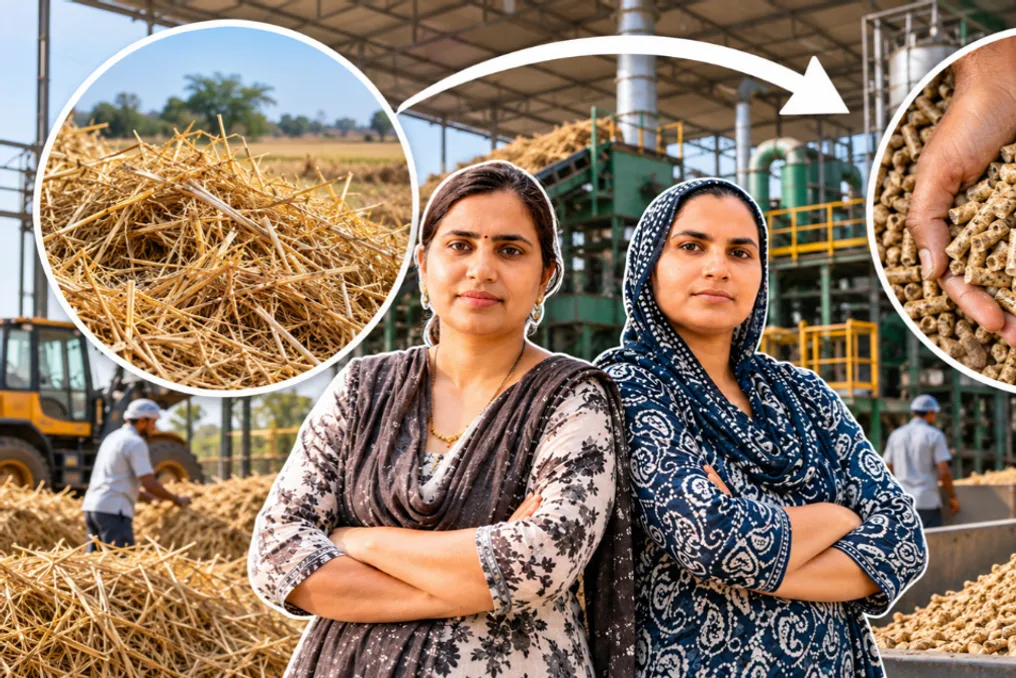
Sanjana, a graduate from the village of Ghoranwali in Sirsa district of Haryana, and her friend Sonika from Bhadra in Rajasthan, discovered a commercial potential in the waste that farmers struggled with. They decided to collect leftover rice straw, known locally as 'parali', and convert it into biofuel pellets that can be used by power plants as alternative fuel.

In 2024, they founded SSAR Biomass Green Private Limited, investing about 2.5 crore rupees. Today, the enterprise shows an annual turnover of 7–8 crore rupees and employs more than 20 people.

From Pollution Problem to Business Idea

For Sonika, the idea arose after repeatedly observing the thick smoke dispersing into the sky during the rice harvest. Concerned about the environmental consequences and threats to public health, she began to think about how agricultural waste could be utilized more effectively. Instead of viewing straw burning as a problem without a simple solution, she and Sanjana started researching ways to transform this residue into a commercially valuable product.

Their concept aimed to solve two problems simultaneously: providing farmers with a productive use for their leftover harvest and creating alternative fuel for industry. Government policies and initiatives supporting straw management also contributed to shaping opportunities for this venture.

Creating a Farm Waste-Based Factory

In 2024, Sanjana and Sonika set up their production unit in Ghoranwali, investing approximately 2.5 crore rupees under the Agricultural Infrastructure Fund (AIF) scheme. The process at the factory begins directly in the fields. The women receive rice straw through baler operators in Sirsa and surrounding areas. These operators collect and press the loose residue, which facilitates its transportation and storage.

The straw is then transported to their plant, where machinery processes it into compact biofuel pellets. These pellets can be supplied to power plants as alternative fuel. The scale of operations is significant: the enterprise annually uses approximately 1 to 1.5 lakh quintals of rice straw. Since the raw material is mainly available during the harvest season, the founders must also plan for subsequent months. They collect and store post-harvest residues, ensuring that the factory has enough raw material for continuous production throughout the year. This model of seasonal supply and year-round production allows the business to operate outside the harvest period.

From Discarded Straw to a Growing Rural Enterprise

The impact of the enterprise extends beyond the pellets it produces. By creating a market for rice straw, SSAR Biomass Green Private Limited also generates business opportunities for local baler operators and other participants in the residue collection and transportation process. The factory itself provides jobs for over 20 people, bringing employment opportunities closer to the homes of villagers and their surroundings. With initial investments of about 2.5 crore rupees, Sanjana and Sonika built an enterprise with an annual turnover of 7–8 crore rupees. For the two founders, the next harvest season will bring another opportunity to collect more straw, maintain production, and expand the business. Their work has provided farmers in the region with another possible way to manage crop residues while simultaneously creating a market for material that would otherwise have little economic value. In Ghoranwali, the rice harvest no longer signifies just the end of the farming cycle; for Sanjana and Sonika, it is also the beginning of a new business season built on utilizing agricultural waste productively.

Prime Minister Modi urged farmers towards organic farming to save the planet
Read more
www.aajtak.in

Prime Minister Modi urged farmers towards organic farming to save the planet

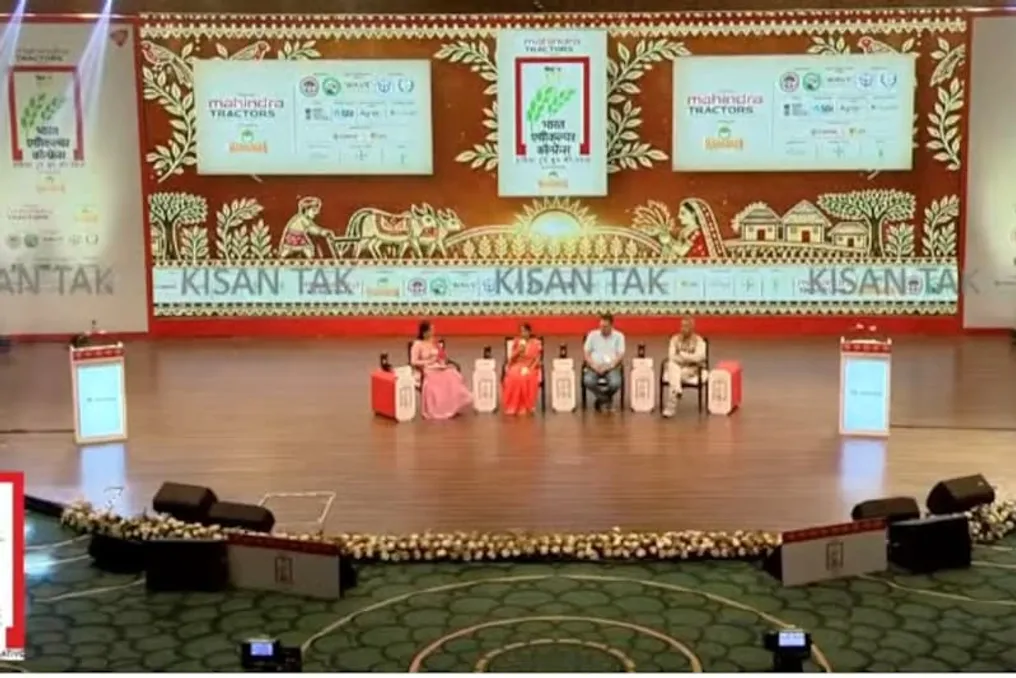
At the 'Bharat Agriculture Conference', organized by India Today Group in Bharat Mandapam in New Delhi, Prime Minister Modi addressed the farmers. He strongly urged them to transition to chemically pure agriculture, known as natural farming.

The Prime Minister emphasized that it is the duty of each of them to save our Mother Earth by implementing natural farming methods.

How Farmers Changed Their Destiny Through Pickle Production, Aquaculture, and Potato Farming
Read more
www.aajtak.in

How Farmers Changed Their Destiny Through Pickle Production, Aquaculture, and Potato Farming

At the 'Bharat Agriculture Conference 2026,' organized by India Today Group, agricultural entrepreneur Krishna Yadav shared her story of struggle and success. Initially, when her family faced financial difficulties, she sold vegetables by the roadside, but now Krishna Yadav has built her own reputation in the business of pickles, sauces, and jams. Her journey, which started with just 500 rupees, has turned into a multi-million rupee business. It is important to note that she also helped other women in the village gain employment and self-sufficiency.

Krishna Yadav recounted that after getting married, she was involved in managing the household. Although her husband worked, difficulties arose with paying for the children's education and supporting the family. During this period, her husband bought a car to start his business, but this led to significant losses, putting the family in a financial crisis.

Since her children were young, she worried about how the family's financial situation would affect their education and future. Therefore, she decided to act independently. After her husband came to Delhi, the family began farming by renting land and starting to grow vegetables.

However, vegetables were often sold at low prices in the market, despite all their efforts. Instead of selling vegetables directly, Krishna Yadav thought about creating new products from them. She remembered seeing her grandmother making pickles from carrots, cabbage, and other vegetables in her childhood, and she liked the taste of the pickles. Then she decided that vegetables grown in the field could be better sold as pickles.

Initially, she tried making pickles at home, but the first attempts were unsuccessful. Then she decided to undergo formal training and received a training course on pickle making at the nearest agricultural center, also learning methods for increasing the value of fruits and vegetables. After the training, she started her business with about 5 kilograms of pickles. This endeavor, which began in 2002 with limited resources, gradually grew, and she named her products 'Shri Krishna Pickles.'

Thanks to perseverance and high quality, Krishna Yadav's small business transformed into a brand. Today, under the 'Shri Krishna Pickles' brand, over 250 types of products are manufactured, including pickles, sauces, jams, and other food items, with the annual turnover of this business exceeding 5 crore rupees. Krishna Yadav's success is not limited to business expansion; she has also involved rural women in this work. This has provided many women with opportunities to get jobs and become economically independent, for which she was awarded the 'Nari Shakti Puraskar.'

Sultan Singh Built a Large Business on 5 Hectares

Haryana is traditionally known for its agriculture and livestock, but Sultan Singh from Karnal created new opportunities in aquaculture. He started aquaculture in 1982, when the practice of fish farming in villages and ponds in North India was very uncommon. Speaking about his journey at the 'Bharat Agriculture Conference 2026,' Sultan Singh noted that he initially rented four to five ponds in the village; at that time, the rent for one pond was 500 rupees, and for another, 2000 rupees. Today, the cost of these same ponds has risen to 50-60 lakh rupees. According to him, aquaculture opened up new sources of income in villages and contributed to local development.

Sultan Singh shared that in 1983, he started raising fish on his field. For this, he asked his father for five hectares of land. At first, his father refused, fearing that digging pits to create ponds would damage the land and affect the future of the family's children. However, Sultan Singh convinced him, and he started his work on five hectares of land. Today, he has developed aquaculture and seed production activities on an area of about 300 acres. He produces seeds of 14 types of fish and supplies them not only to North India but also to states such as Maharashtra, Gujarat, and Rajasthan. According to Sultan Singh, he has helped connect about 300-400 people with work and business in this field. His contribution was not limited to creating his own business; he conducted aquaculture training for about 25 thousand people across the country. For his contribution to the field of aquaculture, he was awarded the Padma Shri in 2019. Sultan Singh's story shows that the rural economy can be strengthened by adopting alternatives such as aquaculture alongside traditional farming.

Satapal Singh Increased Potato Harvest Using New Fertilizers

Popular