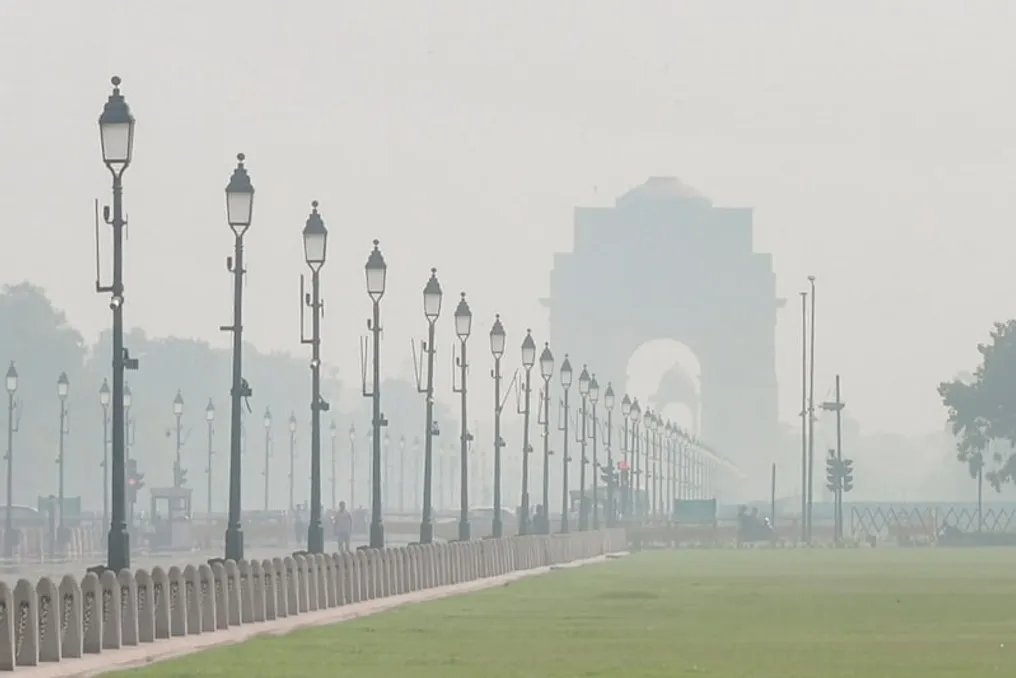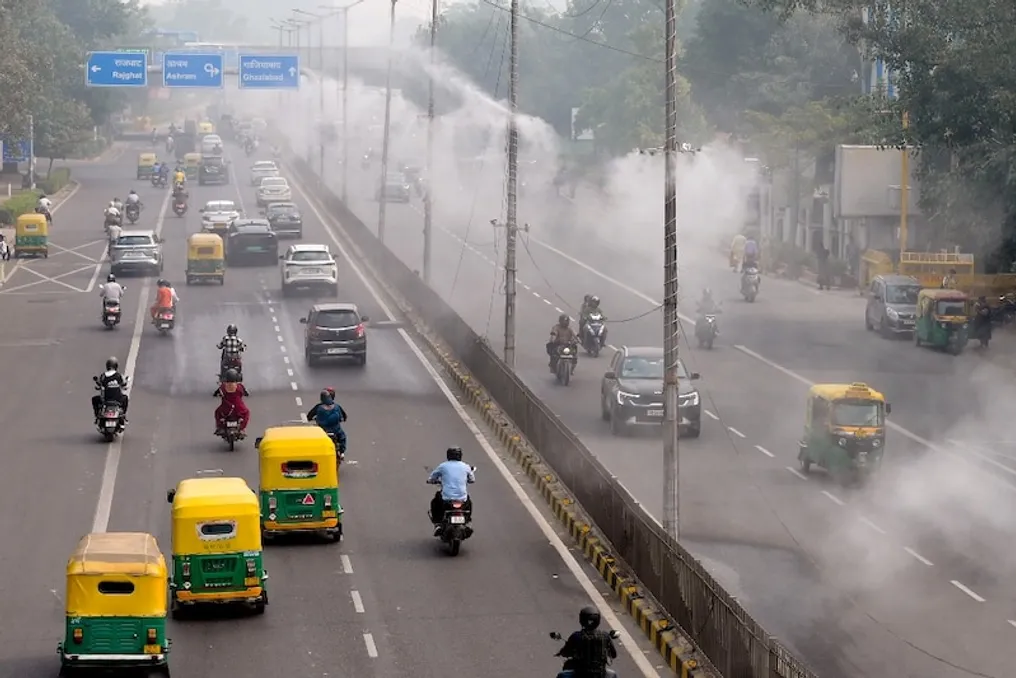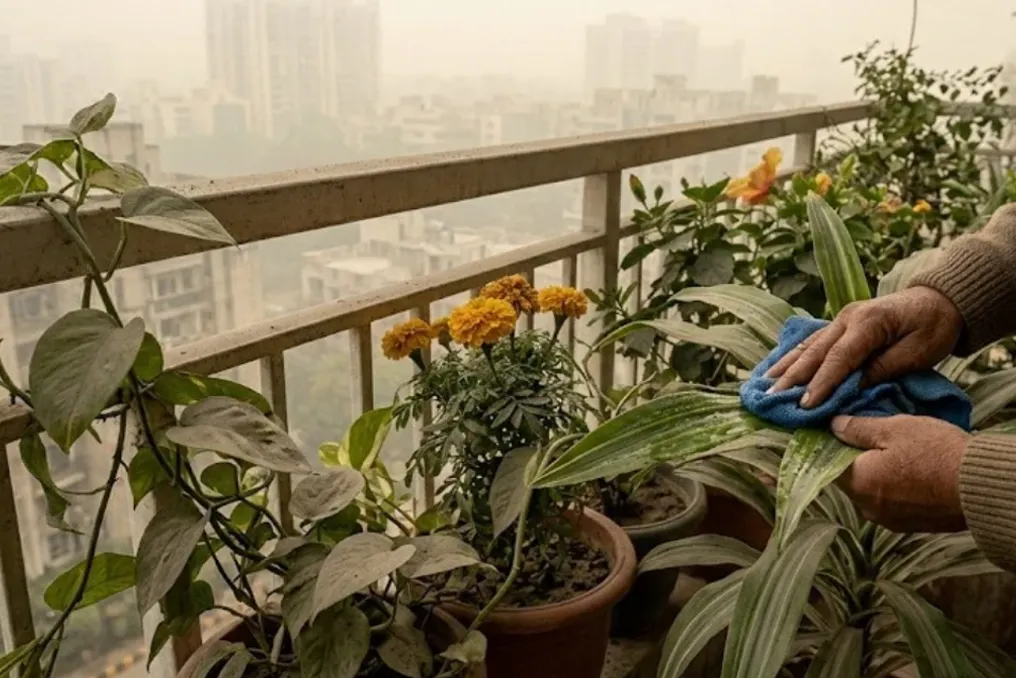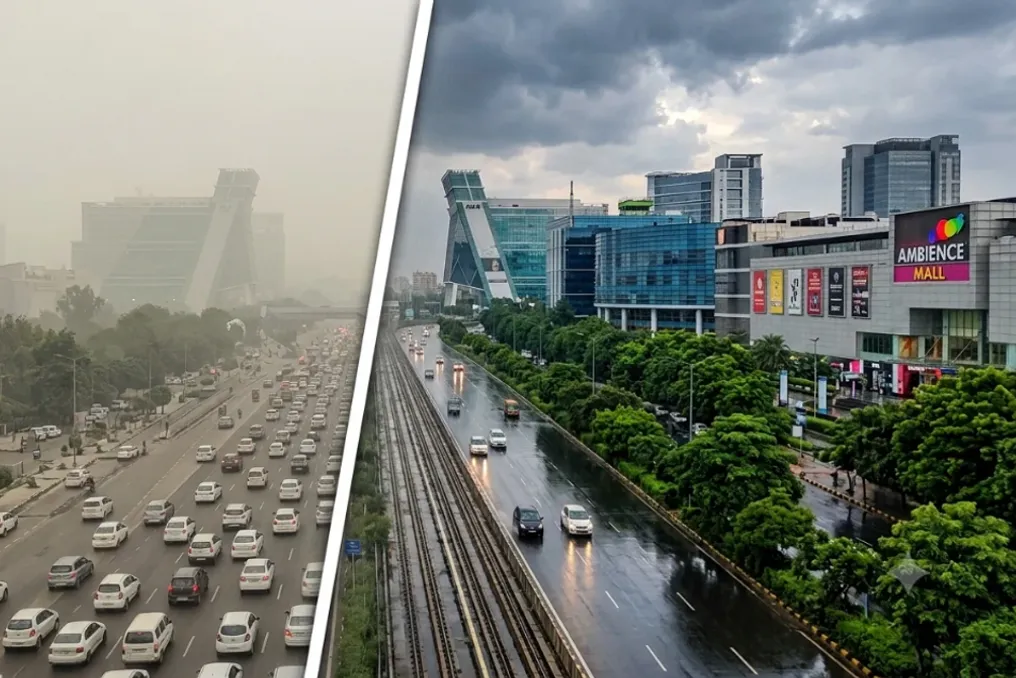
Residents of Gurugram may have noticed a change in the air on Sunday, November 15th. After several days of hazy skies and polluted mornings, light precipitation brought temporary relief. The rain, accompanied by increased surface winds, helped disperse some suspended dust and improve visibility in certain areas of Delhi-NCR.
These changes were reflected in the readings. According to the Central Pollution Control Board (CPCB), the average Air Quality Index (AQI) in Gurugram dropped from 340 on Saturday, November 14th, to 283 on Sunday. This marked a transition from the 'very poor' category to the 'poor' category, following six days of very poor air quality.
Although the rain provided a welcome break for residents accustomed to waking up in smog, it is important to understand that clear skies do not guarantee clean air.
How Rain Acts as a Natural Air Purifier
There is a scientific explanation for the feeling of freshness after rain. As raindrops pass through the atmosphere, they collide with suspended dust, smoke, and other aerosol particles, collecting them and washing them onto the ground. Scientists call this process wet deposition, or atmospheric washout.
This can be thought of as nature's way of washing the air. As the drops fall, they capture pollutants through mechanisms such as interception and impaction. These particles then settle on roads, roofs, trees, and other surfaces along with the rainwater.
However, rain does not remove all pollutants equally effectively. Larger particles, such as PM10 (particles up to 10 micrometers in size), are generally easier for droplets to capture. It is significantly more difficult to effectively remove fine particles, especially PM2.5 (2.5 micrometers or smaller).
This difference is significant because PM2.5 can penetrate deep into the lungs and poses a serious problem during winter pollution episodes in Delhi-NCR. Furthermore, the intensity and duration of the rainfall play a role; prolonged rain offers more opportunities for particle removal from the atmosphere than brief drizzle.
Why Wind Is as Important as Rain
The improvement in Gurugram on November 15th was not solely due to the precipitation. Strong surface winds also played a significant role. Rain helps remove pollutants from the atmosphere, while wind aids in their dispersion. At higher wind speeds, it can carry away polluted air and bring relatively cleaner air from surrounding areas.
This is particularly critical in winter when conditions conducive to pollutant accumulation near the ground arise in Delhi-NCR. The Commission for Air Quality Management (CAQM) notes that low wind speed, shallow atmospheric stratification, and stagnant weather conditions limit pollutant dispersion. Simply put, there is little vertical and horizontal movement to distribute the pollution.
The arrival of stronger winds can disrupt this stagnation, allowing pollutants to disperse. Thus, the combination of precipitation and favorable wind conditions can yield a more noticeable improvement than either phenomenon alone.
Why Does Pollution Return After Rain?
If rain can wash away suspended particles, why does the air quality index quickly rise again? The answer lies in the fact that precipitation only removes part of the existing pollution but does not stop its sources. Transportation continues to emit exhaust fumes, construction activities generate dust, industries release pollutants, and biomass burning contributes to the amount of particulate matter.
As soon as the rain stops and the atmosphere becomes still again, these emissions begin to accumulate. Winter conditions exacerbate the situation: lower temperatures and reduced atmospheric mixing can trap pollutants near the surface, allowing concentrations to rise again.
There is another complicating factor: high humidity can cause some aerosol particles to absorb moisture and increase in size. This affects how they scatter light, making the atmosphere appear hazier, even if the actual concentration of pollutants has not changed in a similar way.
Clear Skies Do Not Always Mean Clean Air
The next time it rains after a period of heavy pollution, one should remember that a blue sky is not an air quality certificate. The AQI is calculated based on measured concentrations of pollutants such as PM2.5, PM10, nitrogen dioxide, sulfur dioxide, and ozone. Visibility, conversely, depends on numerous factors, including humidity, fog, and suspended particles.
The rain might have made the walk on Sunday a bit more pleasant, but the Gurugram AQI served as a reminder that the relief would not last on its own. As soon as the downpours stopped, familiar pollution sources remained in place: traffic on the roads, dust from construction sites, and emissions from the surroundings.
And this is perhaps the most important distinction: rain can give us a temporary respite from polluted air, but cleaner air is what we must strive for long after the clouds have passed.
}, {