Violations in tenders amounting to 942 billion soums detected in Syrdarya region
Read more
Podrobno.uz [uz]
podrobno.uz

Violations in tenders amounting to 942 billion soums detected in Syrdarya region

In the Syrdarya region, 510 cases of violations of antimonopoly legislation were found this year within the framework of tenders, whose total initial value reached 942 billion soums. Additionally, 1,745 incidents related to violations of competition rules were identified for the period from 2024 to 2026.

According to information provided by the press service of the Committee for Competition Development and Consumer Rights Protection, the most common types of violations include non-compliance with the tender procedure regulations, granting unfair advantages to individual participants, as well as cases of affiliation and incorrect evaluation of submitted applications.

Specific examples of violations include tenders for the improvement of Gulistan district, where a violation of about 1 billion soums was found; tenders for the medical association of Sardobinsky district, where the damage amounted to almost 600 million soums; and tenders for specialized boarding school No. 71 for children of the Syrdarya district, where the violation is estimated at 277 million soums.

As a result of the inspections conducted over the last three years, administrative protocols have been drawn up against more than 50 officials, and the relevant materials have been sent to judicial authorities. Previously, similar violations in public procurement have been recorded in six regions of Uzbekistan, leading to cases being filed against contracting organizations and enforcement measures being applied.

Similar stories

India and Nepal plan to sign agreements on energy, infrastructure, and technology
Read more
timesofindia.indiatimes.com

India and Nepal plan to sign agreements on energy, infrastructure, and technology

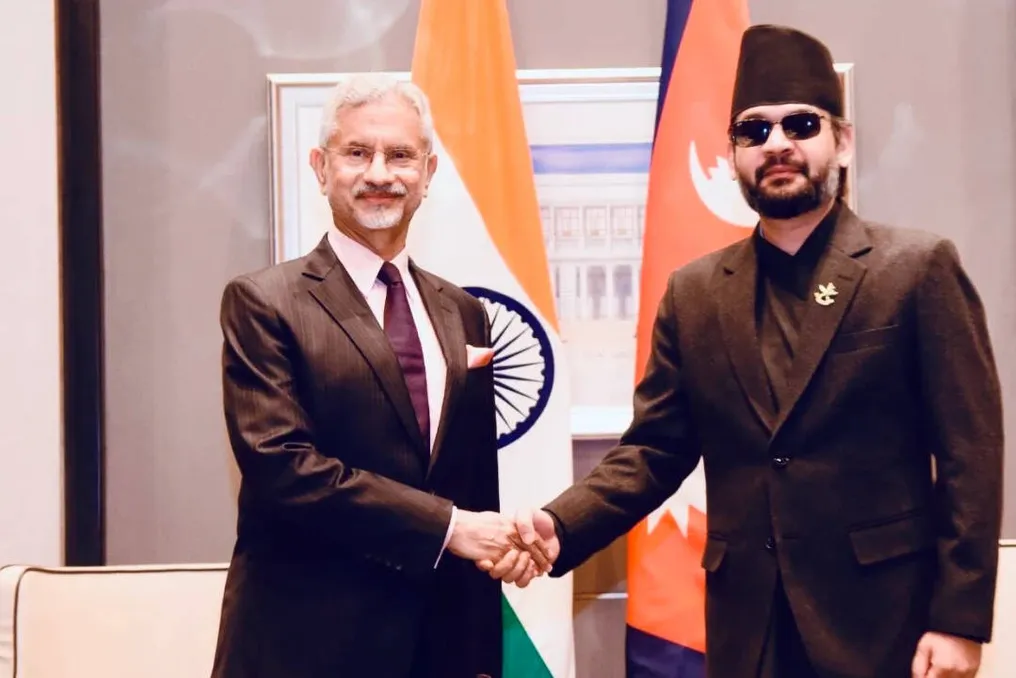
India's Foreign Minister S. Jaishankar invited Nepal's Prime Minister Bidhendra Shah, who arrived in India on Sunday as part of his first bilateral visit abroad. Prime Minister Modi will meet with Shah personally on Monday, after which an exchange of 'prospective' agreements in key areas of cooperation will take place.

These agreements will cover areas such as infrastructure, technology, transport accessibility, development partnership, energy, hydropower, railways, climate change, and disaster resilience. Jaishankar noted in an X post after the meeting that 'India values the special friendship with Nepal' and expressed anticipation for his meetings with Prime Minister Modi.

According to official data, the leaders will virtually inaugurate a number of completed projects and also participate in foundation-laying ceremonies for new initiatives. Furthermore, Shah is expected to reiterate Nepal's request for the creation of bilateral low-altitude air corridors through Indian airspace near western entry points.

Both sides have reached a common vision for bilateral relations, which is set to be unveiled after the meeting. Nepal is also seeking a $2 billion economic package from India. Although Shah may raise the border issue, it is expected not to become a stumbling block during negotiations.

India views its ties with Nepal as unique and comprehensive, based on mutual trust, open borders, shared traditions, and close people-to-people connections. Government sources emphasized that India is Nepal's largest trade, transit, and investment partner. Nepal has duty-free access to the Indian market, and India is Nepal's largest export destination, receiving about 80% of goods exported by Nepal.

The visit aims to strengthen the goodwill that India generated in Nepal through assistance to the country following devastating floods earlier this year. India provided about 140 tons of emergency supplies and offered technical assistance in rescue operations in tunnels and forensic activities after the sudden flood.

India and Nepal are exploring opportunities to develop new pipelines and terminals to further improve energy interconnection. The parties are also discussing new options, such as the Raxaul-Kathmandu railway connection, which could open new routes for cross-border passenger and freight transport.

NHAI implements video surveillance system on 50,000 km of roads to automate fines for contractors
Read more
timesofindia.indiatimes.com

NHAI implements video surveillance system on 50,000 km of roads to automate fines for contractors

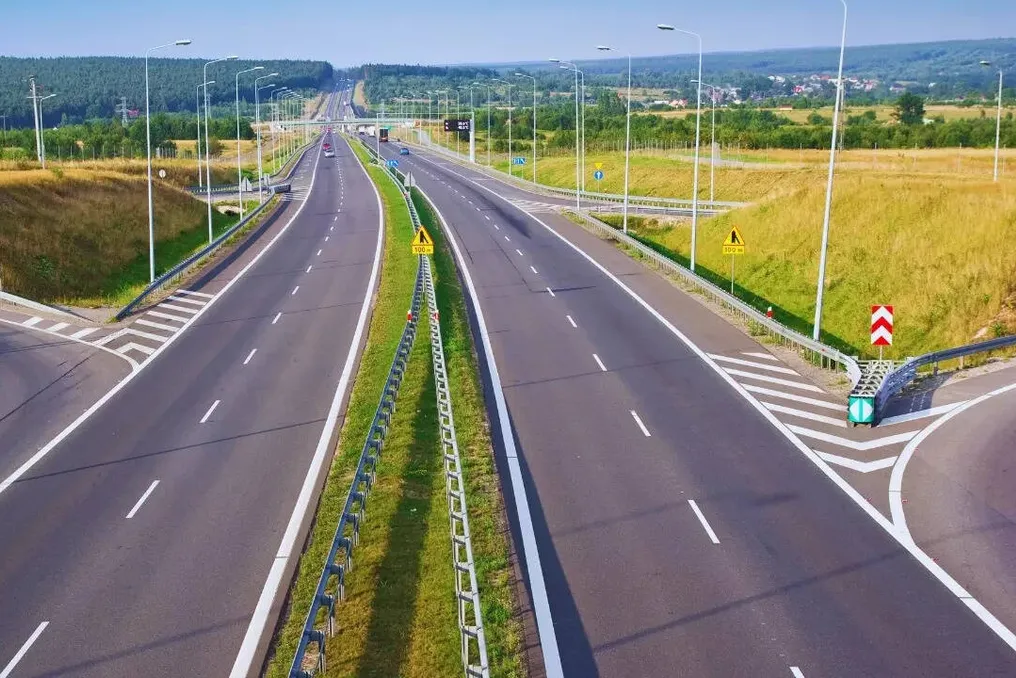
The National Highways Authority of India (NHAI) has implemented a monitoring system that will prevent contractors and NHAI employees from evading action regarding road surface defects such as potholes, faded markings, rutting, and faulty lighting, which remain a frequent problem on National Highway (NH) sections.

NHAI launched a weekly inspection system covering 40 types of defects using video cameras installed on patrol vehicles, which cover nearly 50,000 kilometers of the NH network. NHAI officials reported that in addition to collecting data with precise location details and visual evidence, this information will be transmitted to the respective contractors responsible for specific sections.

A senior NHAI official noted that the cameras are capable of detecting potholes as small as two inches. Currently, failure to rectify a defect within the stipulated time incurs fines calculated according to the contract terms. He added that in the coming months, fine calculation will become fully automated, and work had been underway for the past two months to inform contractors and officers.

The system applies to all operational and maintained NHAI sections. This is significant given that the road authority has faced public criticism over the poor condition of some road sections. According to data obtained by TOI, 92,088 defects were identified through video camera footage in the two months since the system's launch. Approximately 23% of these related to faded markings, and about 15% to potholes. Although almost 72% of the defects have been rectified, about 17% remain overdue.

According to the set deadlines, contractors have two days to fill potholes, one day to repair failed lights and safety issues in work zones, and seven days to close unauthorized openings, among others. Another NHAI employee emphasized that because the defect details are backed by evidence, and every contractor and field officer can view them on the central server, disputes do not arise. He also noted that road contractors understand that timely maintenance reduces their workload. Defects are only closed after uploading and verifying remediation details with photographic evidence.

TOI learned that at a later stage, the public will also be able to view the details and provide feedback.

Anthropic and SpaceX impose atypical rules on IPOs, causing dissatisfaction among Wall Street banks
Read more
olhardigital.com.br

Anthropic and SpaceX impose atypical rules on IPOs, causing dissatisfaction among Wall Street banks

The initial public offerings (IPOs) of Anthropic and SpaceX have caused discontent among bankers and lawyers on Wall Street. Both technology companies implemented unique terms, exercising control over phases of the operations and limiting the autonomy of financial institutions.

Although the banks received over US$ 500 million (approximately R$ 2.85 billion) in fees from Anthropic's IPO, internally nicknamed Project Lantern, sources close to the process reported several issues during the transaction.

These complaints signal a shift in the dynamic between tech giants and Wall Street, driven by the high demand for artificial intelligence (AI)-related stocks. Both SpaceX, in June, and Anthropic managed to negotiate conditions distinct from usual market practices.

One point of contention was the compensation of the banks. According to Jay Ritter, an emeritus professor at the University of Florida and an IPO specialist, the two companies negotiated not to compensate coordinators for the distribution of extra shares sold via the greenshoe option, a feature that allows increasing the volume of securities offered in an initial public offering.

Ritter suggests that few companies will be able to demand similar terms, but does not rule out that OpenAI might possess sufficient bargaining power for such demands.

In the case of SpaceX, Elon Musk's team defined how and to whom the banks should trade the shares. Furthermore, exact order volumes were stipulated that the institutions had to meet, reaching billions of dollars. The banks agreed to participate in the operation without prior knowledge of their earnings.

Anthropic applied a different control model. The company instructed about 22 coordinating banks to restrict the number of employees involved in the deal to four, requiring them to be senior professionals. Additionally, it requested that executives from certain institutions sign agreements preventing central members of their teams from working with competitors such as OpenAI, Cursor, DeepSeek, and Hugging Face for a period of six months after the IPO.

Data control also characterized the offer preparation phase. Almost four weeks before the public disclosure of the registration submitted to the U.S. Securities and Exchange Commission (SEC), Reuters released details of the document, including risks, commercial relationships, and Anthropic's financial data.

To share files with most banks, the company used the NetRoadshow platform. This system monitored who accessed the documents and which pages were viewed, in addition to applying watermarks with the professionals' names. However, the tool prevented bankers from saving copies, complicating the teams' work.

Setbacks persisted on the eve of sending an updated version of the registration, scheduled for November 10. A law firm sent banks a PDF containing incorrect information about prices and shares related to the sale of securities in Canada, only to ask shortly after that the document be ignored.

The correct version was made available by NetRoadshow around 2 a.m. New York time zone. Banks had only a few hours to validate the material before submitting it to the SEC.

Despite the difficulties in preparation, both IPOs registered significant interest. SpaceX shares reached US$ 201.80 (about R$ 1,190.62) on June 16, but later fell below the initial price of US$ 135 (approximately R$ 796.50) in mid-July. Meanwhile, Anthropic's shares rose 17% on the first day of trading but closed Friday with an 8.5% drop.

For Ritter, companies like Anthropic and SpaceX demonstrated sufficient bargaining power to impose their own conditions on the banks. Nevertheless, he estimates that large financial institutions will likely maintain their normal operations with most companies, although OpenAI may be an exception.

Popular