Water Resources Minister Reports No Foam on 52-Kilometer Stretch of Yamuna in Delhi
Read more
The times of India
timesofindia.indiatimes.com

Water Resources Minister Reports No Foam on 52-Kilometer Stretch of Yamuna in Delhi

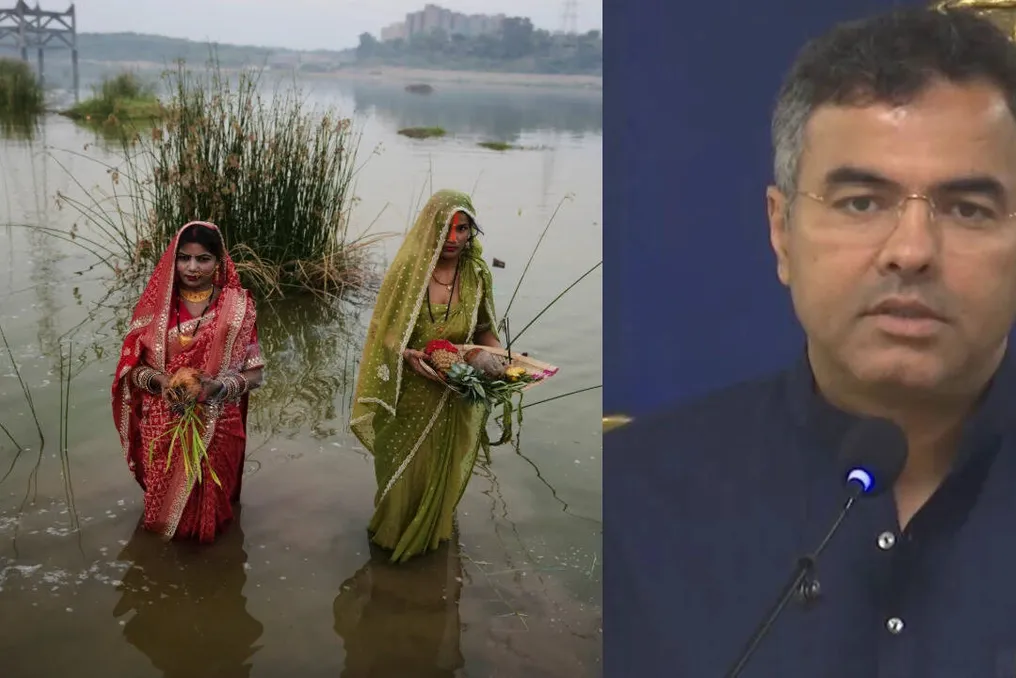
Delhi Water Resources Minister Parvesh Sahib Singh reported on Tuesday that no foam formation was observed along the entire 52-kilometer stretch of the Yamuna River flowing through the capital.

Previously, it had been noted that the Chhath Puja festival took place in areas where the river was covered with foam.

Furthermore, Parvesh Sahib Singh commented on the political situation, stating that 'AAP is disappointed that the Bharatiya Janata Party (BJP) has won the hearts of the residents of Purvanchali.'

Similar stories

Roraima suffers from extreme drought due to El Niño and the displacement of the ITCZ, despite June rains
Read more
olhardigital.com.br

Roraima suffers from extreme drought due to El Niño and the displacement of the ITCZ, despite June rains

The state of Roraima is facing a severe drought, aggravated by the influence of the El Niño phenomenon and the movement of the Intertropical Convergence Zone (ITCZ). Since July, the amount of rainfall recorded was only 37% of the expected average for this period.

Since September, the state has been in a state of emergency, dealing with water supply problems, the need for rationing, and a decrease in school activities, according to g1 Roraima. Furthermore, the National Water Agency (ANA) has declared water scarcity in the Tacutu and Mau rivers until April 2027.

Because most of its territory is located in the Northern Hemisphere, Roraima experiences the Amazonian summer, which is seasonally drier, occurring between October and March. However, in 2026, the drought presents an intensity higher than the usual pattern.

Two main factors contribute to this situation. In June, the ITCZ shifted towards the North of the planet, resulting in a reduction of humidity transported to Northern South America. Daniel Garcia, a researcher at the Brazilian Geological Survey (SGB), stated that the conjunction of these events justifies the intensity of the drought.

The researcher, who is responsible for the Hydrological Alert System of the Branco River Basin, clarified to g1 that the reduction in rainfall is far below normal due to El Niño and the ITCZ.

SGB records indicate that Roraima should have received 1,512 millimeters of rain in 2026. By November 16, 1,061 millimeters had accumulated, corresponding to 70.2% of the projected volume. Precipitation was concentrated in the first semester, with May being the month with the highest record, totaling 316.71 millimeters.

The drought has also significantly affected water courses. In the center of the capital, the level of the Branco River receded by more than 30 centimeters in a single month, exposing sandbanks. Between August and October, tributaries such as Tacutu, Uraricoera, Mucajaí, and Surumu reached their lowest historical levels for this time of year.

Data from the Drought Alert platform, maintained by the National Center for Monitoring and Alerts of Natural Disasters (Cemaden), reveals that 11 out of 15 municipalities in Roraima were under alert in November, while the rest remained on high alert.

Water shortage directly impacts city supply, manifesting as low pressure from taps, interruptions in supply, and the implementation of rationing. In rural areas and indigenous communities, residents depend on emergency actions to obtain potable water.

Water scarcity also compromises vital services. In an indigenous school, the water found in an artesian well was considered excessively salty and unfit for consumption. A manager of the institution reported that children ingested this water and developed symptoms such as diarrhea, vomiting, and fever, leading the school to reduce in-person classes to only two days a week.

Additionally, the drought harms farmers and livestock breeders and increases the risk of forest fires. According to the National Institute for Space Research (Inpe), Roraima registered 342 heat spots between November 1st and 20th. Since January, the total reached 2,770 foci, representing an 80% increase compared to the 1,539 recorded throughout 2025. In 2026, the state ranks tenth nationally, behind Pará, Maranhão, and Bahia.

Nordic Countries Affirm Importance of Multilateral Cooperation in Combating Climate Change After COP31
Read more
noticiasaominuto.com

Nordic Countries Affirm Importance of Multilateral Cooperation in Combating Climate Change After COP31

Denmark, Finland, Norway, Sweden, and Iceland once again emphasized the significance of a multilateral approach to confronting climate change. This came after the climate summit in Antillea, known as COP31, concluded without reaching a global political agreement on the issue.

Sari Multala, Finland's Minister for Climate and Environment, stated in a communiqué from the Council of Nordic Ministers that multilateralism is vital for the northern region, which consists of small countries, as climate change is a global problem requiring global action.

The Council of Nordic Ministers also added that they must promote and advance ambitious climate goals and concrete measures. This Council brings together several countries whose economic power accounts for 10% of the European Union's GDP.

The Council of Nordic Ministers noted that despite the lack of a final agreement, many states expressed willingness to support voluntary initiatives aimed at the gradual phase-out of fossil fuels.

Despite the absence of a final agreement, the German government welcomed the 'concrete progress' achieved at the conference. Germany's Environment Minister, Karsten Schneider, stressed that Antillea also sends a signal to the market favoring clean electrification. He stated in his declaration that this will create opportunities, including for Germany's strong energy sector, and that this strategy benefits both the climate and the economy.

COP31 ended on Sunday without a political agreement, reflecting current disagreements in multilateral cooperation. This occurred despite a record extension of negotiations, which lasted over 44 hours, but failed to reconcile the positions of various regional blocs.

At climate conferences, decisions must be made by consensus among nearly 200 countries, so the formal disagreement of just one country can block a decision. Although intensive negotiations continued for two weeks, COP31 managed to ratify some documents but not the main document.

Approach to Coexistence of Humans and Elephants Developed in Hathihuli Village (Assam)
Read more
thebetterindia.com

Approach to Coexistence of Humans and Elephants Developed in Hathihuli Village (Assam)

In the village of Hathihuli, located in Assam, elephants previously caused fear and were chased when moving through agricultural fields, leading to conflicts between local residents and wildlife.

However, a simple concept changed this situation: instead of fighting, residents began feeding the animals. Under the guidance of 90-year-old conservationist Pradip Kumar Bhuyan, Binod Dulu Bora, and the local community, Hathihuli started looking for ways to ensure the coexistence of humans and elephants.

Local residents began planting feed for the elephants, mapping their migration routes, and working on creating safer corridors for these majestic animals.

Today, more than 300 elephants pass through Hathihuli annually, serving as a vivid example of what is possible when communities choose understanding over confrontation. This case is not just an inspiring story of nature conservation; it reminds us that protecting wildlife does not always imply separating people and animals. Sometimes it means mastering the skills of sharing the same landscape.

Popular