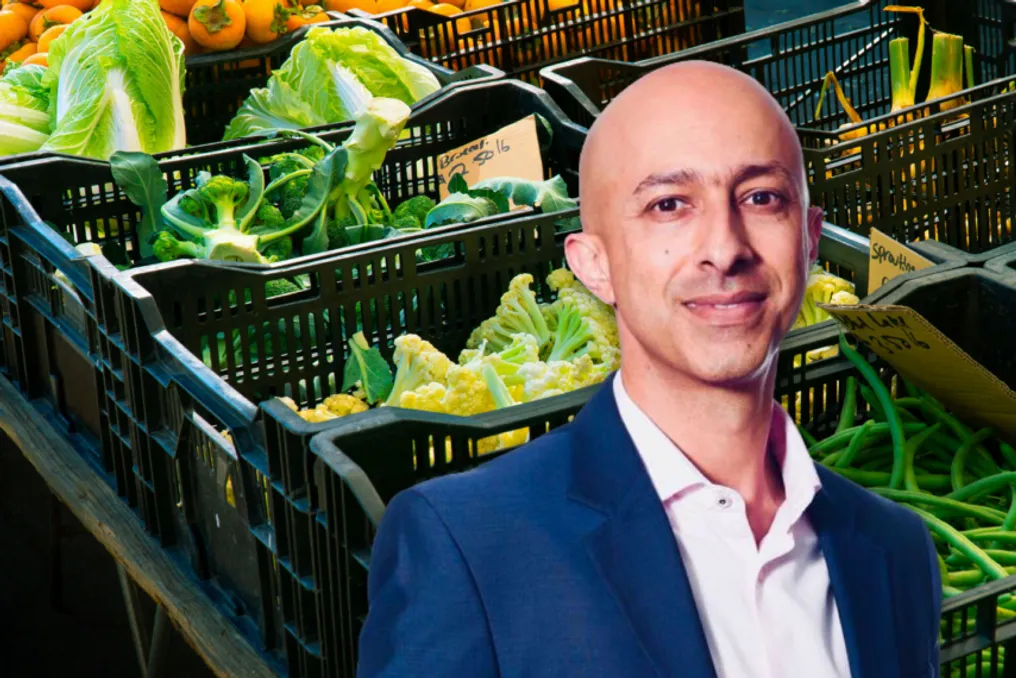
Using intelligent technologies as the key to solving post-harvest losses in Africa
Read more
Food For Mzansi
foodformzansi.co.za

Using intelligent technologies as the key to solving post-harvest losses in Africa

Shiraz Hota, Managing Director for Emerging Africa at SAP, asserts that solving post-harvest losses requires more than just physical infrastructure. He examines how artificial intelligence and related data can help overcome the food loss crisis in Africa, bridge the agricultural information gap, and increase farmers' profits.

Every year, a significant portion of crops grown by African farmers does not reach the consumer. Grain losses in Sub-Saharan African countries account for about 20%, while for fruits, vegetables, and tubers, this figure reaches 40–50%. The exact figures vary widely depending on the crop, country, and measurement method, which itself is telling: in many markets, it is unclear where exactly the losses occur and what intervention measures will have the greatest impact.

This post-harvest crisis is often presented as an infrastructure problem. Indeed, Africa needs additional warehouses, refrigerated transport, processing facilities, and reliable power supply, but beneath these physical limitations lies another, less obvious problem—a lack of information.

Under the Kampala Declaration, African leaders set a goal to reduce post-harvest losses by 50% by 2035. Achieving this goal will require continuous investment in storage, energy, transportation, and processing. However, building additional infrastructure without improving the flow of information risks reproducing today's inefficiencies on a larger scale.

Agricultural value chains often suffer from the absence of timely and accurate data on harvested crops, storage locations, delivery urgency to the market, and demand. Without such transparency, enterprises cannot coordinate transport, plan production capacity, or intervene before products spoil. Infrastructure is important, but it cannot realize its full potential if decisions are made based on incomplete or outdated information.

What we call food loss is also a consequence of disconnected decisions. A processor may not know about the early arrival of a harvest. A logistics operator may lack information to allocate refrigerated transport, and a warehouse operator may only detect a temperature breach after the cargo has spoiled.

Farmers who do not have access to market signals may sell their produce immediately after harvest when prices are lowest, as they cannot assess whether storing it would yield better profits.

Artificial intelligence can eliminate these gaps by transforming disparate operational data into coordinated actions. Yield forecasts allow processors and distributors to foresee expected supply in advance. Connected sensors can monitor temperature and humidity during storage and transport. Predictive models help identify spoilage risks, and intelligent planning systems can match products with available warehouse capacity, transport, processing facilities, and buyers.

However, the greatest potential is unlocked by integrating these capabilities across the entire value chain. Temperature alerts have limited value if they do not trigger a logistical response. A yield forecast cannot prevent waste if procurement, labor, and processing plans remain unchanged. Traceability data will not grant access to premium export markets if it is not integrated into quality management, compliance reporting, and financial systems.

Enterprise technologies play a crucial role by linking procurement, inventory, production, quality, logistics, finance, traceability, and intelligent business systems to form a unified operational picture from farm to retailer. AI then helps organizations predict failures, coordinate responses, and continuously adjust plans as conditions change.

These systems can support practical solutions: redirecting vulnerable produce to the nearest processor, prioritizing refrigerated transport, adjusting warehouse staff before delivery, or identifying quality risks before goods reach exporters.

Over time, this transforms agricultural supply chains from being reactive to losses to being preventative.

Elements of this model are already emerging. Solar-powered cold rooms with a pay-per-storage system make cooling more accessible for small producers in Nigeria. Digital supplier platforms help integrate farmers into formal value chains; one initiative implemented with SAP was designed to connect 850,000 maize producers in Nigeria with buyers and services.

The next step is to integrate infrastructure, farm-level information, and enterprise operations into a single connected system. Local conditions and infrastructure must be considered. Many smallholder farmers do not own smartphones or have stable connectivity. Therefore, successful solutions must include offline capabilities, simple mobile interfaces, and trusted intermediaries who can collect information and provide local insights.

Technologies must align with the realities of Africa's agricultural sector, rather than assuming every farmer is constantly connected to the network.

Greater transparency in agricultural value chains benefits not only food security. Traceable and well-managed supply chains can strengthen access to financing, support sustainability reporting, and help agribusiness comply with the quality and regulatory requirements of high-yield export markets. Reducing losses improves margins without the need to increase land, water, or agricultural resources, providing both economic and environmental opportunities.

Africa needs an intelligent, connected value chain capable of early problem detection and coordinating action across organizational boundaries. When physical infrastructure is combined with reliable data and AI-driven operations, post-harvest loss becomes a preventable failure that can be addressed jointly by businesses, governments, and technology partners.

Similar stories

AI Proposed at COP31 Conference to Reduce Emissions and Energy Consumption in Smart Cities of Uzbekistan
Read more
uzdaily.uz

AI Proposed at COP31 Conference to Reduce Emissions and Energy Consumption in Smart Cities of Uzbekistan

At the COP31 climate conference held in Antalya on November 16, an international initiative was presented aimed at promoting the application of artificial intelligence, digital twins, and the Internet of Things (IoT) to enhance the ecological sustainability of urban areas.

These methods may be particularly relevant for Uzbekistan, as the development of urban infrastructure is accompanied by a growing demand for electricity, transportation, and more efficient resource management.

The initiative was discussed within the framework of a high-level dialogue titled 'Rethinking Sustainable Cities: AI, Digital Twins, and IoT for a Sustainable Future.' The event was organized by the COP31 Presidium in collaboration with the International Telecommunication Union (ITU), and with the participation of the United Nations Human Settlements Programme (UN-Habitat) and the Secretariat of the United Nations Framework Convention on Climate Change (UNFCCC).

The main focus of the meeting was on transitioning from experimental digital solutions to their large-scale implementation in urban infrastructure. Participants explored how these technologies can contribute to improving energy efficiency, reducing greenhouse gas emissions, and helping cities adapt to climate change.

One of the central issues was the use of digital twin technology—virtual models of real assets and infrastructure systems. These models allow for analyzing the condition of objects, simulating various scenarios, and assessing the potential consequences of management decisions.

In combination with IoT sensors and artificial intelligence, such models can be used to monitor energy consumption in buildings, optimize traffic flows, monitor utility networks, and support urban infrastructure planning.

For example, analyzing data on road congestion helps improve traffic light coordination and public transport routes, while digital modeling of energy systems allows for identifying opportunities to reduce electricity losses.

In the field of municipal services, these technologies can also be used to detect water leaks, monitor the condition of engineering networks, and increase the efficiency of utility services.

COP31 also put forward a global call to action aimed at creating smart, sustainable, and environmentally friendly cities. The goal of this initiative is to unite governments, municipalities, technology companies, research institutes, and international partners to accelerate the adoption of digital climate solutions.

Special attention is paid to technological compatibility, scaling successful projects, and measuring their practical impact on the environment. For Uzbekistan, this agenda is significant for developing the digital economy, modernizing municipal services, and strengthening city resilience to climate change.

Specifically, AI and digital twin technologies can help Tashkent and other major cities in Uzbekistan manage transport, electricity supply, water supply, and urban development more effectively.

Nevertheless, the implementation of these technologies requires investments in digital infrastructure, access to quality data, professional training, and robust information security measures. Furthermore, the environmental benefits of digitalization must be assessed alongside the energy consumption of the computing systems and data centers themselves.

The initiative presented at COP31 underscores the growing role of digital technologies in climate policy, but its effectiveness will depend not only on the adoption of artificial intelligence but also on the ability of local authorities to integrate these tools into real urban management systems.

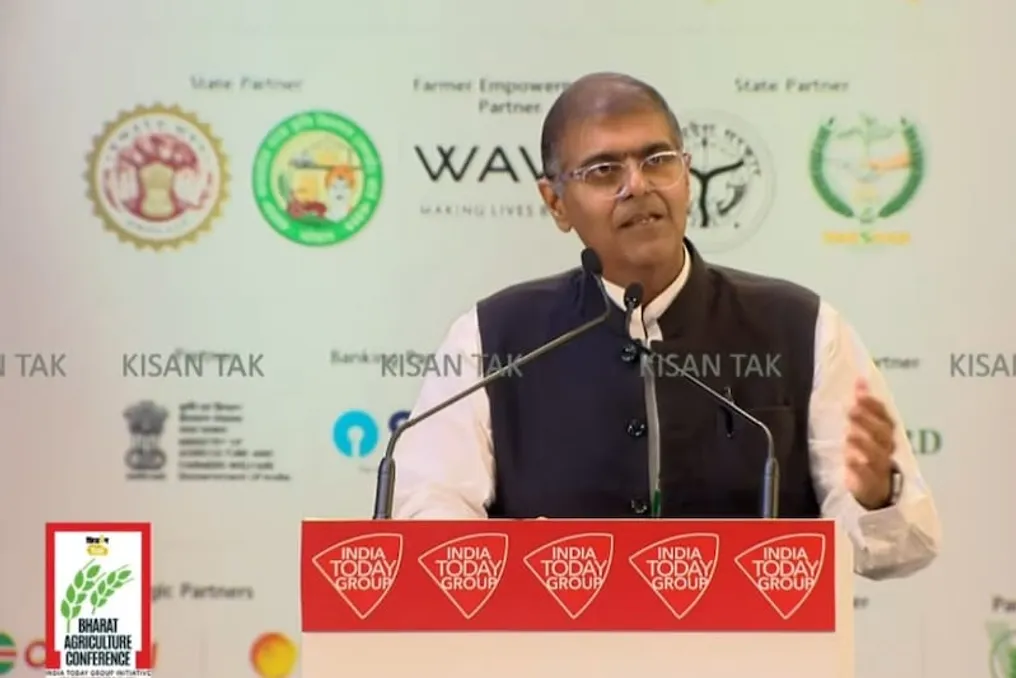
Vijay Nakra discusses the concept of 'smart farming,' where AI and new technologies are transforming agriculture
Read more
www.aajtak.in

Vijay Nakra discusses the concept of 'smart farming,' where AI and new technologies are transforming agriculture

At the 'Kisan Tak Bharat Agriculture Conference 2026,' it was emphasized that simply increasing production volumes is insufficient for the development of Indian agriculture; strengthening the entire value chain in the agricultural sector is critically important. Modern technologies, artificial intelligence (AI), data, and agricultural machinery play a key role in this transformation.

Vijay Nakra, President of the Agricultural Equipment Division of the Mahindra & Mahindra Group, stated on Wednesday that the Indian agricultural sector is undergoing significant changes, and the country has an opportune moment to leverage these opportunities. He also presented the concept of the 'smart farmer' for the future of agriculture.

Speaking on the first day of the conference, organized by India Today Group at Bharat Mandapam in Delhi, Nakra pointed out that food security is a prerequisite for the development, prosperity, and safety of any nation, and the primary responsibility for it lies with the farmers. He added that society as a whole must help farmers cope with issues such as changing weather, climate instability, rising costs, labor shortages, and pressure on natural resources.

Despite numerous difficulties, Indian farmers continue to innovate, adapt to conditions, and move forward. Nakra stressed that the contribution of farmers goes beyond meeting their families' needs, influencing rural communities, the economy, and the progress of the country. He also emphasized that the responsibility for supporting farmers rests not only with the government but also with the private sector, the state, and the media, who must jointly develop solutions to enhance farmer resilience amid uncertainty.

Highlighting that India is the third-largest global economy and a major agricultural producer, Nakra noted that despite this, the yield per hectare in the country remains lower than in several other agrarian economies. Therefore, the current task is not just to increase grain volume but also to create more value from every hectare of land, every drop of water, and every effort of the farmer.

He added that the success of the agricultural sector should be measured not only by field production but also by the additional value added throughout the entire value chain—through storage, logistics, food processing, and market access.

Nakra pointed to serious challenges facing farmers and policymakers, such as stubble burning, water availability, and soil health. Water demand will grow in the future, as the need for water will increase not only in agriculture but also in industries like manufacturing, power generation, and data centers. Therefore, states will have to balance development with agricultural stability.

He explained that a range of new technologies helps solve these problems. For example, Zero Tillage and multi-cropping methods allow sowing directly into the field without removing crop residues. Baller machines help collect stubble, reducing the need for burning, which contributes to improving soil health and rational resource use. Furthermore, sensors, software, AI, and drip irrigation systems can significantly contribute to water conservation and climate adaptation.

Nakra also emphasized the need for mechanization in the agricultural sector. He reported that the level of mechanization in India is less than 50%, whereas in developed countries, this figure approaches 90%. This indicates significant potential for growth in agricultural machinery and mechanization in India. He specified that the use of machinery should not only increase production but also make the work of farmers easier, safer, and more convenient. In this regard, companies are working on creating economical tractor cabins, autonomous vehicles, and smart devices for precision farming. Investment is also growing in alternative fuels, telematics, and the new generation of agricultural equipment.

In Vijay Nakra's view, the biggest change in the future of agriculture will come from the combined application of artificial intelligence, data, computing power, and semiconductor technology. These technologies will enable farmers to make decisions based on accurate data rather than assumptions. He predicts that AI-based recommendation systems, computer vision, autonomous tractors, and humanoid technologies will change farming practices.

This will allow farmers to receive real-time information about soil conditions and simplify the early detection of plant diseases and optimization of water use. However, Nakra warned that merely implementing new technologies is not enough; companies bear the responsibility of ensuring that these solutions are accessible, simple, and within reach of farmers. This requires funding.

Popular