
Mumbai couple organizes low-waste wedding, minimizing carbon footprint
Read more
The Better India
thebetterindia.com

Mumbai couple organizes low-waste wedding, minimizing carbon footprint

Damini Arora and Kunal Keswani held their wedding in Thane on February 21, 2026, making conscious decisions to reduce waste. Their celebration demonstrated how events can be conducted differently by using recycled plastic bottles and reusable decorations.

The couple's story began in 2018 when Damini was involved in waste management issues in Himalayan villages as part of initiatives related to Indiahikes. Kunal connected with her via Instagram to join a trek she was organizing.

They spent nine days traveling through Spiti, overcoming landslides, snow, and damaged roads. They met while staying at the Key Monastery. Damini recalls: 'We genuinely enjoyed each other's company.'

After getting engaged on September 15, 2024, the couple began planning the wedding. Damini noted that they did not want to host a large, overwhelming event where there was little time to socialize with guests; they preferred something more intimate.

The wedding took place at Blue Roof Club in Thane, with about 100–150 guests attending three events. The couple was drawn to the venue due to its greenery and existing infrastructure. An added advantage was the site's waste management systems and use of solar energy.

Water supply was one of the main challenges. Instead of completely abandoning bottled water, they chose the company Clear Pani, which supplies bottles made from recycled PET plastic rather than virgin material. The couple's caterer helped them connect with a supplier who estimated the approximate number of bottles needed, allowing the couple to avoid using around 1000–1200 single-use plastic bottles.

Approximately 450 dishes were prepared across the three events. Damini emphasized that the problem with most weddings is that significantly more food is prepared than guests can eat. They donated leftover food to the hotel staff.

The couple opted against fresh flowers and reused artificial decorations for all functions. Furthermore, they utilized the seating, stages, and structures already available at the venue. Damini explained: 'They already exist. Why remake them?'

Invitations were designed digitally, and printing was done only for a minimal set required for religious rituals. They also rented outfits, which helped prevent the production of approximately 10–12 kg of textiles. Their approach was based on critically assessing what was truly necessary.

Thanks to their choices, they managed to avoid using 1000–1200 plastic bottles, reduce over 20 kg of plastic waste, and save between 80,000 and 100,000 liters of water by minimizing food waste. These figures are approximate estimates.

Similar stories

Sonam Kapoor criticized for calling for a ban on car purchases due to environmental pollution
Read more
www.aajtak.in

Sonam Kapoor criticized for calling for a ban on car purchases due to environmental pollution

During the presentation of the 'Earthshot Prize Awards 2026' in Mumbai, actress Sonam Kapoor made an appeal regarding ecology, which drew online criticism. The actress called on the public to reduce car purchases, minimize plastic use, and prevent river pollution.

Sonam Kapoor expressed serious concern over the growing pollution in Mumbai and Delhi, emphasizing the urgent need for decisive local action to address the country's environmental crisis. Although her suggestion that people buy fewer cars was not well-received, it led to her being trolled on social media.

At the sixth annual 'Earthshot Prize' ceremony in Mumbai, Sonam Kapoor made a significant statement about the city's pollution problems. She stated: 'Buy fewer cars, make sure trash is not littered on the ground, use as little plastic as possible, and do not pollute the rivers. I live near the Mithi River in BKC and have seen its condition. It is our collective responsibility to leave a better future for our children.'

The reaction of internet users to Sonam's statements was mixed. One user commented: 'Sonam, please use public transport next time.' Another Instagram user wrote: 'Very funny! You wear jewelry and clothes that are completely unsustainable.'

Sonam Kapoor described the rise in pollution as 'horrifying' and supported initiatives like the 'Earthshot Prize'. These programs help find, promote, and implement new and creative solutions on a large scale that contribute to the restoration and protection of our planet. She added: 'I am here to support. What is happening is very terrible. When I look at my children, I am very scared, and I wonder what kind of future I will leave them. I believe it is extremely important to take this issue seriously.'

She noted that pollution levels are rapidly increasing in both Mumbai and Delhi. Expressing concern for her children's future, she urged people to take environmental preservation seriously, stressing that the responsibility cannot rest solely on Generation Z. Furthermore, she mentioned the Ganges River on social media. Sonam said: 'I recently saw a video where the Ganges was cleaned, but now it has become dirty again. As people, we must understand that we must take this matter seriously.'

Scientist demonstrates method for Goa residents to turn a ton of food waste into compost in two days
Read more
thebetterindia.com

Scientist demonstrates method for Goa residents to turn a ton of food waste into compost in two days

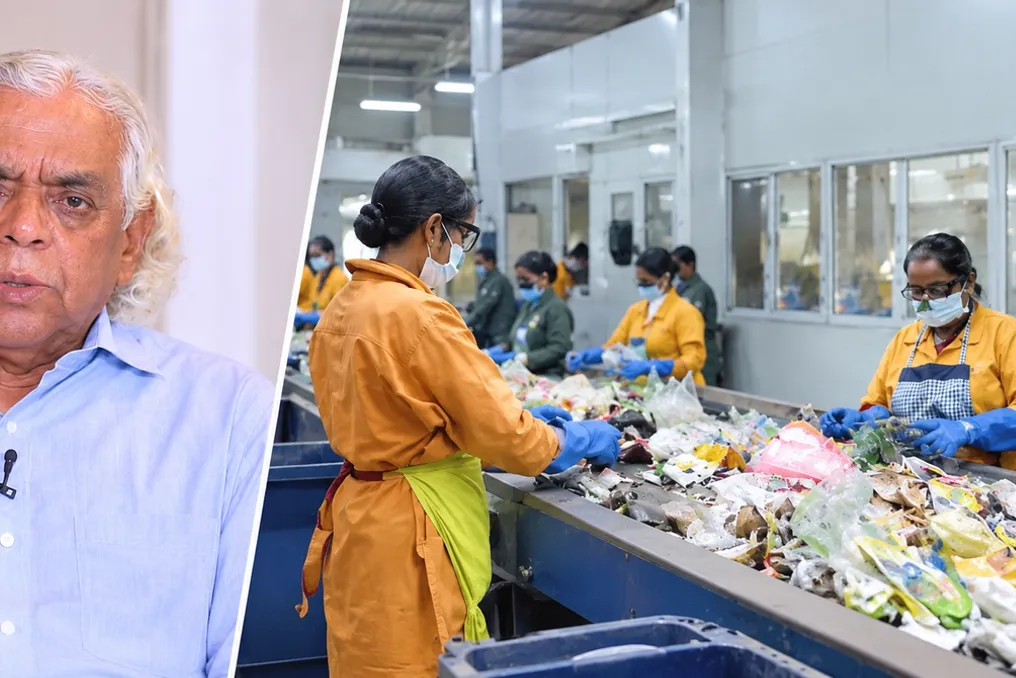
Every day, vegetable peels, food scraps, and other kitchen waste are collected from homes across India. After collection, a significant portion of this biodegradable waste ends up in landfills, exacerbating the country's waste management problem.

However, there is a possibility to convert this waste into fertilizer in just 24–48 hours right where it accumulates. This is what the Nisargruna technology, developed by Dr. Sharad P Kale, a scientist from the Bhabha Atomic Research Centre (BARC), aims to achieve.

This technology is already in use in Goa and is capable of processing one ton of kitchen waste into approximately 150 kg of nutrient-rich fertilizer.

Turning a Ton of Kitchen Waste into Fertilizer in Two Days

The process begins with separating food waste, including vegetable peels and leftover food, from plastic and other dry debris. The biodegradable waste is then ground into small pieces, after which a special mixture of microorganisms is added. These microorganisms naturally break down the organic matter, and the supply of air accelerates the process.

Within 24–48 hours, the waste is transformed into fertilizer that can be used to nourish soil and plants. Unlike traditional waste disposal systems that transport garbage to distant landfills, Nisargruna allows the entire process to take place locally, at the point of waste collection.

This means that kitchen waste can be processed on-site instead of being mixed with other trash and sent to landfills.

Processing Food Waste Near Home

India generates about 78 million tons of food waste annually. When biodegradable waste mixes with plastic and other discarded materials, managing and extracting useful resources becomes more complex.

Nisargruna offers a solution to this problem right at the source. Local processing of wet waste helps reduce the volume of garbage that needs to be transported to landfills. Furthermore, it can lead to a decrease in the number of garbage trucks on the roads and improve the condition of dry waste, facilitating the recovery and recycling of materials like plastic.

The resulting fertilizer can also find application in gardening and soil enrichment, giving discarded food scraps a new purpose.

Can more villages in Goa turn their food waste into fertilizer? The technology's journey in Goa began in Bicholim, where Nisargruna was first implemented. Plans are now being developed to install such units in all municipalities and village panchayats of the state, allowing decentralized waste processing to reach more communities.

For cities and villages facing growing mountains of mixed waste, this idea presents a practical alternative: instead of transporting every piece of waste somewhere else, what can be reused should be recycled where it is generated. Vegetable peels do not necessarily have to end up in a landfill; with the correct process, they can return to the soil as fertilizer in just two days.

Popular