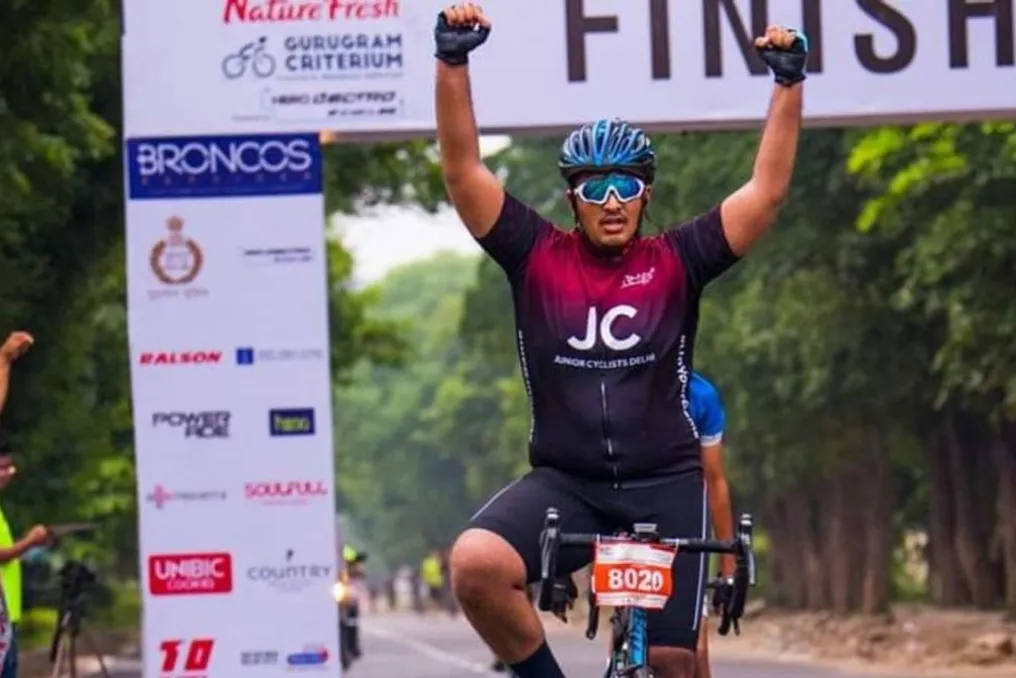
At the age of fifteen, Jai Bhardwaj first participated in a professional race, driven only by determination and the bicycle he used himself. By the end of the day, he returned home with two bikes: the one he brought to the race and the one he won. This small but significant moment defined the future trajectory of his life.
Today, at 23, Jai is a national cyclist who represented Delhi at the National Cycling Championships. He promotes cycling among Indians through his digital platforms, participating in both road and track races.
This progress comes amid growing recognition of cycling in the country. Pune is scheduled to host the 105th edition of the UCI Road World Championships in 2032, which would make India the fourth Asian country to host the event. For athletes like Jai, this event means more than just an international tournament; it offers hope for improved infrastructure and support for the developing cycling community.
From First Race Participation at 15 to Representing Delhi Nationally
Jai's initial interest in cycling stemmed from curiosity rather than a structured training program or professional support. This interest gradually turned into a serious pursuit as he began training, competing, and pushing his own limits.
His competitive journey began in 2017 when he was 15 and participated in the Raahgiri Faridabad race. Jai recalls: 'I didn't expect much from the race I participated in, and thought it would just be another fun ride around the city as part of a 'awareness campaign,' as is often the case at such events.' However, as he recounts, 'at the start, I overtook almost everyone in the first few moments and crossed the finish line with a large lead over other participants. To my surprise, it later turned out that the winners would receive a bicycle. I was thrilled and felt unreal, and I wanted someone to share that moment with.'
This first victory gave him the confidence to pursue cycling more seriously. His parents also began noticing his potential and supported him during training and competitions.
Over the years, Jai participated in several private cycling tours, national road and track championships, as well as events like the HCL Cyclothon. In 2019, he took first place at the Gurugram Criterium, made the top 10 at the HCL Cyclothon, and won the MadoverBiking Cyclothon. Additionally, he entered the top 20 in the individual time trial at the National Championships.
These achievements marked his transition from a young urban racer to a competitive cyclist representing Delhi at regional and national levels in both road and track cycling. For his parents, the first race was the moment cycling stopped being just a hobby, as his victory convinced them of his ability to take the sport seriously.
Fellow cyclist Dhiraj Singh, who closely follows Jai's career, notes that his enthusiasm has inspired others. Dhiraj says: 'Jai started his cycling journey at an early age, and his bright and charismatic personality inspired others to ride. He competed at the national level and uses the experience gained throughout his competitive journey to help others develop their riding techniques. He is an innovative young cyclist who helps his peers improve their results.'
Using Experience to Help More Cyclists
For Jai, cycling gradually became about more than personal achievements. He strives to help others understand the sport, improve their performance, and make informed decisions when starting their own journey.
To do this, he uses YouTube and Instagram under the handle 'Fast But Faster,' where he documents his rides and shares practical information about competitive cycling. His content covers everything: from following international races and understanding their rules to bike maintenance, training methodologies, and choosing appropriate gear.
He also recommends cycling equipment across different price ranges, helping beginners understand what they need without spending huge amounts of money. His advice is based on his own experience as a competitive athlete, including practical lessons learned over years of training and racing.
Although he has not yet organized official initiatives or events, his digital content resonates with people interested in the sport. He receives messages and comments from viewers who say his videos motivated them to cycle or helped them better understand the discipline.
His contribution also extends to the local cycling community. According to Dhiraj, Jai is always ready to help teammates, whether it's assistance during a ride, answering a training-related question, or solving an equipment problem. He often improvises with his gear, finding practical solutions himself instead of spending a lot of money. This resourcefulness is a quality he also encourages among other cyclists. Dhiraj, having known Jai since his days as a strong U18 athlete, has watched his development into a promising U23 cyclist.
Increasing Cycling Accessibility in India
As someone who regularly trains on Indian roads, Jai understands the importance of creating a safer and more favorable environment for cyclists. His training often involves hours of riding, usually early in the morning to avoid peak traffic. He believes that raising awareness among drivers, having dedicated bike lanes, and improving road conditions can significantly change the cyclist experience.
Speaking about the difficulties athletes face, he explains: 'On Indian roads, it is a fight for survival. If you go out for a training ride in a two-heartbeat zone in the city, there is a hundred percent chance that you will unintentionally exceed your heart rate zone due to the overwhelming stimuli from traffic, constant honking, and chaos everywhere, which naturally increases heart rate. Dust is another huge problem besides the already notorious AQI. I wash my bike almost every night before heading out, and by the time I get home, I have a thin layer of dust on me. Imagine how much of that dust gets into your body during exercise.'
For Jai, broader coverage of professional cycling can help solve another problem: the perception of cycling as purely recreational activity. He argues: 'When I said I cycled as a sport in school, people thought professional cycling meant leisurely rides through the streets. I believe the main reason for this is lack of awareness and exposure. There is insufficient support for grassroots athletes, cycling infrastructure, and overall safety. However, with the recent success of the Bajaj Pune Grand Tour 2026, I believe the situation is changing.'
He suggests that regular broadcasting of professional races with multi-lingual commentary could help more Indians understand and follow the sport. Among other measures he proposes are holding regular competitions that are not just commercial bike rides, providing financial aid to young cyclists, and organizing visits to schools for cycling events.
Returning to the Road After an Accident
Like many athletes, Jai's path has also been marked by setbacks. One of the toughest moments was an accident that left him with a serious lip injury. This incident forced him to take a break and focus on recovery, both physically and mentally. It was a difficult experience for his family, especially considering the risks associated with training on busy Indian roads.
His parents note: 'Indian roads are quite dangerous and not designed for cycling. There are very few professional cyclists in India compared to abroad. We saw him get hurt when a car hit him, so we are very scared now. When he goes out, we worry until he gets home. The downside of this sport is that it is a very physically vulnerable sport.'
Nevertheless, cycling remained an important part of Jai's life. He gradually returned to riding, regaining confidence with each trip. This experience also strengthened his conviction about the need for safer roads and better infrastructure for cyclists.
Creating a Stronger Cycling Culture for the Next Generation
Jai's ambitions extend beyond his personal competitive journey. He hopes that more young Indians will discover cycling, gain access to professional training, and opportunities for competition. He believes that identifying talent at the grassroots level is an important starting point. Professional cycling requires many years of dedicated training and significant financial investment, which makes it difficult for young athletes to participate.
Sponsorship support for promising cyclists could alleviate these costs, while academic support from schools and colleges could allow student-athletes to balance studies with training. He also hopes for stricter adherence to road safety rules, dedicated cycling infrastructure, and increased driver awareness.
For Jai, making cycling more accessible means creating an environment where young athletes can discover and engage in the sport without being limited by lack of information, financial resources, or opportunities. His parents, who supported him from the very first race, feel his contribution to cycling goes beyond his personal achievements. They are proud of how he shares his knowledge and encourages other riders.
From winning his first bike at 15 to representing Delhi at national championships and creating a digital platform for mentoring novice cyclists, Jai continues to find ways to contribute to the sport he loves. And as India prepares to host one of the world's largest cycling events in 2032, young athletes like him are helping to shape the interest and awareness that can ensure a stronger future for the sport in the country.