Robbyant LingBot-VLA 2.0 Competition Concludes with Final Using Real Robots
Read more
Pandaily
pandaily.com

Robbyant LingBot-VLA 2.0 Competition Concludes with Final Using Real Robots

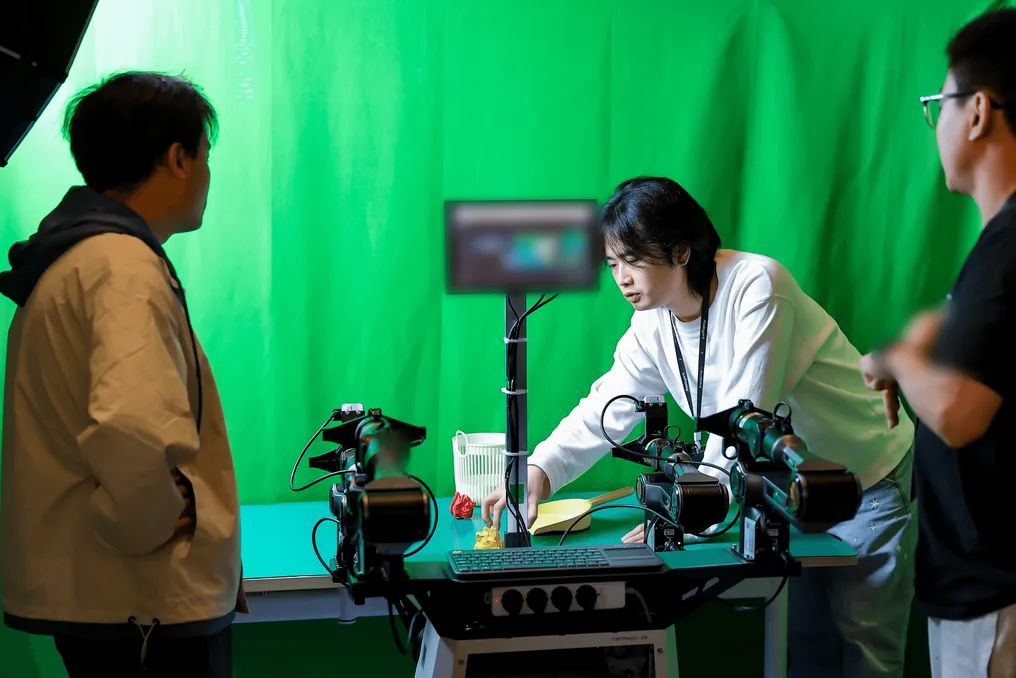
Robbyant, which is involved in embodied artificial intelligence within Ant Group, concluded its first competition based on the fundamental model of embodied AI in Shanghai on November 16. During the 48-hour hackathon, fifteen finalists adapted the same open-source model, LingBot-VLA 2.0, for physical robots.

According to a report by Robot Forward in Chinese, 1855 teams and 3252 registered participants from 13 countries took part in the competition. These figures refer to the total registration throughout the entire competition, not the number of teams that presented robots at the final stage. The finalists passed the preliminary stage in an online simulation before moving on to work with the COBOT MAGIC equipment from AgileX Robotics.

Final Stage Tasks

The final round included testing three different tasks: picking up fruits and vegetables with one hand, placing cosmetics into a transparent box with one hand, and using both hands to sweep trash from a table and place it in a container. Teams were required to collect or adapt data, fine-tune the model, and deploy it on real hardware within this short period.

Practical difficulties proved more complex than just benchmark evaluation. The report notes the difficulty of recognizing space inside transparent containers, changes in lighting, unfamiliar objects, and the sagging of robot manipulators under load. One team found that increasing the number of demonstrations did not improve the result because the new data did not match the evaluated tasks.

Winners' and Participants' Approaches

The winning team, TARS, used Qwen to identify target objects and distractions, which helped reduce irrelevant visual background in the fruit and cosmetic picking tasks. When performing the sweeping task, the team tested the effect of extending the arm on sagging and added compensation for execution time. According to the team, this reduced the learning step time from approximately 15 seconds to 3.4 seconds.

Other groups focused on overcoming different bottlenecks. EVA reported conducting about seven cycles of data feedback and over 700 additional demonstrations, using errors to guide new data collection. SST applied an external model and SAM 3 segmentation to highlight important objects; its policy generated 50 actions simultaneously but executed only 16 before updating. It should be noted that these are methods reported by the participants themselves, not independently reproduced comparisons.

Furthermore, Robbyant announced the launch of the LingBot developer ecosystem program, which initially sought 20 MVP-level experts and 40 Developer Experts to contribute training materials, demonstrations, open-source projects, and evaluation scripts.

It is important to understand that this event is a subsequent implementation phase, not the launch of a new LingBot model. Its value lies in gathering specific adaptation lessons from external developers using LingBot-VLA 2.0, rather than proving the reliable operation of the model in all real-world conditions.
Similar stories

Company 'Melty' introduced 'Melty Gym'—a platform for training robots in video games, such as GTA 5
Read more
www.aajtak.in

Company 'Melty' introduced 'Melty Gym'—a platform for training robots in video games, such as GTA 5

The startup 'Melty' has launched a new platform called 'Melty Gym,' which aims to use video games as an environment for robot training. On this platform, robots can master tasks through repeated action and error analysis.

Despite the potential, the question remains open as to how reliably robots can perform skills learned in a virtual environment in the real world.

The company 'Melty' was founded by David Miller and is a startup part of Y Combinator Fall 2026. Initially, the company focused on modifying and linking various video games. Now, it applies this technology to the field of robotics.

Researchers can upload their robot models into existing games on 'Melty Gym.' They also have the ability to configure game conditions, goals, and robot behavior for training and testing purposes.

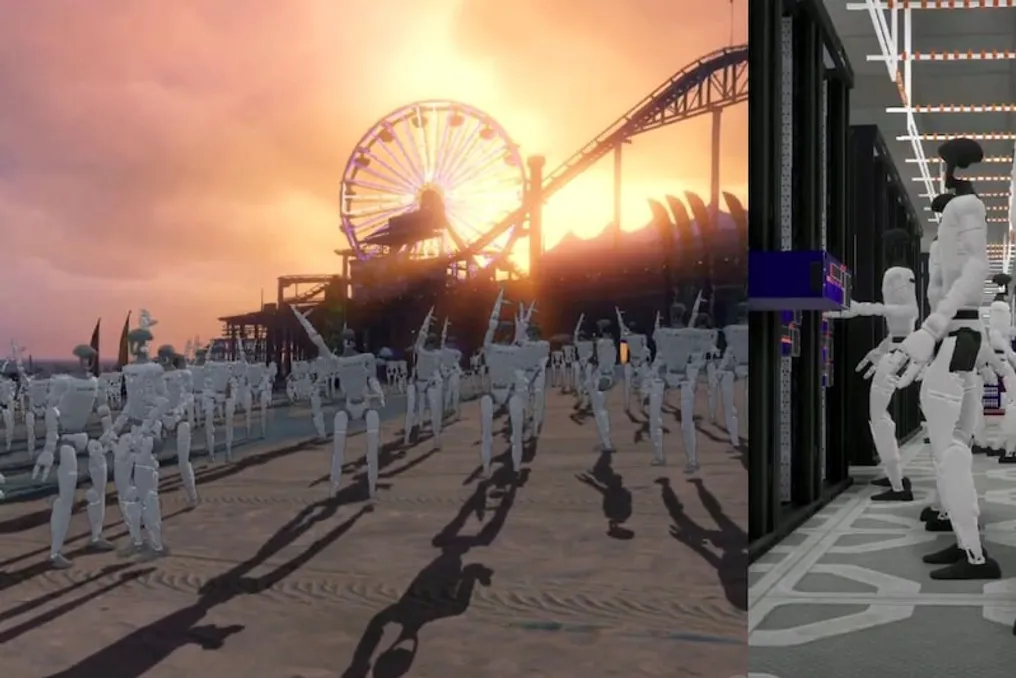
During a demonstration presented on November 13, anthropomorphic robots were shown in the game Grand Theft Auto V (GTA 5). After receiving a task, they attempted to open car doors, sit in seats, and drive vehicles in the virtual city. Additionally, some robots operated in a simulated data center environment, performing tasks on server racks.

Many experiments are planned to be conducted in these virtual worlds, allowing AI models to learn from mistakes without the need for real robots for every attempt.

This approach could be significant because training real robots can be expensive and time-consuming. Working with physical machines involves limitations related to equipment costs, potential damage to the machinery, and the time required to resume operation after a failure.

The virtual environment allows researchers to conduct more experiments, test various scenarios, and expand the scope of learning without constant physical testing. Video games provide a complex environment, including streets, buildings, objects, and moving characters, allowing developers to reuse created worlds for different training sessions.

Nevertheless, there is a significant limitation to this method. Completing a task in a video game does not guarantee that a robot will be able to perform the same task in the real world. Real-world factors, such as friction, balance, sensors, and unpredictable surroundings, present challenges that the virtual environment cannot fully replicate.

'Melty Gym' is currently only available for initial research trials. The company has not yet published results confirming the degree of reliability of skills acquired in the virtual environment when transferred to real robots. Currently, 'Melty Gym' offers a new method for robot training, and the key question remains the practical applicability of skills learned in video games in the real world.

ACE Robotics introduces ACE-CaP-0: AI agents write reusable code for robots with 92.1% success rate
Read more
pandaily.com

ACE Robotics introduces ACE-CaP-0: AI agents write reusable code for robots with 92.1% success rate

ACE Robotics, a company focused on embodied artificial intelligence and led by co-founder SenseTime's Yang Xiaogang, has released the ACE-CaP-0 model. As part of this research approach, a general AI agent is responsible for writing, testing, and refining robot control software, which is then fixed as reusable skills that can operate autonomously without agent intervention.

The paper was posted on arXiv on November 12, and the company announced the work on November 13. This method is based on the 'Code as Policies' concept, which describes robot behavior through executable code instead of calling a large model at every step. The authors argue that multiple model calls slow down the robot, whereas the finished program utilizes the logic already embedded during its creation.

The main challenge lies in developing reliable code without requiring numerous expensive physical tests. In ACE-CaP-0, the agent independently decides when to request assistance.

Methodology and Results

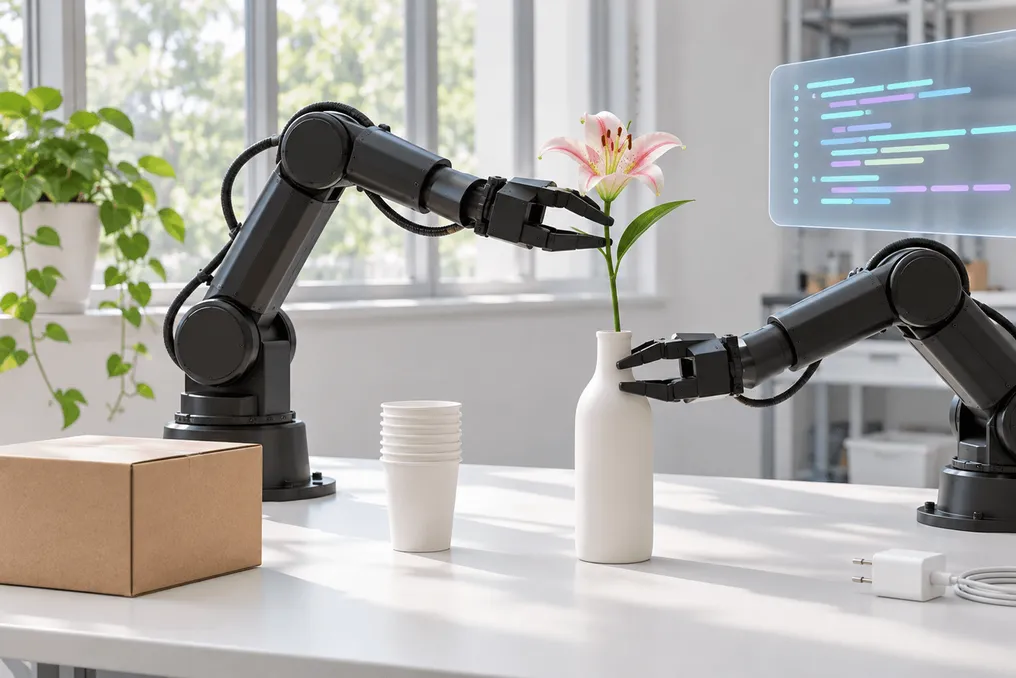
In the comparison conducted by the team, the best results were achieved using on-demand demonstrations combined with selective simulation usage. The success metrics were obtained through the authors' own tests. Across eight real-world tasks, including charging station installation, bread packaging, bottle cap removal, cup insertion, flower placement, and shoe packaging, the recorded programs successfully completed 221 out of 240 attempts, achieving 92.1% success.

Seven of these tasks reached a success rate of at least 90%, and the charging station installation task demonstrated 100% success. The average task completion time ranged from 0.97 to 2.27 minutes. The programs function based on the robot's own perception and control, without human or coding agent intervention.

It should be noted that the results obtained are based on one setup with two manipulators selected by the team and have not yet been independently reproduced. ACE Robotics states that this work aligns with their plan to integrate general models with their global Kairos model.

ACE Robotics uses Mundo model and self-improving skills to automate hotel laundry process
Read more
pandaily.com

ACE Robotics uses Mundo model and self-improving skills to automate hotel laundry process

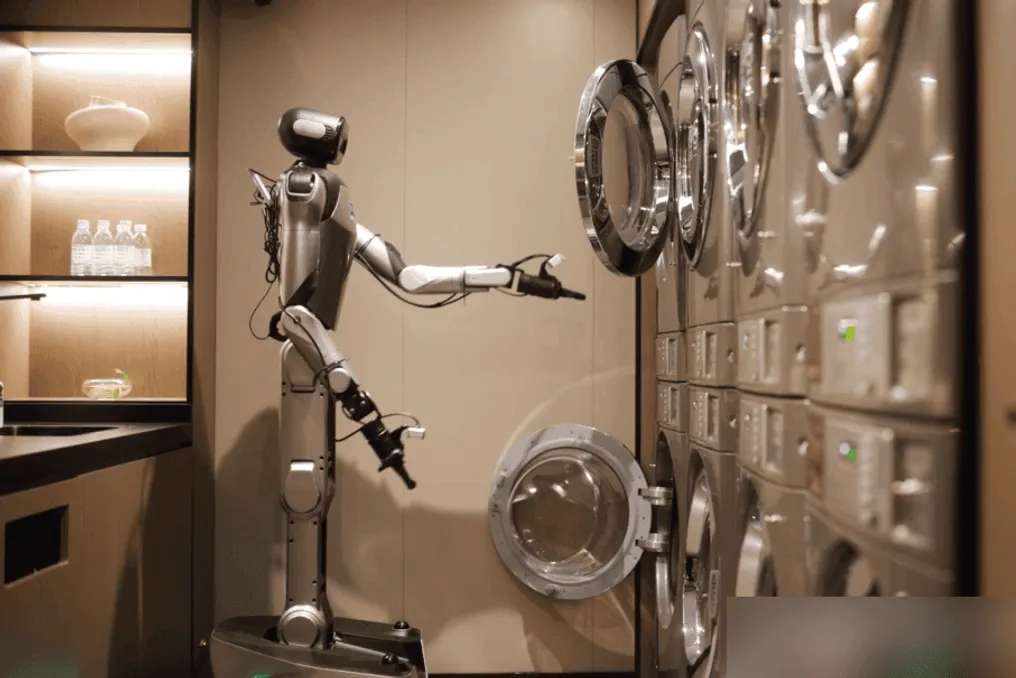
ACE Robotics has implemented its Mundo model to perform tasks in a hotel laundry. As part of this workflow, the robot collects linen baskets from guest rooms, delivers them to the laundry, starts washing and drying machines, and then returns the clean clothes.

The company describes this system as a collaboration between two 'brains' combined with a self-improvement cycle. This is the first commercial use of the Mundo model since ACE Robotics and S-Lab from NTU presented it last month.

The Mundo model transforms photographs of hotel rooms, corridors, and the laundry itself into a digital twin that robots can physically interact with. This digital twin includes characteristics such as object mass and coefficient of friction. Each attempt in this virtual environment generates trajectories, contact states, and visual feedback, which are used to refine the robot's policies before operating on the real object.

The work is divided between two components. A general cloud model, identified by QbitAI as GPT-Astra, is responsible for task decomposition, reasoning, and strategy search within Mundo. Once a method reaches convergence, it is saved as a reusable skill. Then, a local execution model on the robot calls these skills to perform precise actions.

ACE Robotics notes that using the cloud model for every real-time decision took over thirty minutes for a full cycle, whereas the local model completed the same cycle in only 18.648 seconds. A scheduler called BotAgent breaks down the washing process into 53 atomic actions and 14 semantic steps, organizing over 200 sequences of actions depending on room location, elevator status, and laundry machine queues.

When any skill fails, the cloud model analyzes video from multiple cameras and sensor logs to determine the cause of the problem. In one instance, it switched to an overhead camera when the wrist camera was blocked. In another case, it adjusted the gripper lift trajectories and finger angles when jeans got stuck in the dryer drum. The robot is also capable of resetting the scene autonomously, and a separate copy of the model evaluates each round, allowing for the rollback of worse versions.

For just unloading the dryer, ACE Robotics conducted 165 cycles on real robots over 57 hours, resulting in 37 improvement suggestions and about 80 skill versions. The cycle time stabilized at 170–210 seconds, and the percentage of jeans left in the drum decreased from an average of 48% to 32%, with the best result being 19%. Chairman Wang Xiaogan stated that instant retail is the likely next scenario. It should be noted that these results were achieved by the company and have not yet undergone independent verification.

Popular