Doubao Work introduces AI-powered workspaces for 21 professional scenarios
Read more
Pandaily
pandaily.com

Doubao Work introduces AI-powered workspaces for 21 professional scenarios

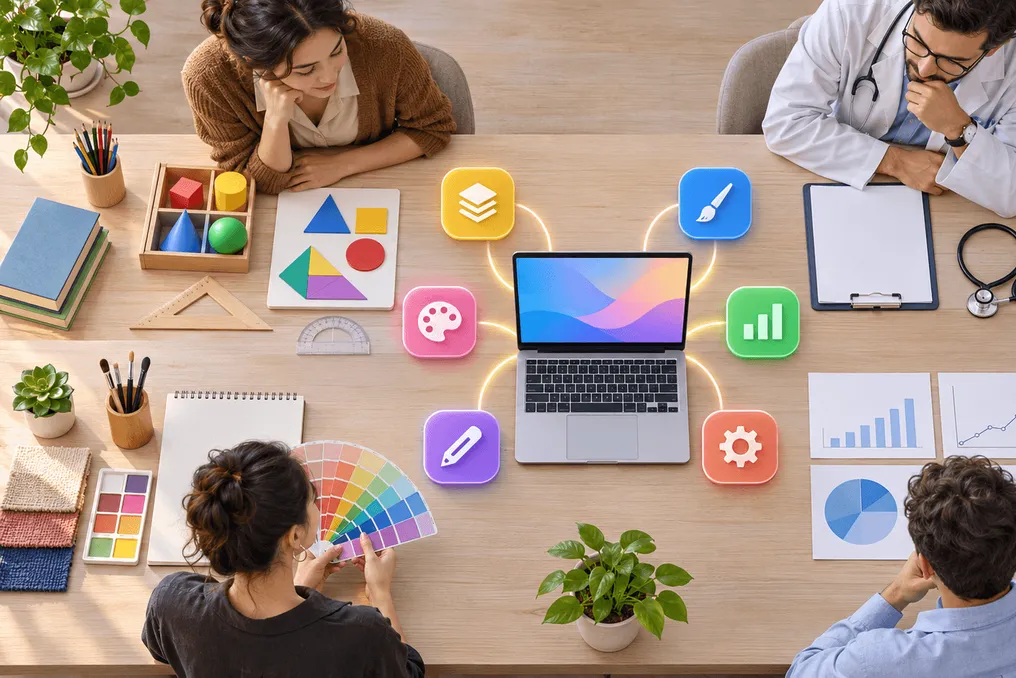
ByteDance released a workspace feature in Doubao Work on November 16th, which integrates pre-configured tools and skills for 21 different professional scenarios. These scenarios cover fields such as healthcare, education, creative design, and financial research. According to information published by Jiemian, this feature is available in both the Doubao Work desktop client and the Doubao mobile application.

Workspaces organize the agent's operation around repetitive tasks characteristic of a specific profession, rather than requiring users to manually assemble every skill and tool. Users navigate to the workspace page and select a professional workspace where relevant entry points for task execution are already prepared. Doubao claims this reduces setup effort, although the announcement does not contain an independent performance evaluation.

Application in Various Professional Fields

In the medical workspace, the company described functions related to searching clinical guidelines, extracting and interpreting medical literature, preparing public awareness materials and communicating with patients, as well as creating research presentations. These functions pertain to information processing and documentation. Furthermore, the launch does not establish clinical accuracy nor replace the physician's duty to verify the results obtained.

The teacher workspace allows for the generation of lesson plans and curricula based on a specified topic, textbook, and learning requirements. As reported in Chinese media coverage of the launch, the system can also transform questions into interactive demonstrations with customizable parameters and draggable elements. An additional resource connector provides another avenue to educational materials and searching for similar questions.

The creative design workspace combines tasks for developing posters, social media images, and visual branding. When a task begins, the system creates a canvas where users can review and organize the results, and then develop the idea into related materials. This packages existing content creation capabilities into a task-specific starting point, rather than announcing a new model for image or video generation.

The financial analysis workspace includes interpreting announcements, researching companies, and preparing briefings. Through plugins, it can connect to professional data services after authorizing the respective user accounts. It is important to note that these connections should not be regarded as unrestricted access to all provider data or as confirmation of the agent's conclusions.

Users are not limited to predefined workspaces. Doubao states that they can create personal workspaces, customize work requirements and preferences, save them, and share them with others. The object of exchange is a reusable work configuration, not necessarily the underlying private files or licensed data.

The update shifts the office agent's entry point towards profession-specific workflows. Its value will depend on the suitability of the included tools, the permissions available to the user, and the quality of the final output, none of which is demonstrated solely by the number of preset options.

Similar stories

Workday limits the use of its AI agents, insisting on adherence to corporate rules
Read more
techcentral.co.za

Workday limits the use of its AI agents, insisting on adherence to corporate rules

Workday aims to position itself as an AI company that strictly adheres to established rules. At the key event Workday Rising Emea in Barcelona on Wednesday, leaders of the software giant for human resources and finance emphasized one idea: artificial intelligence in systems responsible for payroll calculation and financial closing must remain within the limitations set by the company.

Co-founder and CEO Aneel Bhusri, who returned to this role in February, stated that it is impossible to perform book closing or calculate salaries based on probabilities. He noted that finance and human resources are inherently deterministic, and one cannot guarantee salary calculation accuracy at 90% because this percentage can change with every operation performed.

Bhusri argued that the rules embedded in Workday's processes make it safe to combine these processes with probabilistic AI. He explained that 'our AI is legitimate; it is based on business rules that you trust and that are built into your system.'

Critique of the autonomous enterprise concept

Workday President for Products and Technology, Gerrit Kazmaier, spoke out against broader concepts. He questioned whether the idea of an 'autonomous enterprise' sounds cold and soulless, referencing another company. Although he did not name this company, SAP made 'autonomous enterprise' a central theme of its Sapphire conference in May, presenting this strategy to partners in South Africa in Kyalami in July, and repeating it at the TechEd developer event this month.

Other advantages promoted by Workday include integration and control. The company integrates Sana, an AI interface acquired after purchasing a Swedish startup of the same name last year, into the tools of other companies. The Sana self-service agent is already functioning in Microsoft Copilot and Teams, Slack, and Google Gemini Enterprise, and is in early access in Anthropic's Claude Cowork. In Barcelona, Workday announced early access to a Copilot plugin that connects Sana to a wider range of company agents. Developers can create Workday agents in tools such as Claude Code, Cursor, and OpenAI's Codex.

Furthermore, Workday plans to acquire Honeydew, whose 'semantic layer' allows any AI tool to apply its own definitions of metrics, such as headcount, consistently.

Regarding control, Workday demonstrated identity management from C1.ai, formerly known as ConductorOne, which the company plans to acquire in October. Every agent had to request temporary data access, and every action was verified at the time of execution, with high-risk requests, such as extracting candidate profiles, being rejected. Workday also showcased its Flex Credit Estimator, allowing companies to forecast the cost of agent operations before making a final decision.

New 'autopilot' agents, such as a recruitment agent that monitors vacancies around the clock, are intended so that the final decision remains with humans. Alet Blanken, Workday Vice President of AI Engineering, stated: 'We decide what the agent can influence and what must remain under human control.' Bhusri added that 'AI should complement people, not replace them.'

Skeptical market

This message may resonate locally. According to the SA AI Index 2026, only 1% of large South African organizations actively use AI agents, and 71% do not plan to do so. Accuracy and reliability were cited as the main obstacles, noted by two-thirds of respondents.

Engagement among Workday's own customers is uneven. Kazmaier reported that over 6,000 customers use Workday agents in production, but in October, Workday informed analysts that only over 850 customers purchased agent AI products in the last 12 months leading up to July, and about 300 subscribed to Flex Credits, consumption-based pricing. These figures measure different things: the first counts all customers using any Workday agent, while the second counts those who additionally paid for its agent AI products, such as HiredScore, Paradox, and Sana.

Competitors are making similar promises. Oracle, which has a cloud region in Johannesburg since 2022, claims that its agent HR applications, launched in April, operate within existing security and approval rules. SAP presented new Joule assistants for SuccessFactors in May under the banner of 'autonomous HCM' (Human Capital Management), although the then-SuccessFactors Product Director Dan Beck wrote that 'people must remain firmly at the center.'

} , {
Cognizant to hire 20% more freshers instead of layoffs; company's view on the impact of AI
Read more
www.aajtak.in

Cognizant to hire 20% more freshers instead of layoffs; company's view on the impact of AI

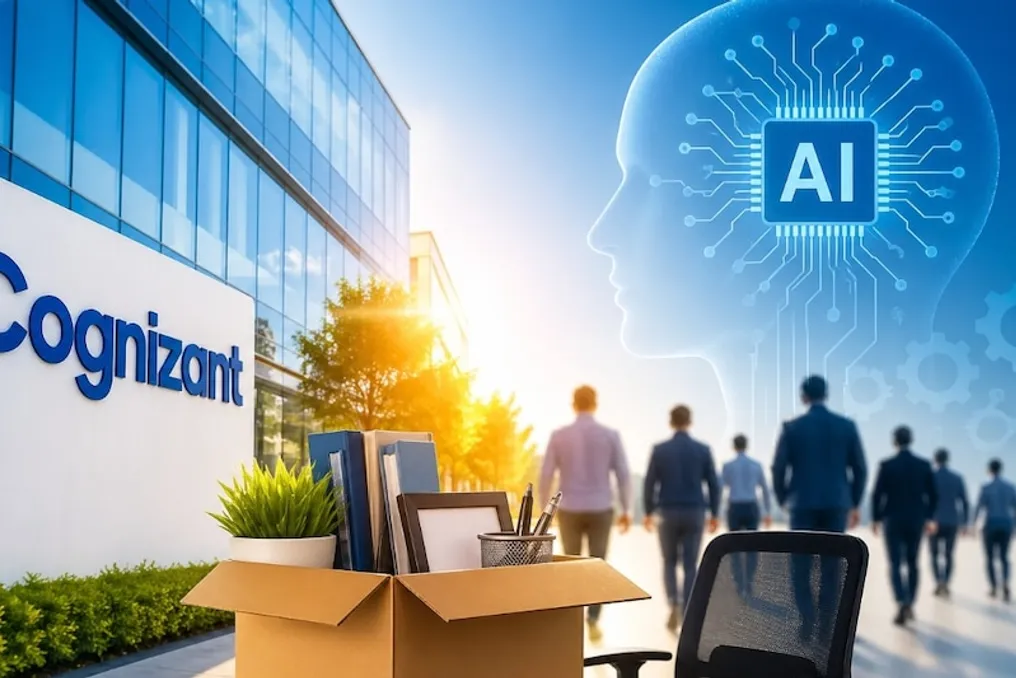
Despite the growing impact of Artificial Intelligence (AI) and concerns about its effect on jobs, Cognizant has announced that it will increase the number of freshers by 20% instead of reducing hiring. The company believes that AI is not eliminating entry-level jobs but rather changing their nature. This strategy indicates that in an environment of declining campus recruitment, the importance of new roles, AI training, and human decision-making skills is increasing.

AI has started handling many traditional tasks and roles globally, and 37% of entry-level tasks in large Indian companies are currently being performed by AI. Amid concerns about the potential negative impact on jobs, Cognizant has decided to focus on freshers.

Rajesh Warrior, Chairman and Managing Director of Cognizant India and Global Operations Head, stated that AI is not ending entry-level jobs, but they are merely transforming. The company continues to recruit freshers while also providing AI training to its existing employees and creating specialized AI roles.

In an interview with Business Today, Warrior referred to the June 2026 report by Cognizant and Pershing, 'The AI Workforce Pulse: The Adaptability Imperative.' According to this report, Indian organizations estimate that 37% of entry-level tasks have already been handled by AI, which is higher than the global average of 33%. In the survey, 80% of participants also stated that AI provides employees with the opportunity to focus on more critical tasks.

The report also indicated another shift in entry-level jobs. 94% of HR heads included in the survey expect AI to create new roles that do not currently exist.

According to NASSCOM data, the Indian IT sector added approximately 135,000 people in FY26, compared to around 133,000 in FY25. A large portion of these new jobs came from global delivery centers. However, there has been a sharp decline in campus recruitment, making it difficult for students to secure entry-level positions. Rajesh Nambiar, Chairman of NASSCOM, said in a recent discussion with Nikkei Asia that 'from a fresher's perspective, this is a matter of concern, and I will not sugarcoat it in any other way.'

When asked about limited job opportunities, Warrior acknowledged that the change is real, but it should not be seen as the end of opportunities. He clarified that 'AI is automating some routine and repetitive tasks that were traditionally part of entry-level jobs. However, we see this as a transformation of roles rather than the disappearance of entry-level opportunities.'

According to Warrior, changes are also visible in daily tasks. He mentioned that 'roles focused primarily on task completion are now shifting towards roles that involve checking AI outputs, understanding their meaning, handling exceptions, and using human judgment.'

He further stated that young professionals may now spend less time on routine tasks and need to focus more on managing AI-driven workflows. This includes interpreting information, solving business problems, and identifying situations where human judgment is necessary. This suggests that in the age of AI, basic coding and software testing alone may not be sufficient to secure a job.

Warrior expressed confidence in India's digitally adept workforce, but also noted that the shortage of AI skills remains a challenge. This could pose a major hurdle in preparing the workforce for the changing job market. He said, 'The question is not whether India has the talent to succeed. The question is whether we can develop the capacity for AI at the speed and scale required across various industries.'

He emphasized that employers require individuals who possess digital acumen along with critical thinking, communication skills, creativity, and industry knowledge. Cognizant's previous report, 'New Work, New World 2026,' mentioned that 93% of jobs could be affected by AI in some way. Warrior concluded that 'AI can generate results, but people must provide context, ask the right questions, verify the results, and take responsibility for decisions.'

ACE Robotics uses Mundo model and self-improving skills to automate hotel laundry process
Read more
pandaily.com

ACE Robotics uses Mundo model and self-improving skills to automate hotel laundry process

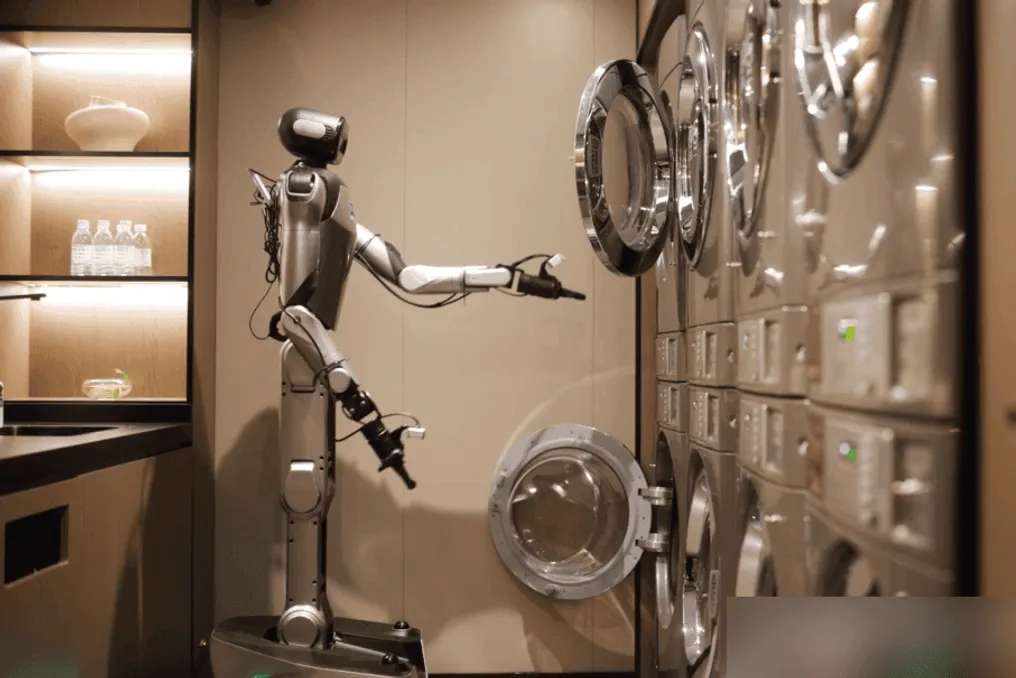
ACE Robotics has implemented its Mundo model to perform tasks in a hotel laundry. As part of this workflow, the robot collects linen baskets from guest rooms, delivers them to the laundry, starts washing and drying machines, and then returns the clean clothes.

The company describes this system as a collaboration between two 'brains' combined with a self-improvement cycle. This is the first commercial use of the Mundo model since ACE Robotics and S-Lab from NTU presented it last month.

The Mundo model transforms photographs of hotel rooms, corridors, and the laundry itself into a digital twin that robots can physically interact with. This digital twin includes characteristics such as object mass and coefficient of friction. Each attempt in this virtual environment generates trajectories, contact states, and visual feedback, which are used to refine the robot's policies before operating on the real object.

The work is divided between two components. A general cloud model, identified by QbitAI as GPT-Astra, is responsible for task decomposition, reasoning, and strategy search within Mundo. Once a method reaches convergence, it is saved as a reusable skill. Then, a local execution model on the robot calls these skills to perform precise actions.

ACE Robotics notes that using the cloud model for every real-time decision took over thirty minutes for a full cycle, whereas the local model completed the same cycle in only 18.648 seconds. A scheduler called BotAgent breaks down the washing process into 53 atomic actions and 14 semantic steps, organizing over 200 sequences of actions depending on room location, elevator status, and laundry machine queues.

When any skill fails, the cloud model analyzes video from multiple cameras and sensor logs to determine the cause of the problem. In one instance, it switched to an overhead camera when the wrist camera was blocked. In another case, it adjusted the gripper lift trajectories and finger angles when jeans got stuck in the dryer drum. The robot is also capable of resetting the scene autonomously, and a separate copy of the model evaluates each round, allowing for the rollback of worse versions.

For just unloading the dryer, ACE Robotics conducted 165 cycles on real robots over 57 hours, resulting in 37 improvement suggestions and about 80 skill versions. The cycle time stabilized at 170–210 seconds, and the percentage of jeans left in the drum decreased from an average of 48% to 32%, with the best result being 19%. Chairman Wang Xiaogan stated that instant retail is the likely next scenario. It should be noted that these results were achieved by the company and have not yet undergone independent verification.

Popular