Porsche Supercars hold greater importance than imagined, driving innovations in the brand
Read more
FlatOut
flatout.com.br

Porsche Supercars hold greater importance than imagined, driving innovations in the brand

Porsche's high-performance sports vehicles possess a relevance greater than common perception, serving as catalysts for technological advancements at the manufacturer. Currently, the company is close to launching the Mission S, a new supercar. This model, whose name is still provisional, will be built on the new mid-rear engine platform, positioning it above the 911. Although technical details remain confidential, Porsche has confirmed that the architecture will support combustion engines, with or without electric assistance. This represents a significant shift from the Mission X, presented in 2023 as an all-electric hypercar, but which did not progress.

Additionally, Porsche has maintained the option of offering a manual transmission, complete with three pedals. There are reasons for optimism, given that the Weissach team has a history of success in developing supercars. Porsche maintains a unique relationship with its luxury sports cars; unlike other brands that create a continuous line of increasingly radical models, the German engineers do not treat these machines as mere successors to one another.

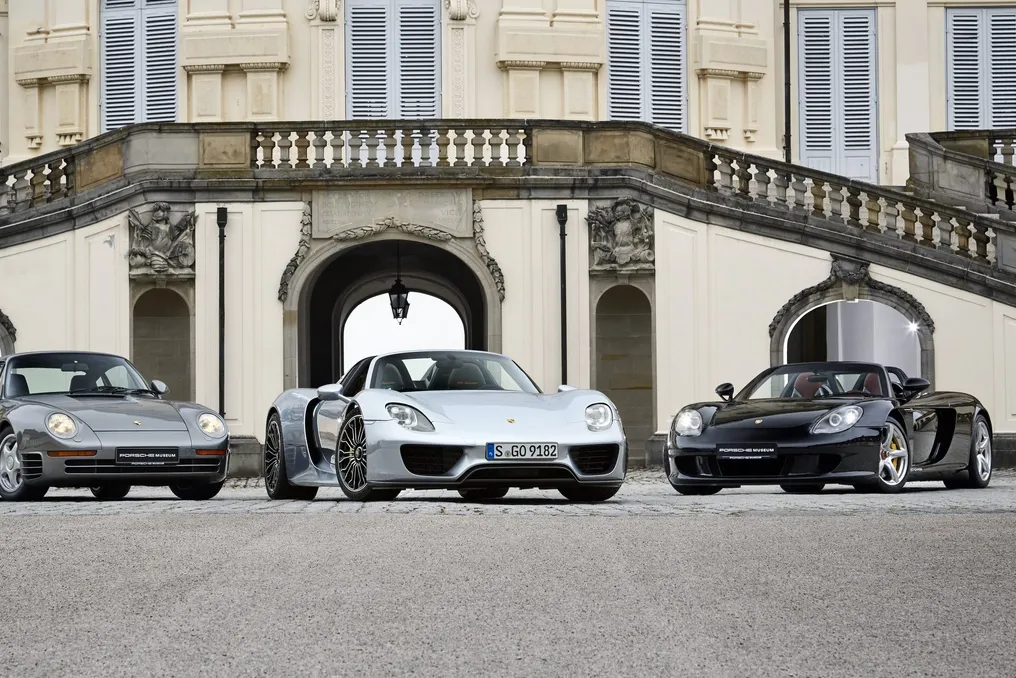
Iconic models such as the 959, Carrera GT, and 918 Spyder are distinct projects, separated by decades and conceived in varied technological contexts. However, there is a common thread between them: the permission to explore innovative solutions that would hardly be applied to a standard model, even within a manufacturer so focused on sports cars. These projects function almost like parallel initiatives, occasionally receiving approval to leave engineering labs and reach the roads.

It is fascinating to observe what Porsche can achieve when it does not have to worry excessively about costs, production volume, or the need to please a broad audience. The solutions generated in these experimental projects do not always remain isolated; many of them migrate to the brand's more common models, notably the 911, through an almost organic technology transfer. First, innovation arises in an exceptional supercar, then it is refined, adapted, and integrated into other models, becoming part of Porsche's inherent identity.

The Porsche 959 is a prominent example of this process. Launched as a prototype in 1983, the 959 aimed to elevate the Porsche 911 to an unprecedented technological level. The initial plan involved developing a vehicle for the legendary Group B. Although Group B is better known for rally cars, its rules also covered track sports cars, as evidenced by the 961, derived from the 959 and prepared for endurance races under the same regulations.

To obtain homologation, a minimum number of units had to be produced for sale. Thus, what began as a competitive engineering exercise resulted in one of the most advanced supercars of its time. The 959 arrived too late to compete in the World Rally Group B, which was discontinued in 1986 due to a series of serious accidents. However, the car found another stage that same year, finishing first, second, and sixth in the Paris-Dakar race with three prepared examples. This outcome, although not expected for a supercar capable of reaching nearly 320 km/h, helps to understand Porsche's vision for the vehicle.

A notable aspect is that all this engineering originated from the 911 itself. In retrospect, four-wheel drive and supercharged engine are basic characteristics of the 911. However, much of the technology currently standard on the 911 originated in the 959. Furthermore, it is incorrect to state that the 959 was merely a modified 911. It used the basic architecture of the 964 (including the rear-mounted boxer engine), but received a deeply altered structure, a body with a hybrid Kevlar and fiberglass construction, and aluminum components. The goal was to reconcile rigidity, durability, and lightness, crucial for a car that would face high speeds on asphalt and severe terrain.

It is interesting to note that the starting point for the 959 was a vehicle with almost two decades of history, whose designs dated back to the original Volkswagen. Despite the 911 already being a sophisticated sports car in its own right, Porsche managed to transform this classic formula into something capable of competing with the Ferrari F40, another great supercar of the 80s, without losing its mechanical identity and original philosophy.

Specifically, the 959's flat-six engine had 2.85 liters, was fueled by Bosch Motronic 2.1 injection (innovative for the time), and was supercharged by two sequential turbochargers. This solution mitigated the typical response lag of turbo engines of that period: a smaller turbocharger operated at low RPMs, while the second gradually took over as the revs increased. The result was 450 hp and a top speed close to 320 km/h, remarkable figures for a car from forty years ago. The engine also featured titanium connecting rods, mixed cooling (liquid in the cylinder heads and air in the block, breaking with Porsche tradition), and other solutions close to competition prototype technology.

Brute force was not the only differentiator; the 959 introduced the all-wheel-drive system with electronic torque distribution, suspension with adjustable dampers, and automatic ride height control, in addition to tire pressure monitoring. Features that are now found even in more modest passenger cars, but which seemed futuristic 40 years ago. The car could adapt the suspension behavior to usage conditions, lower the body at high speed to optimize aerodynamics, and modulate the force between axles based on tire grip.

It is difficult to ignore the amount of technical solutions gathered in the 959. More than just setting speed or acceleration records, the 959 anticipated an approach to supercars that would become the industry standard in subsequent decades: powerful engine and aerodynamic body, in isolation, reach limits. It was imperative that all systems operate together, using electronics to maximize performance without compromising drivability. This made supercars more accessible to less experienced drivers in dynamics, which is an undeniable fact.

Porsche quickly disseminated the advances of the 959 to its production models. The Porsche 911 Carrera 4, launched in 1988, was the first series version of the 911 with all-wheel drive, using a system directly related to the work developed in the 959, but adapted for a wider audience. From then on, all-wheel drive became a fundamental element of the 911 Turbo's identity and was gradually adopted by the entire line.

The same happened with the suspension: the electronic damping control and automatic ride height adjustment of the 959 brought features that would be improved over the years and are now considered standard in any Porsche. The notion of adjusting the vehicle's behavior according to the situation, rather than relying solely on fixed mechanical components, is an essential part of the driving experience not only of the 911 but of any modern sports car. PASM, the electronic suspension management system introduced in the 911 in the mid-2000s, reflects this same philosophy.

In both cases, the solutions were experimental for a homologation car with few units. Liquid cooling also follows this logic: the 959 signaled the inevitability of radiators to keep the engine at an adequate temperature. Turning the 959 into a limited production laboratory allowed Porsche not only to test new technologies but also to demonstrate their effectiveness to the world.

While the 959 represents the peak of technological experimentation of the 80s, the Carrera GT can be seen as the purest manifestation of this philosophy two decades later. Its development began from a prototype intended for Le Mans, equipped with a V10 engine that was not used in the competition. Porsche repurposed this unit into a street supercar, different from the 959, which was not linked to the contemporary 911. This vehicle used a carbon fiber monocoque and a 5.7-liter V10, generating 612 hp, coupled with a six-speed manual gearbox. It is possible that this was the last Porsche supercar with this more analog approach, as the industry was already moving towards increasingly invasive automatic transmissions and electronic aids.

Even if the technical aspects of the Carrera GT were more isolated from the main line, Porsche ensured its influence through the design, which did not entirely deviate from the brand's identity. Its low front end, headlights, and the integration of the body and cabin seemed to foreshadow shapes and proportions explored in subsequent generations of Boxsters and Caymans. While this is a subjective association, elements of the Carrera GT can be seen in the 918 Spyder, despite the latter having a much more technological proposal.

The 918, in turn, synthesized everything Porsche had learned up to that point. Its 4.6-liter naturally aspirated V8 derived from a racing project, and two electric motors added power and enabled operation in a purely electric mode. With 887 combined hp, all-wheel drive, and a plug-in hybrid architecture, it proved that electrification could serve not only to reduce emissions and consumption but also to enhance performance. Alongside the Ferrari LaFerrari and McLaren P1, it helped initiate a new era of electrified hypercars. Its 6:57 time at the Nürburgring, recorded in 2013, solidified its reputation and contributed significantly to enthusiasts becoming more open to hybrid supercars.
Similar stories

Porsche developed a long-lasting car concept in 1973 in response to resource scarcity
Read more
autopapo.com.br

Porsche developed a long-lasting car concept in 1973 in response to resource scarcity

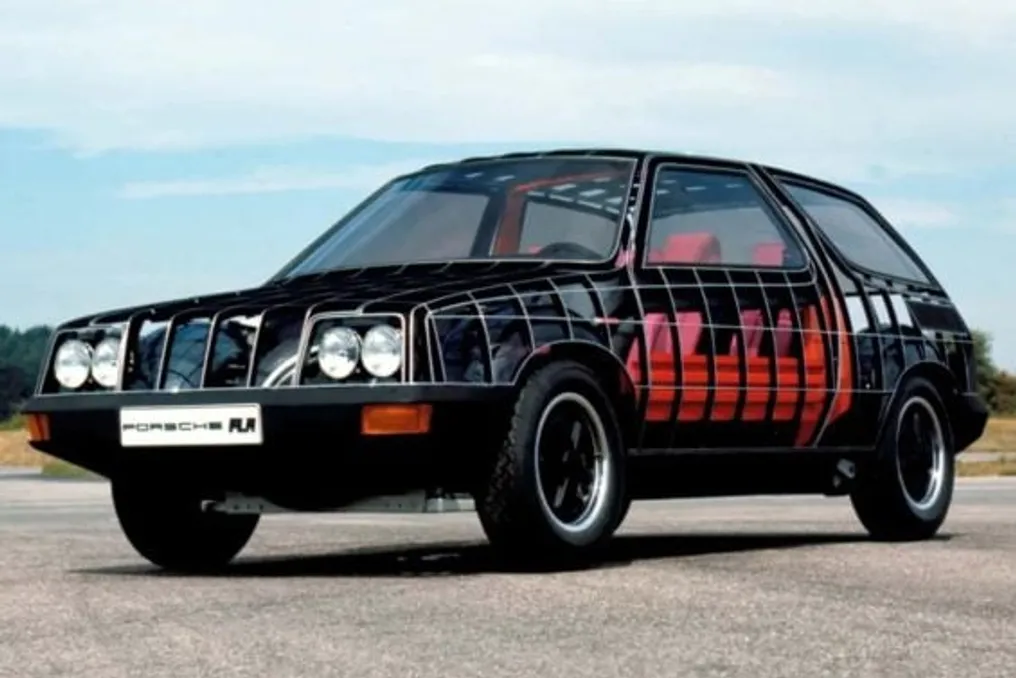
Long before sustainability became a popular topic, Porsche was already showing interest in creating vehicles with greater durability. In 1973, the German manufacturer launched the Forschungsprojekt Langzeitauto (FLA), a conceptual project focused on optimizing the use of raw materials through superior longevity compared to existing models.

This initiative was motivated by the study titled 'The Limits to Growth,' published in 1972 by the Club of Rome, which issued warnings about the depletion of natural resources. The German government commissioned the FLA, which was designed to travel at least 300,000 kilometers over twenty years, doubling the expected lifespan of a car from that era.

Internally named Type 1989, the concept was first presented at the Frankfurt Fair in 1973. Its design differed from the brand's traditional sports cars; it was a compact three-door hatchback, with a silhouette similar to the Lada Samara, a model sold in Brazil in the 1990s.

The vehicle's structure featured an exposed grid design, allowing visibility of the mechanics. Technical solutions included side impact protection doors, a reinforced chassis, and a body constructed from aluminum and stainless steel, materials chosen for their corrosion resistance and ease of recycling. Additionally, the FLA had scratch-resistant glass, a maintenance-free battery, and a segmented electrical harness to simplify repairs.

The four-cylinder boxer engine, with a capacity of 2.5 liters and air cooling, was positioned behind the rear seats. It had only 75 horsepower and was limited to 4,000 revolutions per minute to minimize wear. The transmission was automatic and had three gears.

According to Porsche itself, a production version would cost approximately 30% more than a common car, a price that would be difficult to justify to the consumer, even considering double the expected useful life. Although it never reached the market, the FLA left a significant legacy. The main legacy was the adoption of hot-dip galvanization, a zinc plating process that protects steel against rust, implemented in the body panels of the 911 starting in 1975. Furthermore, the brand began offering a six-year warranty against rust damage.

Brabus developed Porsche 911 Turbo S model with 800 hp, adding 89 hp to the original version
Read more
autopapo.com.br

Brabus developed Porsche 911 Turbo S model with 800 hp, adding 89 hp to the original version

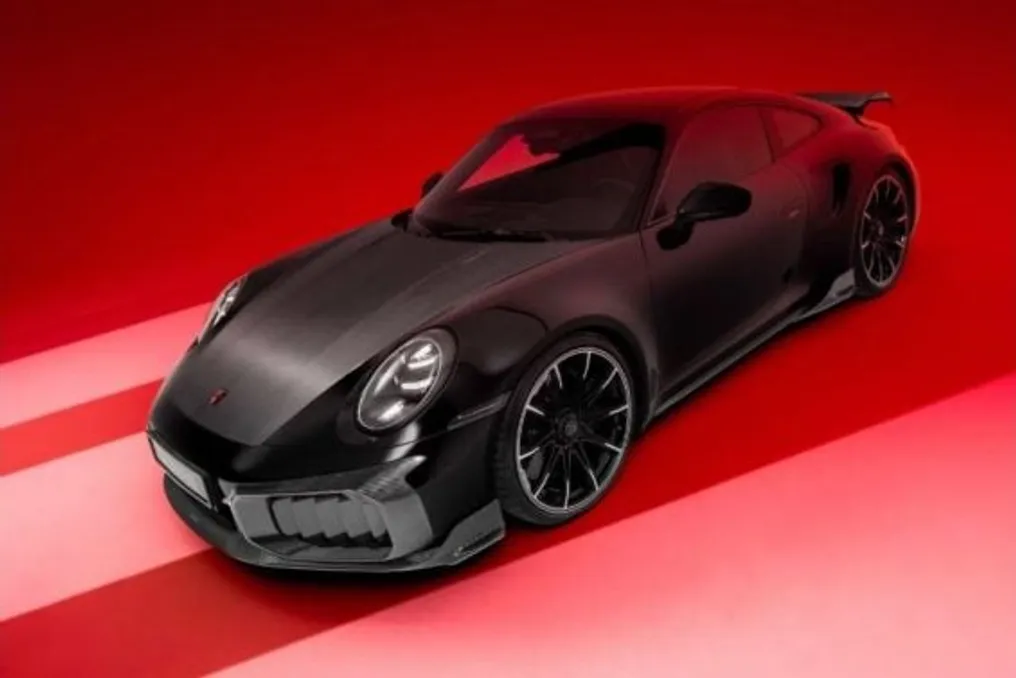
Brabus identified additional power capacity in the Porsche 911, considered the most powerful ever produced in series. The German tuner recently launched the Brabus 800, an adaptation of the current Porsche 911 Turbo S, which achieves 800 horsepower and 91.8 kgfm of torque.

This new performance represents an increase of 89 hp and 10.2 kgfm compared to the original sports car, whose starting price in Brazil is R$ 2.1 million. Although Brabus is known for modifying Mercedes-Benz vehicles, it also works with models from Land Rover, Rolls-Royce, Bentley, Lamborghini, and Porsche.

Previously, in 2022, the company had modified the previous 911 Turbo S, which did not have electrification, boosting its power to 820 hp by installing new turbines.

The challenge this time was that the modern 911 Turbo S integrates a 3.6 biturbo boxer engine with electric turbochargers and an electric motor coupled to the transmission. The implemented solution was the PowerXtra P36-800 kit, an auxiliary electronic unit that adjusts injection, ignition, and turbo pressure without altering the mechanical components or the existing hybrid system.

Thanks to this modification, the internal combustion engine goes from 640 hp and 77.5 kgfm to 729 hp and 87.7 kgfm, while the electric motor maintains its 71 hp. According to Brabus, the coupe can reach 100 km/h in just 2.4 seconds, and the convertible takes 2.5 seconds, beating the factory models' times by a tenth. The top speed remains at 322 km/h, equal to the original Porsche.

Aesthetically, the vehicle features visible carbon fiber parts, including a front spoiler, a higher rear wing, side skirts, and a diffuser equipped with four sporty exhaust outlets. The original active aerodynamics remain operational. The forged wheels, which have a center nut, are 21 inches in the front and 22 inches in the rear. Additionally, sports springs allow the car height to be reduced by up to 2.5 cm.

Inside, which is made to order, the open convertible has black leather upholstery, diamond-patterned padded seats, and carbon fiber details on the steering wheel and dashboard. An extra module has been added capable of memorizing the settings for the start-stop system, lane assist, and exhaust. In Germany, Brabus announced a ready convertible for approximately R$ 2.95 million (equivalent to 482,714 euros), already including local taxes.

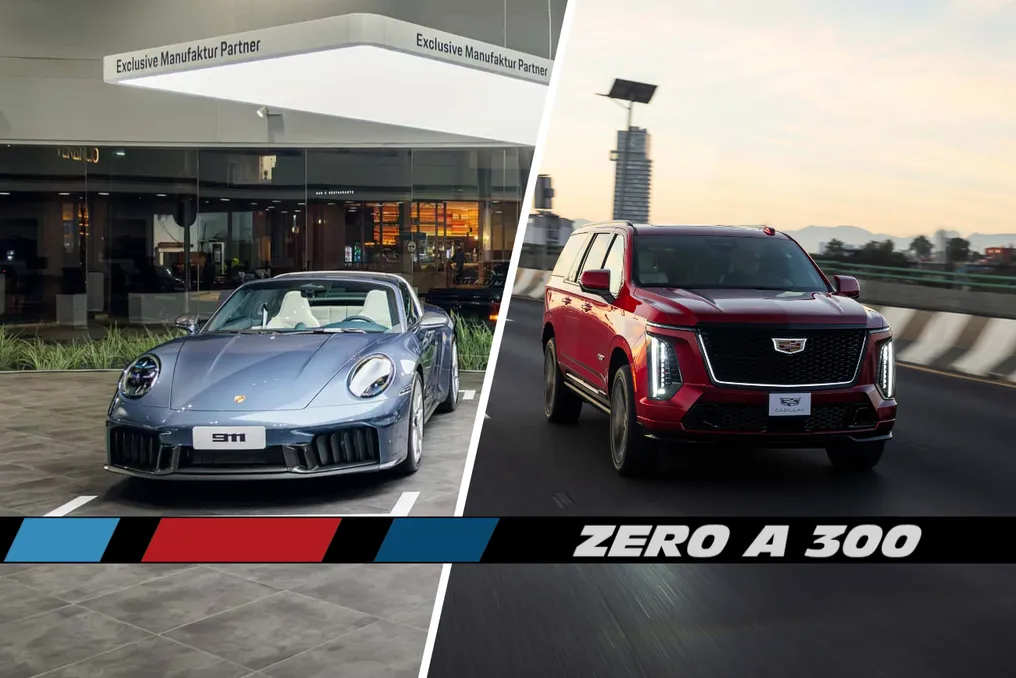
Porsche launches 911 GT3 S/C and Targa 4 GTS in Brazil; Cadillac plans to introduce Escalade V8
Read more
flatout.com.br

Porsche launches 911 GT3 S/C and Targa 4 GTS in Brazil; Cadillac plans to introduce Escalade V8

Porsche announced the launch of two variants of the 911 model in the Brazilian market this Wednesday, the 11th. The new arrivals are the 911 Targa 4 GTS and the new GT3 S/C. Both vehicles will be displayed to the public during the Porsche Fest event, scheduled for November 28th at Interlagos.

The GT3 S/C represents Porsche's first regular production convertible version, taking a position similar to the 2019 911 Speedster. It shares the same mechanical package as the GT3, utilizing the 4.0-liter naturally aspirated boxer engine, which generates 510 hp and 45.9 kgfm, coupled with a six-speed manual transmission.

To mitigate the weight added by the automatic roof, which opens in 12 seconds, Porsche employed materials such as carbon fiber and magnesium, in addition to carbon-ceramic brakes. Consequently, the GT3 S/C weighs 1,497 kg, only 35 kg more than the GT3 coupe with a manual gearbox. Despite this weight increase, the convertible maintains the performance of the closed model, reaching 100 km/h in 3.9 seconds and a top speed of 313 km/h. Its price in Brazil is set at R$ 2,060,000.

Meanwhile, the Targa 4 GTS operates with the T-Hybrid system, which integrates a 3.6-liter turbocharged boxer engine with an electric motor connected to the eight-speed PDK gearbox and an electric turbocharger. This setup delivers a combined output of 541 hp and 62.2 kgfm, allowing for 0 to 100 km/h acceleration in 3.1 seconds and reaching 312 km/h. The model features all-wheel drive, a steering rear axle, and active aerodynamic devices. It has been available for pre-sale since June and costs R$ 1,440,000.

The presentation is part of the celebrations of Porsche's 75 years in the automotive sector. In addition to these two additions, the manufacturer exhibited three customized GT3 Touring units through the Sonderwunsch program, which allows customers to request exclusive paint jobs, upholstery, and finishes. If the reader is in São Paulo, the cars are available for viewing at the Porsche Center São Paulo in Vila Olímpia.

GM advances plans to commercialize Escalade V8 in Brazil

It appears that General Motors (GM) is progressing with its plans to officially sell the Cadillac Escalade in Brazil. In an interview given to journalists this Wednesday (11) in Detroit, Fábio Rua, Vice President of GM South America, stated that introducing the SUV to the Brazilian market has become a matter of honor for the company. When questioned about the arrival of the model, he stated: 'It comes, or I am not called Fábio Rua.'

According to information from Jornal do Carro and Estadão, the Escalade is already undergoing the homologation process in the country, although there is no official launch date yet. The main hurdle lies in the differences between American and Brazilian homologation standards. While Brazil adheres to safety requirements aligned with international UN regulations, the United States uses its own standards, which are not automatically accepted locally. This implies adaptations and new certifications, whose costs may make official low-volume importation unfeasible. Additionally, the V8 engine needs adaptation for Brazilian gasoline, which contains 30% ethanol.

The Escalade is one of Cadillac's flagship models since its launch in 1998 and ranks among the largest American SUVs. In the standard configuration, it measures 5.38 meters in length, and the extended ESV version reaches 5.76 meters. In the US, the vehicle is equipped with a 6.2L naturally aspirated V8 producing 426 hp and 63.6 kgfm, linked to a ten-speed automatic transmission. There is also the Escalade-V, which uses a supercharged version of the 6.2L V8, generating 691 hp and 90.3 kgfm. Its interior accommodates up to eight passengers and features a 55-inch digital dashboard, massage seats, and an audio system with up to 42 speakers, often used as executive transport in the US.

The arrival of the Escalade would signify Cadillac's effective entry into Brazil, as the brand currently sells only the electric SUVs Lyriq and Vistiq in very small volumes. Although they opted for electric vehicles to start operations, the brand recognizes the demand for the Escalade, which is already being brought to Brazil by independent importers with some success. GM has not yet specified which versions will be offered, nor has it provided prices or a debut date.

Popular