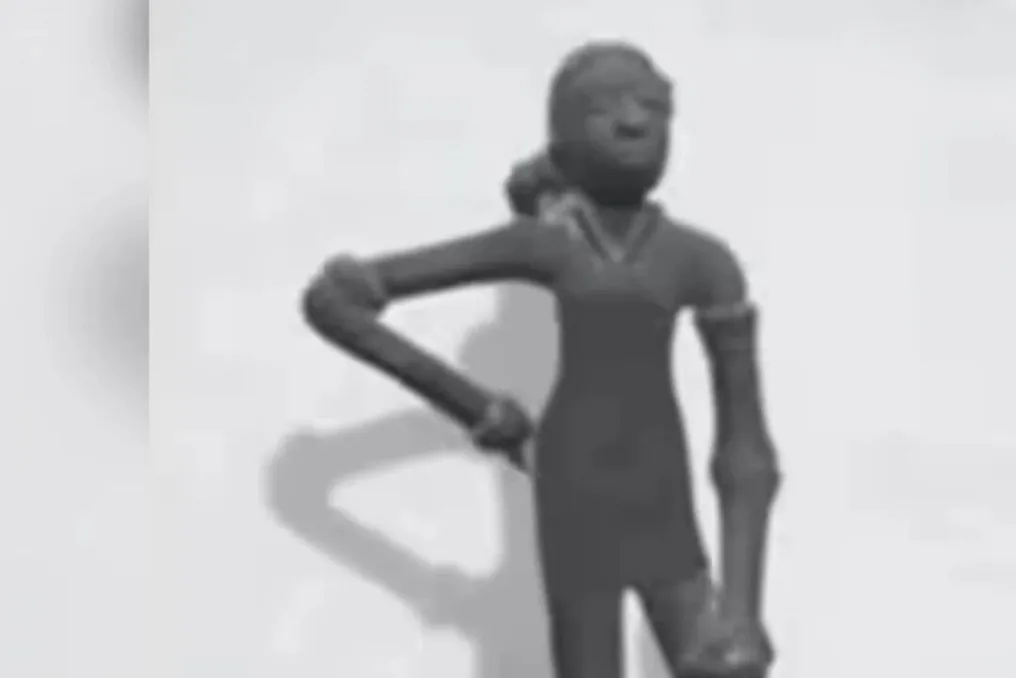
Bronze figurine of 'Dancing Girl of Mohenjo-Daro' to move to North Block museum
Read more
The times of India
timesofindia.indiatimes.com

Bronze figurine of 'Dancing Girl of Mohenjo-Daro' to move to North Block museum

The 4500-year-old bronze statuette, known as the 'Dancing Girl of Mohenjo-Daro,' currently housed in the National Museum, will be relocated to a new facility. This move is set to occur when the first gallery of the South Yugen Bharat Museum, titled 'Jewel,' opens next year in a prominent part of the North Block.

This exhibit will serve as a key component of an exhibition designed to showcase the civilizational development of India. Culture Minister Vivek Aggarwal stated that among the main items likely to be displayed in the opening gallery of YYBM, visitors will be able to see the jewels of Nizam, which are currently stored under high security at the RBI.

It is planned that numerous artifacts will be transferred from the National Museum to the 'Jewel' gallery. These include ancient gold and stone jewelry from Taxila (Takshashila), as well as miniature paintings and sculptures from the Indian Museum in Calcutta and the Gandhara sculpture collection.

According to ministry data, the curation team is developing an exhibition plan for items that will be sourced from various museums and transferred to YYBM. The Minister noted that this proposed plan will be presented to a consultative committee for review and final approval of the selection and description of the exhibits.

He emphasized that the goal is to demonstrate the sophistication of Indian culture from its earliest stages. Vivek Aggarwal clarified that the National Museum will retain its function as a historical museum, while YYBM will focus on the civilizational journey, thereby establishing a clear distinction between the two institutions. Furthermore, items for YYBM will come from various museums across the country, including the National Museum.

Last week, the Cabinet Committee on Economic Affairs approved a development plan worth 3,230 crore rupees, which will cover both the North and South Blocks and occupy an area of approximately 180 thousand square meters. This project, scheduled for completion by March 2031, is positioned as the world's largest exhibition space museum.

Similar stories

Design Museum Ghent undergoes renovation and expansion with projects by Carmody Groarke, ATAMA, and RE-ST
Read more
archdaily.com.br

Design Museum Ghent undergoes renovation and expansion with projects by Carmody Groarke, ATAMA, and RE-ST

After a four-year period of intensive modernization and expansion, the Design Museum Ghent is about to open its facilities near areas recognized as UNESCO World Heritage sites. The complex, which previously consisted of charming but scattered buildings, has been transformed into a modern museum focused on the union of history, innovation, and sustainability.

This major change involves both the restoration of listed buildings dating from the 16th to the 20th centuries, as well as the inclusion of a new and notable wing. This addition gives the museum a contemporary and updated aesthetic.

The new section, conceived by Carmody Groarke (UK) and ATAMA (Belgium), completes the museum complex, complementing the restoration of the historical buildings carried out by the firm RE-ST (Belgium). This project places the museum in the 21st century, both in the experience offered to visitors and in its social role. Visitors are not limited to observing collection items; they have the opportunity to interact, debate, reflect, and appreciate the pieces.

With the incorporation of large areas designated for lectures, workshops, exhibitions, events, and contact with nature, the museum becomes open to both the local community and the global scene.

Additionally, the new wing removes barriers, configuring itself as an area of free access that includes a Stadskamer (City Hall). In this space, visitors can rest, and it serves as a meeting point for communities and neighborhoods in the city to present their creations, functioning as a space for celebration, production, and discovery.

The Hotel de Coninck, historically organized around its central courtyard, had a ruined south passage and underutilized urban land behind its imposing facade. Thanks to the new wing, this courtyard can now operate fully as a garden, serving as the core of the museum and a guiding element. Large openings directed towards the courtyard act as a visual guide for visitors.

This courtyard not only aids navigation through the building, but the new wing also establishes the connection between all parts of the museum. The design introduced six new zones based on three essential pillars: welcome, accessibility, and flexibility. On the basement level, the collection handling area allows a glimpse into the museum's operational backstage.

From the large Stadskamer (which functions as reception and shop), through the Forum (lecture space), the Atelier (workshop areas), and the Vitrine (temporary exhibitions), visitors reach the Loft on the fourth floor, an event space offering wide panoramic views of Ghent.

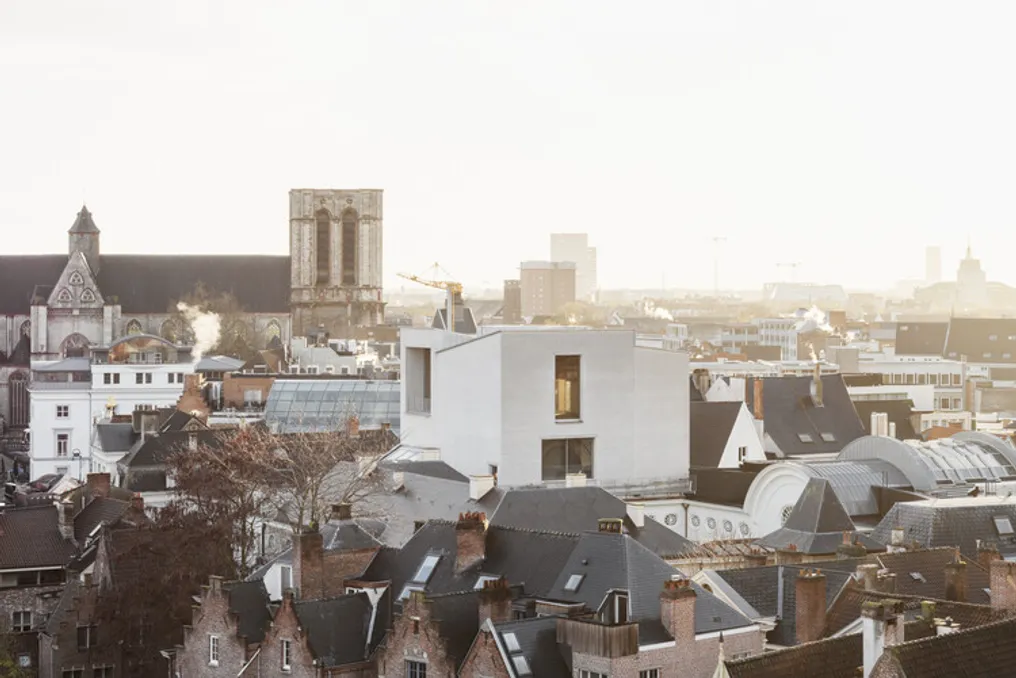
The new wing was constructed using wood and white bricks, presenting a modern reinterpretation of traditional Ghent construction techniques. The facade employs the innovative Gent Waste Brick, a type of brick cured with lime obtained from local construction waste. This process occurs without kilns and without large carbon dioxide emissions, resulting in a drastic reduction in the material's ecological footprint.

More than 82,000 bricks were manufactured by BC Materials at Het Arsenaal in Ghent, in a process closely monitored by local residents. The result is a facade that not only reflects the city's history but also projects its future. The dimensions of the brick allude to those used in the 18th-century Hotel De Coninck, allowing for a subtle fusion of the old and the new.

Its white tone harmonizes with the historic residences on Drabstraat street. Simultaneously, the shape of the facade evokes the great headquarters of craft corporations and the patrician homes of Ghent, while the deep windows, prominent eaves, and meticulous details clearly define a unique public building with a strong identity.

The overall planning honors the past while pointing toward the future. Historic interiors received careful restorations, while subsequent additions were optimized to maximize space and improve climatic conditions. Whenever possible, materials were reused and sustainable solutions adopted, culminating in a museum capable of housing international collections under ideal conditions, minimizing its environmental impact.

Uzbekistan presents artifacts from the ancient settlements of Khalchayan and Afrasiab at an exhibition in Milan
Read more
gazeta.uz

Uzbekistan presents artifacts from the ancient settlements of Khalchayan and Afrasiab at an exhibition in Milan

The Fund for the Development of Culture and Arts of Uzbekistan (ACDF) has brought artifacts originating from the ancient settlements of Khalchayan and Afrasiab to the Global Antiquity research exhibition in Milan (Italy).

This exhibition is being held at the Fondazione Prada cultural center in Milan. This foundation was established in 1993 by Italian designer Miuccia Prada and entrepreneur Patrizio Bertelli.

The organizers of Global Antiquity invite visitors to view exhibits that demonstrate the artistic, trade, and political connections that existed between peoples and cultures from the Mediterranean to Asia over more than 1600 years.

The exhibition features over 150 works of art and historical artifacts, covering the time period from 600 BCE to 1000 CE. The curator of the exhibition, Salvatore Settis, believes that ancient heritage serves as 'a key unlocking access to the diversity of modern cultures.'

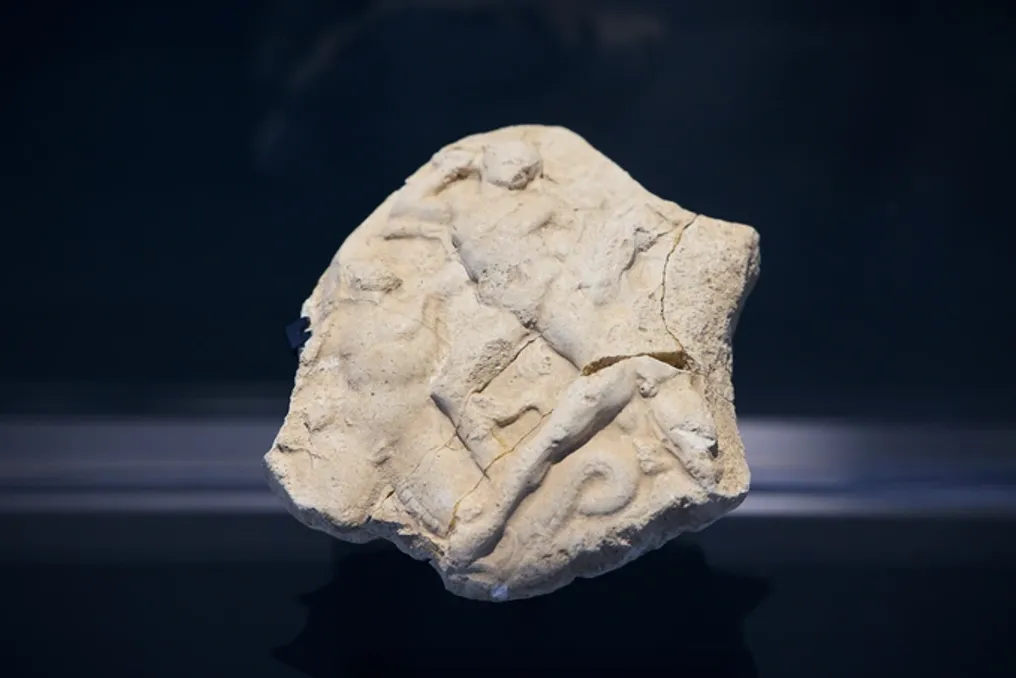
Eight museum items from the collection of Uzbekistan were presented, including a clay figurine of a prince from Khalchayan (Surkhandarya region), dating from the 1st century BCE to the 1st century CE, as well as seven chess pieces from Afrasiab (Samarkand region).

The artifact from Surkhandarya is executed in the sculptural technique of the Kushan era, which combines Bactrian, Achaemenid, and Hellenistic traditions. As for the 8th-century bone figure from Samarkand, it is one of the earliest surviving examples of figurative chess pieces. Historians suggest that the spread of chess is related to cultural exchange between India, Persia, Central Asia, and subsequently Europe.

The exhibits representing Uzbekistan are displayed alongside collections from institutions such as the Metropolitan Museum of Art, The Paul Getty Museum, the British Museum, the Louvre, the Museo Ghi, the Prada Museum, the Vatican Museums, the Pompeii Archaeological Park, and others.

Global Antiquity is part of a broader study of ancient art that the Prada Foundation began in 2015 with the projects Serial Classic and Portable Classic, and later continued with the Recycling Beauty exhibition in 2022. The official website of Fondazione Prada emphasizes that the main goal of this comprehensive study is to view ancient art not only as past heritage but also as an important factor influencing the present and future.

The Global Antiquity exhibition is scheduled to run in Milan until March 1, 2027.

Popular