France holds new wave of strikes focused on salary adjustments in the public sector and education
Read more
Noticias ao Minuto
noticiasaominuto.com

France holds new wave of strikes focused on salary adjustments in the public sector and education

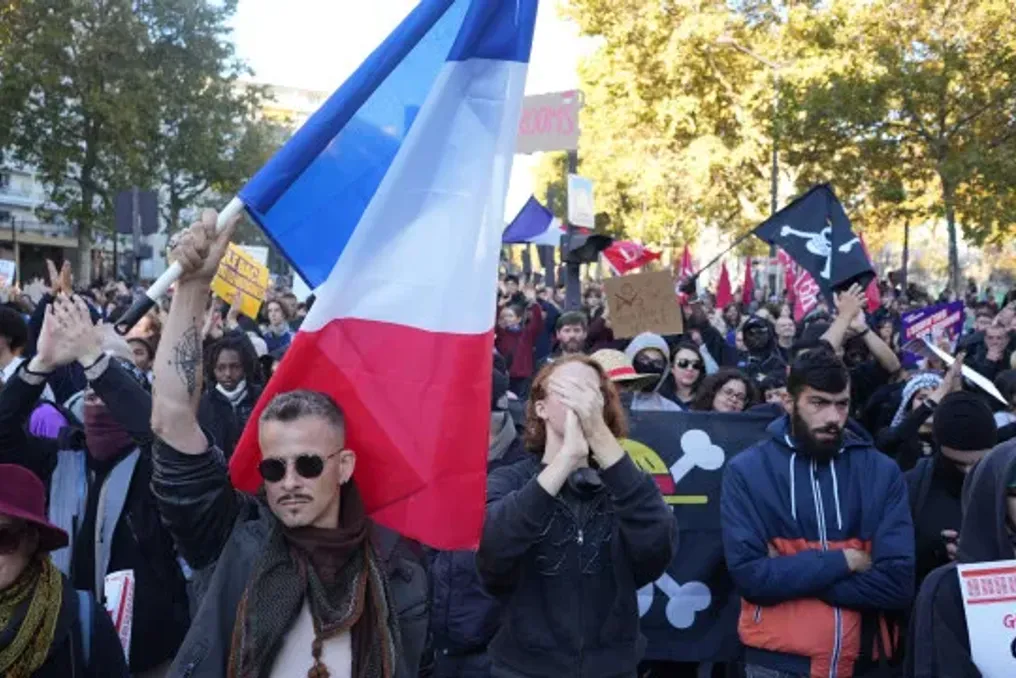
France will face a new series of strikes and demonstrations on Tuesday, called by public administration unions. The main demands include salary increases, in addition to the claims of students and teachers in the Education sector.

The General Confederation of Labour (CGT), which is the second largest national union and one of the major drivers of this movement, registered 179 demonstrations across the national territory. The largest is scheduled to take place in Paris, starting at 2:00 PM (1:00 PM Lisbon time), following a route previously authorized by the metropolitan police: from Place de la Nation to Place d'Italie.

According to the television channel BFMTV, security forces expect a contingent ranging between 40,000 and 80,000 people. Although there are distinctions between the protest scheduled for Tuesday and that of November 5th, participation in Paris and other cities will be compared to the previous day, when unions reported that about 1.6 million people took to the streets in France (of these, 350,000 in Paris), while the Ministry of the Interior estimated this number at 575,000.

Additionally, after secondary school student protests that began in the second half of September, there have been demonstrations over the last five Saturdays against the rising cost of living, but also more broadly against the actions of the Government and President Emmanuel Macron. However, these demonstrations have shown weakening in terms of mobilization capacity and, on certain occasions, have been marked by confrontations with the police, acts of vandalism, and looting of commercial establishments, a situation noted especially during the first Saturday of protests, on October 17th.

On Tuesday, the CGT leads an inter-union coordination of the public administration, composed of UNSA, FSU, Solidaires, CFE-CGC, and FAFP. This coordination called for mobilization to demand an immediate adjustment of the base index for salary appreciation, in addition to its linkage to inflation, arguing that workers have lost more than 16% of their purchasing power since 2017. There were also calls from the CGT, UNSA, FSU, Solidaires, and the French Democratic Confederation of Labor (CFDT)—the largest union in the business sector—to expand the strike to the private sector.

The unions consider the announcements made by the Government during the social conference on November 9th insufficient. Among the measures presented are the anticipation by one month of a 1.6% adjustment to the minimum wage, valid from December (which amounts to approximately 24 euros net per month), and the call to resume salary negotiations.

Although several unions of the state railway SNCF have called for stoppages, massive participation is not expected. Initially, disruptions are anticipated in circulation on some suburban lines, but not on high-speed trains (TGV). In the Education field, some teacher unions, such as Snes-FSU and SUD, joined the strike day, as did youth organizations of secondary and university students.

Blockades and operational interruptions persisted in recent days, affecting various educational institutions. For example, according to a source from the Ministry of Education cited by the newspaper Ouest France, 20% of universities were impacted today. The responsible minister, Édouard Geffray, was received today with applause and boos, under heavy police presence, upon arriving at the Nelson Mandela secondary school in Nantes. This location had been the scene of a fire during a blockade carried out by striking students on October 1st, an incident that resulted in the judicial indictment of two students.
Similar stories

French police demand salary increases and improved working conditions
Read more
noticiasaominuto.com

French police demand salary increases and improved working conditions

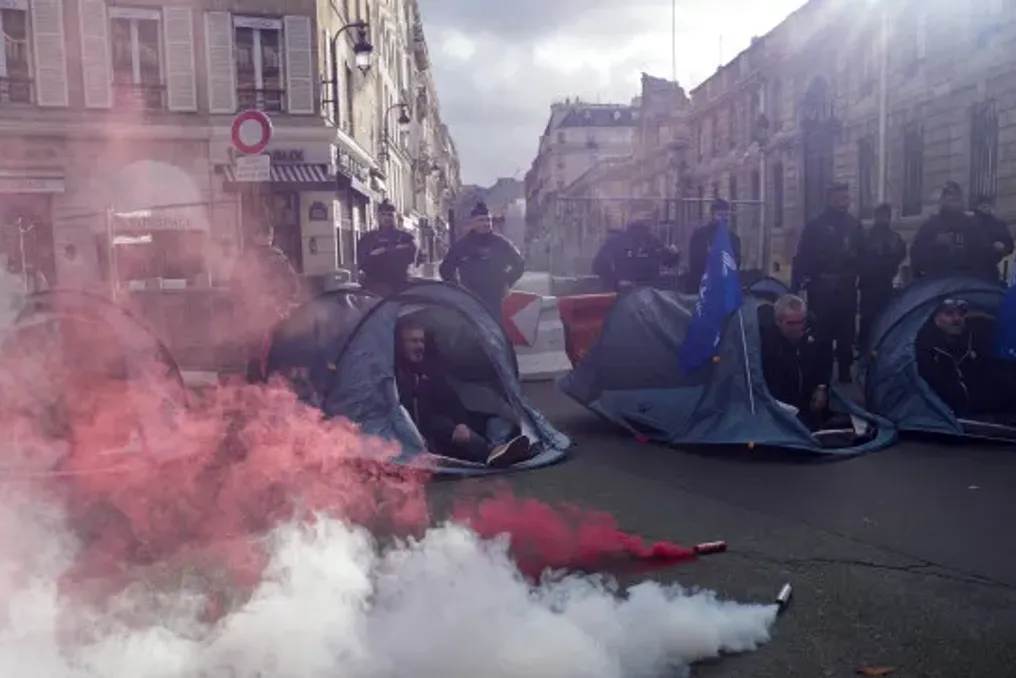
Hundreds of police officers held a demonstration in Paris to demand better working conditions amid ongoing protests in France. They were received by the Minister of the Interior, Laurent Nuñez.

Between 400 and 500 agents, gathered at the call of the union Alliance Police Nationale, marched from the Champs-Élysées to the headquarters of the Ministry of the Interior. They insisted on an immediate increase in the risk allowance from 28.8% to 35%, according to Le Figaro.

This allowance compensates for the risks associated with the profession and is taken into account when calculating employee pensions. Nuñez proposed increasing it to 33.5%, but gradually, between 2027 and 2029, however, the unions considered this offer insufficient.

A union representative, Jean-Pierre Clouet, told Franceinfo that they demand an immediate increase to 35%, condemning the large number of injured officers during recent protests.

To the dissatisfaction caused by aggression, the fatigue of police units is added, which are forced to work intensive shifts due to student mobilizations and protests against the cost of living. Officers also complain that they are called into service on weekends or holidays to ensure security measures.

On Tuesday, over 1200 agents of the Republican Security Services (CRS) and rapid response units demanded medical monitoring, as reported by Le Figaro. The union acknowledged that this initiative was a way to express discontent, as French police do not have the right to strike.

Over 100 thousand people protest in France over pay raise demands
Read more
noticiasaominuto.com

Over 100 thousand people protest in France over pay raise demands

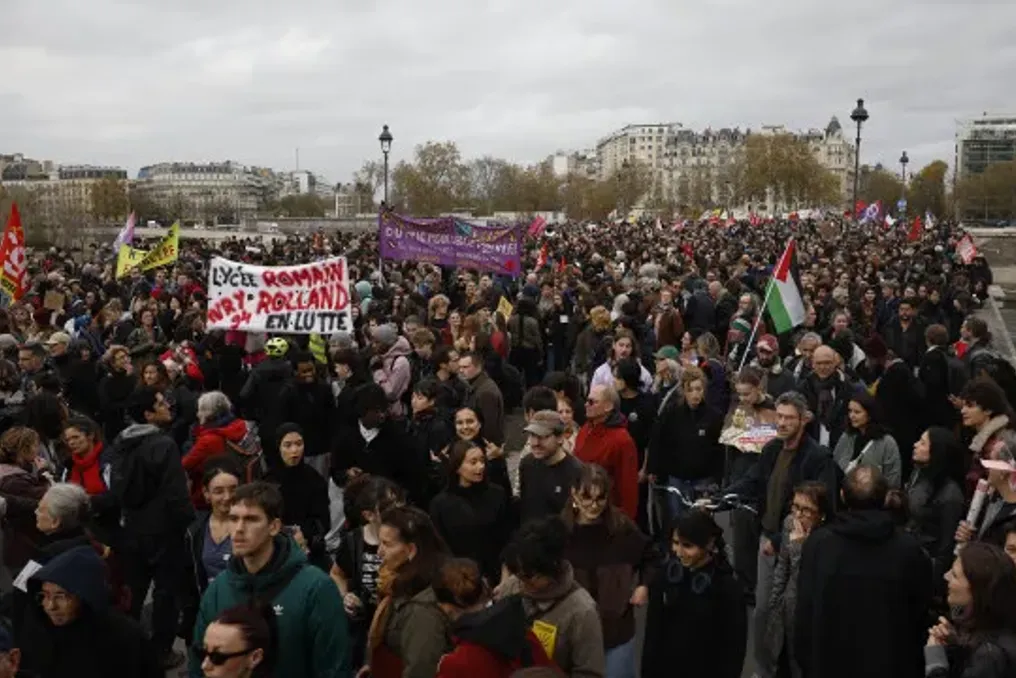
Mass protests took place again in France today, involving over one hundred thousand people with various demands. These diverse demonstrations united students from secondary and higher education institutions, civil servants, pensioners, and private sector workers.

The protest was organized by civil servant trade unions to demand salary increases and review of career paths. According to these unions, the action gathered over 500 thousand participants, of which 175 thousand were in Paris.

The Ministry of the Interior reported the registration of 146 thousand demonstrators across the country, while the Metropolitan Police Command recorded 28 thousand participants in the capital.

In the south of France, in Marseille and Toulouse, local police counted about 5 thousand participants, whereas the trade unions cited figures of 80 thousand and 20 thousand respectively, which is less than what was registered on November 5th.

Thousands of people also took to the streets in Lille, Lyon, Bordeaux, Strasbourg, La Rochelle, and Metz, cities where turnout was lower compared to previous protests.

The government noted that less than 3% of civil servants went on strike today, including employees of ministries, municipalities, and rectorates. On November 5th, the percentage of strikers reached almost 10%.

Youth maintained high activity thanks to the announcement of support for the action by 'Interfac IDF', which represents a general assembly of students from faculties in the Paris region, and the youth inter-union organization.

The leader of the Confederation of Labour (CGT), Sophie Bine, demanded that the Government include all trade unions (representatives of private sector workers, public sector workers, and youth) in 'immediate statements that are appropriate' to the current situation. She argued that 'only a response to our demands will end the protests.'

On Friday, civil servant unions expressed dissatisfaction with the Government's new refusal to provide general salary increases, just days after the announcement of minimum wage adjustments for private sector workers. They criticized the Government's measures regarding low wages for its inability to respond to the urgency of the situation.

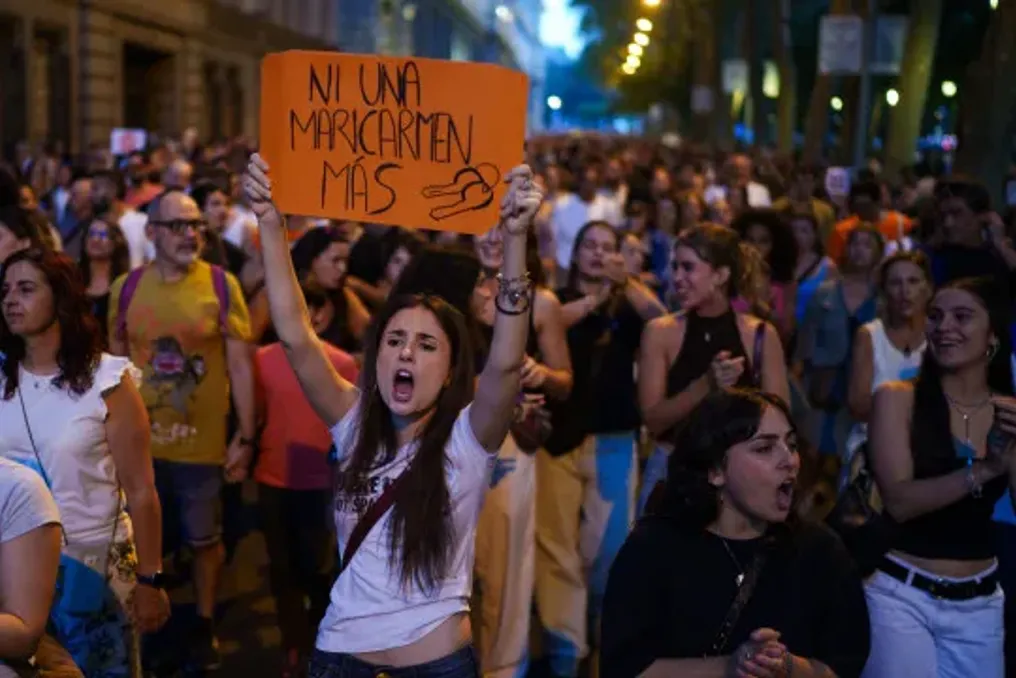
Spain holds first general strike in 14 years over wages and housing
Read more
noticiasaominuto.com

Spain holds first general strike in 14 years over wages and housing

Spain is preparing for its first general strike in 14 years, scheduled for midnight (23:00 Lisbon time today), aimed at defending the rights to decent housing and wages. The strike will last 24 hours and takes place against the backdrop of the start of the election campaign scheduled for November 29th.

This nationwide protest was announced following the Prime Minister, socialist Pedro Sánchez's, announcement of early national elections, and union centers have characterized it as 'atypical.' In addition to participating in the strike, unions have called for mass rallies and demonstrations, including marches planned for Wednesday evening in various cities, including central Madrid.

According to union centers, the success of this 24-hour protest will depend primarily on participation in rallies rather than on influencing the activity of the country's businesses and services. The call for the strike was initiated by the two largest Spanish unions (CCOO and UGT) in response to demands from associations gathered in the Tenants Confederation, which advocates for the right to housing and mobilized thousands of people in the streets of Spain since September 23rd.

CCOO and UGT appealed to the country's citizens to mobilize for improved wages, guaranteed decent housing, and price control amid inflation that undermines purchasing power. The first demand of the unions and associations supporting this call is that 'all state administrations promote policies that end real estate speculation.'

The announcement of the strike during an election period has drawn criticism from business associations and right-wing opposition parties. Business groups have questioned the legality of the action, arguing that it is not focused on labor issues, and have also questioned its timing given the upcoming elections on November 29th. Antonio Garamendi, president of the Spanish Confederation of Business Organizations, noted that the strike has a 'clear political and electoral component' and appears aimed at the opposition rather than the ruling left-wing government.

Major opposition parties, the Popular Party (PP, right-wing) and Vox (far-right), have also criticized the strike, emphasizing that it occurs just before the elections and is the first organized by unions in 14 years and since Sánchez took office in 2018. Borja Sempere, a representative of the PP, stated: 'This decision is essentially political, with the intention of promoting political actions by Pedro Sánchez.' The PP highlighted that the 'unions agreed' after eight years of governments led by Sánchez, whose 'major failure' is the housing issue, as house and rent prices have risen sharply in recent years.

Meanwhile, Prime Minister and leader of the Spanish Socialist Workers' Party, Pedro Sánchez, stated that there 'will be a general strike on one issue'—access to housing, which he believes 'affects many workers and their families,' and therefore 'the only thing the government can do is respect this constitutional right.'

Unions insist that the general strike was conceived before the election announcement and has multiple targets, including CEOE, regional governments, or the central executive body. The last general strike in Spain, organized by UGT and CCOO, took place in 2012.

According to a poll published Monday by the newspaper El País, 48.8% of respondents do not support the strike, while 46.3% agree with the protest. However, the same poll showed that 53% condemn the housing camps that were created—and still exist in many cities—after the eviction of Mari Carmen Abascal, an 87-year-old woman, on September 23rd.

The 24-hour strike takes place just before the official start of the election campaign, set for October 5th by Pedro Sánchez, amidst street protests against the housing crisis and after right-wing forces rejected government decrees with measures in this area in parliament. On Thursday, the parliamentary standing committee will discuss and vote on the housing decrees, which the government has re-approved.

Popular