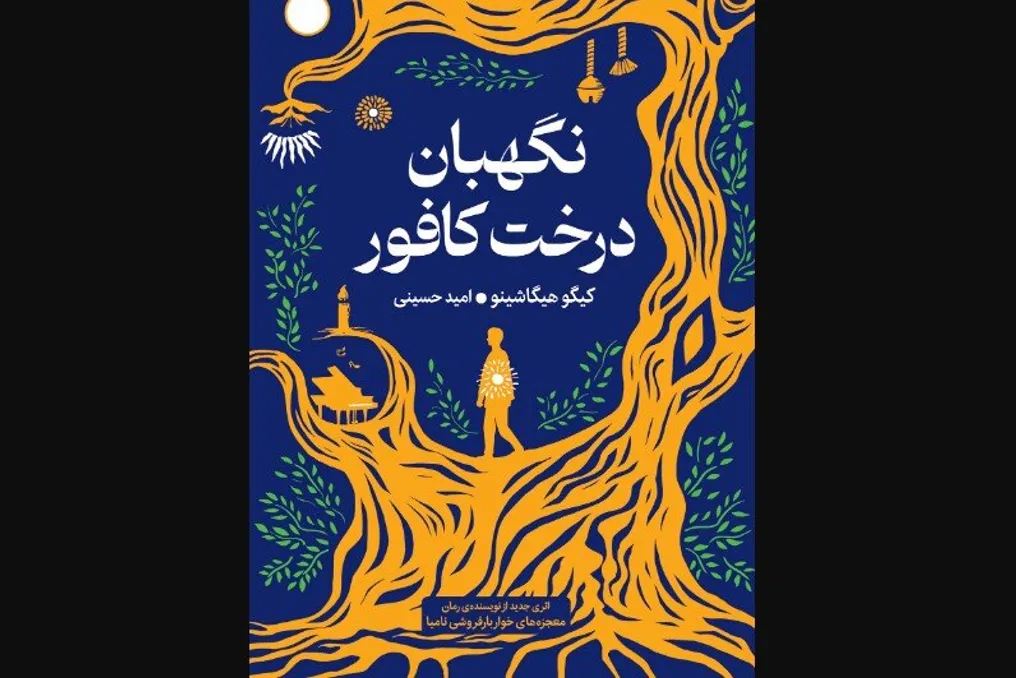
The novel 'The Cedar Keeper' by popular Japanese author Keigo Higashino has been released in Persian. Milkan Publishing in Tehran released the book with a translation by Omid Hosseini.
Originally published in 2025, this novel combines elements of mystery, family relationships, and the supernatural, exploring themes of human connection, grief, hope, and the possibility of emotional healing. Instead of following the standard structure of a crime thriller, the narrative centers around an unusual tree whose mysterious powers unite people carrying personal burdens, unresolved questions, and unspoken feelings.
The story is about Reito Naoi, a young man whose life changes drastically after a series of unfortunate events leading to his arrest. Faced with imprisonment, he receives an unusual offer from a lawyer representing a relative he never knew—his aunt Chifune. She agrees to help secure his release on one condition: he must become the keeper of an ancient cedar tree located within the sanctuary grounds.
With no clear idea of his future, Reito accepts this duty and begins fulfilling a new role. However, this tree is no ordinary landmark. According to ancient belief, people visit it after dark to commune with it in a mysterious ritual, seeking solace, guidance, or a way to express feelings they cannot share with others.
Observing the visitors, Reito meets people whose life circumstances are far more complex than they appear at first glance. Among them are a reserved middle-aged man who hums to the tree for hours, his daughter who secretly follows him, and a wealthy young man who approaches the ritual with skepticism and reluctance.
Curious about the significance of the tree and the reasons for these visits, Reito repeatedly asks Chifune for explanations. Nevertheless, his aunt does not reveal the answers immediately, telling him that he will understand the secrets of the tree when he is ready.
Through these encounters, Reito gradually realizes that his responsibility extends beyond merely preserving an ancient tree. The people who come to him are seeking ways to confront their past, connect with loved ones, and find meaning in the experiences that have shaped their lives. The tree becomes a meeting place for memory, loss, and the human need for connection.
The novel explores how seemingly ordinary gestures and meetings can influence people's lives, raising questions about the nature of communication, intergenerational bonds, and the things people leave unsaid. Higashino blends the element of mystery with emotionally rich storytelling, gradually revealing the significance of the tree and the stories surrounding it.
Keigo Higashino was one of Japan's most widely read contemporary novelists, best known for his detective and crime fiction. Born in Osaka in 1958, he graduated from Osaka Prefectural University with a degree in electrical engineering and worked as an engineer before dedicating himself fully to writing. He debuted in literature in 1985 with 'After School,' which earned him the prestigious Edogawa Rampo Prize. His 2006 novel 'The Suspect's Devotion' won him the Naoki Prize and the Classic Detective Award, and its English translation was nominated for the Edgar Award in 2012 for Best Novel. Among his other internationally acclaimed works are 'Pleasure,' 'Journey Under the Midnight Sun,' and 'Namia Shop Wonders.' His books have been translated into many languages and adapted for film and television. Higashino passed away in July 2026 at the age of 68.