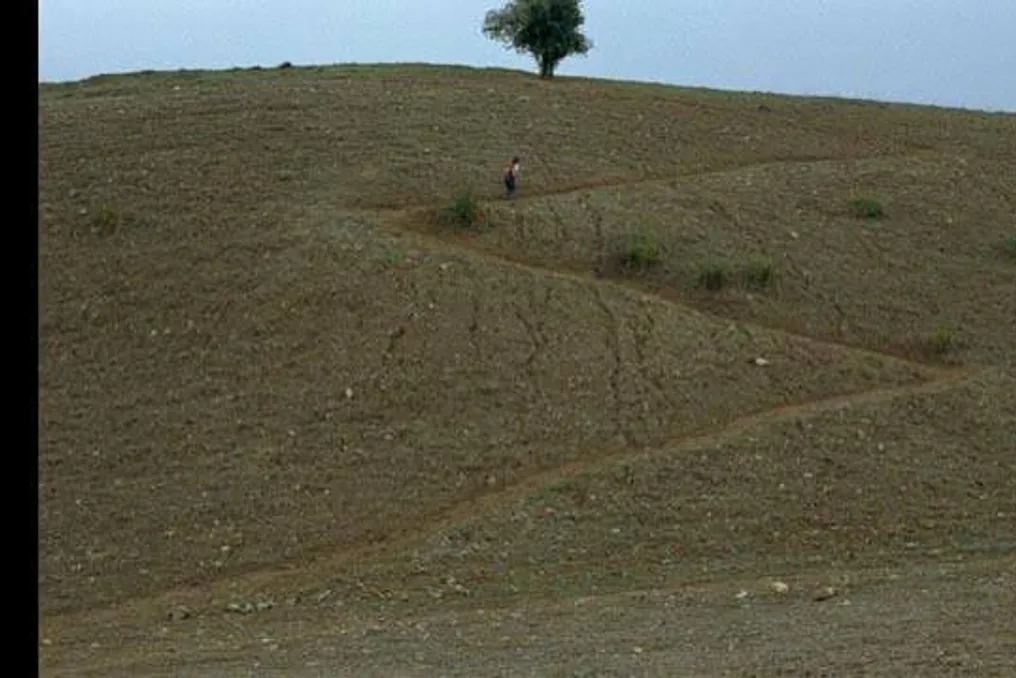
A retrospective of the works of the acclaimed Iranian filmmaker Abbas Kiarostami is scheduled at the La Filmothèque du Quartier Latin cinema in Paris. The program will cover 18 films shot during different periods of his career and will run from November 20 to December 24.
This screening gives audiences the opportunity to rediscover the director's work: from early pieces created at the Institute for the Intellectual Development of Children and Youth (Kanun) to later films shot in France, as well as his famous 'Koker' trilogy.
The selection includes feature films, short films, and lesser-known works, allowing for a comprehensive overview of Kiarostami's unique cinematic approach and his contribution to both Iranian and world cinema.
The central element of the retrospective is the 'Koker' trilogy, consisting of the films 'Where Is Friend's House?' (1987), 'And Life Goes On' (1992), and 'Through Olive Trees' (1994). These films, set in the northern villages of Iran, explore the lives of ordinary people through themes of love, responsibility, friendship, and resilience, blurring the lines between fiction and reality.
'Where Is Friend's House?' tells the story of a young schoolboy's attempt to return a classmate's notebook, turning a simple task into a reflection on compassion and duty. 'And Life Goes On' shows the director's journey through earthquake-stricken northern Iran searching for actors from his previous film, demonstrating people's determination to rebuild their lives. And 'Through Olive Trees' further blurs the line between truth and fiction through the story of the film crew after the earthquake.
The program also features internationally renowned works by Kiarostami, such as 'Close-Up' (1990), which combines documentary and fictional elements based on a real case of impersonation; 'Taste of Cherry' (1997), where the protagonist contemplates suicide; 'Wind Will Carry Us' (1999), which recounts the director's stay in a remote Kurdish village; 'Ten' (2002), depicting conversations between a woman and passengers in Tehran; 'Shirin' (2008), built around women's reactions to a theatrical performance; 'Certified Copy' (2010), dedicated to themes of identity and relationships; and 'As Long As We Love' (2012), a story of unexpected connections in Tokyo.
Furthermore, the retrospective includes Kiarostami's early works, including 'Bread and Alley' (1970), 'Rehearsal' (1974), 'Experiment' (1973), 'Wedding Dress' (1976), 'Chorus' (1982), 'Decent or Indecent' (1981), 'Citizen' (1983), and 'Homework' (1989).
Born in Tehran in 1940, Kiarostami began his career at Kanun, where he developed his recognizable style through short films and works focusing on everyday life and children's experiences. He later became one of the most famous figures of Iranian cinema on the world stage.
His films received significant international recognition, including the Palme d'Or at the Cannes Film Festival in 1997 for 'Taste of Cherry'. Abbas Kiarostami passed away in Paris in July 2016 at the age of 76.
The screening at La Filmothèque du Quartier Latin offers the French audience an opportunity to re-evaluate the work of a director whose minimalist storytelling, poetic imagery, and exploration of the relationship between fiction and reality left an indelible mark on world cinema.