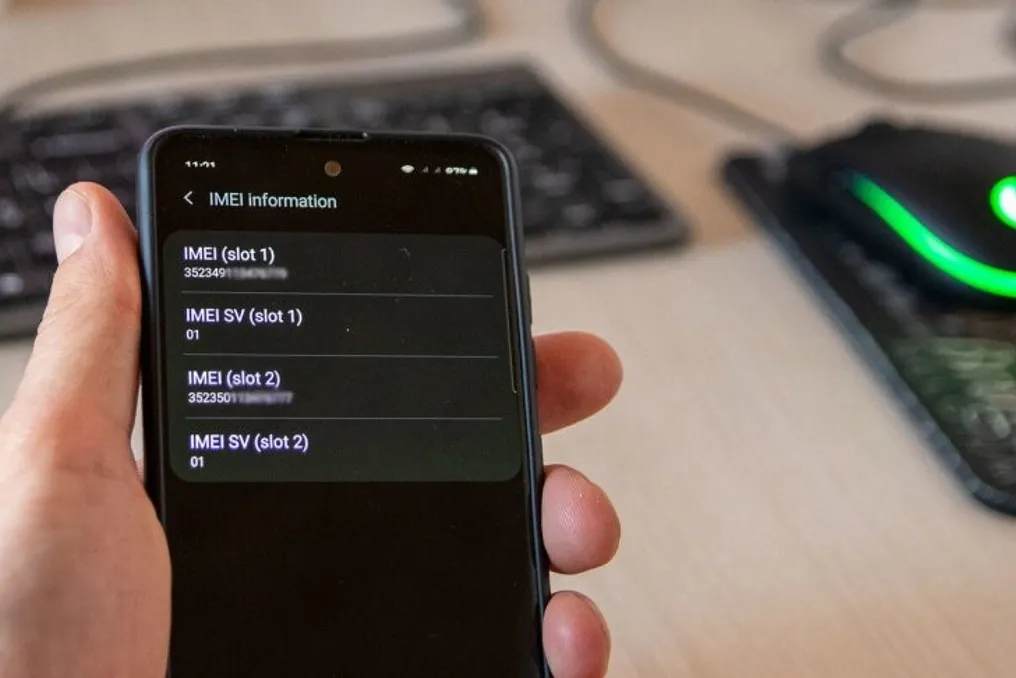
The fight against illegal smartphone imports revealed vulnerabilities in the customs supervision system: the processing of mobile phones at Tashkent airport was suspended for three days. The reason was that inspectors could not independently confirm the compliance of the device's IMEI codes, which required involving experts from UZIMEI. This situation raised questions about the distribution of powers between various agencies and the overall effectiveness of existing control mechanisms. The discussion of gray imports also touched upon the interests of both end consumers and legitimate businesses.
In early November, the suspension of mobile phone customs clearance began at Tashkent airport. Widespread coverage of this issue appeared on November 10 when messages about equipment delays at customs started appearing on social networks. Some posts hinted at the possibility of expediting the release of devices for an additional fee. In response to public outcry, the Customs Committee held a press conference to clarify the reasons for the halt and dispel rumors of paid services. The agency categorically denied any possibility of speeding up the procedure for money.
According to the Customs Committee, the delay was caused by instances where the IMEI codes listed in the accompanying documents did not match the data of the devices themselves. Inspectors lacked sufficient technical means and knowledge to conduct an independent verification of these identifiers. Agency representatives explained that employees were hesitant to release the equipment without such a check, as claims could be made against them if substitution or the use of IMEI in illegal import schemes was discovered.
As a result, some phones were seized and placed in temporary storage. Explaining their actions, Customs Committee employees referred to the norms of the Customs Code, Cabinet of Ministers resolutions, and presidential decrees regulating the import procedure of mobile devices and the distribution of powers during IMEI checks. However, no specific regulation was named at the press conference that granted the right to suspend clearance for three days and seize phones for storage.
Clearance resumed after UZIMEI specialists were involved to assist customs inspectors in checking IMEI codes. The agency reported that the process of releasing previously seized devices had begun, although the exact number of phones was not disclosed, only that it concerned hundreds of units. The Customs Committee also apologized to citizens for the inconvenience caused.
Furthermore, measures taken against personnel were announced by the Customs Committee. According to the committee, 29 customs officers were held accountable for disciplinary action, and another 67 underwent preventive discussions.
Who is actually responsible for checking IMEI?
Farhod Olimjonov, Head of the Customs Committee department, explained, based on the Cabinet of Ministers resolution of September 17, 2019, that the functions of checking, registering, matching, and identifying IMEI codes fall under the responsibility of the system operator. Customs authorities, in turn, are responsible for controlling the characteristics of goods that affect the amount of customs payments.
Nevertheless, customs possesses its own tool for detecting discrepancies. If one phone model is indicated in the declaration, but the identifier corresponds to another, the information system automatically generates a warning for the inspector. According to committee representatives, this mechanism began to be applied to commercial imports around July 2025, and for devices imported by private individuals—since February 2026.
Despite having such a tool, it did not grant employees the right to conduct technical examinations of devices independently. The Customs Committee acknowledged the lack of knowledge and experience among inspectors. Another reason cited for the situation was problems in interaction with UZIMEI, even though the integration of the two agencies' information systems began at the end of 2024.
Olimjonov also referred to the provisions of the resolution defining UZIMEI's powers, stating that the operator is responsible for ensuring the uninterrupted operation of the system, its information security, and integration with other information systems.
Gray Import
A significant part of the press conference was dedicated to cases of IMEI code manipulation during the import of mobile devices. According to the agency, one common scheme involves using identifiers of cheaper models to clear more expensive smartphones. This allows false information about the actually imported equipment to be provided in documents.
As illustrations, committee representatives provided several examples: in documents for a batch of a thousand phone boards, about two thousand IMEI codes corresponding to Redmi, Samsung, and Apple models were listed. In another case, 3,200 smartphone identifiers were declared for 80 wireless headphones. Such actions can distort data on imported goods and affect the amount of customs payments. Nevertheless, the presented examples do not allow for an assessment of the scale of such violations, as the agency did not report what percentage of the total import volume these cases constitute.
It is important to note that IMEI substitution and gray import are different concepts. Using an unreliable identifier may cause difficulties with the registration of a specific device. However, the mere fact of purchasing a phone from an unofficial supplier does not mean that it is counterfeit, unsafe, or imported in violation of the law.
Why Do Official Distributors Support Stricter Control?
A representative from Samsung Electronics Uzbekistan spoke at the press conference and discussed the advantages of purchasing products through official channels: this includes warranty service, special marking tools, and the ability to check the device's status. According to him, after the introduction of mandatory customs declaration for phones, the volume of official Samsung supplies doubled.
It should be understood that Samsung is acting from its own commercial position in this context, not as an independent expert assessing the impact of customs policy on the entire market. The company is interested in rules that promote the strengthening of its official distribution. The harder it is for unofficial suppliers, the higher the share of official sales.
Representatives of legitimate businesses link gray imports to threats to buyers and unfair competition. They emphasize that official sellers continue to be responsible after the sale: they provide warranty repair and the possibility of recourse to the seller in case of malfunction. A buyer who purchases a phone legally receives a more transparent mechanism for receiving service within the country, whereas when buying through unofficial channels, such opportunities may be limited, such as the absence of local warranty.
However, the existence of warranty obligations is a real plus, but this does not prove that all unofficial imports are illegal or require complete exclusion from the market. These aspects should be considered separately from issues of IMEI substitution and violation of customs rules.
What Do Official Import Figures Show?
According to the Customs Committee, 4.1 million mobile devices were officially imported into Uzbekistan over ten months of 2026. Revenue from customs duties reached two trillion soms, according to officials. Separately, customs reported 452 thousand imported Apple devices, which brought 756.6 billion soms to the budget.
These figures reflect the reporting of the Customs Committee itself and should differ from the foreign trade statistics published by the National Statistical Committee. For example, for the period from January to September 2025, according to the National Statistics Committee, about 3.21 million mobile phones worth $370.8 million were imported into the country.
A direct comparison of indicators is only possible after a thorough review of the methodology: it is necessary to ensure that the same categories of devices and periods are used. Moreover, the increase in customs revenues may be due not only to the growth of official supplies but also to changes in the structure of imports, smartphone prices, and the completeness of declarations.
How Much Does the Buyer Actually Pay?
Various payments related to the import and use of phones were discussed at the press conference. The first is the unified customs payment, levied when physical persons import goods above established duty-free limits. For air passengers, this limit is one thousand dollars, provided certain conditions are met, and a payment of 30% is charged on the excess amount.
The second payment is the fee for IMEI registration in the national system. The official UZIMEI portal lists tariffs: 88 thousand soms for one identifier registered within 30 days and 110 thousand soms after this period expires. If a smartphone has two IMEI codes, the fee is charged for each: 176 thousand or 220 thousand soms, respectively.
The third mechanism relates to commercial imports, where import duties and taxes stipulated by legislation, including VAT, apply. This payment differs from that paid by a physical person when exceeding the duty-free limit.
Starting January 1, 2027, the rate of the unified customs payment for goods transported by physical persons for personal use is set to decrease from 30% to 20% of the customs value, but not lower than two dollars per kilogram. This change is enshrined in Presidential Decree No. 174 of August 27, 2026. This change applies exclusively to the unified customs payment and does not cancel the need to pay for IMEI registration.
Duty Abolition and Promise of Cheaper Phones
Another topic discussed at the press conference was the potential abolition of the import duty on mobile phones in connection with Uzbekistan's accession to the World Trade Organization. Olimjonov stated that during negotiations for WTO accession, a zero tariff rate for mobile devices was agreed upon; it currently stands at 5%. Meanwhile, VAT of 12% will remain.
The official estimated that the possible reduction in budget revenues could amount to 300–400 billion soms and suggested that the cost of phones for consumers could decrease by almost 5%. Customs representatives also clarified that the UZIMEI collection issue was not discussed within the framework of WTO accession negotiations, so there is no basis to link the possible reduction in import duty with the cancellation of the IMEI registration fee.
The press conference demonstrated that the problem of smartphone clearance goes beyond isolated substitution incidents.