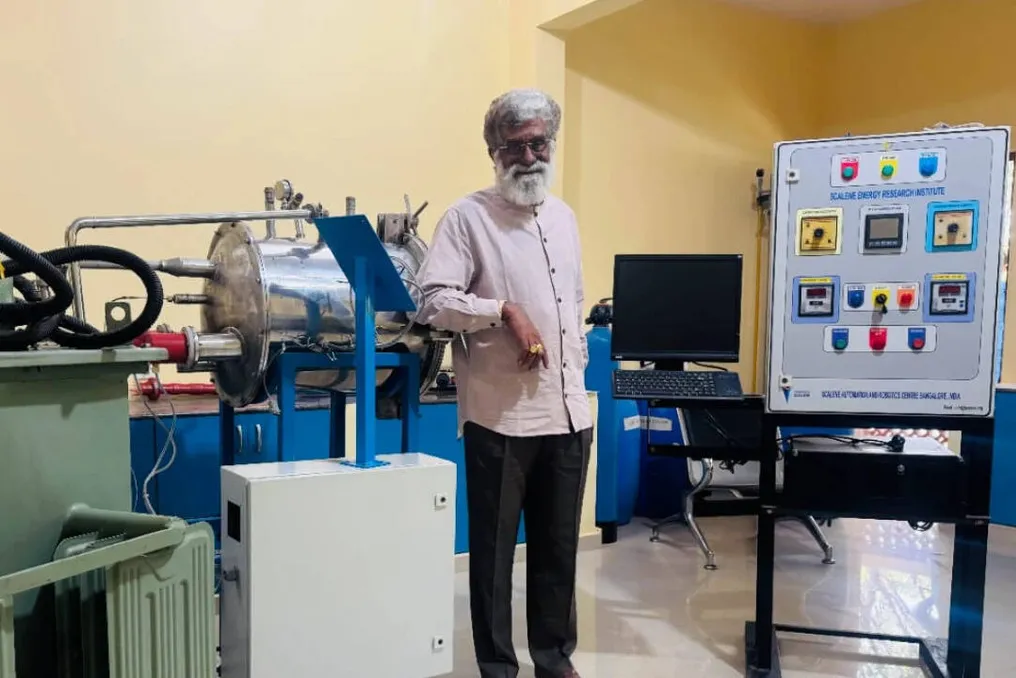
Indian Inventor Patents Element Transmutation Method After Discovering Gold During Tests
Read more
The times of India
timesofindia.indiatimes.com

Indian Inventor Patents Element Transmutation Method After Discovering Gold During Tests

An Indian inventor from Bengaluru has received a patent for a process that allows one chemical element to be converted into others, including gold, by using specially generated frequencies. This method does not require the use of traditional nuclear reactors or radioactive processes.

Experiments conducted by the inventor demonstrated the presence of gold, silver, and several other elements in the processed samples. The innovation, named Gravitoradiophysical Nuclear Transmutation (GNT), was registered in India (Patent No. 5683222) nearly eight years after the application was filed on November 21, 2017, and was issued in the second half of 2025.

Kumar, Director and Chief Scientist at Scalene Energy Research Institute, told TOI that the GNT technology could potentially find applications in the fields of energy, medicine, genetics, industry, and space.

How It Works

To understand the process, it is necessary to know how elements differ from each other. Each element consists of atoms, and at the center of an atom is a nucleus. The identity of an element is determined by the number of protons in this nucleus. For example, gold has 79 protons, while mercury contains 80. Therefore, converting mercury to gold would require changing the structure of the nucleus by removing or shifting one proton and one electron, which is impossible with a normal chemical reaction.

The process proposed by Kumar uses a specially designed reactor. Its key component, called the 'Boom Tube,' is a tubular reactor that creates continuous free fall and weightlessness at the molecular level. It is equipped with aluminum alloy antennas and connected to a high-power high-frequency generator. The apparatus also includes systems for regulating temperature and pressure in a vacuum environment.

The process is carried out in two supposed stages. First, one frequency is used to separate the target element from the chemical compound it is contained in. Then, a second frequency is applied to achieve the supposed change in the element's nucleus. The exact mechanism of action is still being studied.

As Kumar explains: 'Every element possesses a unique frequency or set of frequencies capable of breaking its chemical bonds and separating it from the compound. For initial experiments, I chose mercury, which he describes as one of the heavier elements that can be relatively safely processed in an experimental setup. However, the goal was not just to obtain gold.'

Broader Goals

A larger objective was to create a process capable of transforming various elements and isotopes for potential use in energy, medicine, industry, and space research. The patent describes experiments where a mercury compound, mercury sulfate, was mixed with distilled water and passed through the reactor. A portion that was not treated was kept for comparison, and both samples were analyzed by an accredited laboratory that, reportedly, did not know which samples had been treated.

The results showed the detection of gold at a concentration of 1.91 mg per liter in the first treated sample and 2.3 milligrams per liter in the second. Silver was also detected at a concentration of 11 milligrams per liter in the second test. Other elements, including magnesium, manganese, phosphorus, and zinc, were also recorded in the treated samples. The amount of mercury decreased from 33.45 g to 8.67 g, while sulfur remained almost unchanged, around 8.5 g.

The laboratory used a method known as Inductively Coupled Plasma Atomic Emission Spectroscopy (ICP-AES), which identifies and measures the amount of elements in a sample. The research group acknowledges that significant work remains under various conditions before the process is perfected or considered for large-scale application.

There is also an important scientific caveat. The discovery of gold, silver, or other elements in a sample does not automatically mean that the technology or process is ready for immediate widespread use. The laboratory method only records the substances present, not how they were formed. A full understanding of the science behind the claimed transmutation requires independent experiments, including tests of elemental atomic structure.
Similar stories

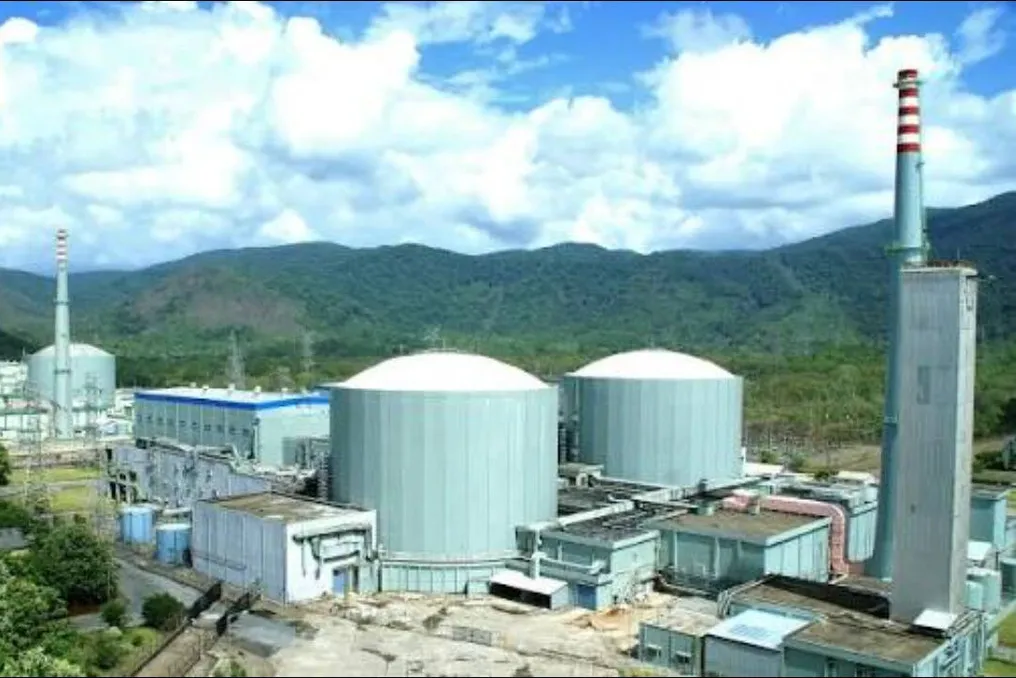
Kaiga Reactor Unit-1 Achieves Criticality Again After Life Extension Work
Read more
timesofindia.indiatimes.com

Kaiga Reactor Unit-1 Achieves Criticality Again After Life Extension Work

In a significant achievement for the country's nuclear sector, the Kaiga Generating Station Unit-1 (KGS-1) in the state of Karnataka successfully reached criticality on Sunday, receiving a second life. This reactor had been taken out of service to undergo life extension work after 25 years of operation. This was reported by the Nuclear Power Corporation of India Limited (NPCIL) on Sunday, a public sector undertaking responsible for the design, construction, commissioning, and operation of nuclear power plants across India.

Achieving criticality means that a self-sustaining, controlled chain reaction of nuclear fission has been established in the reactor core. KGS-1 first achieved criticality on September 26, 2000, and managed to generate 37,670 million units of energy before being shut down for maintenance in April of last year.

This same power unit set a world record of 962 days of continuous operation on December 31, 2018, functioning at a plant capacity factor of 99.3%, surpassing the previous world record of 940 days set by Heysham II (Unit 8/Reactor 2) in the UK.

NPCIL announced on social media platform X on Sunday that achieving this result just 600 days after being shut down for major repairs of the EMCCR (Mass Cooling Channel replacement) and EMFR (Mass Feed Device replacement) on April 1, 2025, sets a new benchmark for the entire fleet, as it is the first NPCIL reactor to reach criticality in such a short period. The company emphasized that this outstanding success reflects exceptional dedication, technical excellence, and coordinated teamwork.

The Kaiga power station has four operational nuclear units with a total capacity of 880 MW, and two additional units (5 and 6) are under construction, which will add 1,400 MW, bringing the total planned capacity of the six units to 2,280 MW.

Kaiga Units-5 and 6 are modern, indigenous pressurized heavy water reactors (PHWRs) with a capacity of 700 MW each, incorporating advanced safety features and considered among the safest in the world. Three such reactors—KAPS-3&4 and RAPP-7—are successfully operating in the states of Gujarat and Rajasthan, respectively. Components and equipment for this project are supplied by domestic industrial partners, and the work is carried out by Indian contractors, aligning with the Atmanirbhar initiatives of the Modi government.

Several days ago, another important event occurred: the Atomic Energy Regulatory Board (AERB) granted permission for the first approach to criticality for the eighth unit of the Rajasthan Atomic Power Station (RAPP-8) in Rawatbhata after satisfactory completion of safety checks.

Elon Musk announced the development of a unique Tesla vehicle without a steering wheel, brakes, or pedals
Read more
www.aajtak.in

Elon Musk announced the development of a unique Tesla vehicle without a steering wheel, brakes, or pedals

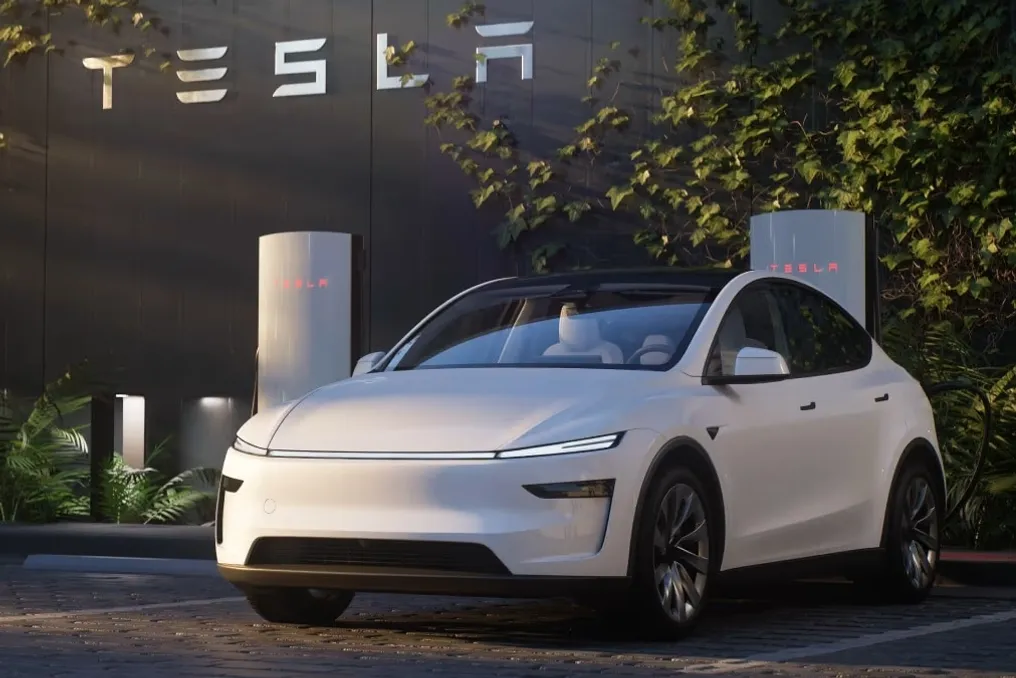
Elon Musk announced Tesla's plans to create an unusual vehicle that will be fully autonomous and will not require the driver to control the steering wheel, press the gas, or brake. This information was revealed during an interview at the annual New York Times summit.

It is anticipated that this modern technology could be integrated into the Tesla Model Y. Musk indicated that Tesla is working on versions of the Model Y and the larger Model Y L, which will be fully autonomous and could become part of the company's Robotaxi network. Furthermore, these vehicles may also be sold for private use in the future.

Musk presented this concept at the New York Times summit, but he did not provide any details regarding the launch date, cost, or production plans for this new SUV model.

The main goal of this potential project is to strengthen the Tesla Robotaxi network. Currently, the existing Model Y, equipped with a steering wheel, pedals, and Full Self Driving (FSD) system, is used in the Robotaxi service. Additionally, the two-seater Cybercab was recently added to the network.

Tesla is preparing to introduce a seven-seater version of the Model Y. The Cybercab, introduced by the company in October 2024, is a fully driverless vehicle without a steering wheel or pedals, but due to having only two seats, it was not considered practical for family use. Therefore, the wheel-and-pedal-free version of the Model Y or Model Y L represents a significant opportunity for the company.

Recently, Tesla announced that the Cybercab would also be available to private buyers, although purchasing it would require paying a costly subscription. Moreover, this vehicle can only operate within limited zones designated by the company for its Robotaxi network.

Currently, the standard Tesla Model Y accommodates five people, including the driver, while the larger Model Y L is designed for six passengers. During the interview, Musk mentioned creating a vehicle for six or seven people, suggesting the possible creation of an even larger version of the Model Y. Interestingly, after the Model Y L was introduced in China, Musk had previously stated there were no plans to bring it to the American market, but less than a year later, he changed his stance.

Bringing such a vehicle to the mass market for Tesla will not be a simple process, as the main barriers are safety issues and government regulation. There are serious challenges in the US related to wheel-and-pedal-free vehicles. Although Tesla independently certified the Cybercab in America, this drew criticism, and the country's Department of Transportation is currently conducting an investigation.

Another important question arises: whether ordinary consumers will want to buy a family car that lacks the ability for manual driving if necessary, especially considering that the vehicle can only operate within predefined geozones.

Tesla recently made significant changes to its product portfolio, announcing the discontinuation of the popular Cybertruck and the closure of models such as the Model S and Model X. As a result, the company's portfolio now consists only of the Model Y, Model Y L, and Model 3.

Previously, the company planned to develop an inexpensive vehicle for markets like India, but this project was postponed in favor of the Cybercab. On the other hand, Tesla showed a prototype of its long-awaited Roadster supercar, although its production will take at least a year.

Popular